
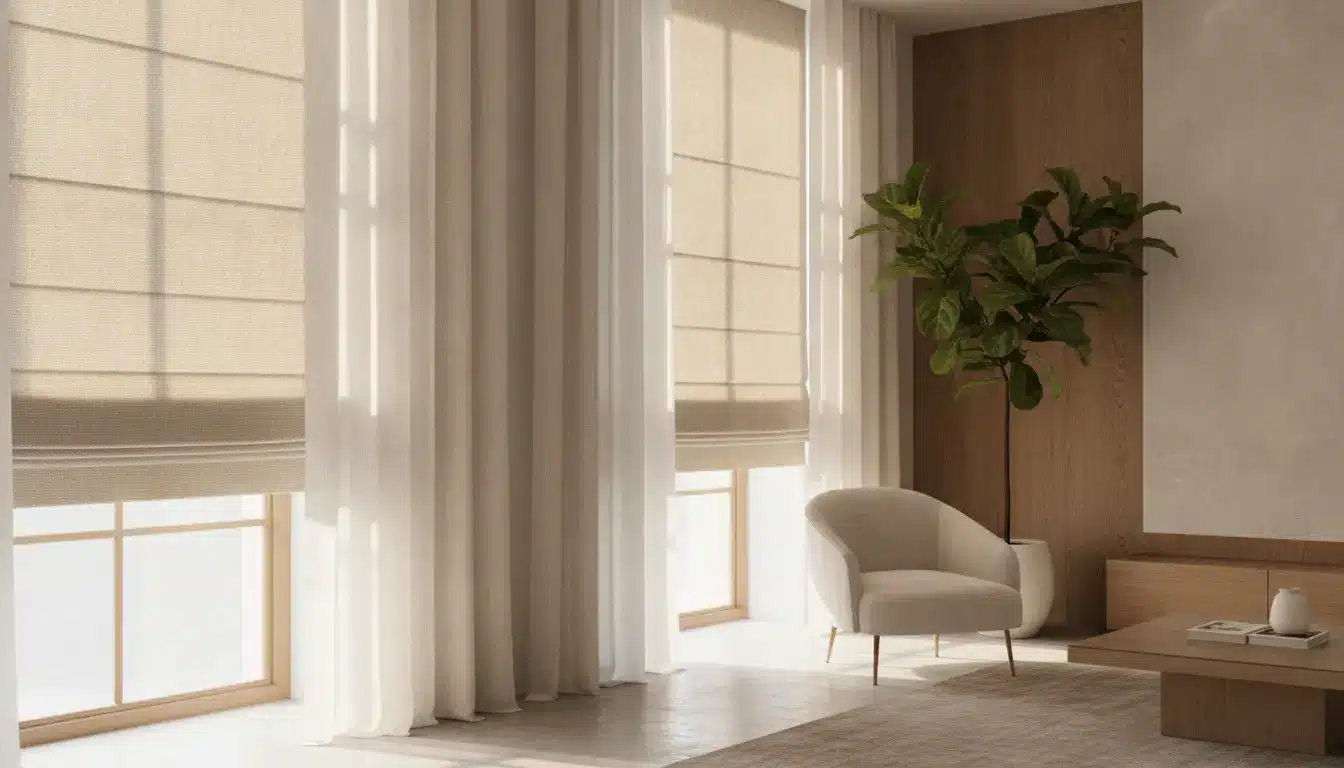
A room can have new furniture, fresh paint, and carefully chosen lighting, yet still look unfinished because of one detail: your window coverings. Blinds that look cheap, shades that don’t fit, or heavy curtains that cover too much glass can throw off an otherwise well-designed space.
In 2026, window treatments are trending toward a more tailored and intentional style. Options like Roman shades, woven textures, motorized blinds, cellular shades, and layered curtains are all popular, but each serves a different purpose. Some help with privacy or comfort, while others simply make a room look more custom and high-end.
Still, choosing new blinds for windows just because they are trendy can be a huge mistake that can cut your home market value by 3-5%. Just think about it: 10-12 windows around the home, all with poorly selected blinds, can create a really unbalanced look from room to room.
Hence, the best choice depends on your window size, room layout, light, privacy needs, and budget. And here are five good options recommended by professional window blind installers, along with their typical costs and where they work best.
What Does “Adding Value” to a Window Actually Mean?
Window coverings are often marketed as a way to add value to your home, but that idea needs some explanation. Most buyers won’t offer more just because a living room has Roman shades. However, well-fitted window treatments can make a home feel more complete, lower move-in costs, and make daily life more comfortable.
There are really three types of value to compare:
- Visual value: Does the treatment look properly scaled and intentional in the room?
- Functional value: Does it solve a real issue with privacy, glare, light, or thermal comfort?
- Resale appeal: Does it feel like a permanent, useful feature a future buyer is likely to keep?
Price isn’t always the best guide. Spending $1,000 on a motorized shade for an easy-to-reach bedroom window might not make much difference. But a well-fitted $250 roller blind that fixes an awkward window shape can transform the entire room.
|
Window covering style |
Used for |
Typical price per unit |
Common pitfalls |
|
Roman shades |
A tailored, custom look |
$150 – $600+ |
Fabric weight and uneven folds |
|
Woven shades |
Texture in neutral interiors |
$150 – $600+ |
Limited night privacy |
|
Motorized roller shades |
Large or hard-to-reach windows |
$380 – $1,000+ |
Motor, power, and smart-home compatibility |
|
Cellular shades |
Thermal comfort and bedrooms |
$100 – $500+ |
Side gaps and correct sizing |
|
Layered treatments |
Maximum visual impact |
$300 – $1,500+ |
Too much fabric or blocked glass |
1. Tailored Roman Shades Give Windows a More Custom Look
Roman shades are an easy way to make a plain window look thoughtfully designed. Their structured fabric softens the window’s edges, and the folds add depth without the need for full-length curtains.
They work particularly well in bedrooms, dining areas, powder rooms, and kitchens where long drapery may feel impractical.
Mounting a Roman shade inside the frame gives a clean, simple look but shows the window’s true size. Mounting it outside can make a short window look taller and hide an unattractive frame.
For the most polished result:
- choose a lined shade if privacy or light control matters
- use a structured fold on wider windows to reduce uneven stacking
- match the fabric weight to the scale of the room
- check how much fabric sits at the top when the shade is fully open
Roman shades may not be the best choice for kitchens, since grease and cooking residue can build up on the fabric. They also don’t offer as much control over daylight as adjustable blinds. Still, for the look you get for the price, a well-fitted Roman shade is hard to beat.
2. Woven Shades Add Texture to Rooms That Feel Too Flat
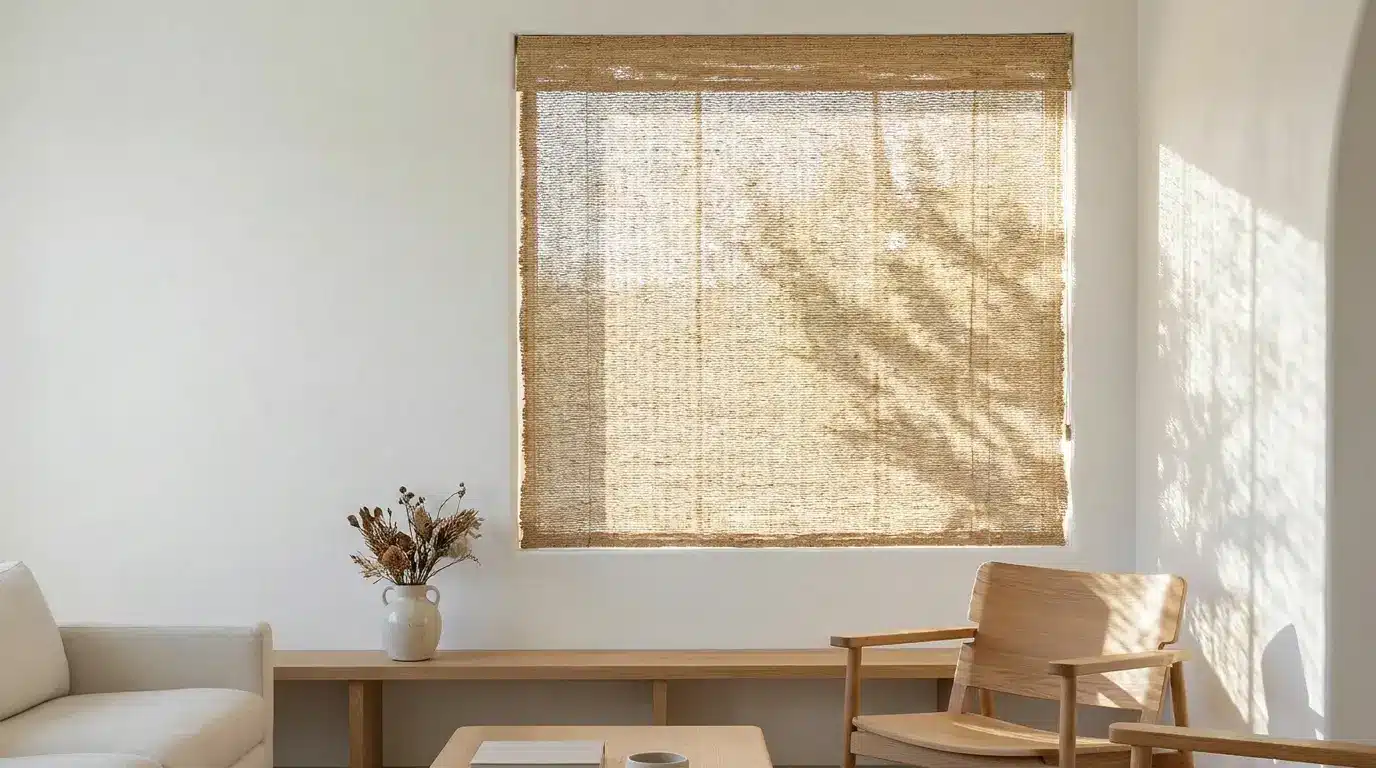
White walls, light wood, smooth cabinets, and neutral furniture are still in style, but a room with only clean surfaces can feel a bit flat. Woven shades add texture to the window without bringing in bold colours or busy patterns.
This makes them especially useful in:
- white and wood kitchens
- warm minimalist living rooms
- coastal-inspired interiors
- spaces with limited architectural detail
A common mistake, however, is choosing woven shades from a sample without considering privacy. A loose weave can let in lovely sunlight during the day, but at night, it might be almost see-through from outside when the lights are on.
A privacy or blackout liner is often a better solution than simply choosing the darkest, thickest weave available. The liner handles light and privacy, while the visible material can still be selected for texture.
Material matters in kitchens and bathrooms, too. Natural fibres can react to moisture, stains, and frequent cleaning in different ways, so it’s smart to check the manufacturer’s recommendations before you buy.
Woven shades stand out most in simple rooms. If your space already has lots of patterns, decorative walls, or detailed furniture, adding more texture at the window can make the room feel too busy.
3. Motorized Roller Shades Are Worth Paying for in the Right Place
Many Vancouver window blinds experts agree that motorized window coverings are a big trend for 2026, but adding a motor to every blind doesn’t always make your home feel more upscale. Motorized shades make the most sense in places where it’s truly hard to open or close them by hand:
- tall or hard-to-reach windows
- glazing behind a sofa, desk, or kitchen counter
- several side-by-side windows that should align
- large living-room windows with daily glare
- bedroom blackout shades used every morning and evening
When you have four blinds in a row, it’s hard to get them all to stop at the same height by hand. Motorized shades can move together, fixing this small visual problem and making big windows easier to handle.
When shopping for motorized shades, look beyond just fabric and colour. Find out how they’re powered, how noisy the motor is, if you need a special app to control them, and how easy it is to get parts or service.
Battery-powered systems are easier to add during a finished renovation. Hardwired shades may make more sense in new construction or a major remodel, especially across several large windows.
One drawback is that the motor and controls might wear out before the shade fabric does. Motorized shades are worth the cost when they solve a real access or daily-use problem. For a regular guest room window you can reach easily, a manual shade is often the smarter choice.
4. Cellular Shades Have the Strongest Performance Argument
Cellular shades don’t usually make a bold visual statement like heavy drapes or Roman blinds. Their main advantage is their performance.
The folded material forms air pockets between the room and the window. Several studies revealed a 24% increase in heating energy savings when cellular shades are properly installed and regularly operated.
How well cellular shades work depends on your window, climate, how they’re made, and how you use them. If you leave the shade open on a cold night, it won’t help as much as one that’s closed regularly.
Cellular shades are worth considering for:
- bedrooms with cold-feeling windows
- older homes with noticeable winter discomfort near the glass
- north-facing rooms
- blackout applications
- homeowners prioritising thermal comfort over decorative detail
Getting the right fit is crucial. Large gaps along the sides reduce insulation effectiveness, so measuring carefully is just as important as choosing the right cell size or fabric colour.
There’s a real design trade-off with cellular shades. They often look more practical than luxurious. In a main bedroom or formal living room, you can layer them behind drapes to get better light and temperature control, plus a softer, more polished look.
A quick warning: window coverings can help with comfort, but they can’t fix broken seals, damaged frames, or drafts from a poorly installed window.
5. Layered Window Treatments Create the Richest Look and the Most Room for Error
Layering is still a top trend for window treatments in 2026. Combining a Roman shade with side panels, a roller blind behind curtains, or sheers with blackout curtains lets you control privacy, daylight, and darkness separately. It also makes the window look more substantial.
But proportion is the main challenge. Thick curtains on a narrow window can cover a lot of glass, even when open. In a small room, heavy fabric and big curtain rods can make the wall feel cramped.
Before ordering layered blinds, check:
- how much wall space is available beside the window
- where the curtain fabric will stack when open
- whether radiators, furniture, or vents affect curtain length
- if the shade and drapery solve different problems
- whether the fabric undertones work together
Mounting the curtain rod higher can make the window look taller, and extending it past the frame gives the panels space to sit without blocking the glass. But these tricks don’t work in every room. Ceiling height, wall width, and nearby cabinets can affect your options.
Layered window treatments can get expensive fast. Fabric, lining, hardware, custom sizes, and installation all add to the cost. This approach works best in rooms where the windows are a main feature, not on every window in the house.
Are Window Blinds Actually Worth the Money?
Figure out what you need first, then pick the style. Some common rules are:
- If a room feels unfinished, Roman or woven shades can give it a more polished look.
- Big or awkward windows might be worth motorizing.
- Choose cellular shades if you prioritize comfort and light control in cold weather. Layered treatments are best for rooms where the window is a key design feature.
Before spending money on custom coverings, check the window itself. Open and close it, look for condensation between the panes, and check for damage or drafts. A blind can help with glare and add a layer, but it can’t fix a broken window.
One last thing to check before you order: cord safety. Choosing cordless window coverings has long become a huge trend for kids’ and pets’ safety.
The priciest window treatment is often the one you have to buy twice. Measure carefully, know what problem you’re solving, and only spend more when the window and room really need it.