
Walk into any workshop that has been running strong for years, and you will notice something right away: Tools are worn but never neglected. That is the gap between a shop that operates efficiently and one that is constantly buying new equipment it could have held on to for another 10 years. The idea of tool longevity isn’t to “baby” your tools. It’s about knowing how they fail, then creating habits to prevent failure in the first place.
Clean Every Tool After Every Use
Dust, metal shavings, and grease can cause more damage than any single hard day of work. Debris that accumulates on a blade, bit, or moving part will hold moisture against the metal and accelerate corrosion. A quick wipe-down takes only 30 seconds. Not doing it for a month leads to rust spots you can’t buff out.
Hand tools need to be treated the same as power tools. Wrenches, pliers, and screwdrivers collect dirt on the job they handle, and that dirt gets into joints and hinges. At the end of the day, a rag with a bit of solvent is run over moving parts to keep them smooth and prevent old oil from making the grip surfaces slick. This habit is nearly free and will pay off every time you use that tool again.
Store Workshop Tools the Right Way
It may look like a harmless way to toss tools in a drawer or bucket, but you’ll see the nicks, bent tips, and scratched finishes that result from metal-to-metal contact. Each tool is separated and protected in foam-lined drawers, pegboards, and dedicated cases. It also helps to make inventory quicker, as you can see what is missing or out of place at a glance.
Most of these problems are addressed by a single piece of equipment: a heavy-duty metal workbench with built-in drawers. In a spacious workshop or when working in a team, it’s better to consider a 10ft workbench with drawers to store all the essential tools. For smaller garages or shops, a 6ft- or 8ft workbench is just enough. A steel-frame workbench will retain its shape year after year, even when loaded with power tools and hardware.
Smaller parts such as sockets, bits, and fasteners are stored in drawers rather than on the work surface, reducing the risk of lost parts and accidental damage from tools jamming in the work area during a job. Some models also come with lockable drawers, which are a must-have if your garage is used for storage or if you have children using it.
Humidity control is as important as physical separation. One of the quickest ways to turn a good set of hand tools into a rust museum is to keep them in a damp garage. Moisture exposure can be reduced considerably by using silica gel packs, a small dehumidifier, or by placing tools in a sealed cabinet away from exterior walls. In areas with a seasonal change in humidity, a single change can extend a tool’s useful life by many years.
Sharpen and Calibrate on a Schedule
Dull blades and bits are not only slower to work with but also do not work at all. They make the motor of the tool do more work and cause wear on the bearings and gears much greater than a sharp edge would. Saw blades, chisels, and drill bits should be checked regularly and sharpened before they become dull, not when you notice the quality of the cut has decreased.
Calibration is important for measuring and power tools. If the table saw fence is out of square or the level is no longer true, it will produce poor results and put undue stress on the machine as you try to compensate for the error. Even if it’s something as straightforward as squaring the fence or checking the level against a known flat surface, it helps keep your results and equipment in good shape to make a simple monthly check a habit.
Lubricate Moving Parts Consistently
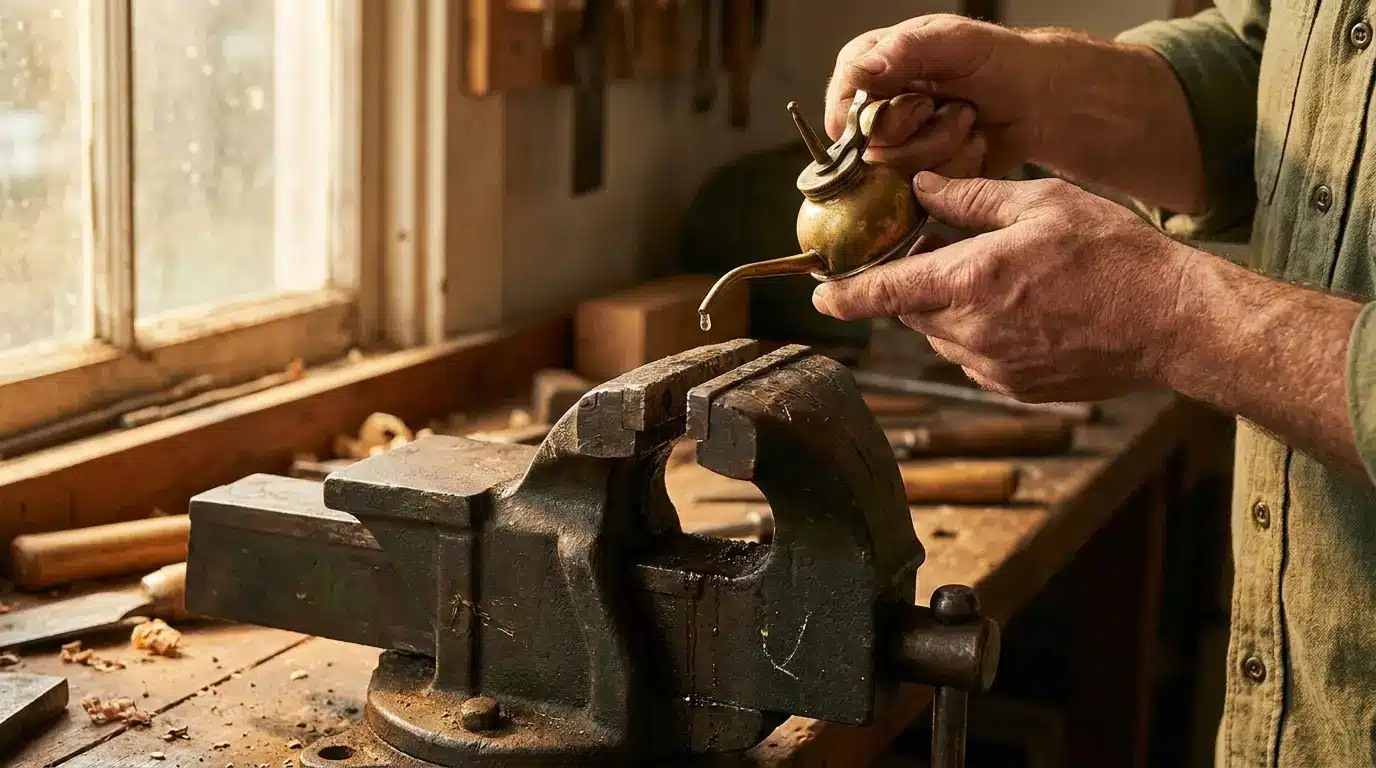
All tools with gears, bearings, or hinges require lubrication, and neglecting to do so is one of the most common causes of early tool death in the garage. Dry grinding metal against metal produces heat and friction that can cause components to wear out much more quickly than they would in normal use. When oil drips off a chuck on a drill or a thin film of grease forms at a pivot point of a saw, it keeps things running as the manufacturer intended.
Not all lubricants work for all jobs, though. The wrong type can attract more dust than it repels, or it may decompose when heated, leaving a gummy residue. Always refer to the manufacturer’s specifications for each category of tools: A table saw arbor may require a different product than a hand plane’s adjustment screw. Having a few of the right lubricants on hand at your workbench makes this an easy habit, not an excuse to avoid it.
Avoid Overloading Power Tools
Each power tool has a particular capacity, and exceeding it is one of the quickest ways to shorten its lifespan. When the material is not suited to the drill, or the saw is used on a material that is too thick for the blade, the motor and internal parts are overloaded. The tool may withstand one overload. It is not going to last a series of them.
Matching the tool to the job is also a more subtle protection of your investment – you don’t want to be tempted to force something that isn’t working. If a tool is having trouble, stop and consider whether it is the appropriate tool for the job, and don’t push it, or risk burning out the motor or stripping the gear. A shop that has a sufficiently broad selection of tools to match each job properly will always last longer than one that has a few tools used to a greater extent than they were intended.
Inspect Cords, Batteries, and Attachments Regularly
Power cords are exposed to a lot of abuse in the busy shop, including being run over by equipment and being stored too tightly. Frayed cords pose a safety hazard and should be replaced or repaired as soon as they are found frayed. Batteries should be treated similarly: heat, deep discharges, and improper charging all significantly shorten battery life, while partial charging in a cool, dry location can extend it.
Attachments and accessories, such as saw blades or sanding pads, can wear out at various rates depending on use, and replacing them before they become worn will keep the tool they are attached to in good condition. A dull blade requires the saw’s motor to run longer, and a broken sanding pad can damage the sander’s backing plate. It’s better to have a small record of when major accessories were last replaced, rather than finding out during the project.
Final Thoughts
Workshop tools that last for decades aren’t just a matter of luck or high prices. They are the result of regular practices: cleaning after use, proper storage, regular sharpening, proper lubrication, understanding each tool’s limits, and inspecting wear points before they become issues. Incorporate these habits into your work schedule, and your workshop will be more efficient and will save you a lot of money on replacement parts over the years.