
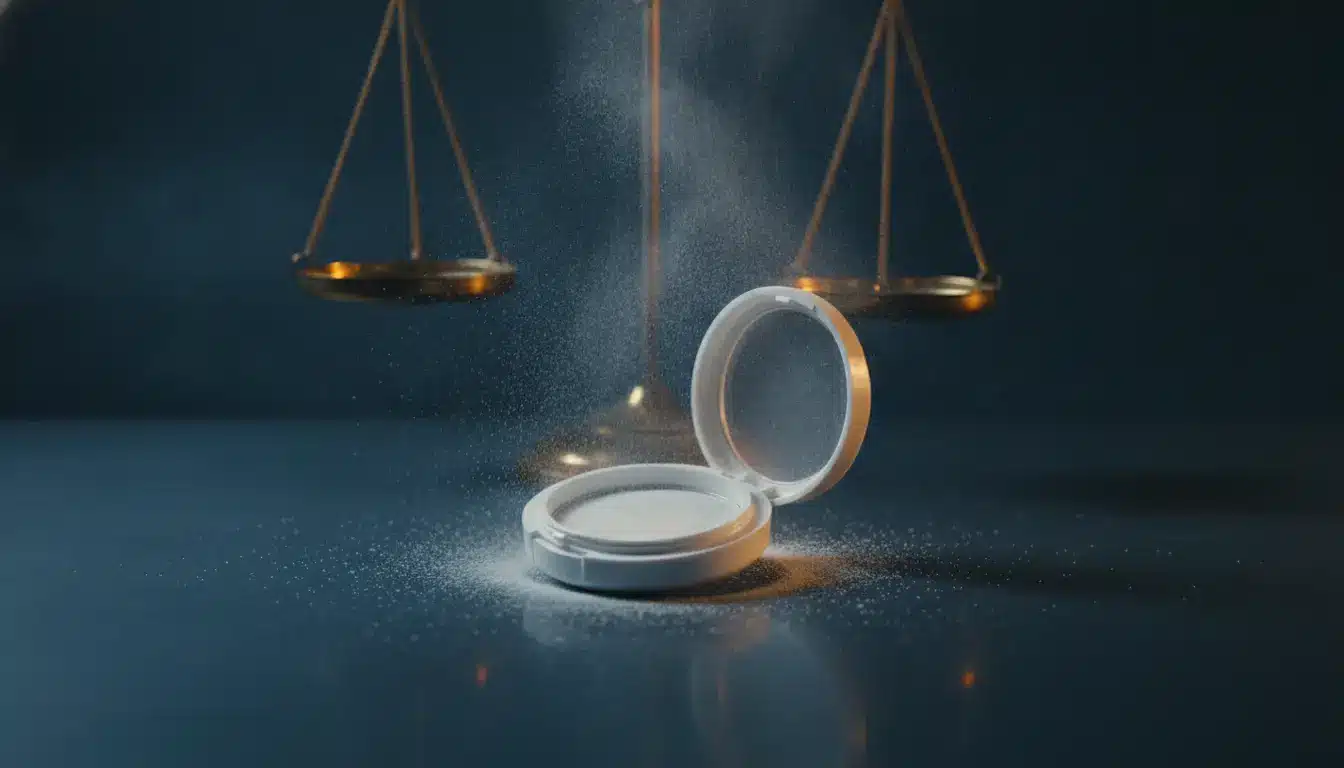
There have been changes that are happening with regards to the legal landscape involving talc product liability in the US. Johnson & Johnson has proposed $5.5 billion to resolve almost 76,000 legal claims alleging its talc-based baby powder and other talc products cause ovarian cancer. The company says the deal, announced in July 2026, would bring an efficient end to more than a decade of litigation, but it isn’t final yet. It still requires at least 95% of eligible claimants to opt in before it takes effect.
Nine out of fifty-two. That’s how many talc-based cosmetic products came back positive for asbestos when the FDA ran its 2019 sampling program, spread across blush, baby powder, and eyeshadow lines sold at normal retail counters. The FDA didn’t pull those 52 products at random. It deliberately targeted items already flagged as suspect, popular with kids, or trending on social media, so the ratio isn’t a snapshot of what’s sitting on shelves industry-wide. What it shows is that contamination isn’t rare or hypothetical but rather, it is traceable to how talc is mined and keeps turning up in finished products years after the risk was first identified.
Talc and asbestos materials can be found in the same rock layers underground, which results in the problem of getting a batch of talc mixed with harmful asbestos fibers. Manufacturers say they screen for such contamination, but this screening has a poor track record.
An individual who contracts serious illness from the use of a cosmetic talc powder or similar products can assert their rights by hiring a product liability lawyer. With legal assistance, a client can be assisted with regard to what evidence is needed to prove their case and help maximize their compensation as efficiently as possible.
Why the Rules Just Shifted Under Everyone’s Feet
For a while it looked like federal testing rules were finally catching up. In December of the year 2024, the Food and Drug Administration (FDA) issued a proposal to provide standard testing procedures for the identification of asbestos fibers in talc products. This proposed two-loading screening method comprised a combination of polarized light microscopy and electron microscopy, which will be used in accordance with the provisions of the 2022 Modernization of Cosmetics Regulations. In November 2025, the agency pulled the rule back entirely. No enforceable federal testing standard currently exists for talc cosmetics. Companies can still market a product as “asbestos-free” using their own internal methods, methods that critics say are often too coarse to catch the smallest fibers.
That regulatory gap is why product liability law is so important here. Government oversight of talc has always been thin. People rely on civil claims when regulation does not cover their case.
Three Ways a Product Can Be Legally Defective
Product liability doesn’t hinge on whether a company meant to cause harm. Most states apply strict liability to these cases, meaning a plaintiff doesn’t have to prove carelessness, only that the product was defective and that the defect caused the injury. According to Cornell Law School’s Legal Information Institute, courts recognize three categories of defect that can form the basis of a claim.
A design defect is when the product is risky right from the blueprint, before even one single unit ever rolls off the line. A manufacturing defect is different. In this particular case, the blueprint is sound, but then something went sideways during production. Examples include contamination in one batch, not the entire product line.
A failure-to-warn defect is when the product works and was assembled correctly, yet people who buy it were never given a warning about a risk they couldn’t see or should not reasonably be expected to guess.
Cosmetic talc claims frequently touch on the failure-to-warn theory, since asbestos contamination isn’t something a shopper can detect by looking at a compact of blush. But they can also implicate manufacturing defects, particularly when a specific lot or supplier is traced back to a contaminated talc source. Sorting out which theory fits requires digging into sourcing records, testing history, and what the company knew and when.
The North Carolina cosmetic talc asbestos lawyer team at Wallace & Graham, for instance, has built its asbestos practice around exactly that kind of sourcing and causation work. They have developed over more than four decades of combined litigation experience in the field.
What a Cosmetic Talc Claim Has to Prove
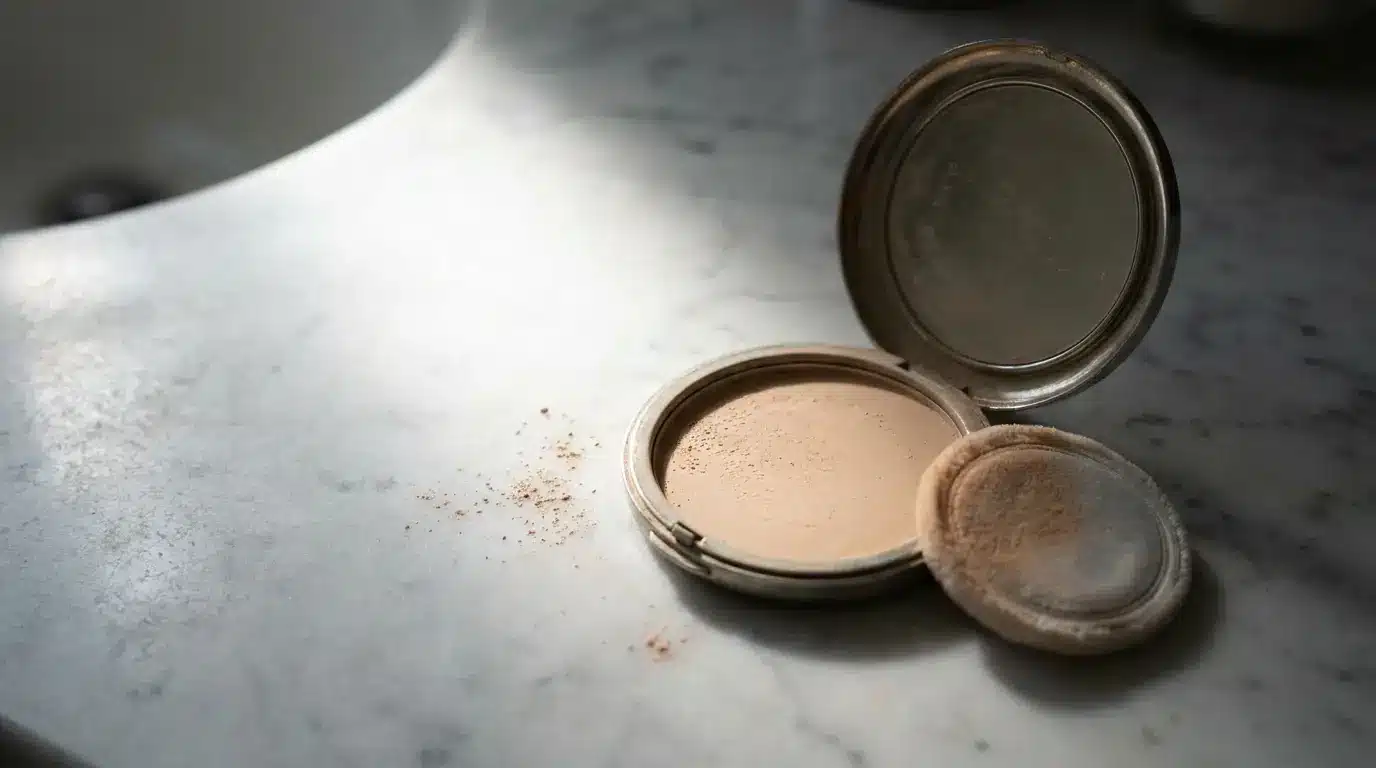
A viable claim needs three things established. First, the manufacturer, or some other party in the supply chain, somehow failed to stop asbestos contamination or didn’t properly give warning about the hazard. Second, that the person really was exposed to the contaminated product, usually over a prolonged stretch of time rather than just a single use. Third, that the person then developed an illness that has a known medical connection to asbestos exposure, most often mesothelioma, lung cancer, or asbestosis.
That third element is where these cases get complicated in a way most product liability claims don’t. Mesothelioma can take twenty to sixty years to surface after exposure. A person who used a contaminated eyeshadow palette at age 20 may not show symptoms until much later. To address this issue, the courts have come up with the discovery rule, which allows the filing of a claim to be done during a period of time when the plaintiff is aware or ought to be aware that their disease was caused by the defendant’s product and not immediately after using the said product.
State laws on limitation periods continue to be diversified, and the combination of immense limitations with the rather recent enactment of the laws on statute periods is precisely the kind of thing that should be confirmed from a lawyer’s perspective.
The Regulatory Vacuum Consumers Are Living With
No federal agency right now sets a hard, binding standard for how talc is tested before it actually lands in a cosmetic product. The FDA can go after a finished item if it judges it as contaminated, but the whole testing method that would create steady enforcement is precisely the kind of rule that got withdrawn in the first place. The EPA and OSHA handle asbestos more broadly, like in workplaces or construction materials, yet neither of them owns cosmetic supply chains the way the FDA does.
Meanwhile, a few jurisdictions abroad are sort of doing the reverse. In September 2024, the Risk Assessment Committee of the European Chemicals Agency (ECHA) concluded that asbestos-free talc met criteria for Classification 1B as a carcinogen. This decision is still moving through the EU’s formal adoption process. The said label usually pushes regulators toward a cosmetics prohibition once the formal regulation finally catches up. American consumers, for now, are operating under a patchwork of state tort law rather than a uniform safety policy.
Where Legal Guidance Fits In
Anyone who suspects a cosmetic talc product contributed to an illness is dealing with a medical diagnosis that arrived decades after the actual exposure and a set of federal rules that offer less oversight now than they did a year ago. Neither problem gets easier by waiting. Tracking down which specific products were used, when, and from which retailer gets harder with time, and state filing deadlines don’t pause for a slow-moving diagnosis.
Firms that focus specifically on this niche, rather than general personal injury work, tend to have existing relationships with the toxicologists and industrial hygienists needed to trace contamination back to a source.
Talc contamination isn’t a settled problem the law has already caught up to. It’s an active one, and the legal tools available to someone harmed by it are still changing right alongside the science and the regulation itself.