

Your skin suddenly stings when you apply products that never bothered you before. It feels tight, dry, flaky, or oddly sensitive, even after moisturizing.
That can happen when your skin barrier becomes weakened. Skin barrier repair does not always require a shelf full of new products.
A simpler skin barrier repair routine can help reduce irritation, restore moisture, and give your skin time to recover. Gentle cleansing, barrier-supporting moisturizers, and daily sun protection can make a meaningful difference.
The key is knowing what to pause, what to keep, and when your skin is ready for active ingredients again. With a few practical changes, you can support a healthier barrier without constantly changing your routine.
What Is the Function and Causes of Skin Barrier Damage
The skin barrier protects the body from irritants, allergens, chemicals, and water loss while maintaining hydration.
Made of ceramides, cholesterol, and fatty acids, it keeps skin cells connected like mortar between bricks. A damaged barrier lets moisture escape, and irritants enter, causing dryness, sensitivity, and discomfort.
Barrier damage rarely comes from one habit alone. It usually builds from:
- Over-exfoliation: Using physical scrubs or chemical acids (AHA, BHA, glycolic acid) too often strips away the lipids that hold the barrier together.
- Harsh cleansers: Foaming or sulfate-heavy face washes remove excess oil along with the natural oils your skin needs to stay protected.
- Active ingredients used too aggressively: Retinoids, high-strength vitamin C, and layering multiple actives at once can overwhelm skin before it has time to adjust.
- Pollution exposure: Airborne particles and pollutants can sit on the skin’s surface and trigger oxidative stress, weakening the barrier over time.
- Sun exposure: UV rays break down collagen and lipids in the skin, making the barrier thinner and less resilient.
- Low humidity and cold weather: Dry air pulls moisture out of the skin faster than it can be replaced, leaving the barrier dehydrated and more prone to cracking.
Formulator’s Note: Ceramide creams, an acid toner, and a retinol serum can each be fine on their own but overwhelming together. If your skin is reacting to something new, look at your whole routine, not just the newest addition.
What Effective Ingredients Repair the Skin Barrier?
Effective barrier repair products restore moisture, strengthen the skin’s protective layer, and reduce irritation. The best formulas usually combine ingredients that replenish lost lipids, attract hydration, and calm stressed skin.
Choosing the right components can support skin barrier health and help the skin recover from damage.
| Ingredient Type | Examples | How It Supports the Skin Barrier |
| Lipids | Ceramides, cholesterol, fatty acids | Replenish the skin’s natural oils and help repair its protective barrier |
| Humectants | Hyaluronic acid, glycerin | Draw moisture into the skin and improve hydration levels |
| Soothing agents | Panthenol, centella asiatica, colloidal oatmeal | Calm irritation and support a more comfortable recovery process |
Barrier-friendly formulas avoid unnecessary irritants such as strong fragrances, harsh alcohols, and aggressive exfoliants. A balanced product with hydrating, repairing, and soothing ingredients helps maintain stronger, healthier skin over time.
Tip: Choose products with ceramides, humectants, soothing ingredients, or gentle carrier oils to support barrier recovery.
How Do I Know If My Skin Barrier Is Damaged?

A damaged skin barrier can change how your skin looks, feels, and reacts throughout the day.
These visible and noticeable changes often appear when the skin struggles to retain moisture and protect itself from everyday irritants.
Below is the list of what a damaged skin barrier looks like:
- Red, irritated patches appear more noticeable than usual.
- Dry, flaky areas develop across the skin’s surface.
- Skin looks dull, rough, or uneven in texture.
- Fine lines appear more visible because of dehydration.
- Small bumps or breakouts may become increasingly common.
- Skin may look tight, shiny, or unusually inflamed.
These changes can signal that your skin needs a gentler routine and more consistent hydration.
Reducing potential irritants while supporting moisture retention can help the skin gradually regain its healthy appearance.
How to Repair Your Damaged Skin Barrier
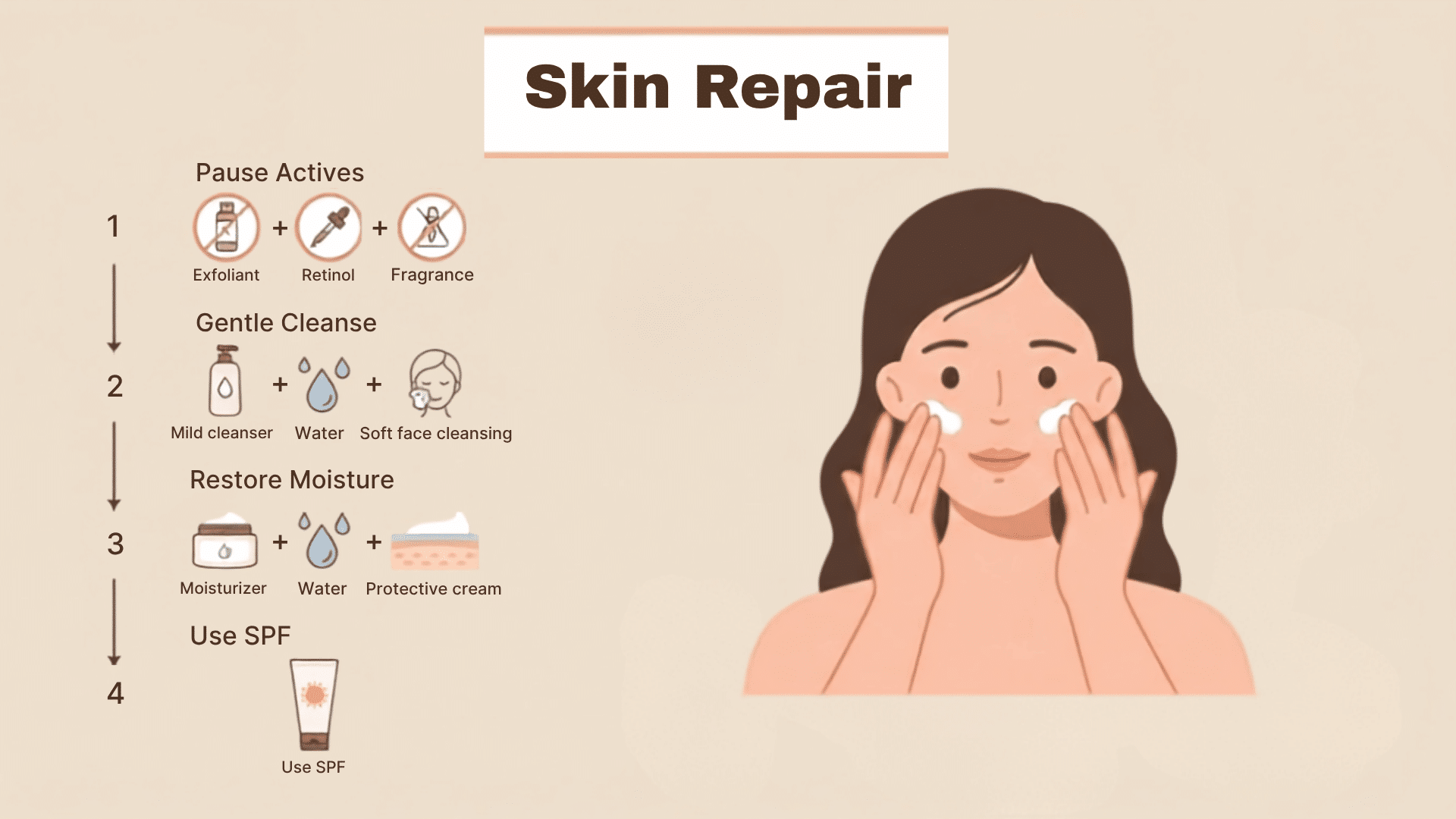
Repairing a damaged skin barrier starts with reducing irritation and restoring moisture. A simple, gentle routine gives your skin the support it needs to recover and become more resilient.
Keeping cleansing gentle, moisturizing regularly, and avoiding unnecessary product changes can make a routine easier to follow.
Step 1: Pause All Actives and Irritants
- Stop exfoliating: Halt all physical scrubs and chemical acids like AHA, BHA, and glycolic acid completely. Not “less often,” fully paused. Even a low-strength exfoliant can re-injure a compromised barrier.
- Hold retinoids: Stop using retinol or prescription retinoids until your skin heals. Retinoids increase cell turnover, which is the opposite of what already-thin, already-sensitized skin needs right now.
- Avoid fragrance: Eliminate products with added perfumes or essential oils that cause stinging, including “natural” fragrance from citrus or lavender oils, which can irritate compromised skin just as much as synthetic fragrance.
Recommendation: Read ingredient lists, not marketing claims. A product labeled “gentle” or “sensitive skin” can still contain fragrance or alcohol denat. Look for “fragrance-free” specifically, not just “unscented.”
Step 2: Simplify Your Cleansing Routine
- Use lukewarm water: Avoid hot water on your face, as it strips natural oils and worsens dryness. Water that feels comfortably cool to the touch is ideal for protecting a compromised barrier.
- Cut back on washing: Limit face washing to once a day, preferably at night to remove sunscreen, sweat, and pollution buildup. In the morning routine, a splash of plain water is often enough instead of a second full cleanse.
- Choose a mild, fragrance-free formula: Pick a cleanser that removes dirt and excess oil without leaving skin feeling tight or squeaky-clean. Avoid harsh soaps and aggressive foaming formulas, since strong surfactants tend to be more stripping and can slow barrier recovery.
Foaming cleansers rely on surfactants to create lather, and stronger surfactants (the ones that foam up dramatically) tend to be more stripping. A cleanser that leaves a slight film rather than a squeaky-clean feel is usually the gentler choice for compromised skin.
Step 3: Rebuild With Repair Ingredients
- Look for ceramides: Choose rich creams containing ceramides, glycerin, or hyaluronic acid to restore lost lipids and draw in moisture. Apply to slightly damp skin right after cleansing so the formula has moisture to seal in, not just its own weight to sit on top of.
- Try slugging at night: Apply a thin layer of an occlusive ointment like CeraVe Healing Ointment or Vaseline over your moisturizer to lock in hydration overnight.
- Be consistent: Stick to your minimal, gentle routine for at least one to two weeks before judging results or introducing anything new. Barrier repair is cumulative, not immediate, and switching products midway resets the clock.
Step 4: Don’t Skip Sun Protection
UV exposure can worsen irritation and make it harder for a weakened skin barrier to recover. Daily sun protection limits additional environmental stress while your skin heals, making it a non-negotiable step rather than an optional add-on.
- Apply sunscreen daily: Use a broad-spectrum SPF 30 or higher every day, even indoors or on cloudy days. UV exposure worsens irritation and slows barrier recovery, so this step matters regardless of weather or visible sun.
- Choose mineral formulas: Opt for zinc oxide or titanium dioxide sunscreens over chemical filters. Mineral sunscreens tend to sit better on compromised skin and are less likely to sting or cause additional irritation.
- Reapply generously: Don’t rely on a single morning application. Reapply during prolonged outdoor exposure, especially after sweating, swimming, or towel drying, to keep protection consistent throughout the day.
Personal Suggestion: If your usual sunscreen has ever left a stinging or tingling sensation, even before your barrier was compromised, that’s worth noting now. Mineral formulas are almost always the safer default while you’re healing.
|
Product Recommendation:
|
How Long Will It Take to Restore Skin Barrier?
Skin barrier repair typically takes 2–4 weeks, while mild irritation may improve within 3–7 days with gentle, consistent skincare. Severe damage can take 4–6 weeks or longer to fully recover.
Consistent care supports healing and helps prevent repeated irritation. Gentle cleansing, regular moisturizing, and daily sun protection create better conditions for recovery.
Many people expect quick results and switch products too often, which can delay progress. Avoid exfoliants, harsh cleansers, retinoids, and fragrances while the barrier is weakened.
Recovery happens gradually, so monitor improvements in dryness, tightness, and sensitivity. Consult a dermatologist if symptoms persist or become worse despite proper care.
Real Reddit Experiences With Skin Barrier Repair
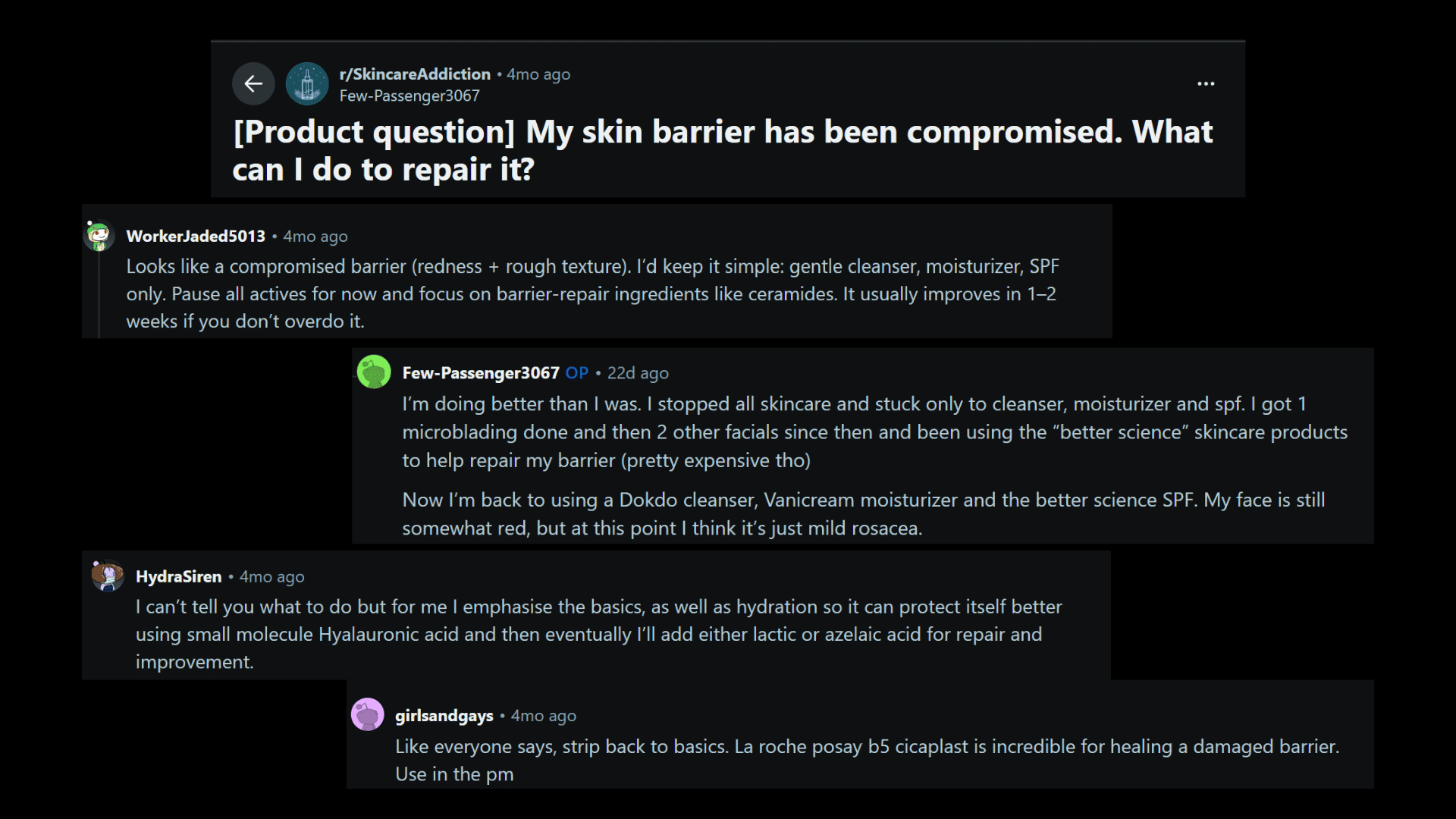
Reddit user shared that their barrier took close to a year to fully calm down. Their routine stayed simple: a gentle cleanser, a soothing moisturizer, daily SPF, and a nourishing oil layered on top.
Another commenter in the same thread pared things back even further, pausing cleanser altogether for a while and leaning on urea- and ceramide-rich barrier creams instead. Redness that had lingered for years slowly started fading.
Real experiences like these echo what dermatologists often say: skin barrier repair rewards patience over quick fixes, with consistency mattering more than constantly switching products.
Prevention Tips to Protect Your Skin Barrier
Maintaining a healthy skin barrier is easier when you focus on prevention rather than waiting for irritation to appear.
Small daily habits, such as using gentle products, protecting your skin from environmental stressors, and avoiding unnecessary damage, can help preserve moisture balance and reduce the risk of barrier disruption.
- Use a gentle, fragrance-free cleanser to avoid stripping natural oils.
- Apply moisturizer regularly to support hydration and strengthen the barrier.
- Wear sunscreen daily to protect against UV-related damage.
- Avoid over-exfoliating or combining too many strong active ingredients.
- Introduce new skincare products gradually to identify potential irritants.
- Keep your routine simple when your skin feels sensitive or stressed.
Consistent prevention helps your skin stay resilient and reduces the chances of recurring dryness, irritation, and sensitivity. A balanced routine focused on protection, hydration, and gentle care supports long-term skin barrier health.
When Should You See a Dermatologist?
Consider seeing a dermatologist if your skin barrier does not improve after several weeks of gentle, consistent care. Conditions such as eczema and contact dermatitis may require medical evaluation.
Professional advice is especially important when redness, burning, itching, or swelling becomes severe or keeps returning.
Painful cracks, oozing, bleeding, or signs of infection also warrant prompt evaluation.
A dermatologist can assess your skin, identify possible triggers, and determine whether conditions such as eczema, contact dermatitis, or rosacea may be involved. They can also recommend suitable treatments.
Avoid repeatedly experimenting with strong products when your skin remains irritated.
Getting personalized guidance can prevent further damage and help you choose a routine that supports long-term skin health.
Tip: Seek professional advice if irritation persists, worsens, or causes significant discomfort.
Winding Up
Skin barrier repair doesn’t require a complicated routine or a bathroom shelf full of products. Gentle care, consistent moisture, and fewer irritants can help stressed skin settle and feel comfortable again.
A damaged skin barrier can make everyday skincare frustrating, but small changes can make your routine easier to manage. Paying attention to what your skin tolerates may also help prevent repeated irritation.
Keep your routine gentle, moisturize regularly, protect your skin from the sun, and give it time before bringing strong actives back.
Simplify your skincare routine today and give your skin the calm care it needs to recover.
Have you dealt with a damaged skin barrier? Share what helped your skin in the comments.
Frequently Asked Questions
Can Dehydration Make Skin Barrier Problems Worse?
Yes. Not drinking enough fluids can contribute to overall dryness, although topical skincare and environmental factors often play a more direct role in barrier comfort.
Can Over-Exfoliating Damage the Skin Barrier?
Yes, over-exfoliating can damage the skin barrier by removing protective oils, causing dryness, redness, sensitivity, and irritation. Limiting exfoliation helps maintain healthy, balanced skin.
Does Aquaphor Repair Skin Barriers?
Yes, Aquaphor can support skin barrier repair by creating a protective layer that reduces moisture loss. Its occlusive formula helps protect dry, damaged skin while allowing the natural healing process to continue.