

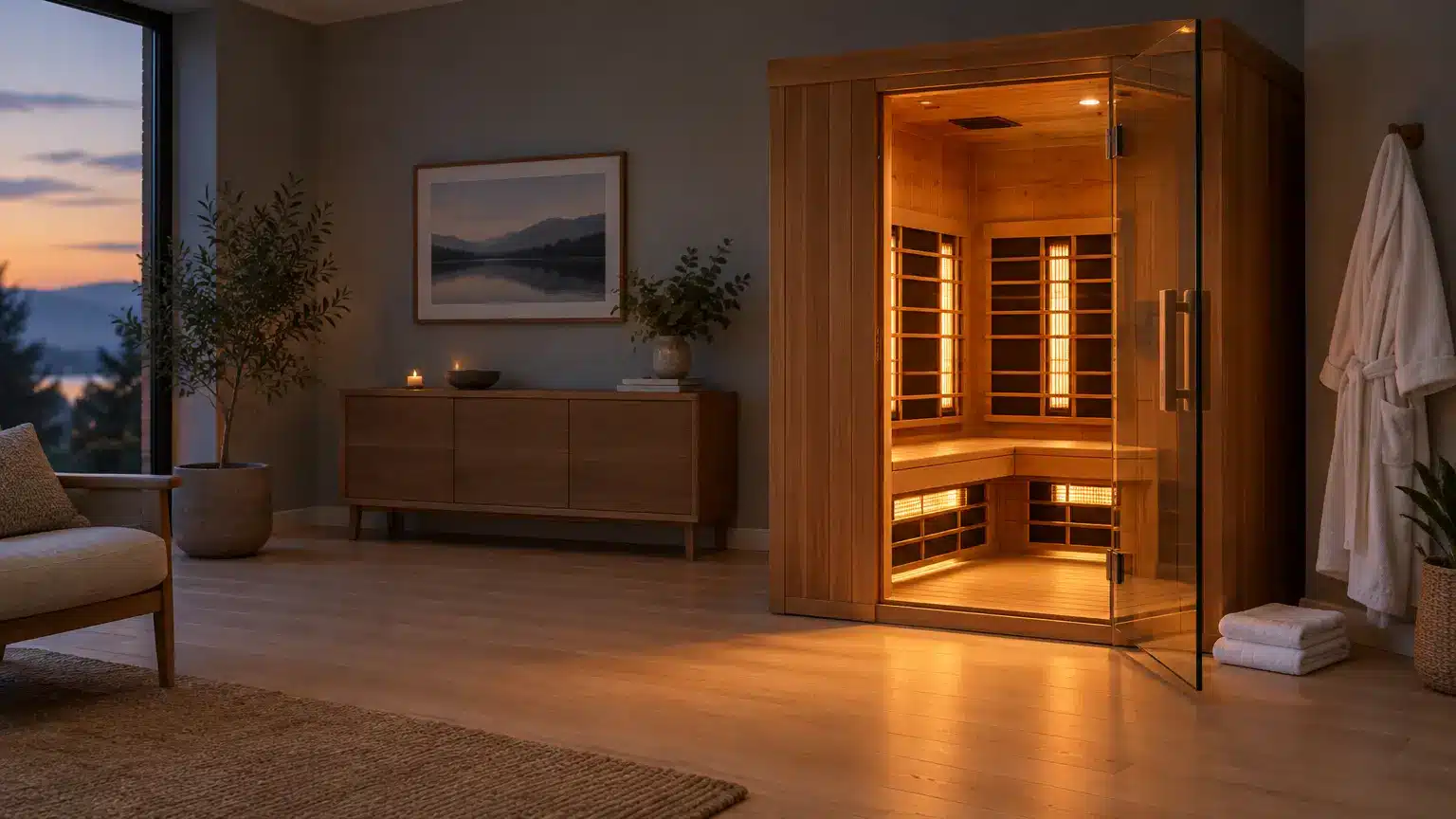
Your gym has one. Your favorite wellness influencer posts from inside one every Sunday. Now your neighbor mentions hers the way people talk about a new espresso machine. Infrared sauna cabins went from niche spa gear to a genuine home upgrade in a few short years, and the reasons are pretty simple once you look at the details. Here is the honest version: they are not magic, they are not a medical treatment, and they are not cheap. But for a lot of people they replace three things at once, a spa membership, a nightly wind down ritual, and a reason to stay off your phone for thirty minutes.
If you have been circling the idea of buying one, this guide walks you through how they work, what separates a good cabin from a frustrating one, and what to actually check before you hand over your card. Retailers like infrared sauna cabins specialists have made the category far more accessible than it was even a decade ago, which means the choice is now about quality, not availability.
What Actually Makes a Sauna Infrared
Traditional saunas heat the air around you until the room itself is scorching. Infrared cabins work differently. They use heating panels that emit infrared light, and that energy warms your body directly rather than the air in the room. You feel the heat sooner, and the ambient temperature stays noticeably lower.
That single design difference explains almost everything people like about them. You can sit in one for longer without that oppressive, hard to breathe feeling. You can read, listen to a podcast, or take a call if you really want to. And the cabin itself heats up in a fraction of the time a traditional stove based sauna needs, which matters a lot when you are squeezing a session into a weeknight.
The panels are the whole ballgame. Carbon based panels tend to produce a softer, more even heat. Ceramic panels generally run hotter and respond faster. Cheap cabins cut corners here first, and you feel it, because heat that hits one shoulder harder than the other turns a relaxing session into a fidget fest.
Where People Put Them (and Why That Decides Everything)
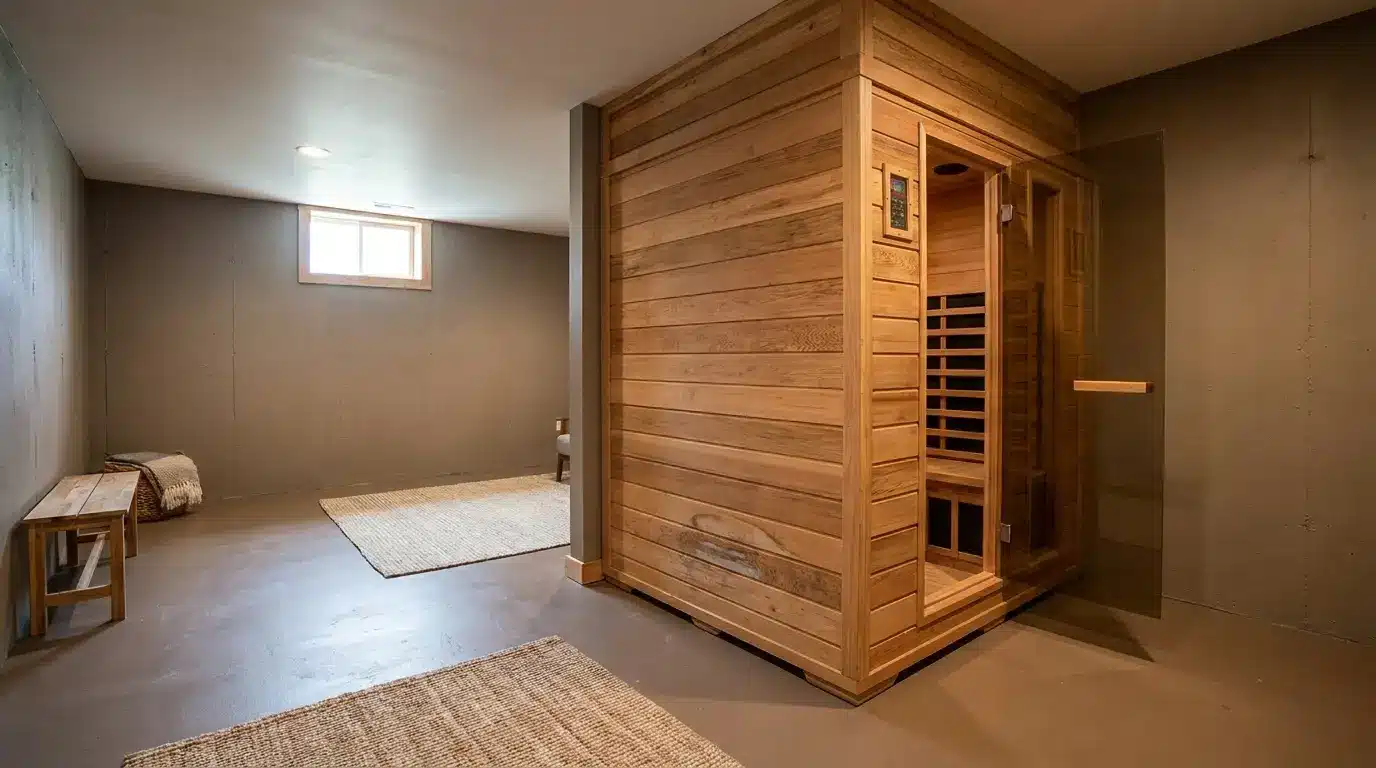
Most buyers fall into one of three setups. The bathroom or master suite, the basement or spare room, and the covered patio or garage. Each one changes what you should buy. A one person cabin fits in a corner of a large bathroom and becomes a genuine nightly habit because it is four steps from your bed. Two person cabins usually land in a basement or spare bedroom and get used by couples. Outdoor models need to handle humidity and temperature swings, so you pay more for the shell even when the heater is identical.
Measure twice, and measure the doorframe too. I have watched more than one person buy a beautiful two person cabin and then realize it will not clear the turn at the top of their staircase. Flat packed models exist for exactly this reason, and they solve a problem that no amount of enthusiasm can fix.
Do You Need a Doctor’s Note?
No, and be skeptical of anyone selling these as a treatment for a specific condition. What infrared cabins do is make you warm, and being warm can feel genuinely good on a stiff back or a stressful evening. That is a wellness claim, not a medical one, and it should stay in that lane. The CDC is a useful starting point for anyone who wants plain language guidance on heat exposure and how the body handles it, especially if you take medication or have a condition that changes how you respond to heat.
Here is my stance, and it is a firm one. If you are buying a cabin to fix a health problem, do not. If you are buying one because you want a reliable, pleasant way to unwind at home, go ahead and enjoy it. Those are two very different purchases, and only one of them ends well.
The Checklist I’d Use Before Buying
Run through these in order. Skipping any of them is how people end up with a large wooden box they never use.
- Panel type and placement. Ask how many panels, where they sit, and whether the back rest blocks them.
- Interior height for your tallest user. If your shoulders brush the ceiling, you will stop using it.
- Electrical load. Some units want a dedicated circuit. Confirm this with an electrician before delivery day, not after.
- Assembly reality. Two people, a few hours, and a decent drill. If that sounds miserable, pay for installation.
- Warranty on the heater, separately from the shell. This is the part that fails, and it is the part that is expensive.
- Return policy and delivery path. Know who moves it inside and who takes it back if it does not fit.
That dedicated circuit point trips up more buyers than any other. Heating panels pull real wattage, and a cabin sharing a circuit with a space heater or a hair dryer is asking for a breaker trip mid session. The Department of Energy publishes solid background on home electrical loads and efficiency if you want to understand what you are plugging in before you commit.
How to Actually Build the Habit
Buying the cabin is the easy part. Using it in February is the hard part.
My advice is to attach it to something you already do without thinking. Right after your evening shower. Right after you put the kids down. Right before you start dinner, with a timer running. Twenty to thirty minutes is plenty for most people, and consistency matters far more than duration.
Keep a towel, a water bottle, and a charged pair of headphones within arm’s reach of the door. A robe on a hook. The friction of walking to another room to grab things is what kills the habit, and it kills it fast. Set the cabin up so that sitting down in it is easier than not sitting down in it.
One more thing worth knowing: sleep researchers generally point out that a warm, quiet wind down period helps people transition into rest, while a hot shower right before bed can leave some people wired. Sources like the Sleep Foundation cover the basics of evening routines and temperature, and the takeaway is simple. Sauna early in the evening, not at the last minute.
What You’re Really Paying For
Strip away the marketing and a good infrared cabin is a well insulated wooden box with evenly distributed heat, safe wiring, and a door that seals. That is it. Everything else, the chromotherapy lights, the Bluetooth speakers, the app, is garnish. Nice garnish, occasionally, but garnish.
So put your budget into the heater, the panel layout, and the build quality, then let the extras go. A mid range cabin with excellent heat distribution will make you happier for years than a top trim model with uneven panels and a speaker that crackles.
The Bottom Line
Infrared sauna cabins are a legitimately great home upgrade for the right person. Someone with the floor space, the electrical headroom, and a genuine desire for a daily wind down ritual that does not involve a screen. If that sounds like you, the checklist above will keep you out of trouble.
If it does not, save your money and book a session at a local spa once a month instead. Which one are you, the person clearing a corner of the basement this weekend, or the person adding it to a list for next year?