
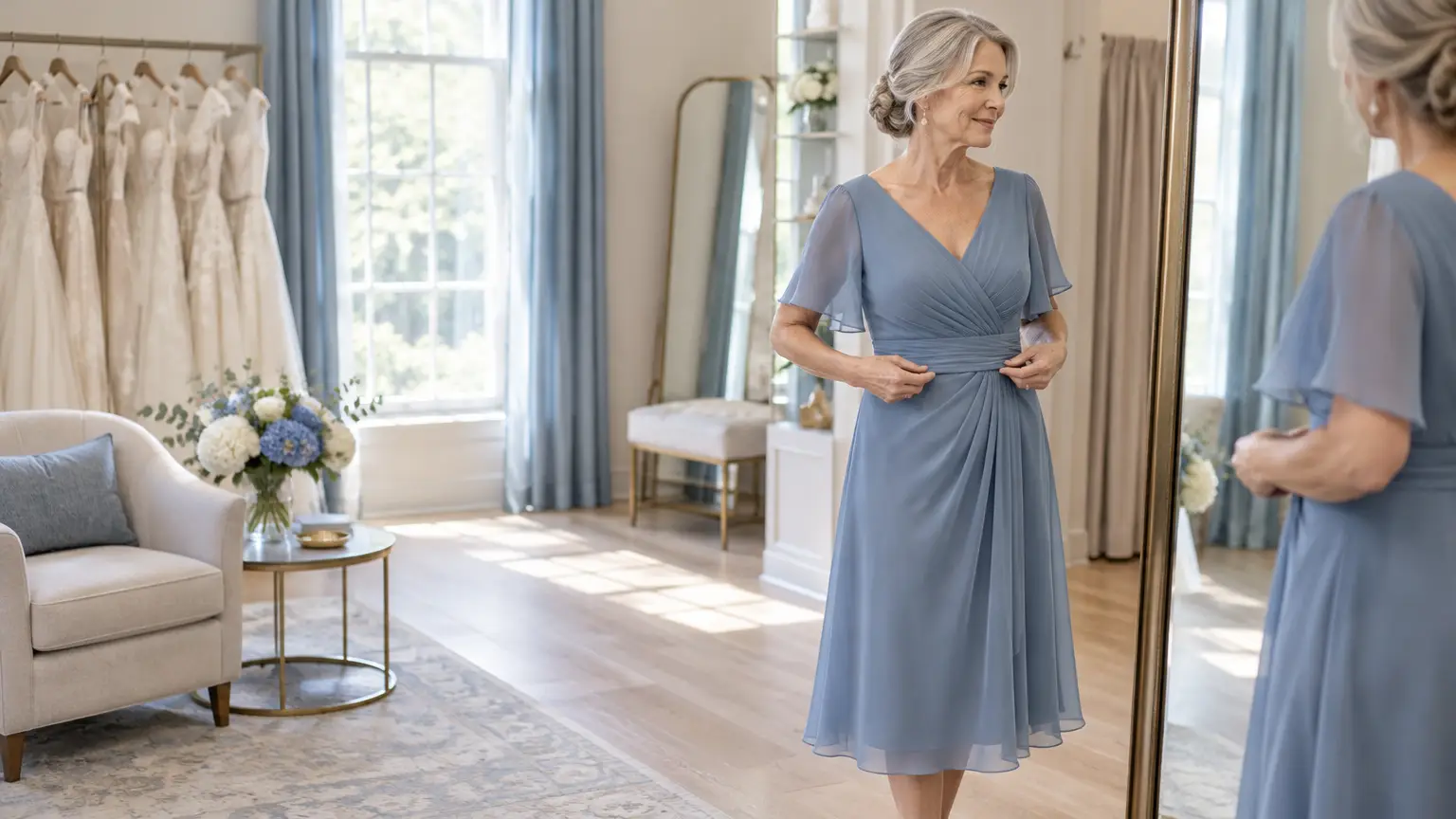
The mother of the bride should wear an outfit that suits the wedding’s dress code, complements the celebration and feels comfortable from the ceremony through the last dance. Yes, a floor-length gown can be lovely, but it isn’t the only option.
You don’t need to match the bridesmaids or squeeze into a style that feels unlike you. Start with the couple’s plans, then choose a look that makes you feel confident, polished and ready to enjoy the day.
Consider the Venue and Dress Code
The invitation gives you a starting point, but the venue helps fill in the details. A ballroom reception calls for a different approach than a daytime ceremony in a garden, after all.
For a black-tie wedding, a floor-length evening gown is generally the safest choice. For cocktail attire, consider a refined midi dress, an elegant knee-length style or a dressy pantsuit.
Consider the dress code, season and venue when choosing your outfit. Those details help narrow the search before you begin to compare mother of the bride gowns.
An outdoor setting also deserves practical attention. Think about uneven paths, warm sunshine or a chilly evening before committing to a long hem or heavy fabric.
Choose Colors Together Without Matching Exactly
Ask your daughter whether she has a color palette or any preferences for your outfit. A quick conversation can prevent confusion without turning your dress into another wedding-planning project.
Fashion guidance from AARP recommends checking with the bride about colors and prints before shopping. You can then explore shades you enjoy within those preferences rather than guessing what will work.
Navy, plum, sage and dusty blue are possible starting points, not mandatory choices. Avoid white, ivory or anything that could look bridal unless your daughter specifically welcomes it.
Fabric swatches can help you assess a shade before choosing your dress. Exploring chiffon-and-lace designs and three-quarter-sleeve options, for example, gives you several ways to potentially interpret the wedding’s style.
Before settling on a color, check these details:
- The bride’s preferences
- The bridesmaids’ dress colors
- The other mother’s planned outfit
Aim for coordination rather than identical dresses. Each mother can have a distinct look while still fitting the celebration.
Find a Silhouette That Feels Like You
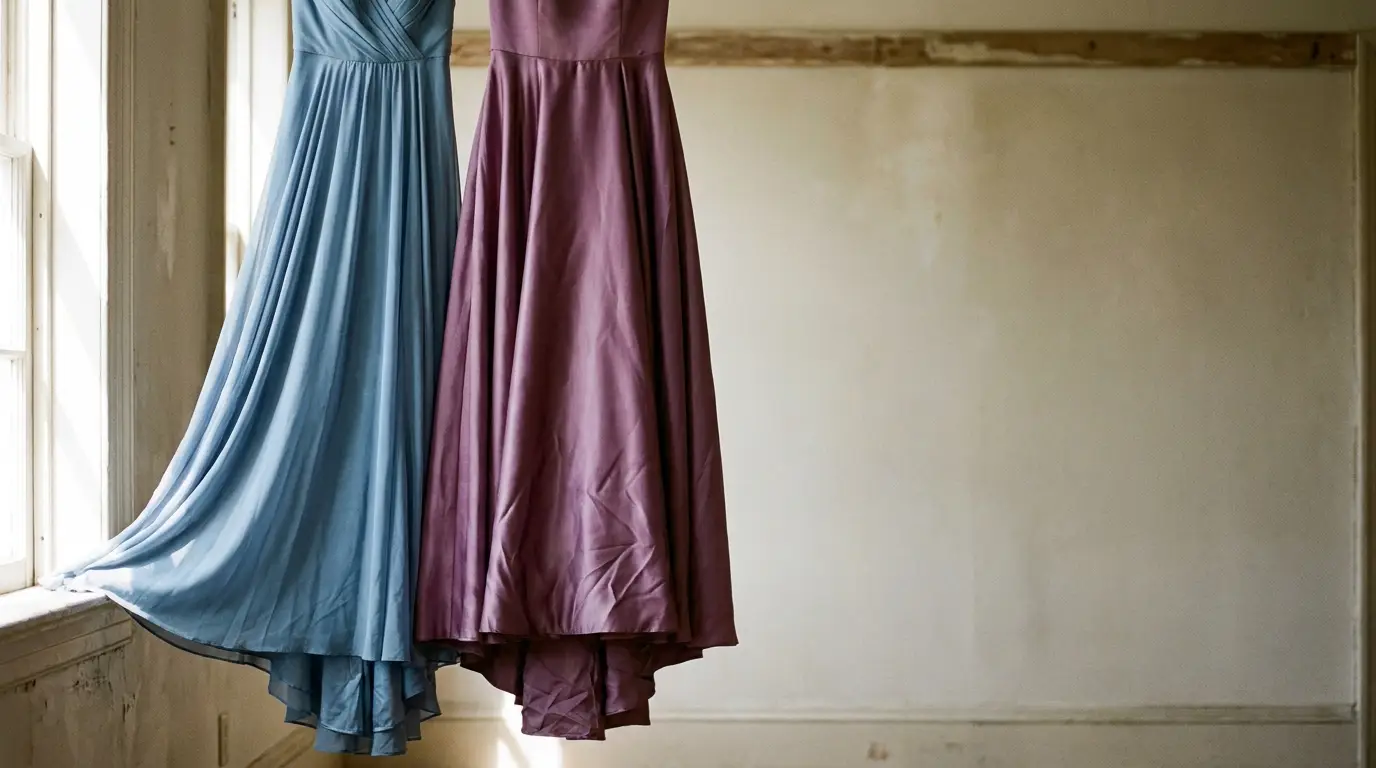
A flattering outfit should feel good when you move, not just when you stand in front of a mirror. Try several shapes rather than assuming you must wear a particular cut because of your age or body type.
Start With Your Favorite Features
Consider which details make you feel most comfortable and confident. You might love an open neckline, a defined waist or sleeves with room to move.
An A-line skirt can offer an easy fit through the hips, while a straighter silhouette may suit your preference for clean lines. Neither is automatically better; the right choice depends on the individual dress and how it feels on you.
Balance Fabric and Detail
Choose fabric with the setting and your comfort in mind. A flowing chiffon skirt creates a different effect from a structured satin gown.
If you enjoy embellishment, consider concentrating it around the neckline or sleeves. If you prefer simplicity, an interesting neckline or softly draped waist can provide detail without extensive beading.
Make Comfort Part of the Outfit
You’ll likely spend the day sitting, standing, greeting guests and posing for photographs. Your outfit needs to accommodate all of those moments without constant adjusting.
During a fitting, sit down, lift your arms and walk around. Check whether the neckline stays in place, the sleeves allow movement and the skirt gives you enough room for a comfortable stride.
Try the dress with the undergarments and shoes you plan to wear. A hem that looks right barefoot may need adjusting once you add heels.
Accessories should work just as hard as the dress. Choose shoes you’ve tested, earrings that don’t feel heavy and a small bag that holds your essentials.
If the celebration moves outdoors after sunset, plan a coordinating wrap or jacket. Treat it as part of the outfit so you won’t have to improvise at the last minute.
Give Yourself Time for the Finishing Touches
Once the wedding’s dress code and general palette are clear, start looking at options. Leaving room for delivery, fittings and alterations makes the process less stressful.
Ask about sizing and customization before ordering rather than assuming every dress offers the same choices.
Keep the final fitting focused on movement and proportion. Check the hem with your wedding shoes, then try the complete outfit together so nothing feels like an afterthought.
Feel Like Yourself on Your Daughter’s Wedding Day
The answer to what the mother of the bride should wear comes down to the elements discussed above. And remember: a coordinated outfit that lets you move easily will serve you better than a trend you don’t enjoy.
Hopefully this article has been useful! If so, be sure to explore some of our other insightful posts.