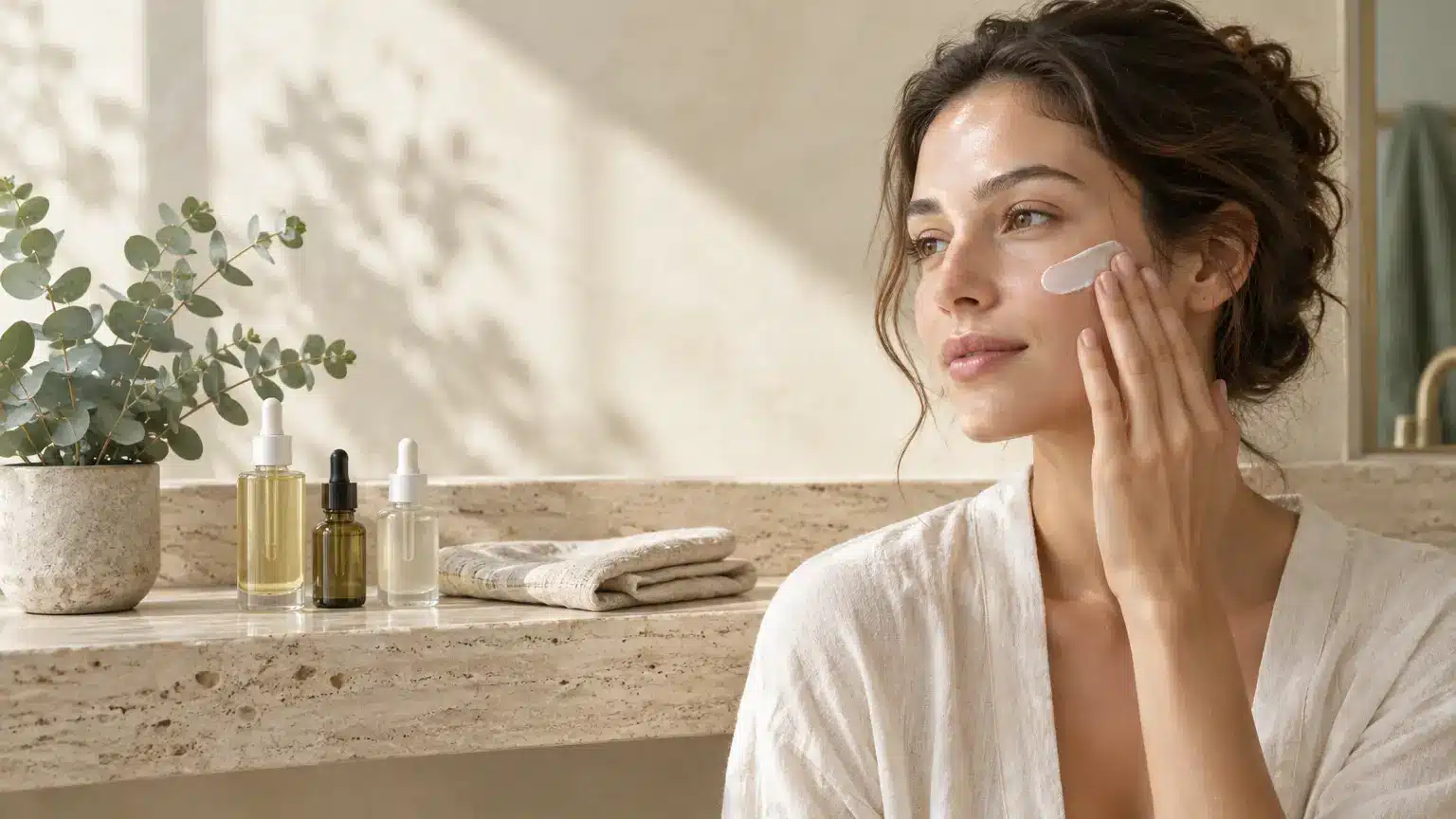

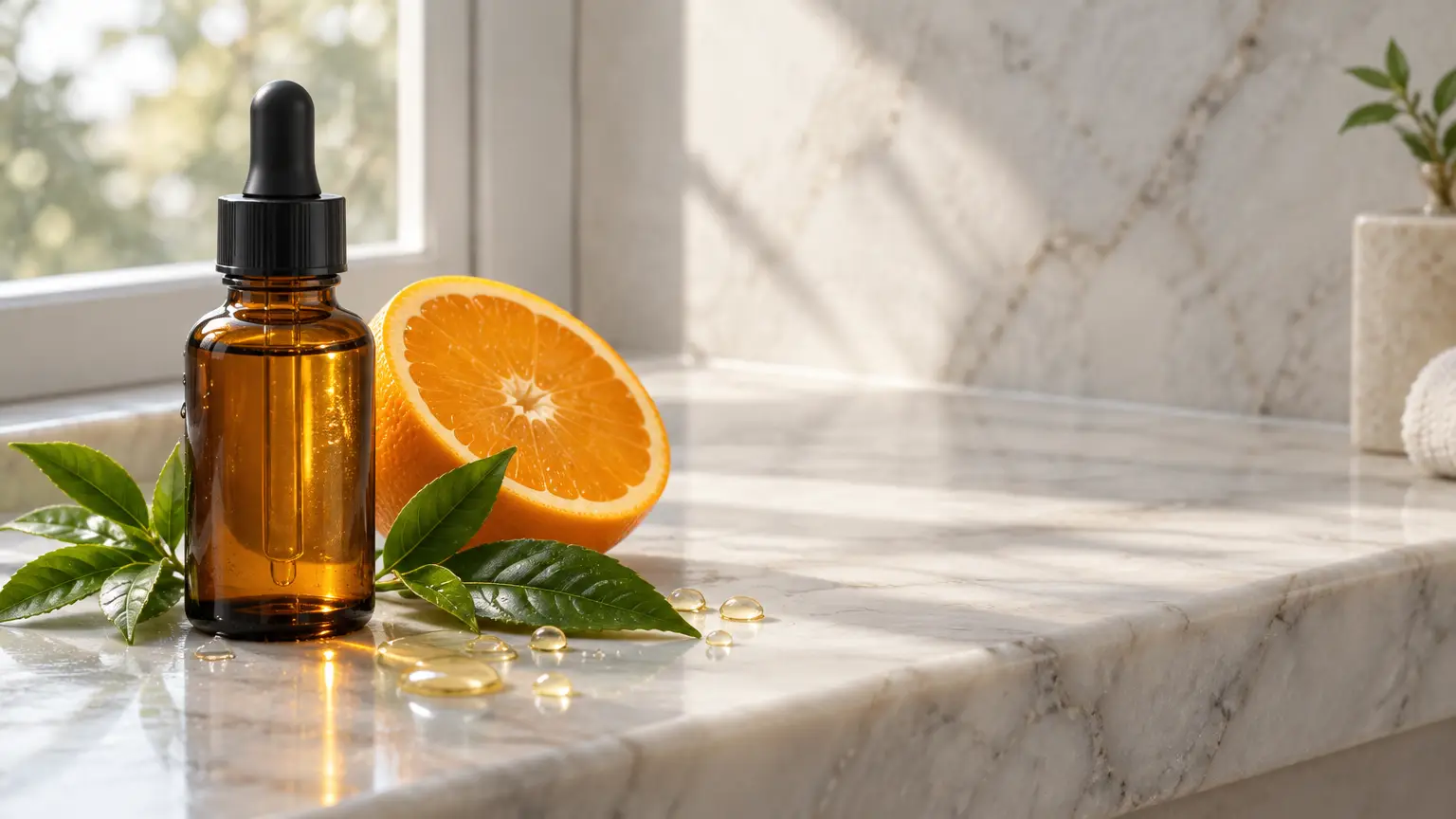
Skin faces daily stress from ultraviolet radiation, air pollution, smoke, and temperature changes. These exposures generate free radicals, unstable molecules that damage lipids, proteins, and genetic material within skin cells. Antioxidants help control this process by donating electrons without becoming unstable themselves. A well-planned routine pairs antioxidant products with sunscreen, gentle cleansing, and regular moisturization. Knowing how these ingredients work makes daily product choices more practical and leads into the protection steps that follow.
Why Oxidative Stress Matters
Free radicals form when environmental stressors alter molecules in the skin. Ultraviolet light is a major source, while pollution and cigarette smoke add oxidative pressure. Heat and inflammation also increase cellular stress. Learning how antioxidants in skincare work helps readers choose formulas that support the skin’s natural defenses without treating antioxidants as a substitute for daily sunscreen. The right product also depends on ingredient stability, concentration, packaging, and regular use.
Oxidative stress affects the skin barrier, which helps retain water and keep irritants out. Repeated damage can leave skin dry, rough, or sensitive. It also contributes to visible photoaging, including uneven tone, fine lines, and reduced firmness.
Antioxidants do not create an invisible shield over the face. They work within a formula and on the skin’s surface to neutralize reactive molecules before those molecules cause further damage. Their performance depends on the ingredient, concentration, stability, packaging, and consistent application.
How Antioxidants Protect the Skin
A free radical lacks a stable electron, so it reacts with nearby molecules. That reaction creates another unstable molecule and starts a chain reaction. An antioxidant interrupts the chain by donating an electron to the free radical.
This process limits oxidation in skin lipids and proteins. It also helps protect the ingredients within a formula from breaking down. A stable product matters because an oxidized antioxidant no longer performs its intended function and can irritate the skin.
Antioxidants work best as one part of a broader routine. Broad-spectrum sunscreen reduces ultraviolet exposure, while a moisturizer supports the skin barrier. Cleansing removes particles from the skin without adding unnecessary dryness.
Ingredients With Different Roles

Different antioxidants work in different ways, so the right ingredient depends on what the skin needs.
Vitamin C and Vitamin E
Vitamin C is a water-soluble antioxidant that helps neutralize free radicals and supports collagen production. It also improves the appearance of uneven skin tone with consistent use. L-ascorbic acid is a well-studied form, but light, air, and water affect its stability.
Vitamin E is a fat-soluble antioxidant that helps protect skin lipids from oxidation. Formulators often combine vitamin C and vitamin E because each works in a different part of the skin’s surface environment. People with sensitive skin should introduce concentrated products gradually.
Botanical Antioxidants
Green tea contains polyphenols that help defend skin against oxidative stress. Resveratrol and ferulic acid also appear in antioxidant formulas because they support protection against environmental damage.
Plant origin does not guarantee gentleness or effectiveness. Ingredient quality, concentration, preservation, and packaging determine how well a product performs. A patch test helps identify irritation before regular facial use.
How to Add Antioxidants to a Routine
Morning use suits many antioxidant products because the skin faces environmental exposure during the day. After cleansing, a serum can be applied before moisturizer and broad-spectrum sunscreen with a sun protection factor of 30 or higher.
Sunscreen remains essential because antioxidants do not block ultraviolet radiation. Reapplication becomes necessary during extended outdoor exposure, sweating, or swimming. Hats, shade, and protective clothing add physical protection.
At night, gentle cleansing removes sunscreen, makeup, and particles. A moisturizer then supports the skin barrier while the skin rests. Using one antioxidant product consistently is more useful than layering several unfamiliar formulas at once.
What to Check on the Label
Look for a named antioxidant near the beginning of the ingredient list, along with packaging that limits exposure to air and light. Pump containers, tubes, and opaque bottles usually protect sensitive formulas better than open jars.
Stop using a product that causes persistent burning, swelling, or a rash. A dermatologist can help identify the cause, especially if irritation continues after the product is removed.
Conclusion
Antioxidants help limit molecular damage caused by daily environmental exposure, but they work best alongside sunscreen and barrier-supporting care. Vitamin C, vitamin E, green tea, and other antioxidant ingredients have distinct functions, so formula quality matters as much as the ingredient name. The practical next step is simple: choose one stable antioxidant product, apply it consistently, and track changes in tone, texture, and sensitivity for several weeks. Consistency gives the routine a fair test.