

Apartment security has become much more complicated than installing a few cameras at the front entrance. A single community may need visibility across parking garages, lobbies, elevators, package rooms, courtyards, and multiple buildings, often with hundreds of residents and visitors moving through these areas every day.
The numbers show why better management matters. The FBI estimated that U.S. property crime fell 8.1% in 2024, yet millions of offenses still occurred nationwide. Only 15.9% of property crimes were cleared by arrest or exceptional means. Package theft creates another challenge. A 2025 survey found that one in four Americans had experienced package theft, while apartment and condo residents were victimized 3.5 times more often than people in single-family homes during the survey’s most recent three-month period.
For apartment operators, the issue is not simply having cameras. It is being able to manage them efficiently, find important footage quickly, and maintain visibility across the entire property.
That is where cloud video management is changing residential security. In this article, we will look at how a cloud-based VMS can simplify camera management while improving oversight of entrances, parking areas, packages, and shared spaces.
1. Bringing Apartment Cameras Into One Manageable System
A typical apartment property does not have just one area requiring attention. There may be cameras at the main entrance, leasing office, parking garage, package room, elevator lobby, pool, and other shared spaces.
Larger communities may have several buildings, making traditional surveillance even more complicated.
With conventional systems, each building or property may depend on its own recorder, server, software, and local configuration. This can create a fragmented security environment where property teams need to physically access equipment or switch between systems to investigate an incident.
Cloud-based video management centralizes much of this work.
Instead of thinking about each recorder as an independent system, authorized staff can manage cameras through a centralized interface. For apartment operators managing several buildings or properties, this can simplify routine tasks such as:
- Viewing live cameras
- Reviewing recorded footage
- Managing user permissions
- Checking camera health
- Applying retention policies
- Investigating incidents remotely
Centralization is particularly valuable for multifamily operators because security responsibilities are rarely limited to a single room or building. Regional managers and authorized security personnel may need visibility across several communities without physically traveling between them.
2. Giving Entrances Better Security Visibility
Apartment entrances experience a constant mix of residents, guests, contractors, delivery workers, maintenance teams, and prospective tenants.
That makes them natural priorities for surveillance.
The challenge with conventional recording is that footage often becomes useful only after somebody reports a problem. A resident may tell management that an unknown person followed them through a secured door, for example, and staff then have to determine when the incident happened and search the appropriate recorder.
A modern VMS can make that process more manageable by bringing live and recorded video into one environment.
For a community with several entrances, property teams can organize cameras logically and give authorized personnel remote access when needed. This can be particularly helpful outside leasing-office hours, when fewer employees are physically present.
Cloud systems can also make it easier to connect video management with a broader security strategy. Entrances still need good lighting, reliable locks, access control, and clear visitor procedures. Cameras add visual context to those measures rather than replacing them.
The result is a more complete picture of what is happening at the points where residents and visitors enter the property.
3. Improving Oversight of Parking Areas
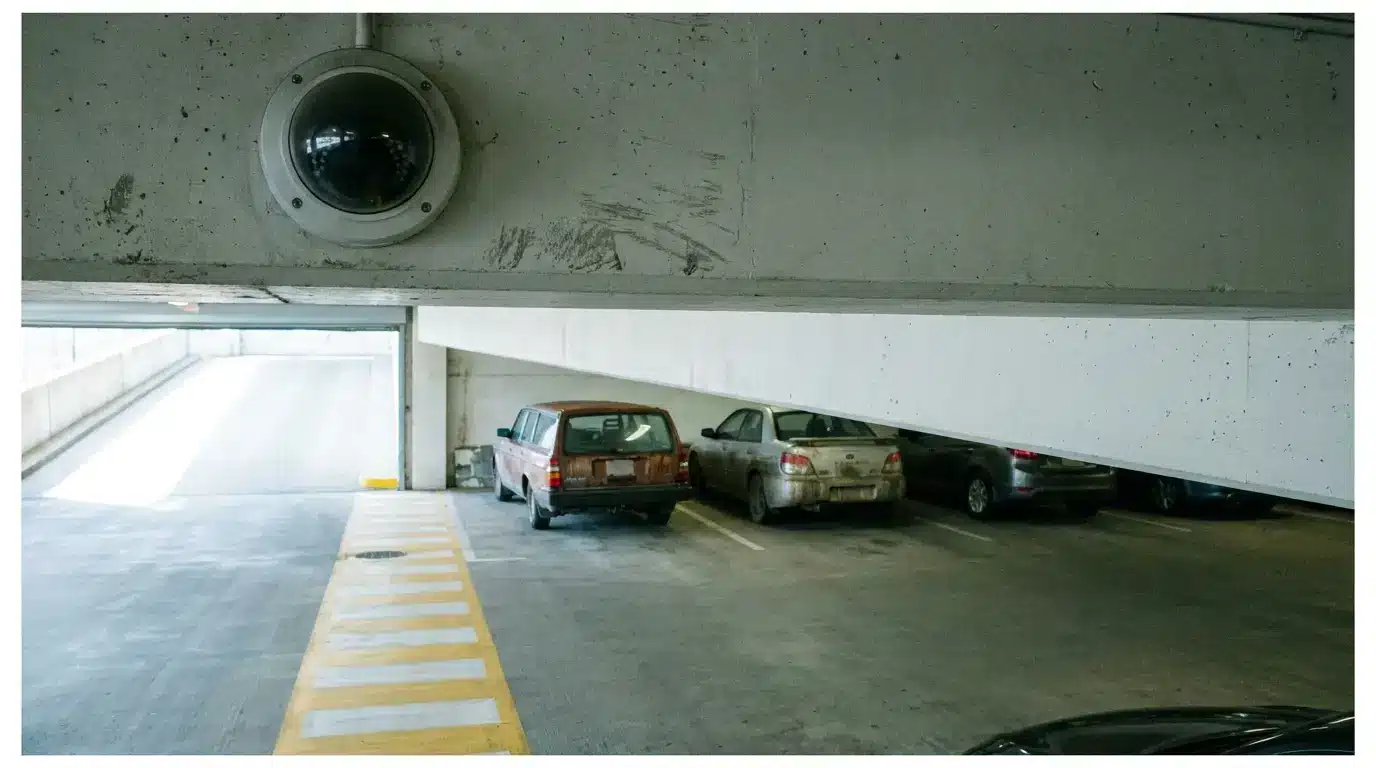
Parking lots and garages are difficult spaces to monitor effectively. They can cover large areas, contain blind spots, and experience significant activity during early mornings and late evenings.
Vehicle-related crime also remains relevant despite recent improvements. FBI data shows motor vehicle theft decreased substantially across U.S. population groups from 2023 to 2024, including declines ranging from 16.2% to 26.9% depending on the population group.
For apartment managers, a VMS can make parking surveillance easier to use rather than simply increasing the number of cameras.
Imagine a resident reporting vehicle damage that occurred sometime overnight. Instead of visiting a local recorder or manually navigating disconnected systems, an authorized manager can access relevant footage through the centralized video platform.
Camera placement remains critical. Coverage may be particularly useful around:
- Vehicle entrances and exits
- Pedestrian routes
- Elevators and stairwells
- Garage access doors
- High-traffic parking zones
The advantage of centralized video is not that it can prevent every incident. Rather, it can make parking areas easier to monitor, investigate, and manage as part of the wider apartment security system.
4. Moving From Traditional Recorders to Smarter Cloud Management
This is where the distinction between traditional surveillance and a cloud based VMS becomes especially important. A cloud VMS can centralise camera configuration, permissions, health monitoring, footage access, and other functions rather than relying exclusively on locally managed recorders. Modern systems can also introduce AI-assisted search and alerts that make large amounts of video easier to investigate.
Coram, for example, is one platform that illustrates this approach. According to the company’s 2026 overview, Coram combines video surveillance, access control, and emergency management in a cloud-based security platform. It works with IP cameras and includes AI-powered and natural-language search, real-time proactive threat alerts, hybrid storage, license plate recognition, and centralized access policy capabilities.
For an apartment operator, the broader takeaway is not about adding technology simply for the sake of it. It is about reducing fragmentation.
If cameras across several buildings can be accessed and administered through a common environment, security teams have fewer isolated systems to manage. Existing compatible cameras may also be useful when moving toward a cloud model, potentially avoiding an unnecessary full replacement of the surveillance infrastructure.
That can make modernization more practical for established apartment communities.
5. Making Package Areas Easier to Protect and Investigate
Package rooms have become high-value areas within apartment buildings.
The National Apartment Association reported in 2025 that 95% of surveyed residents said knowing their package would remain secure until they could retrieve it was important. More than 90% of residents with access to parcel lockers used them weekly and received at least one package through the system.
Package theft statistics make the issue even clearer. Research published in 2026 based on an October 2025 survey estimated that stolen packages represented $8.2 billion in online orders over the previous year, with an average stolen package worth approximately $222.
Video cannot solve package theft by itself, but it can strengthen a larger package-management strategy.
For example, cameras covering appropriate package-room entry points can help management determine when someone entered, when a delivery was made, and what happened around the time a parcel disappeared.
Centralized footage access can also speed up investigations. Instead of locating a specific recorder and manually retrieving video, authorized staff can review the relevant camera remotely through the VMS.
The strongest approach combines video with controlled package-room access, parcel lockers where practical, resident notifications, good lighting, and clear delivery procedures.
6. Monitoring Common Spaces Without Creating Unnecessary Complexity
Apartment buildings contain numerous shared spaces that may require different levels of security.
Lobbies may be busy throughout the day. Fitness centers might operate early in the morning or late at night. Pools and courtyards have their own operating hours. Elevators and hallways connect private residences with public areas.
A centralized VMS can help property teams organize these cameras without treating each area as a separate surveillance project.
This becomes particularly useful when management needs to investigate an event across multiple cameras. Someone entering through a lobby, for instance, might later appear near an elevator or another common area. Having those cameras accessible through the same platform can make the investigation easier.
However, residential monitoring requires thoughtful boundaries.
Apartment communities are homes, not purely commercial facilities. Camera placement should focus on legitimate common-area security needs, while private spaces should remain private. Operators also need policies governing who can access footage, how long recordings are retained, and when video may be shared.
Technology should make apartment security easier to manage without making residents feel unnecessarily monitored.
7. Making Multi-Property Security Easier to Scale
Cloud management becomes even more useful when an apartment operator manages multiple communities.
Traditional systems can create a situation where every property has different servers, software versions, permissions, and maintenance requirements. As a portfolio expands, that complexity grows with it.
Cloud-based platforms can give authorized teams a centralized way to manage distributed camera environments. According to the Coram cloud VMS overview, cloud systems can allow policies such as retention periods, user permissions, and updates to be managed centrally rather than independently at every location.
This can help multifamily operators standardize security practices across properties.
A regional manager, for example, may need to review an incident at one property while a security employee investigates an event at another. Centralized access can make that possible without requiring both people to be physically present at each community.
Scalability also matters during acquisitions or new construction. Instead of building an entirely separate surveillance environment every time another apartment property is added, operators can plan around a common management architecture.
Key Takeaways
- Apartment security involves more than entrances. Parking areas, package rooms, elevators, lobbies, and other shared spaces all require thoughtful security planning.
- Centralized video management reduces fragmentation. Property teams can manage cameras and footage through a common environment rather than treating every recorder or building as an isolated system.
- Package security deserves special attention. In a 2025 survey, apartment residents experienced package theft 3.5 times more often than people in single-family homes.
- Cloud systems can simplify multi-property management. Remote access and centralized administration are particularly useful for multifamily operators responsible for several buildings or communities.
- AI can make recorded video easier to use. Search and event-based capabilities can reduce the amount of time required to locate relevant footage.
- Privacy remains essential. Apartment operators should carefully manage camera placement, permissions, cybersecurity, footage retention, and resident expectations.
FAQs
What is a cloud-based VMS?
A cloud-based video management system is software used to manage surveillance cameras, footage, permissions, and related security functions through cloud-connected infrastructure rather than relying entirely on locally managed servers and recorders.
Why is cloud VMS useful for apartment buildings?
Apartment properties often have cameras distributed across entrances, parking areas, package rooms, lobbies, and shared amenities. Centralized management can make those cameras easier to access, organize, maintain, and investigate.
Can a cloud VMS work with existing apartment cameras?
It depends on the platform and camera models. Some cloud VMS platforms support existing IP cameras, which may allow apartment operators to modernize without replacing every camera.
Is cloud video useful for multiple apartment properties?
Yes. Centralized administration can be especially valuable for owners and management companies overseeing multiple communities because authorized personnel can access and manage distributed camera environments remotely.
Does cloud VMS eliminate the need for other security measures?
No. Video management should complement controlled entrances, access control, lighting, secure package areas, staff procedures, and appropriate physical security.
Conclusion
For apartment communities, the real challenge is no longer simply deciding whether to install cameras. It is deciding how to make dozens or even hundreds of cameras useful without creating an increasingly complicated security system.
Cloud-based video management provides one answer by bringing footage, camera administration, remote access, and increasingly intelligent search tools into a more centralized environment.
That can make a practical difference at the places residents interact with every day, from the building entrance and parking garage to the package room and shared amenities.
The strongest residential security strategy still requires more than software. Good lighting, secure doors, sensible access policies, privacy protections, and responsive property management remain essential.
But as apartment portfolios become larger and resident expectations around security increase, the bigger question is becoming clear: Is a collection of disconnected cameras still enough, or should residential video security operate as one coordinated system?