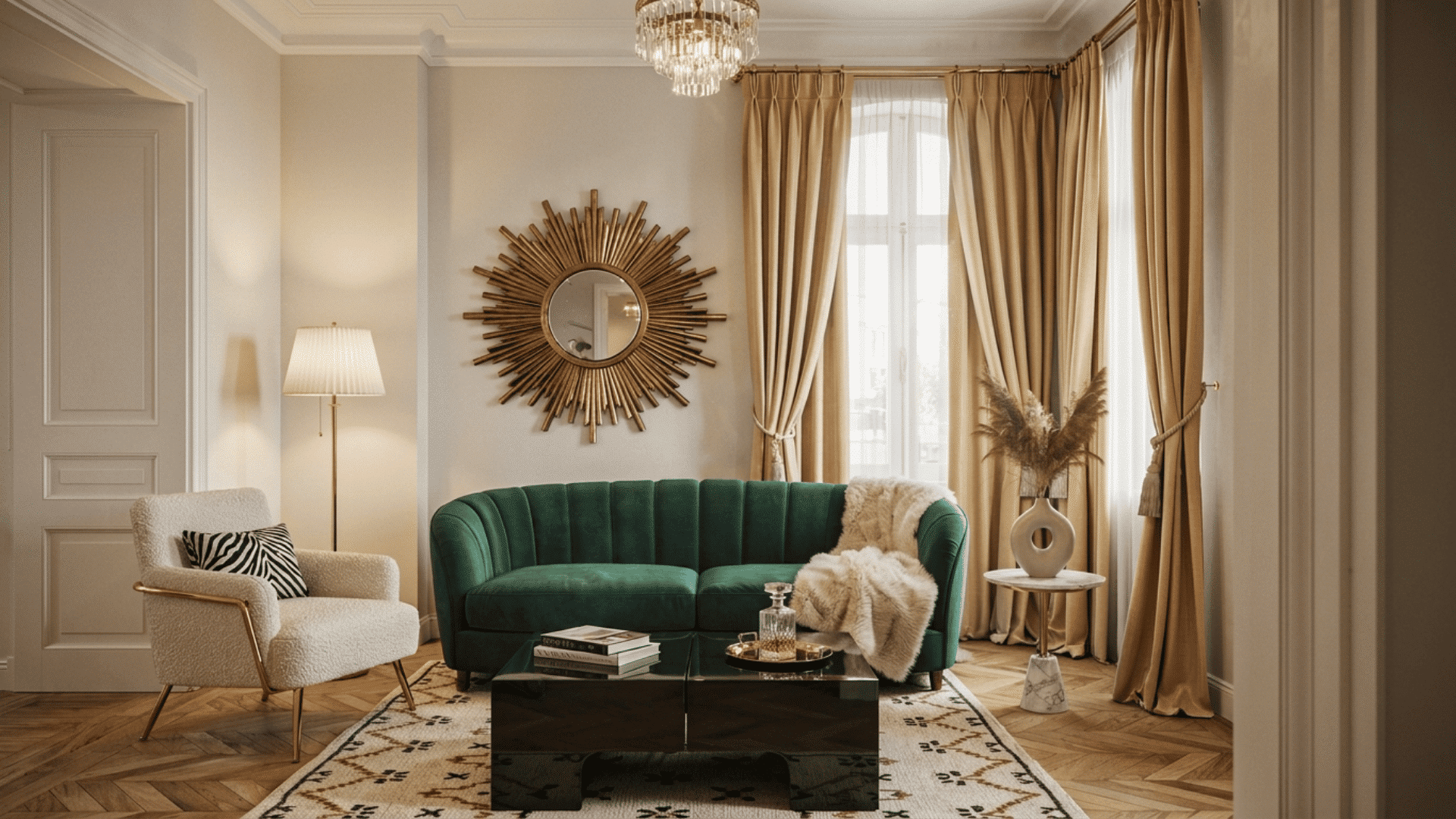
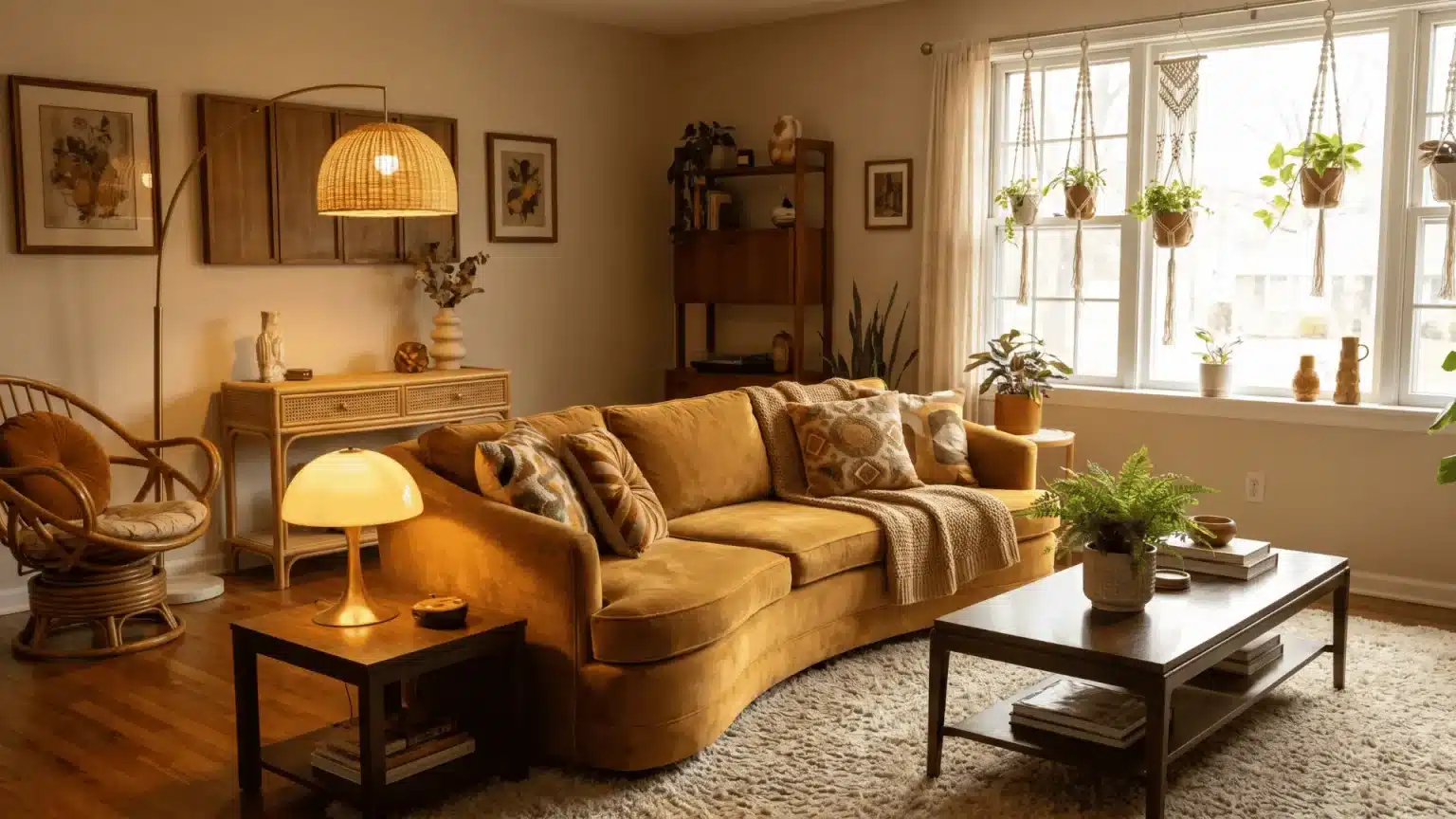
A retro-inspired home does not need to look outdated or overly themed. The real challenge is finding the right balance between vintage character and a space that still feels comfortable for modern living.
A retro 70s house interior uses warm colors, natural textures, curved furniture, and relaxed styling to create inviting spaces rather than overly polished ones.
In many homes, even small details like walnut finishes, soft lighting, or woven accents can noticeably change the atmosphere without requiring a full renovation.
Not every 70s trend works well today, which is why a more balanced approach matters.
What Is a Retro 70s House Interior?
A retro 70s house interior is a style based on design trends from the 1970s. It uses warm colors, natural materials, soft textures, and relaxed furniture to create comfortable spaces.
The focus is on everyday living, with cozy seating and a casual feel rather than a perfect or formal look.
Compared to minimal interiors, this style uses more color, texture, and detail.
It remains popular today because it makes homes feel warm, personal, and easy to live in.
Key Elements of a Retro 70s House Interior
From earthy tones to curved furniture and bold wallpaper, these are the defining features that make a 70s-inspired interior instantly recognizable and endlessly charming.
1. Earthy Color Palettes
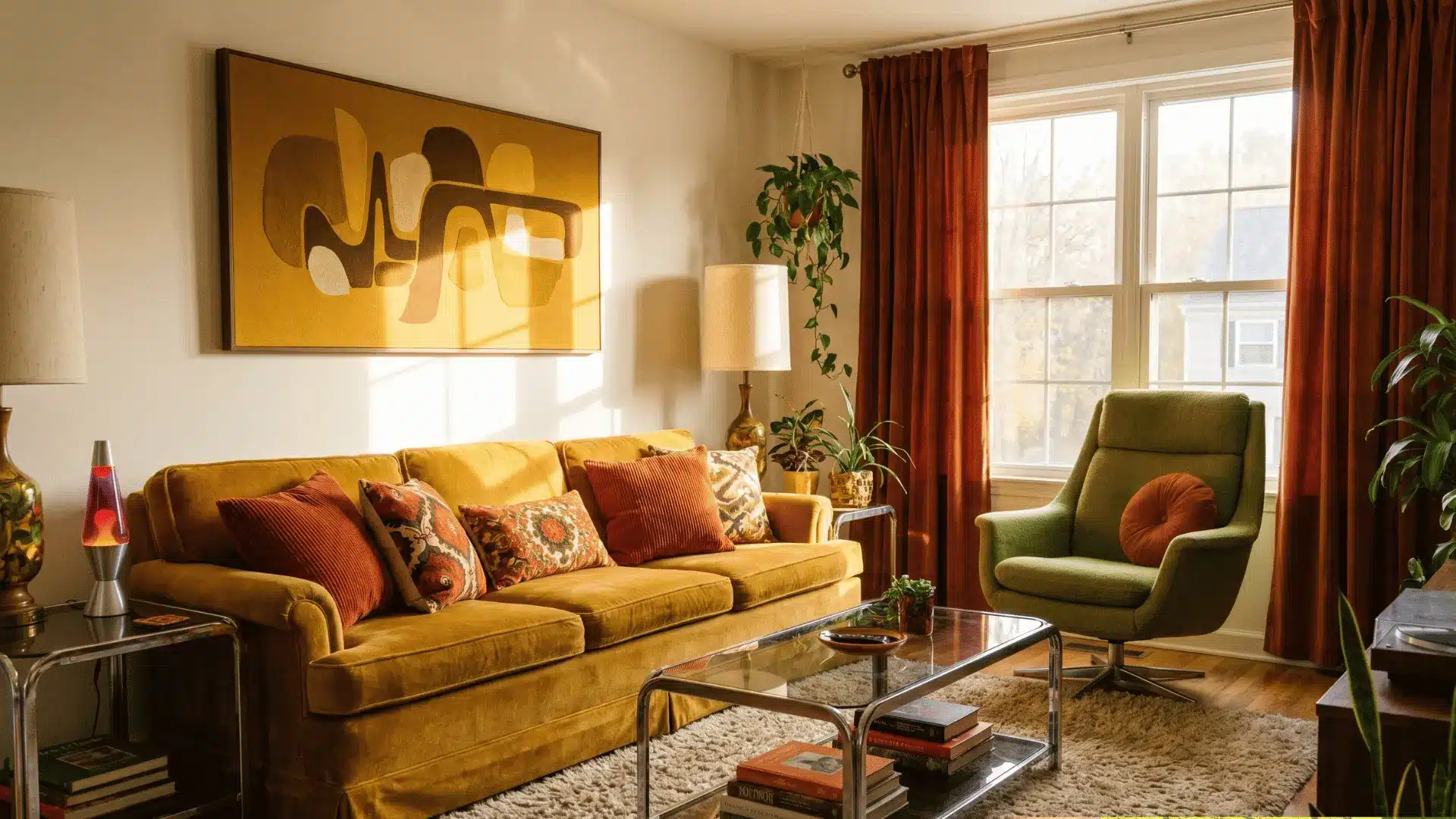
Color was one of the biggest features of 70s interiors. Warm and earthy shades made rooms feel cozy, bold, and welcoming.
Popular choices included mustard yellow, avocado green, burnt orange, brown, rust, and harvest gold. These tones work well on walls, cushions, bedding, curtains, or kitchen accents.
2. Warm Wood Finishes and Natural Materials
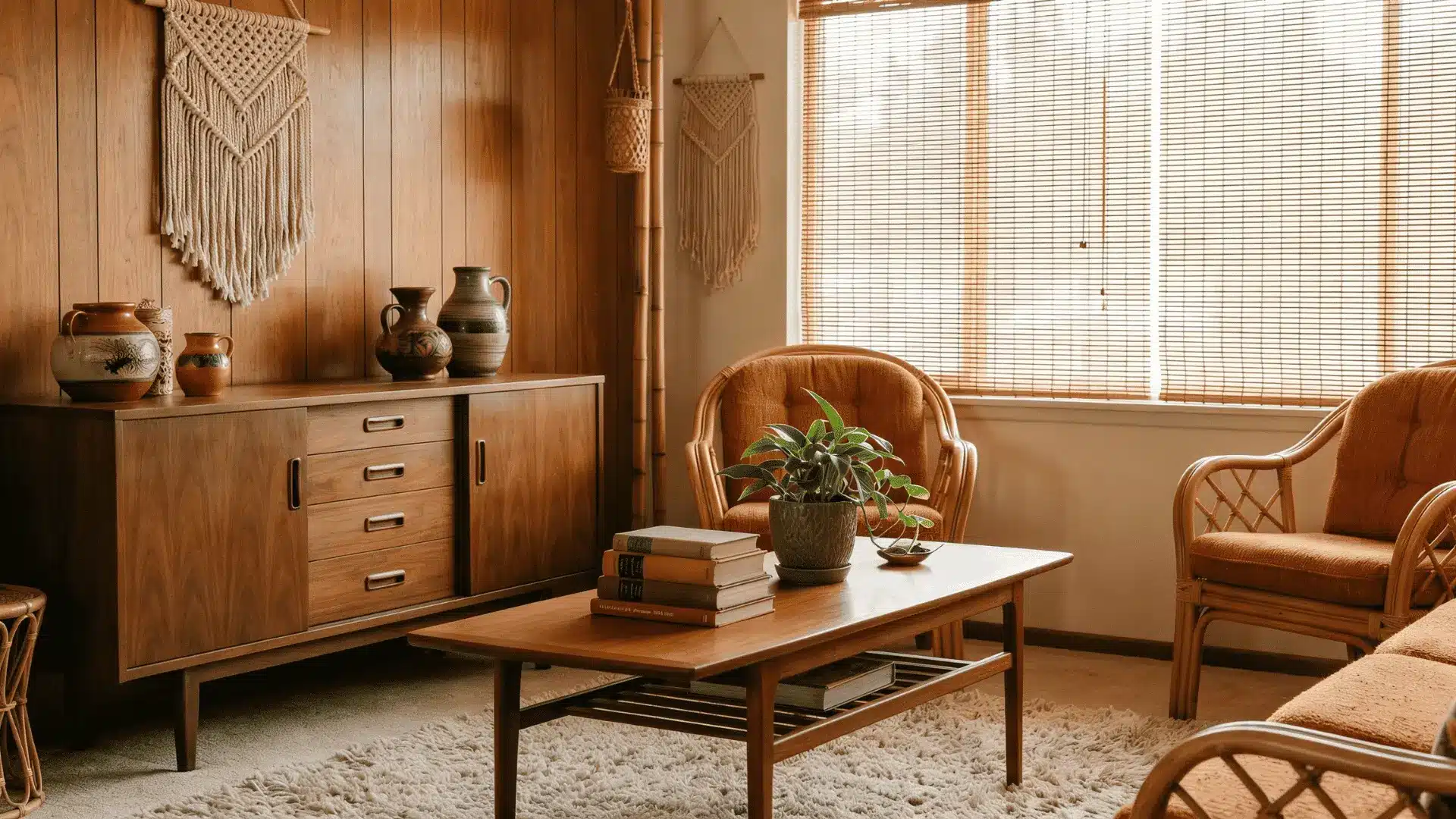
Wood and natural textures were key elements in 70s interiors, adding warmth and depth. Walnut furniture, teak cabinets, and wood paneling were widely used across spaces.
Materials like rattan, cane, and bamboo, along with woven accents, added an organic touch and balanced the overall look.
3. Cozy Layered Textures
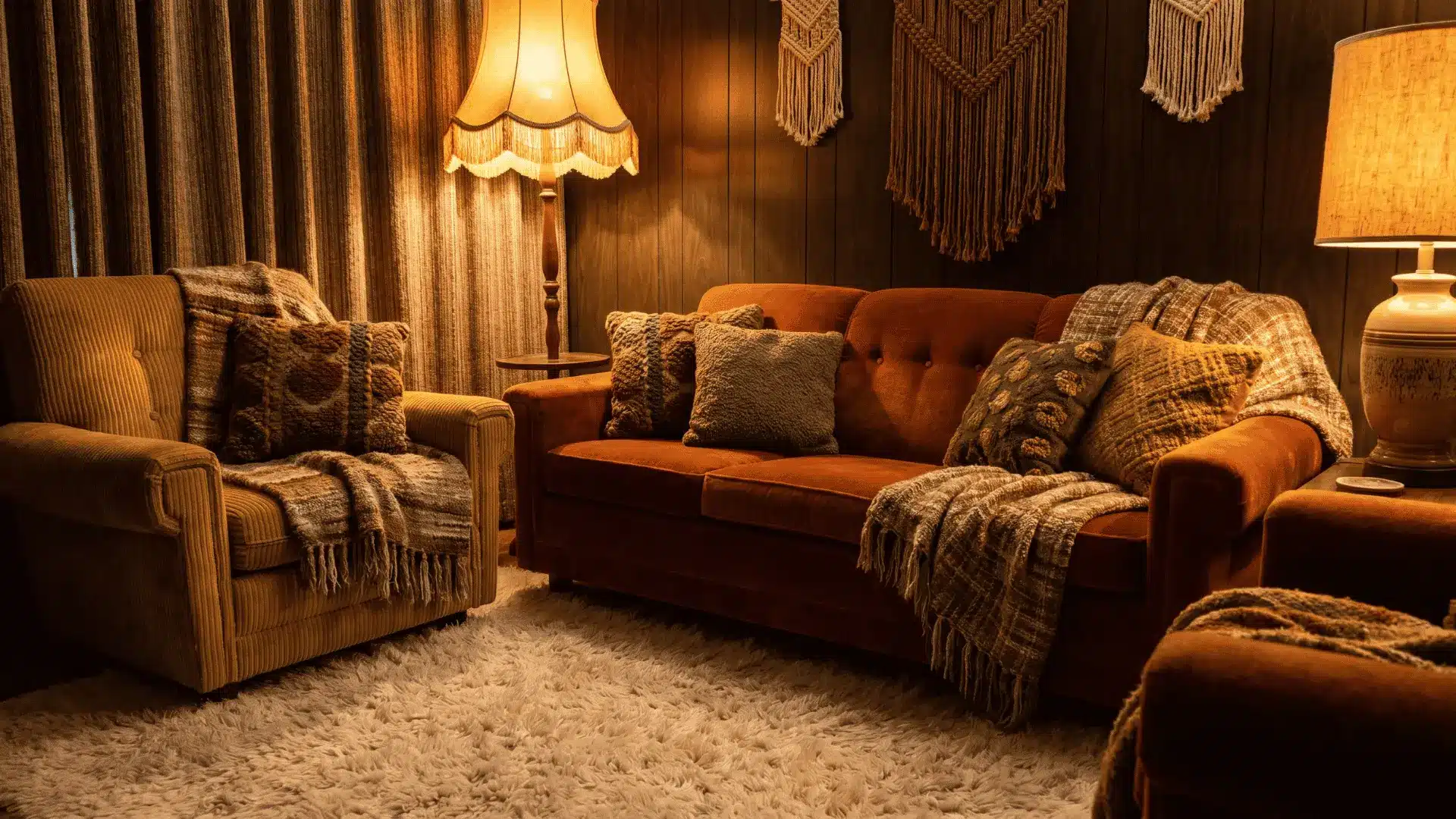
Texture helped balance the strong colors of the decade. Soft surfaces made spaces feel relaxed and comfortable.
Velvet sofas, corduroy chairs, shag or plush rugs, and woven throws or cushions are perfect ways to recreate this look.
4. Curved and Low Furniture
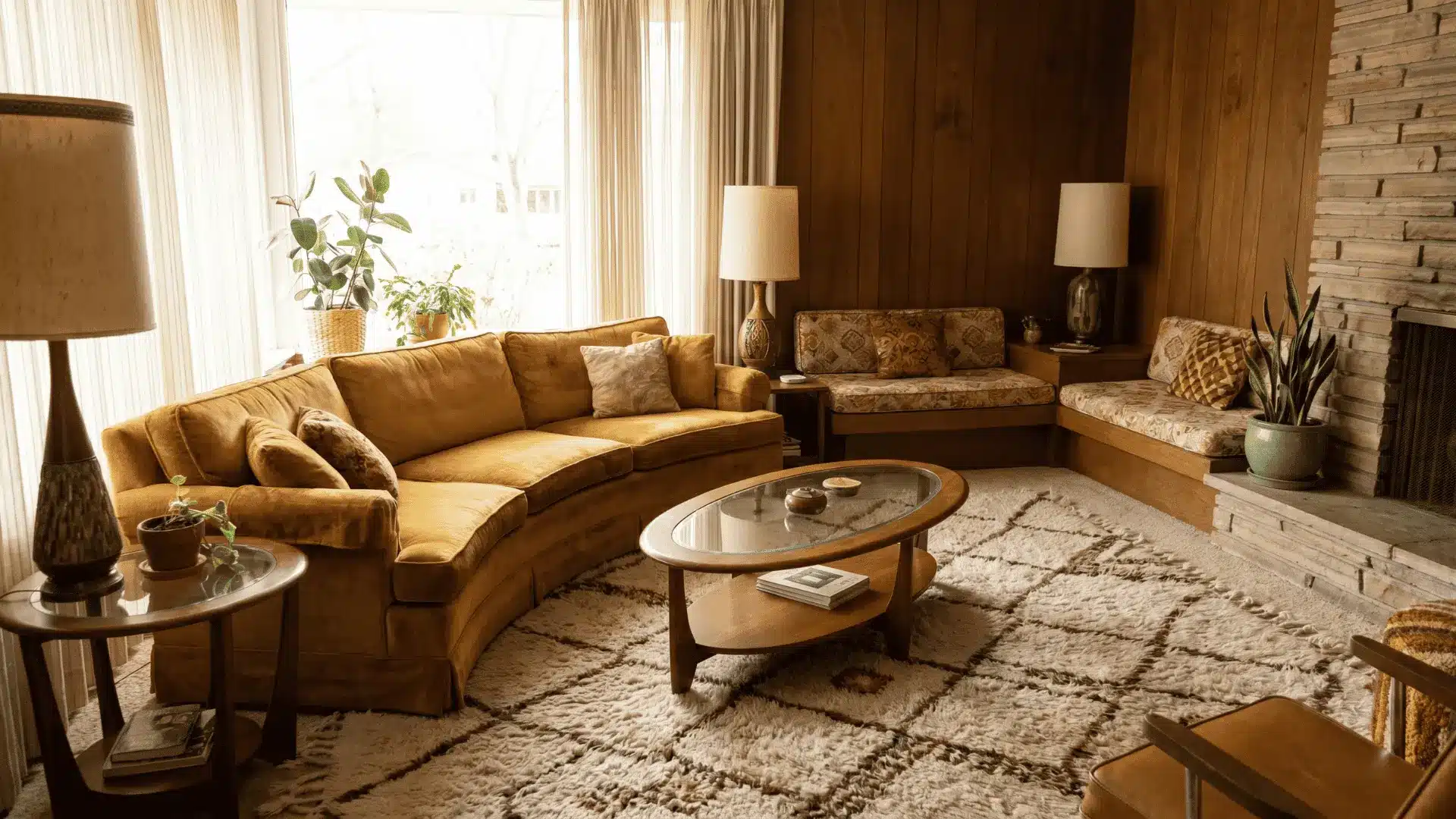
Furniture in the 70s often had rounded shapes and lower profiles. This made rooms feel softer and more casual.
Curved sofas, low seating, rounded coffee tables, and platform beds all capture the style well.
5. Statement Retro Lighting
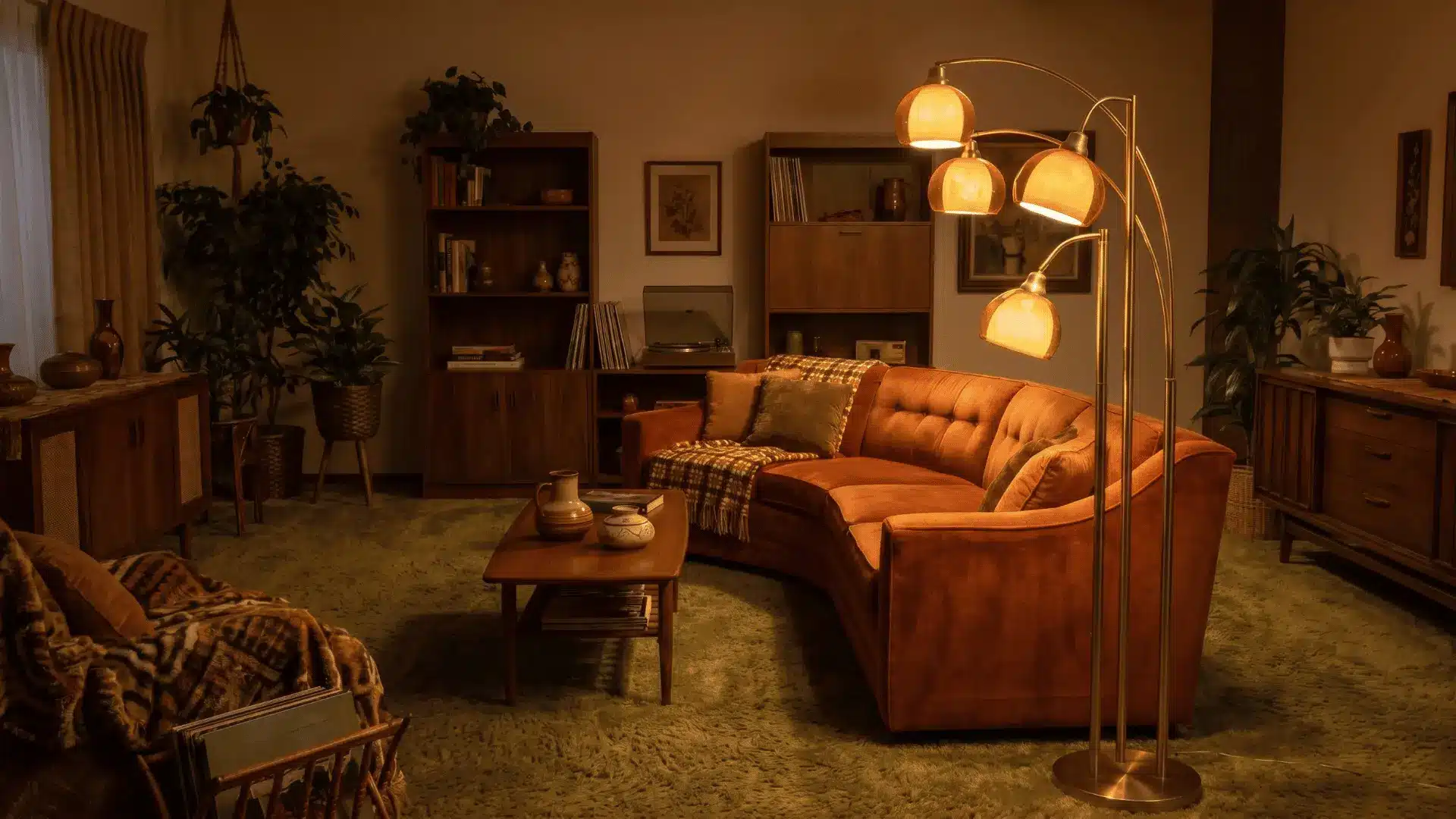
Lighting was both functional and decorative in 70s interiors. Soft, warm light made the rooms feel inviting.
Popular options include mushroom lamps, globe pendants, and brass floor lamps. These work beautifully in living rooms, bedrooms, and dining spaces.
6. Bold Patterns and Wallpaper
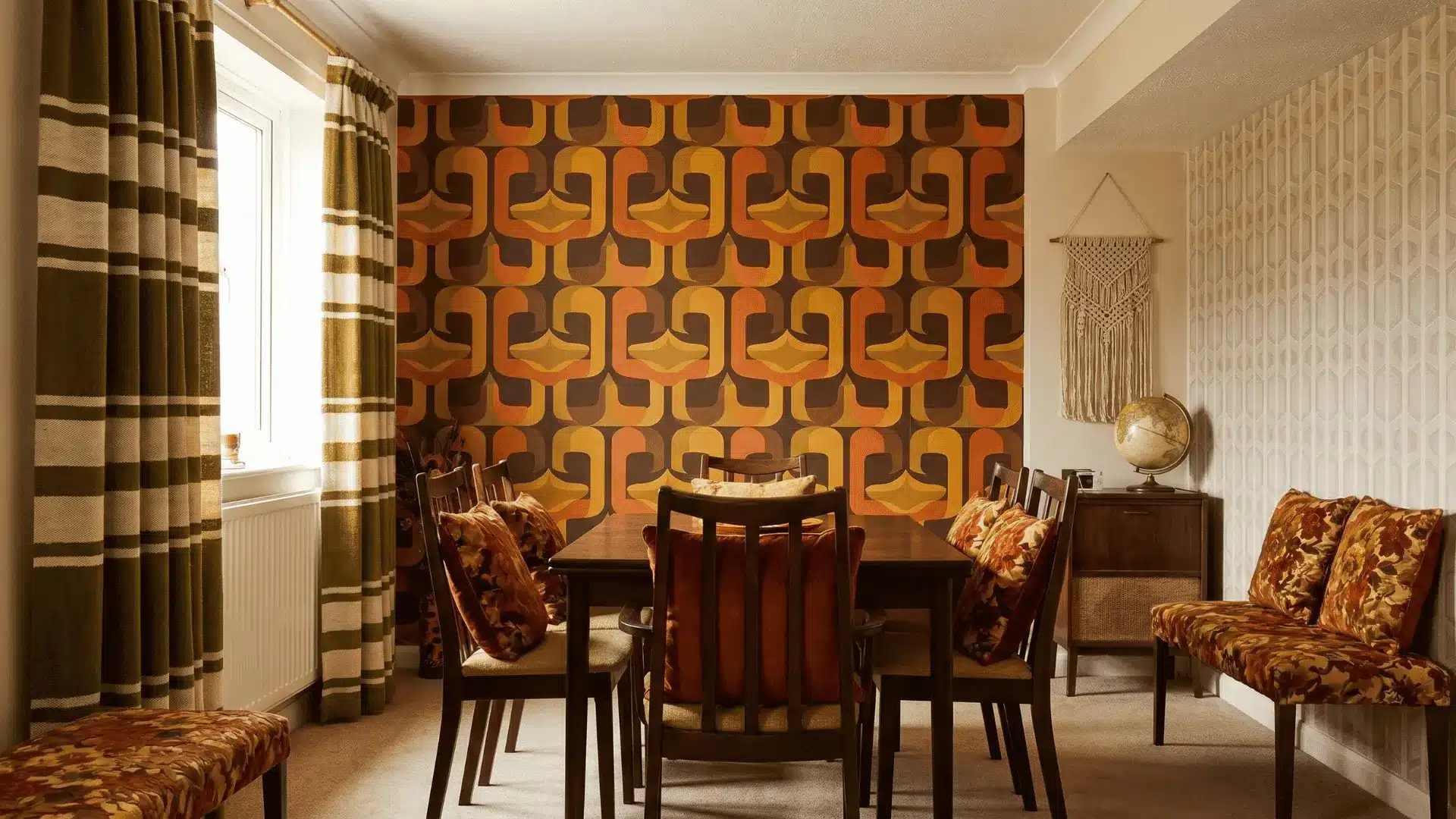
Patterns brought energy and personality into the home. Walls and fabrics often featured strong prints.
Geometric designs, floral motifs, stripes, and arches are classic 70s choices. Use them on feature walls, kitchen backsplashes, curtains, or cushions.
7. Indoor Plants and Organic Décor
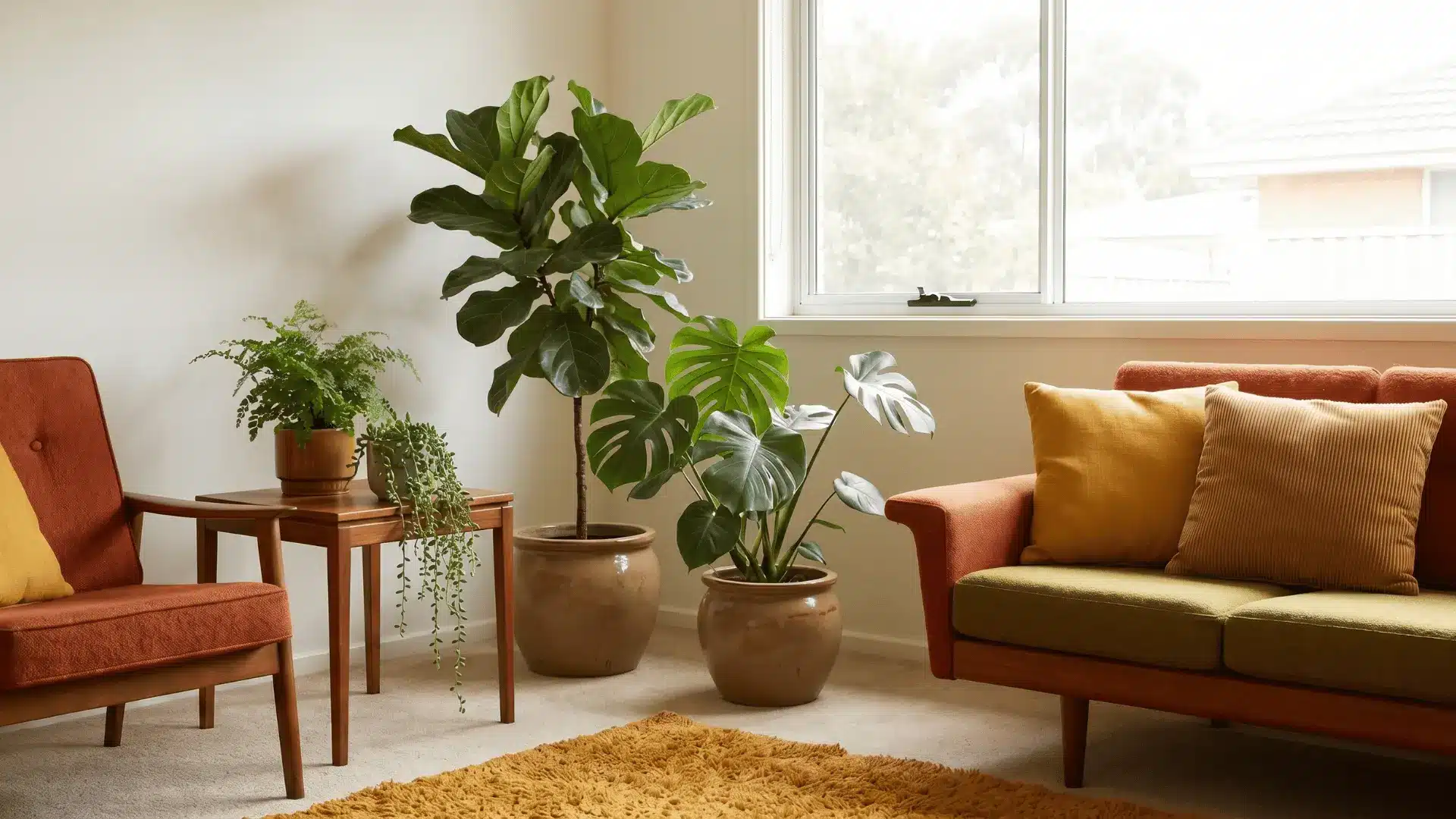
Plants helped connect indoor spaces with nature. They also made rooms feel fresher and more relaxed.
Use hanging plants, large leafy plants, ceramic pots, and macramé hangers for an authentic retro touch.
How to Make a Retro 70s House Interior Look Modern?
A modern 70s look is about balance, not copying the past. The right mix of color, texture, and furniture keeps the space fresh and comfortable.
- Use One Statement Piece Per Room: Pick one standout item like a curved sofa, retro lamp, or bold rug. A single focal point adds character without making the room feel busy.
- Balance Bold Colors With Neutrals: Pair strong 70s shades with calm tones like cream, beige, or soft white. This keeps the space balanced and easy on the eyes.
- Mix Vintage and Modern Furniture: Combine retro pieces with modern furniture for a fresh look. This mix keeps the space current instead of dated.
- Keep Décor Curated, Not Cluttered: Use a few key accessories like a vase, lamp, or plant. Too many items can make the space feel crowded.
- Choose Texture Over Excess Pattern: Focus on materials like velvet, corduroy, and woven fabrics. Texture adds warmth without making the room look busy.
Keep things simple and intentional with each choice. A few well-balanced elements can give your home a clean yet retro feel.
Budget-Friendly Ways to Get the 70s Look
You do not need a big budget to bring 70s style into your home. Small, smart updates can make a noticeable difference without spending too much.
| Budget-Friendly Idea | What to Look For | Estimated Price (USD) |
|---|---|---|
| Thrifted Furniture Finds | Coffee tables, sideboards, chairs, and mirrors from thrift stores or flea markets | $20 – $150 |
| Peel-and-Stick Wallpaper | Geometric prints, arches, or earthy tones for feature walls | $15 – $60 per roll |
| Warm-Toned Cushions and Rugs | Mustard, rust, olive, or brown cushions and area rugs | $10 – $80 |
| Secondhand Lamps | Dome lamps, brass floor lamps, globe lighting | $15 – $100 |
| DIY Wood Accents | Shelves, frames, and small tables with walnut-style finishes | $10 – $70 |
| Affordable Plant Styling | Indoor plants, ceramic pots, woven baskets, hanging planters | $5 – $50 |
Start with one or two simple changes and build from there. Even low-cost updates can add warmth, texture, and character to your space.
Tip: Mix thrifted pieces with a few modern items to keep the room balanced and avoid making the space feel outdated or overly themed.
Conclusion
A retro 70s house interior works because it was never really about following trends, it was about making spaces feel warm, personal, and comfortable to live in.
From earthy color palettes and curved furniture to layered textures, statement lighting, and natural materials, every element serves the same purpose: creating rooms that invite you to stay longer. The style does not require a full renovation or a big budget, either.
Thrifted finds, a few warm-toned cushions, or a single walnut accent piece can quietly shift the entire feel of a room.
The key is balance enough character to feel interesting, enough restraint to feel modern.
Whether you are starting from scratch or adding small retro touches to what already exists, the 70s have a way of making any home feel a little more alive.
Which retro element would you bring into your space first? Share your favorite pick or styling idea in the comments below!
Frequently Asked Questions
Can Retro 70s Interiors Work in Small Apartments?
Yes, they can work well in smaller spaces when used carefully. Focus on a few retro details like lighting, cushions, or a statement chair instead of filling the entire room with heavy décor.
Can Black and White Be Used in A Retro 70s Interior?
Yes, but they work best as supporting colors rather than the main palette. Adding warm browns, rust tones, or wood textures keeps the space connected to the 70s look.
What Type of Artwork Fits a Retro 70s Home?
Abstract prints, nature-inspired art, geometric designs, and vintage posters work well. Large framed pieces with earthy or muted tones usually fit the style best.