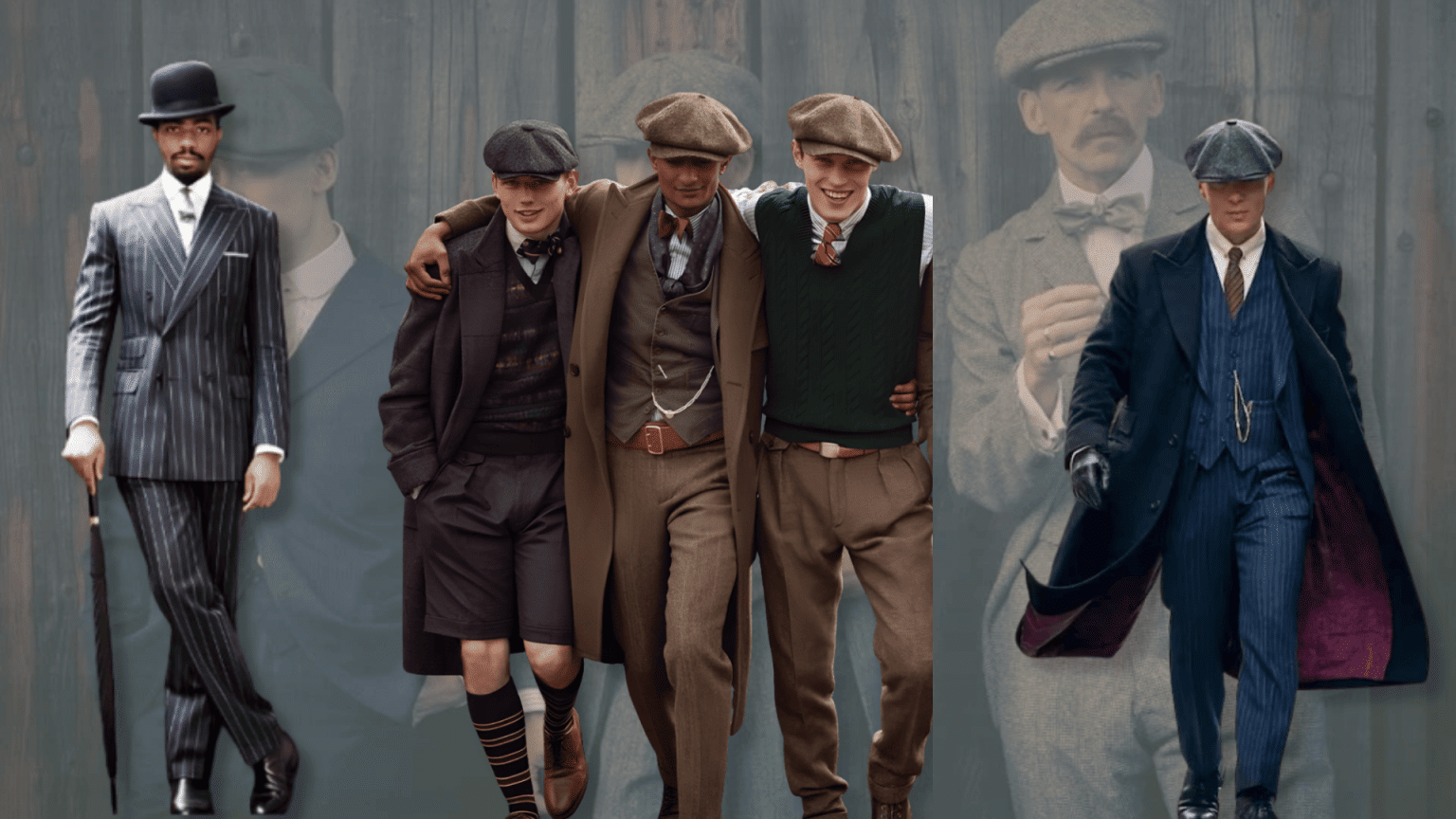
The 1920s marked one of the most remarkable changes in men’s fashion.
After World War I, a renewed sense of freedom and creativity shaped how men presented themselves.
Jazz music, cinema, and social gatherings encouraged bolder choices, with suits becoming sleeker, fabrics lighter, and accessories more expressive.
In this blog, you will find what made 1920s men’s fashion iconic, from daily suits to formal evening wear, inspired by film stars and athletes.
Every piece, from the hat to the shoe, showed personality, taste, and practicality that continue to shape men’s clothing even after a century.
The Historical Backdrop of 1920s Men’s Style
The 1920s brought a cultural and social shift that reshaped modern menswear.
After the war, America’s growing economy and vibrant nightlife encouraged men to dress with more confidence and individuality.
Influenced by jazz, sports, and Hollywood, they traded stiff Victorian garments for softer fabrics and more relaxed silhouettes.
Ready-to-wear clothing became widely available, allowing men from all walks of life to express style without the need for custom tailoring.
This blend of comfort and sharp presentation created a fashion identity that defined an era and continues to shape the essence of men’s style today.
1920s Men’s fashion
Suits, hats, and accessories became symbols of self-expression influenced by jazz, cinema, and rising urban lifestyles.
1920s Formal Styling
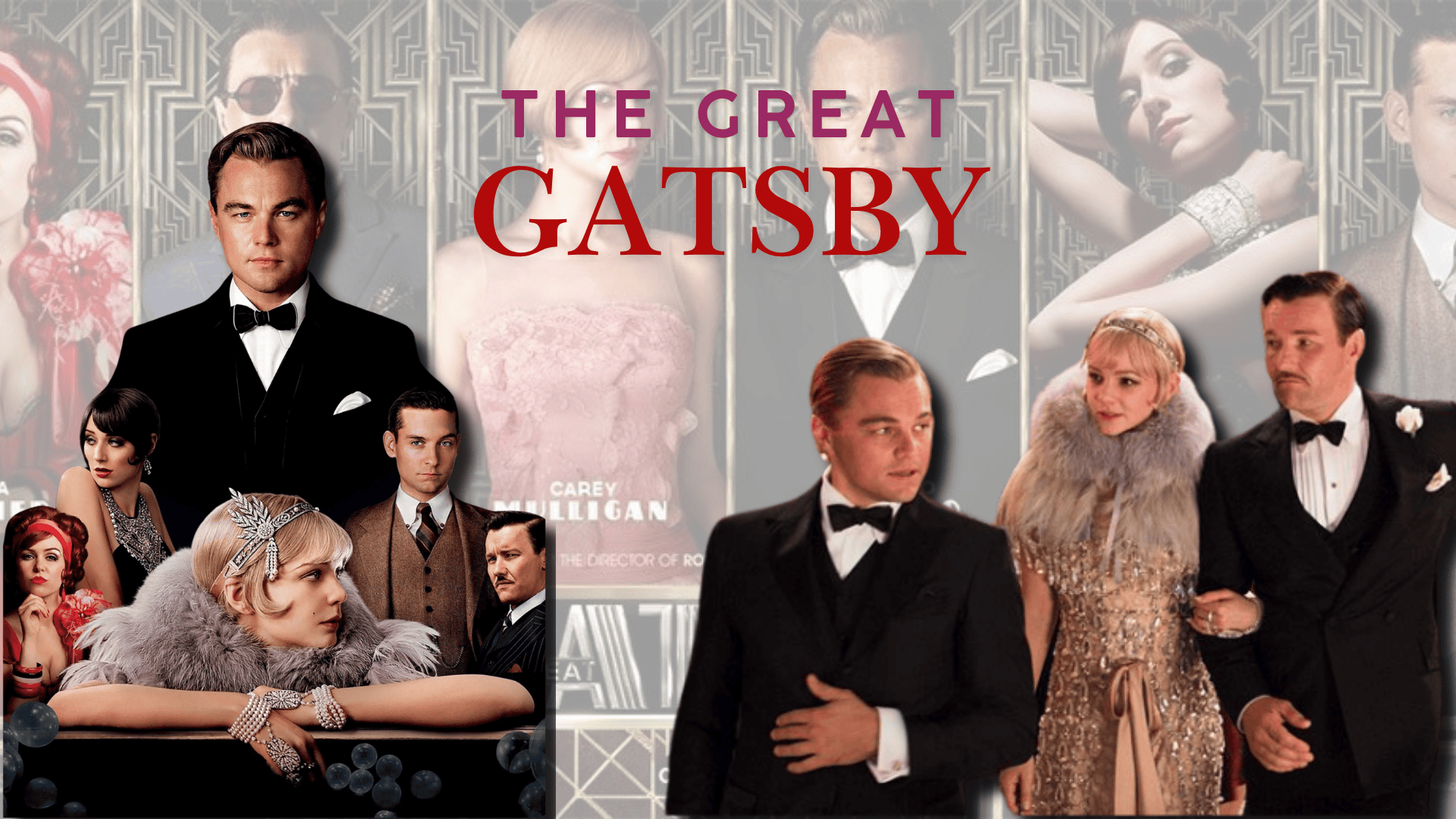
Formal fashion in the 1920s reflected structure and confidence, with men favoring three-piece suits featuring high-waisted trousers, waistcoats, and fitted jackets made from wool, tweed, or flannel.
For evenings, tuxedos with bow ties showcased class and social grace, while pin-striped and double-breasted suits became popular among professionals.
Colors like navy, brown, and grey replaced the plain black tones of earlier years, creating a fresh look that defined 1920s fashion men admired.
1920s Men’s Casual Look
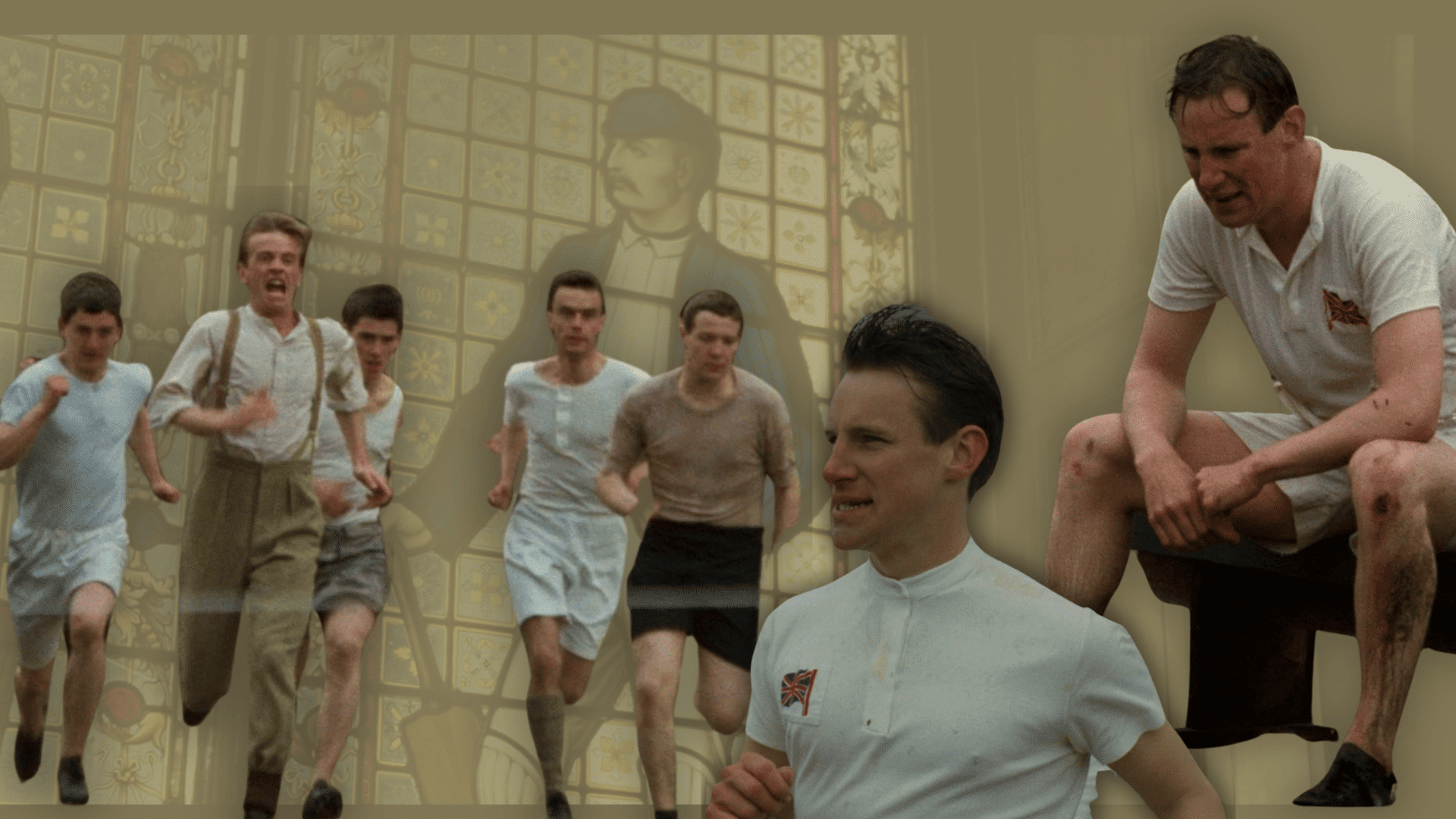
Casual fashion began gaining importance in the 1920s wardrobe as men started wearing sweaters, cardigans, or vests with pleated trousers for relaxed occasions.
Sportswear also became popular, with knickers, plus-fours, lightweight shirts, flat caps, and casual jackets adding comfort and charm to weekend dressing.
This version of 1920s fashion male dressing showed that men could look neat without being overly formal.
1920s Working Class Fashion
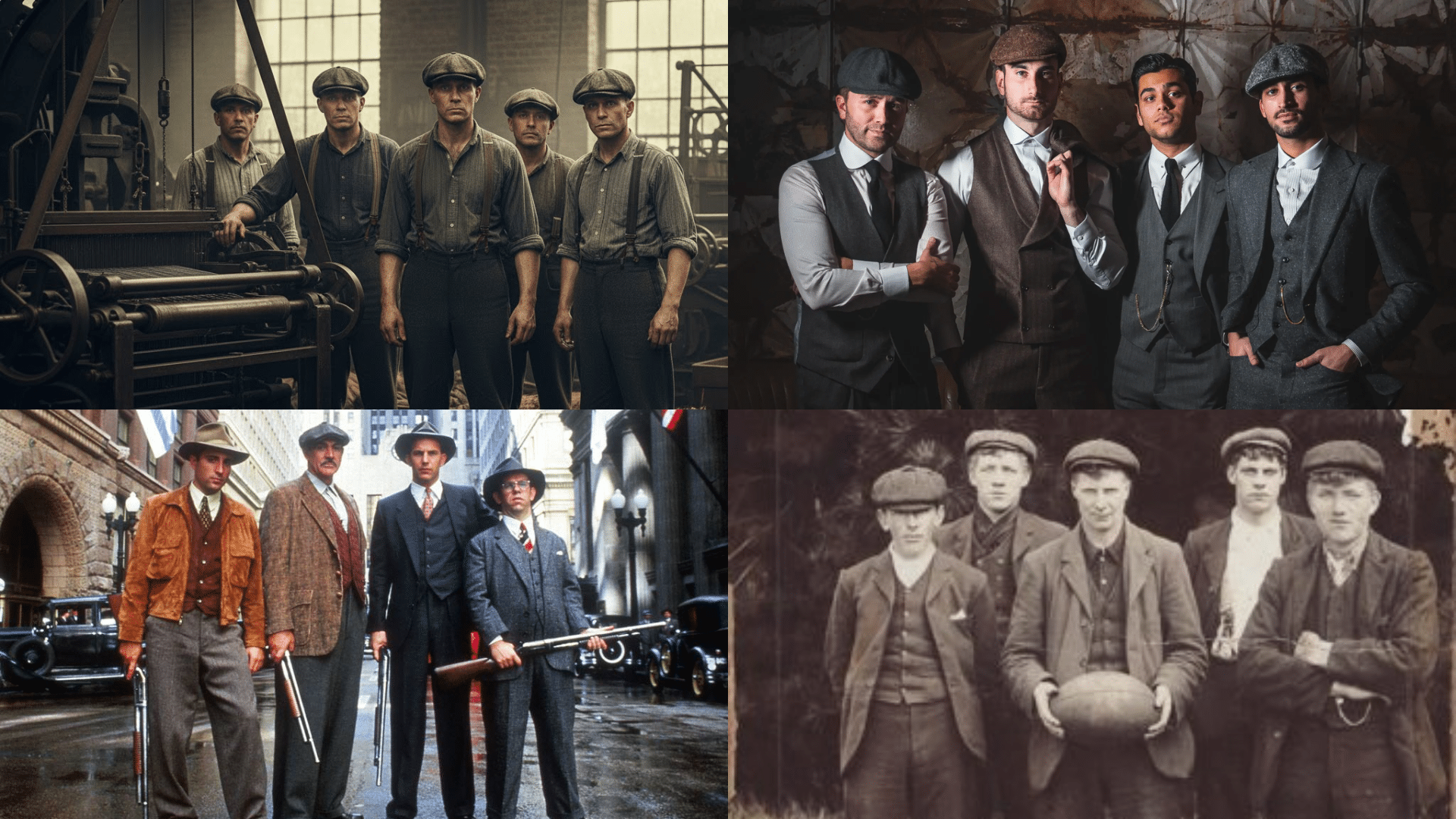
In the 1920s, working-class men dressed in clothes that were strong, simple, and practical.
Most wore wool or denim trousers, button-up shirts, and suspenders to keep everything in place.
Overalls were common for factory and outdoor jobs, while vests or wool jackets were added for warmth.
Flat caps or newsboy caps were worn daily and became a trademark of this group.
The TV show Peaky Blinders gives a clear picture of this style, showing how working men dressed neatly but simply.
Their clothing focused on comfort, strength, and function rather than fashion or show.
Iconic 1920s Men’s Outfits and Accessories
The 1920s brought a smart and simple style for men. Each item, from suits to hats, helped create a neat and confident look for everyday wear.
1. Suits
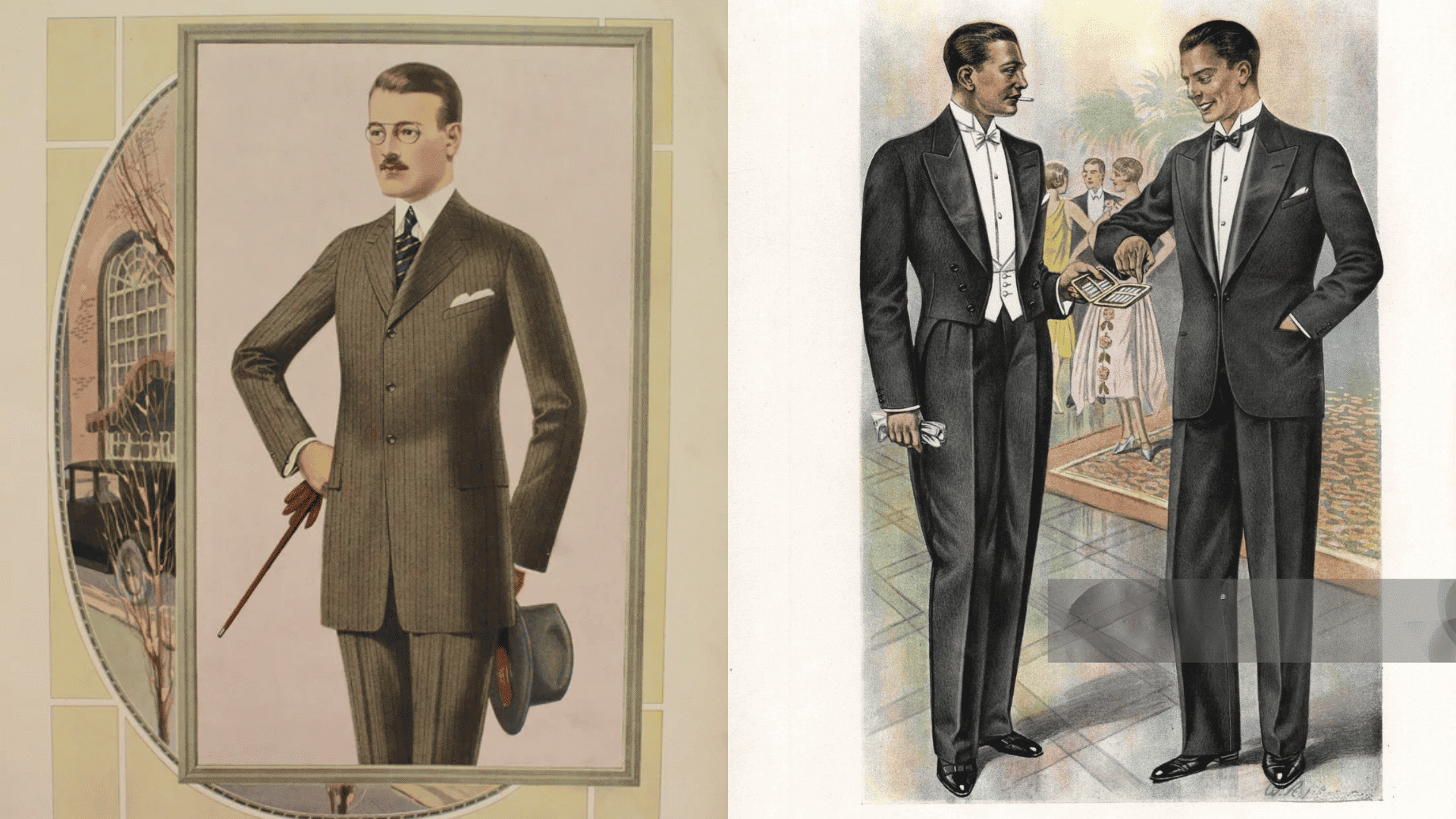
Suits were the main part of men’s fashion in the 1920s.
Most men wore three-piece suits with matching jackets, trousers, and vests.
The jackets had wider shoulders and shorter lengths, giving a sharp shape. Dark colors like navy, brown, and gray were the most popular choices.
2. Shirts and Collars
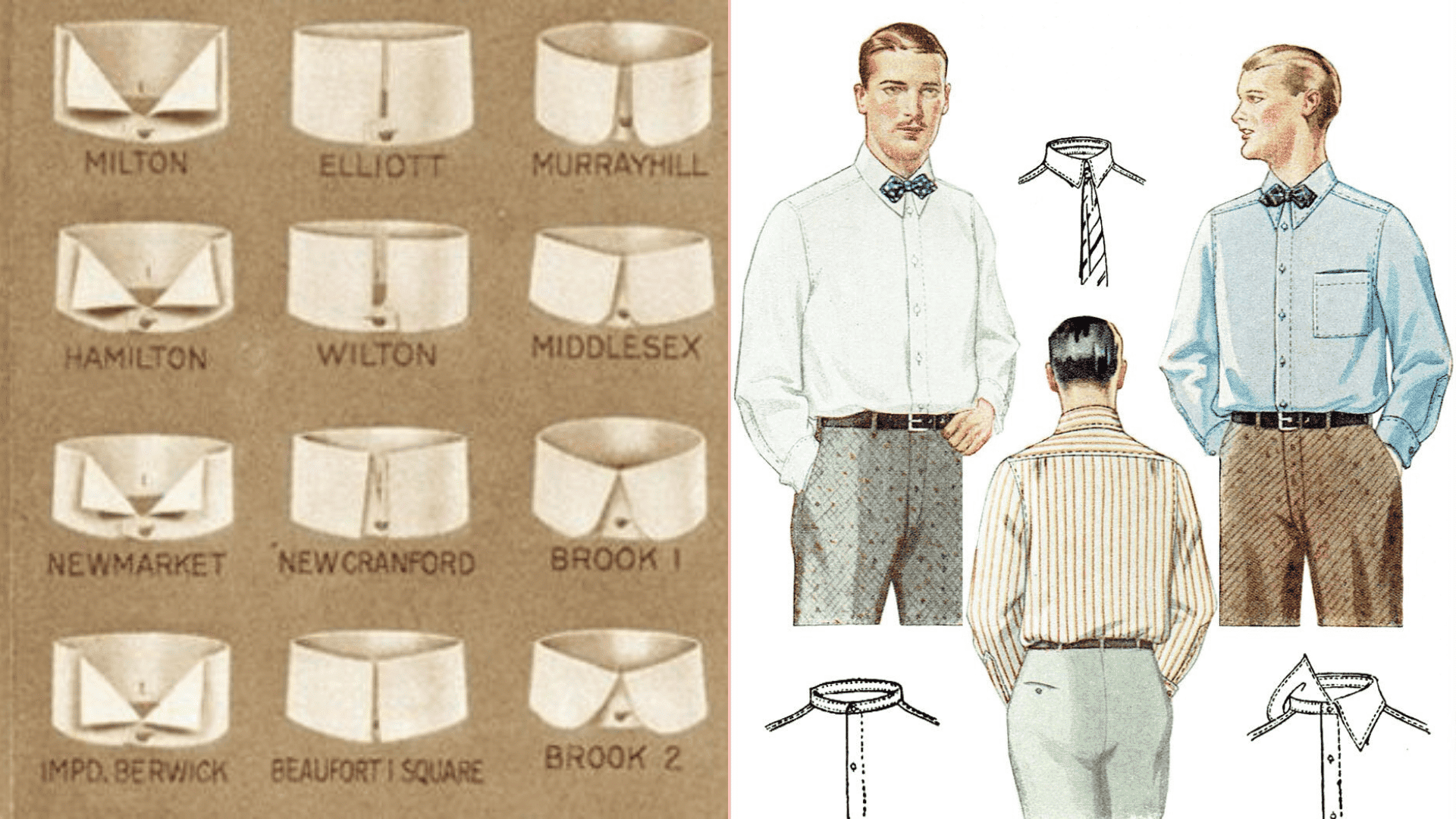
Shirts in the 1920s were made from cotton or linen and came mostly in white or soft pastel colors.
Early in the decade, most men still wore detachable collars, which were stiff and could be changed or cleaned separately from the shirt.
By the mid-1920s, attached collars became more common as men preferred a softer and more comfortable style.
3. Pants
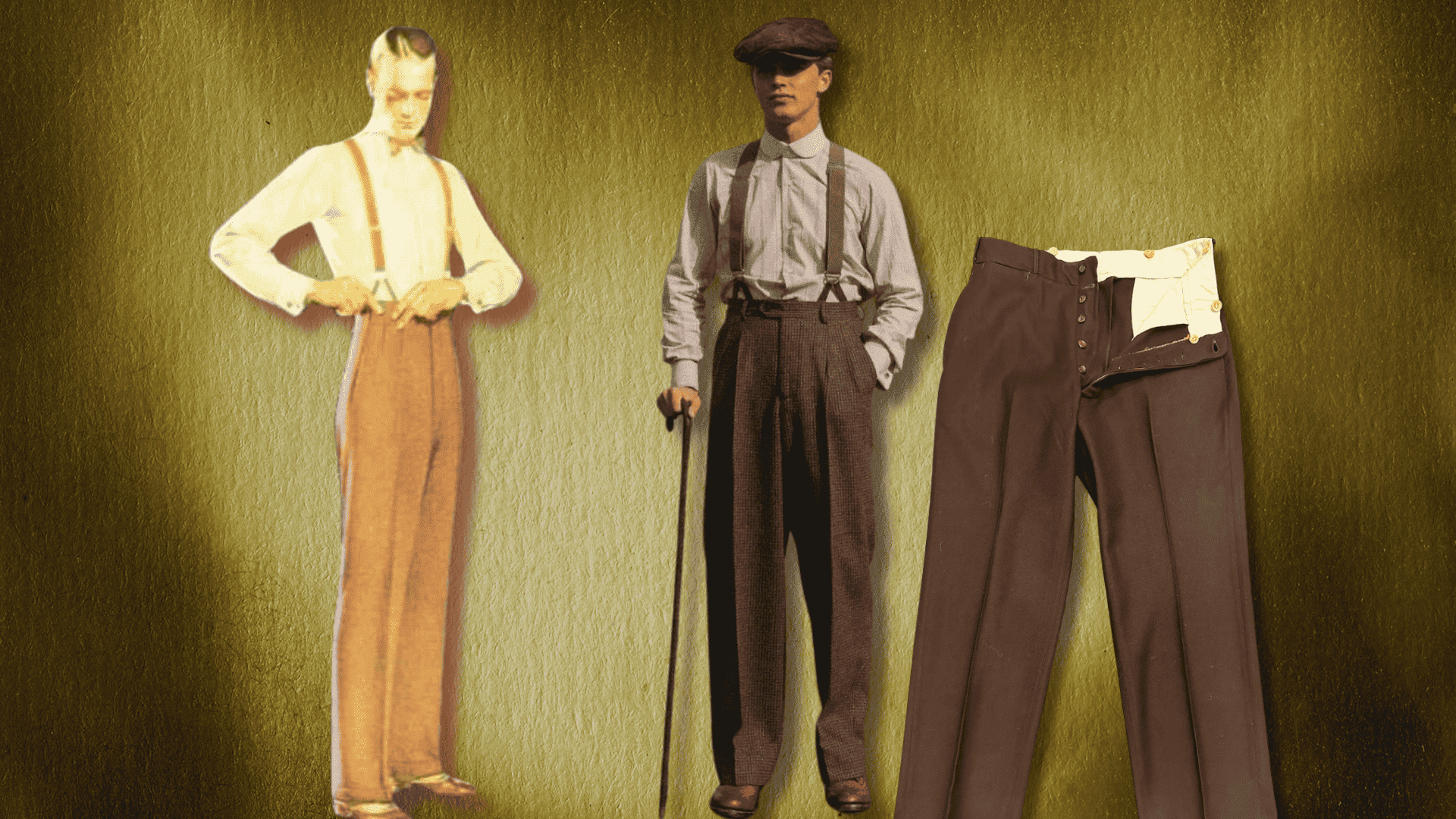
Men’s trousers were high-waisted and loose around the legs, often with cuffs at the bottom. Suspenders kept them in place since belts were not common.
Wool and tweed fabrics made them durable and comfortable for daily use.
Men often paired them with suspenders instead of belts, keeping a clean, structured shape.
4. Waistcoat and Vests
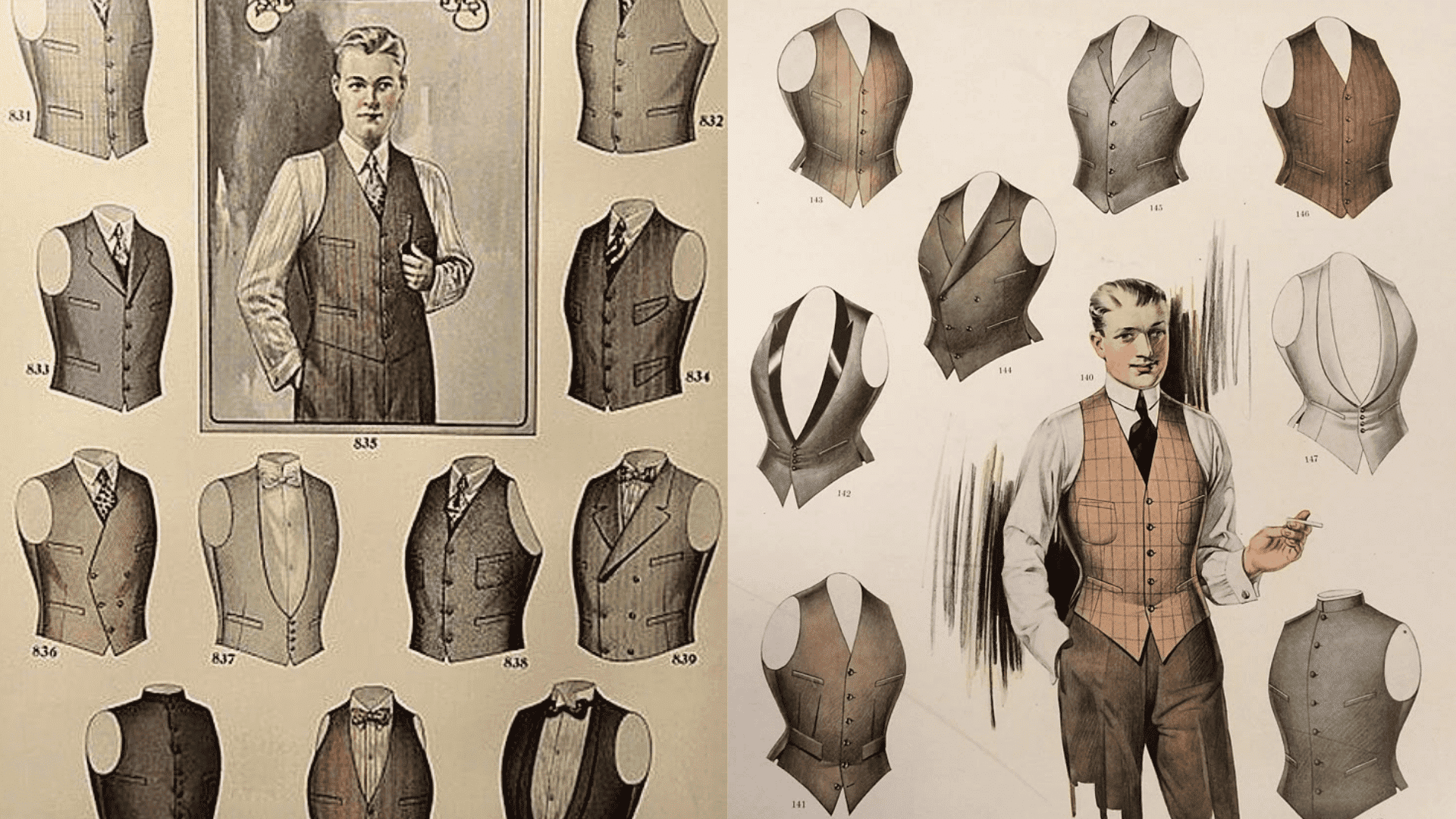
Vests, also called waistcoats, completed most outfits.
They added structure and warmth while giving a tidy appearance.
Usually made from the same fabric as the suit, they sometimes had small pockets for pocket watches or other small items.
5. Ties and Neckwear
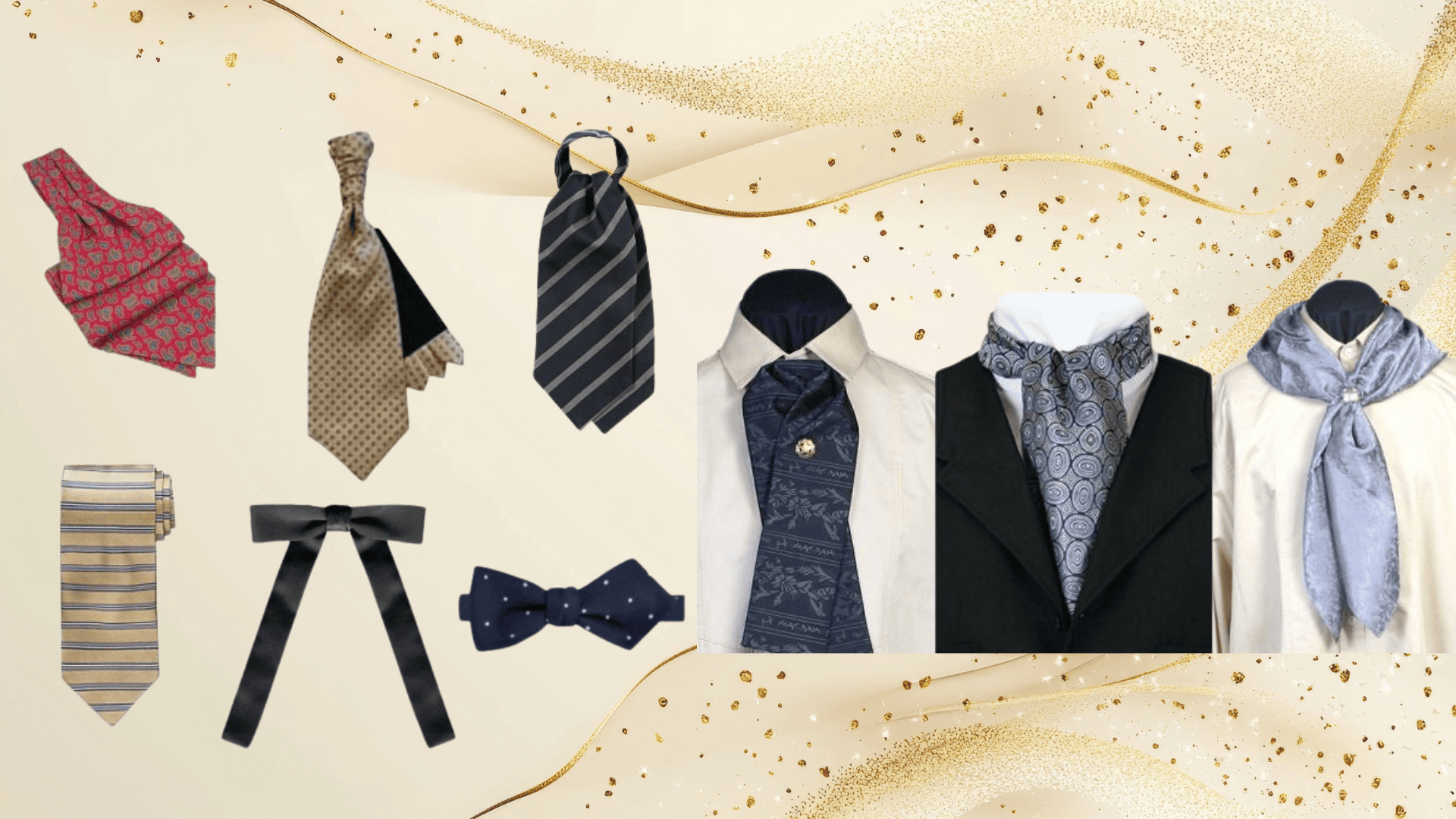
Ties and other neckwear brought color and personality to 1920s men’s clothing.
Most ties were slim with stripes, checks, or geometric designs that matched the decade’s modern taste.
Bow ties were common at evening events, while tie pins or clips kept the tie perfectly straight, adding polish to both work and casual outfits.
6. Hats and Caps
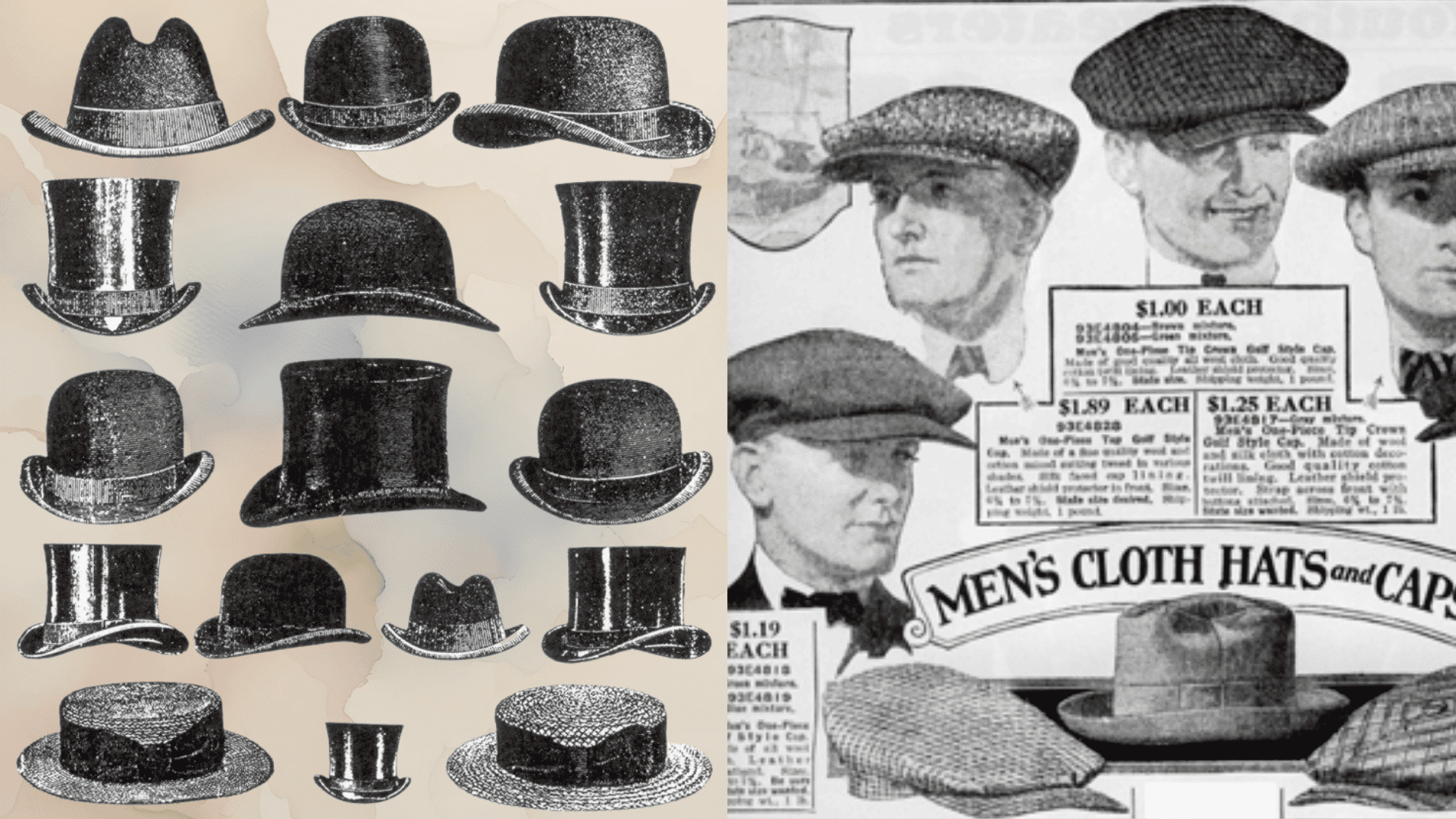
Hats were a key part of every 1920s outfit, worn by men of all classes.
Fedoras, homburgs, and trilbies were popular in cities, while flat caps and newsboy caps suited outdoor or working life.
Hats were made of wool, felt, or tweed and gave protection from the sun while completing the look.
7. Shoes
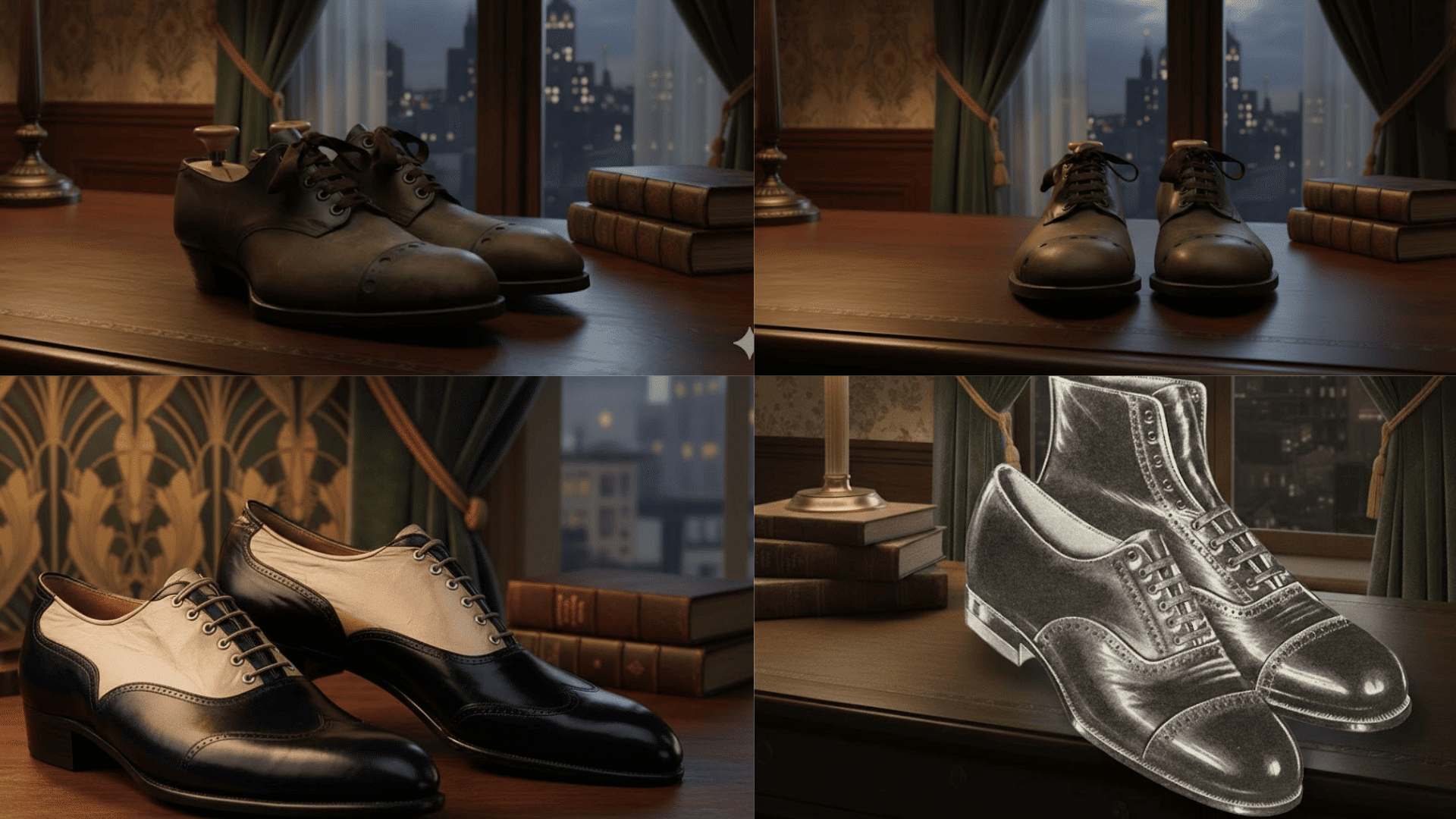
Leather shoes completed the look of 1920s men.
Oxfords and brogues were the most common, often crafted from quality leather in black or brown shades.
Two-tone spectator shoes were a bold trend among younger men, worn for social outings or dances.
8. Pocket Squares
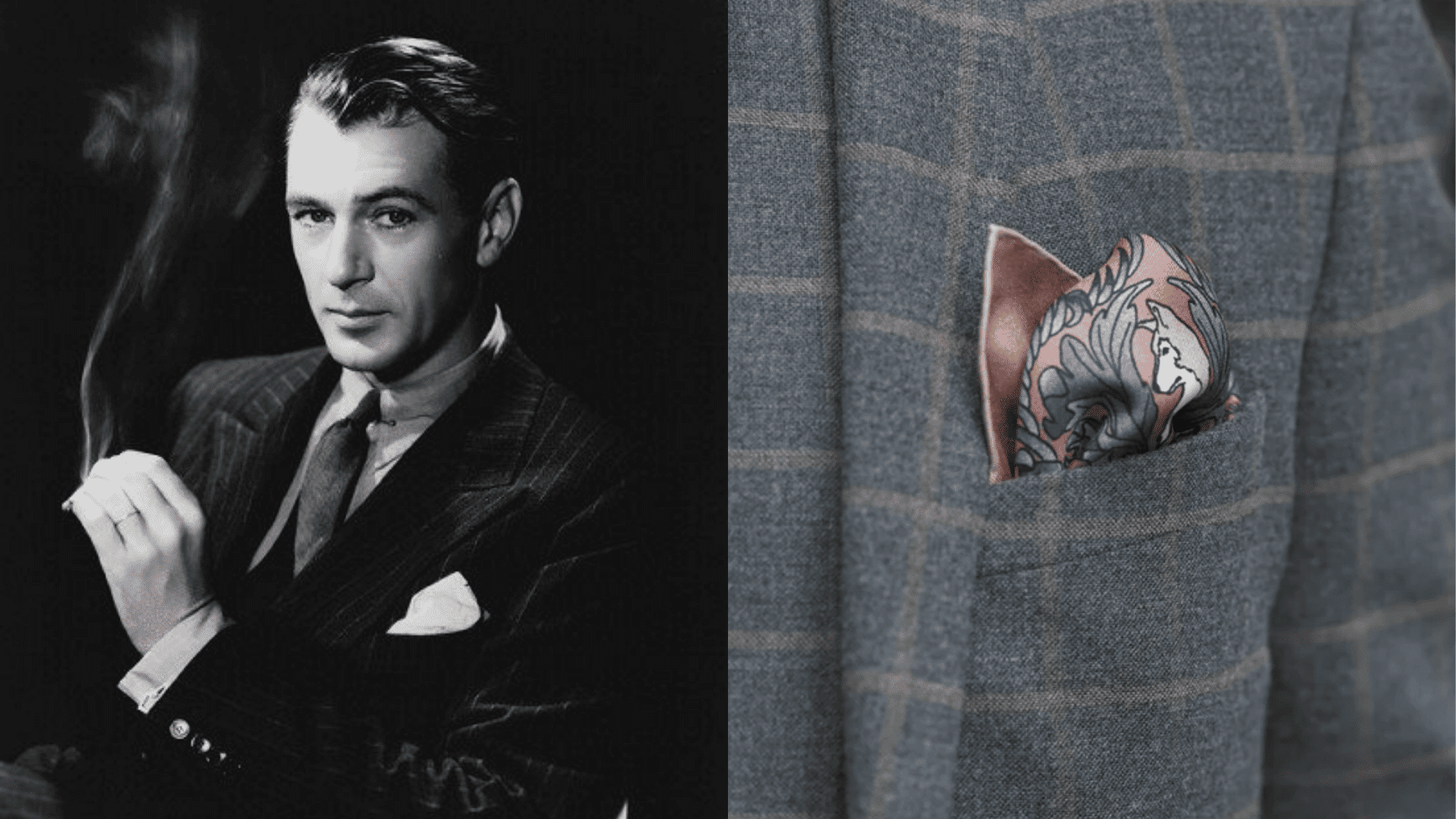
Pocket squares gave men a chance to show subtle style.
Usually made from silk or fine cotton, they came in simple colors or small patterns.
Folded neatly into the jacket’s breast pocket, pocket squares added a refined touch that balanced the formality of a suit with quiet personal charm.
9. Watches
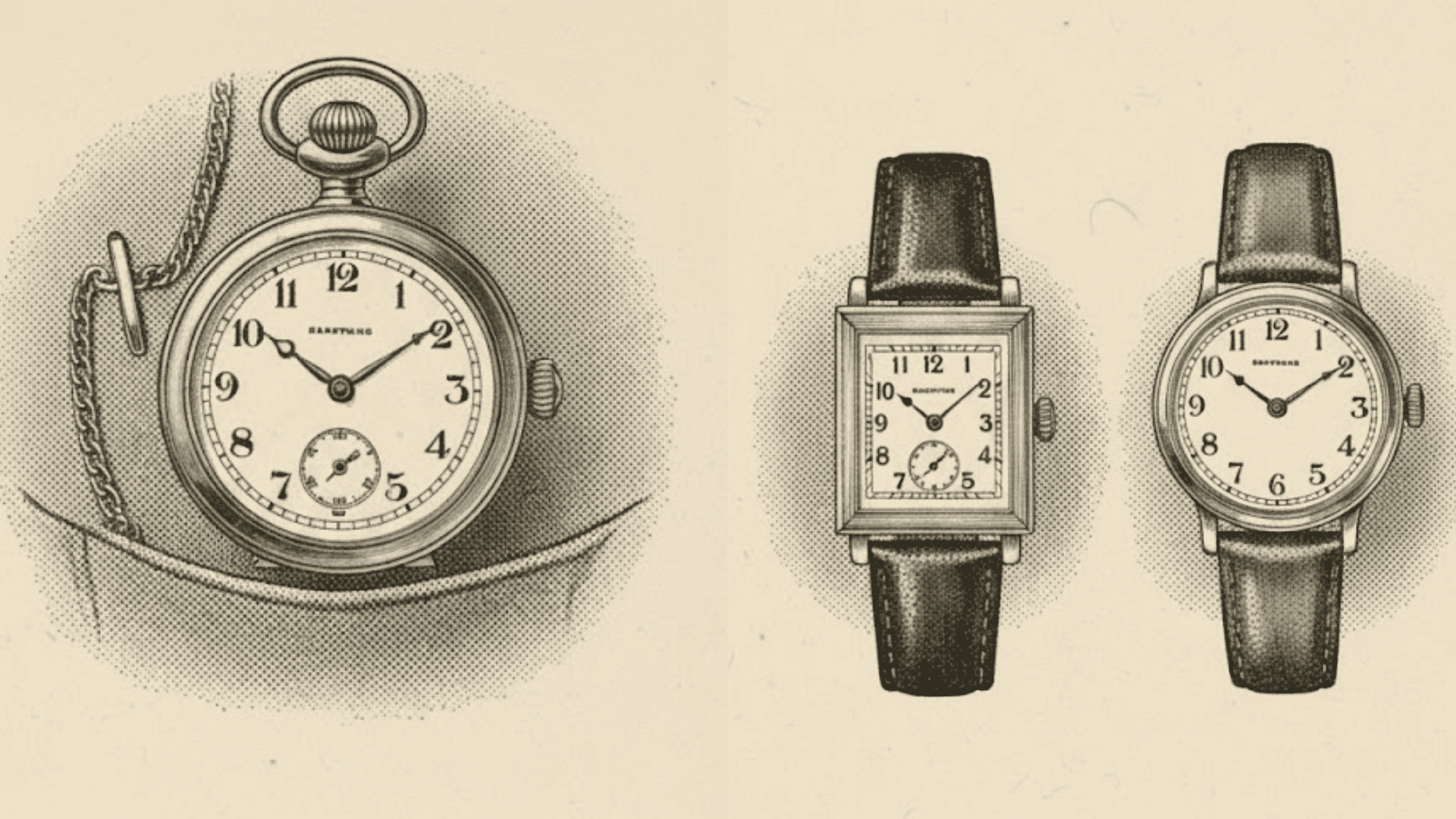
Pocket watches were common among men in the early 1920s, often carried in vest pockets with short chains.
By the end of the decade, wristwatches became more popular, offering a modern and practical option for everyday use.
1920s Famous Men’s Fashion Icons
The 1920s produced men whose style defined the era.
Their clothing choices, from tailored suits to polished shoes, reflected confidence and class that still influence fashion today.
1. Clark Gable
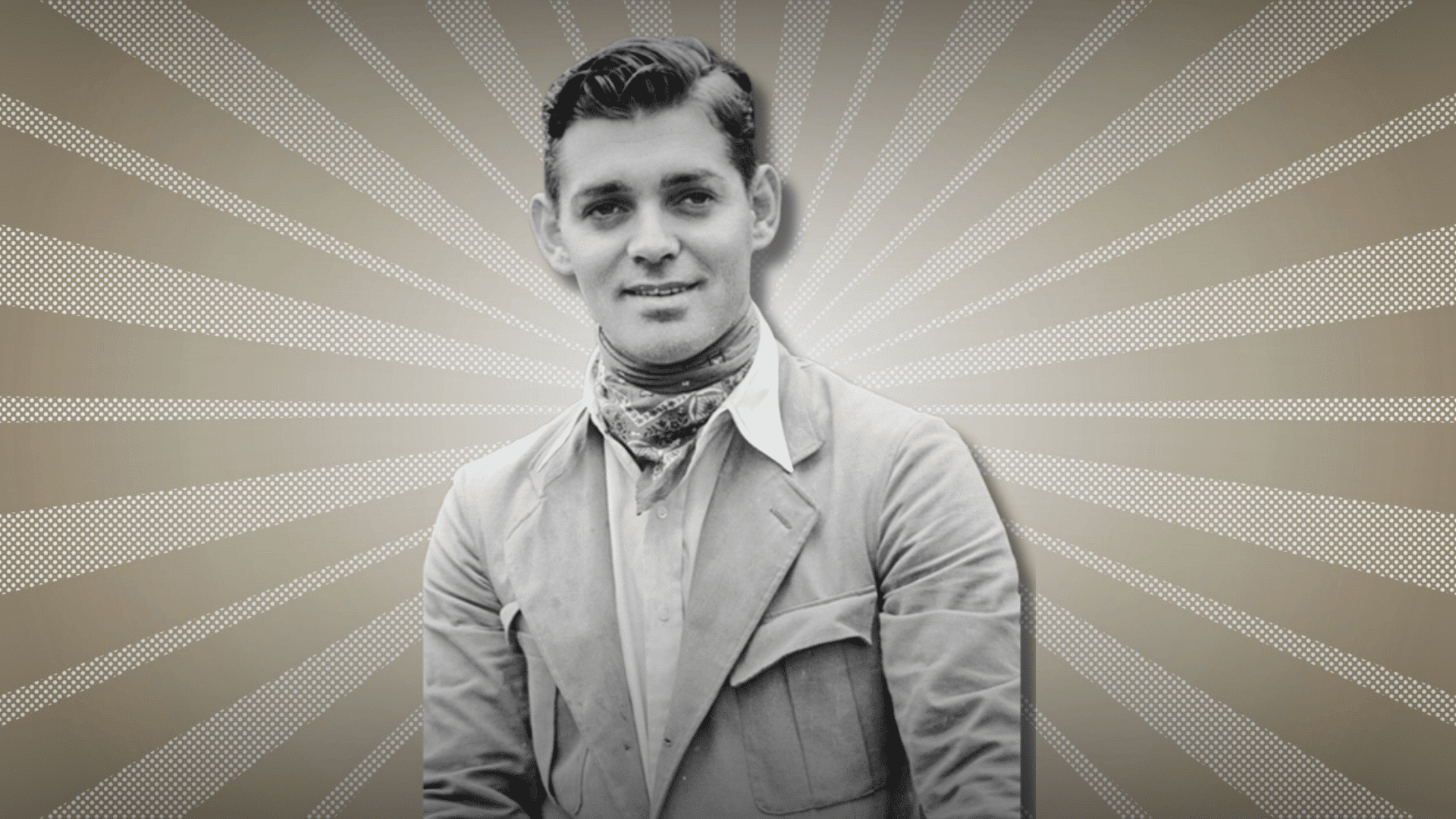
Clark Gable became known for his clean, confident style both on and off the screen.
His preference for fitted suits, neat ties, and slick hairstyles made him one of the most admired figures in 1920s men’s fashion.
His look set the tone for modern, masculine elegance.
2. Rudolph Valentino
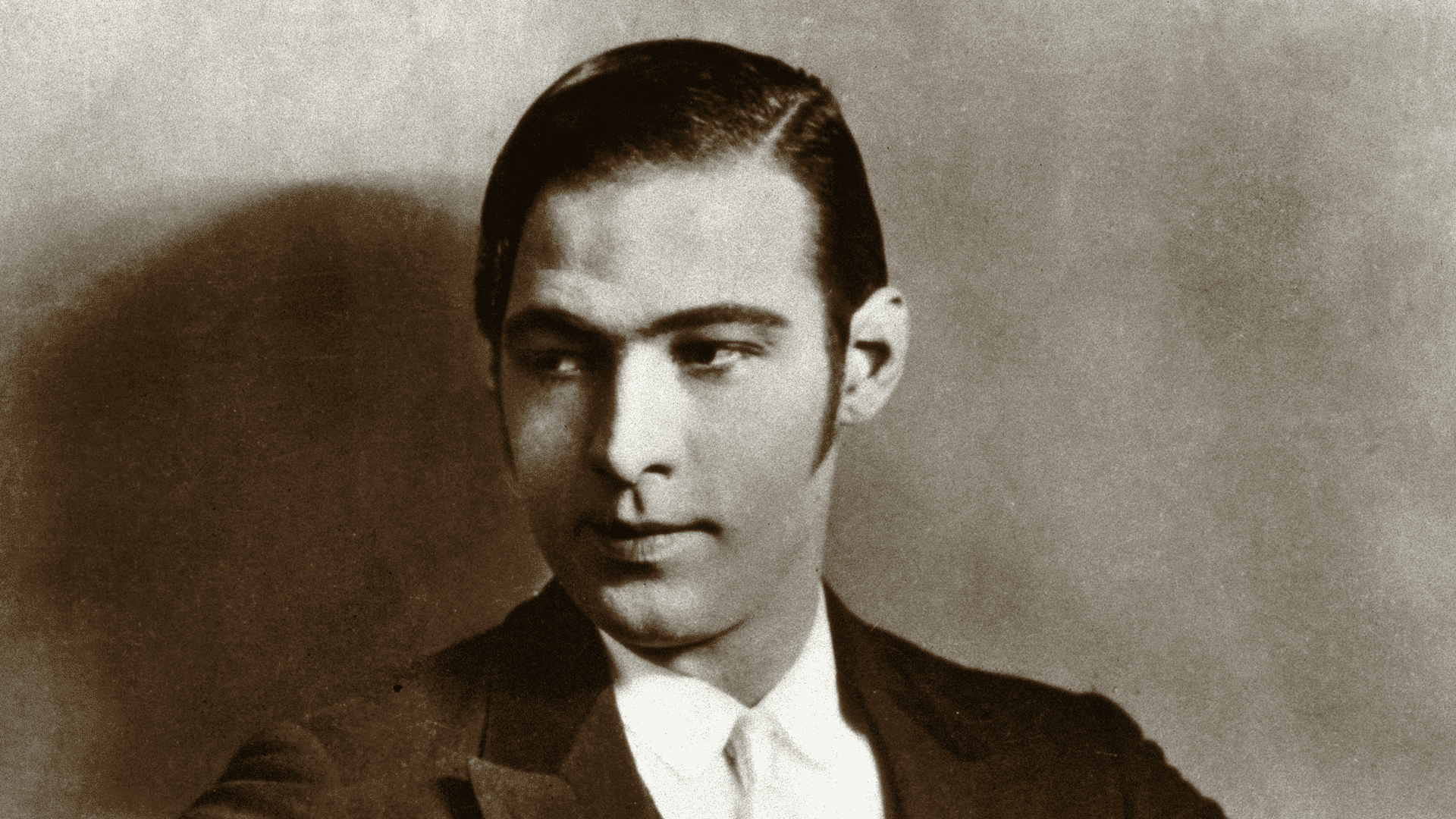
Rudolph Valentino, a major film star of the silent era, brought a sense of charm and sophistication to men’s clothing.
He favored tailored suits, wide-brimmed hats, and silk neck scarves, showing how men could dress with flair while maintaining a strong, classic image.
3. Fred Astaire
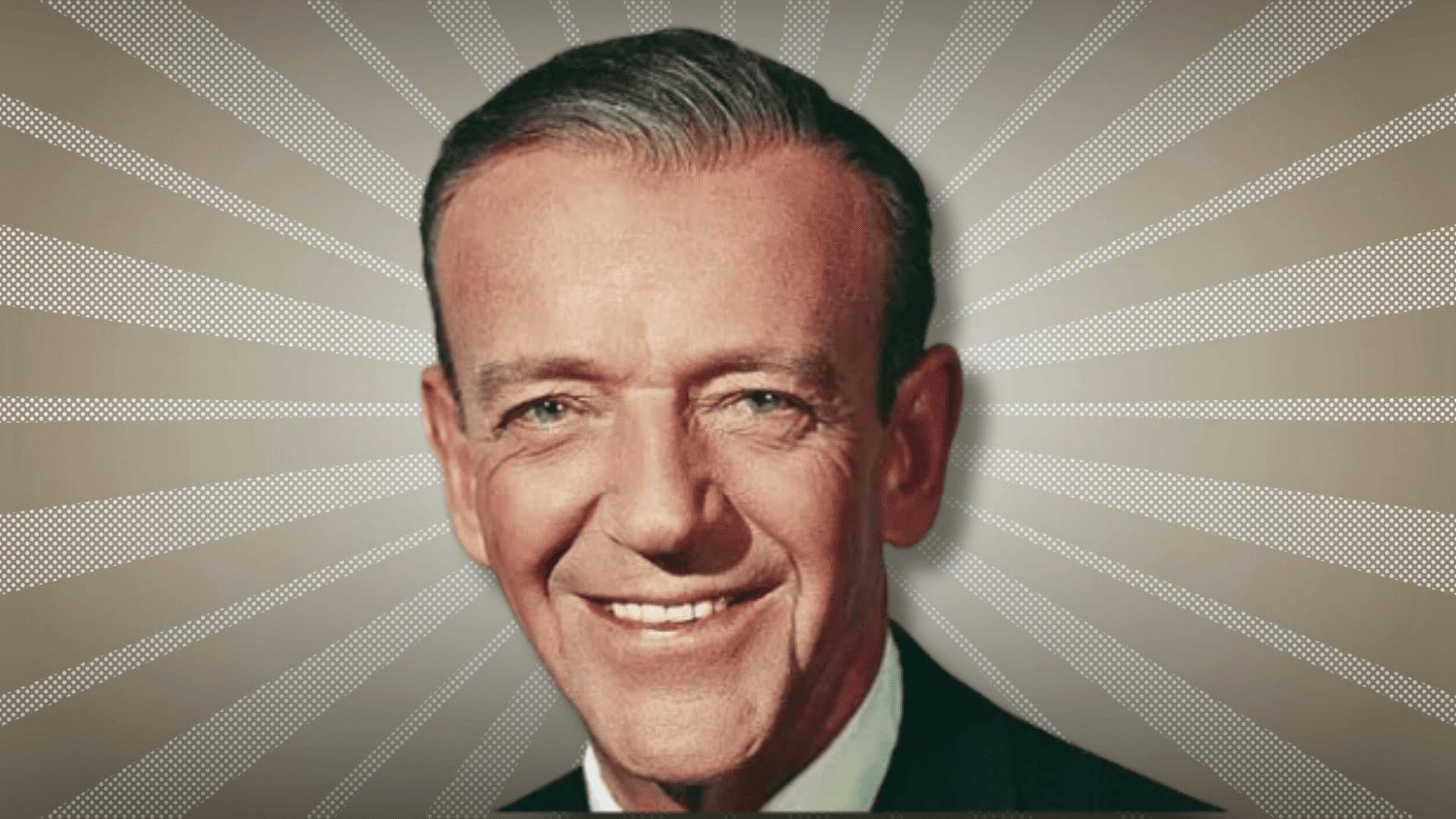
Fred Astaire combined ease and polish, often appearing in tuxedos, tailcoats, and patent leather shoes.
His graceful movement and refined sense of dress made him a lasting style influence, showing how comfort and sophistication could exist together in men’s fashion.
4. Duke Ellington
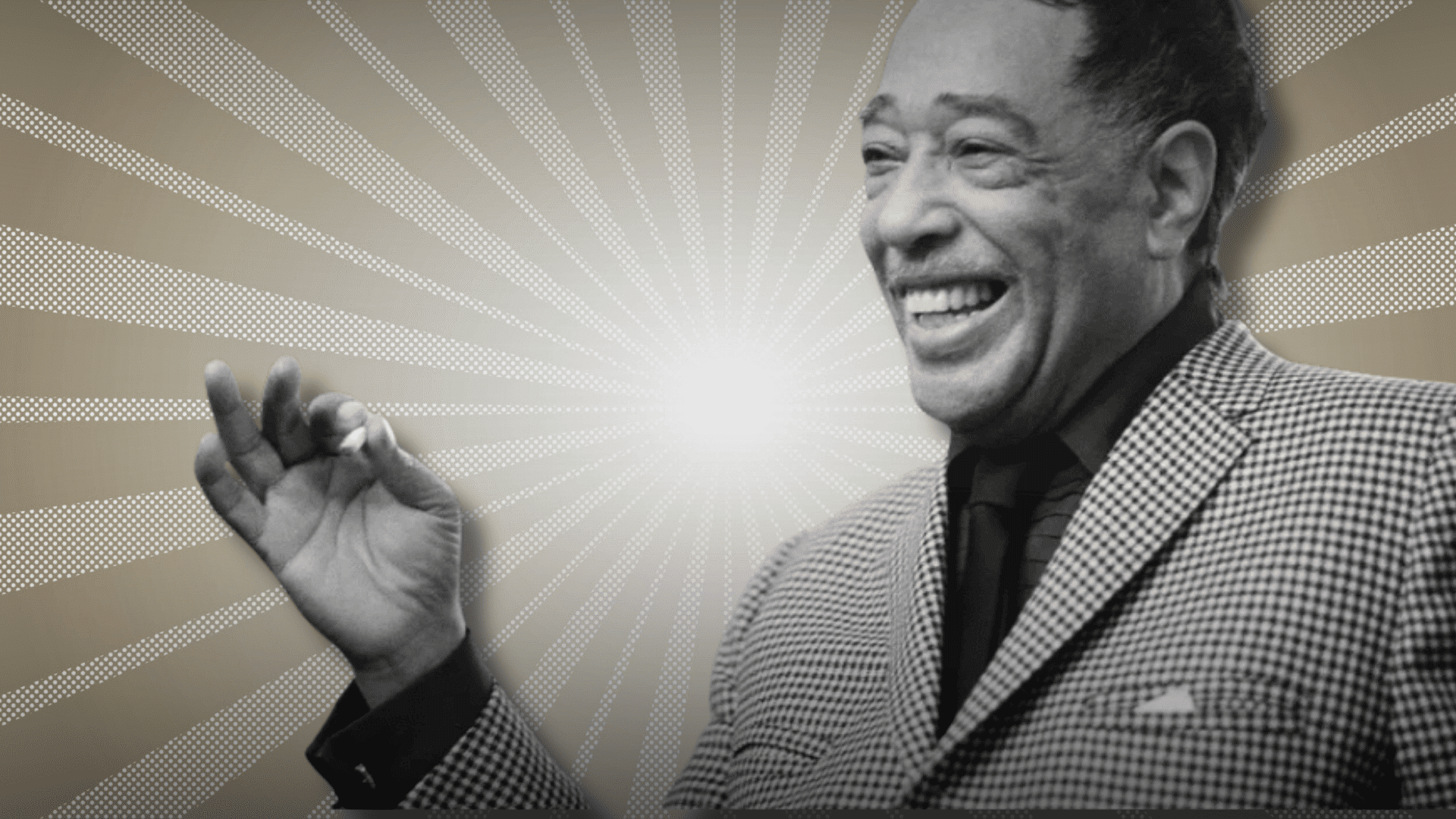
As one of the leading jazz musicians of the 1920s,
Duke Ellington’s stage presence matched his music.
He often wore perfectly tailored suits, satin lapels, and pocket squares, blending creativity and refinement that mirrored the spirit of the Jazz Age.
How to Interpret and Wear 1920s Style Today?
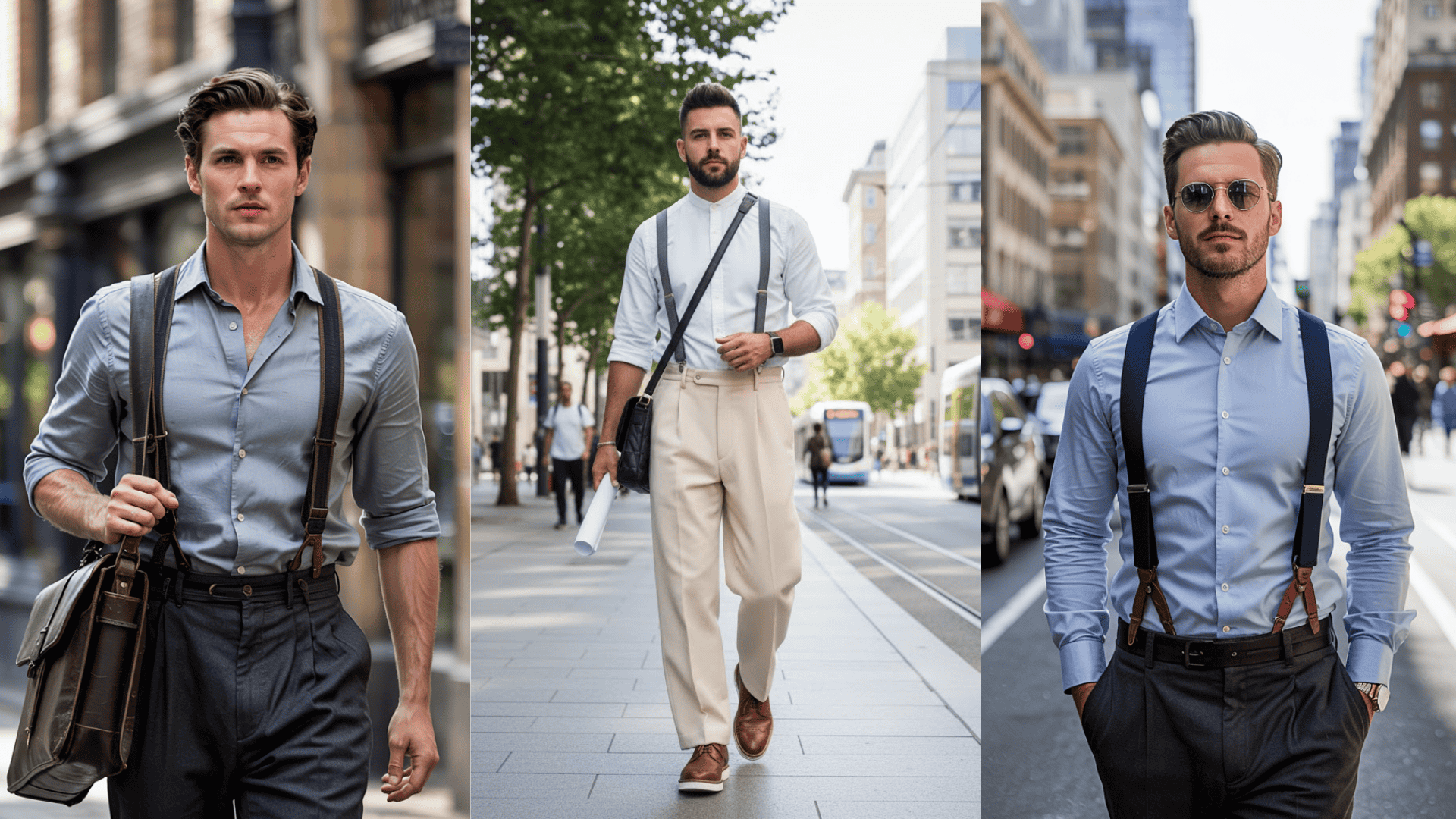
Modern fashion often takes cues from this iconic decade.
A man can easily add touches of vintage charm by pairing high-waisted trousers or suspenders with a crisp white shirt.
Wearing a vest or hat inspired by 1920s fashion male trends brings a subtle yet classic appeal.
These pieces bring vintage charm into everyday outfits without looking outdated.
Women can also embrace this era through structured blazers or pin-striped pieces inspired by men’s 1920s fashion.
Conclusion
The 1920s changed how men dressed forever.
Sharp suits, clean hairstyles, and thoughtful accessories created a confident look that still influences modern wardrobes.
What started as a cultural shift became a lasting part of global fashion.
Today, these ideas about fit, fabric, and presentation remain relevant.
Appreciating 1920s men’s fashion is not about nostalgia; it is about recognizing how well-designed clothing continues to inspire new generations.
Which nineteen’s style would you love to see return, the classic tuxedos or relaxed cardigans?
Share your thoughts in the comments below.
Frequently Asked Questions
Which 1920s Accessories Are Still Popular Today?
Pocket squares, cufflinks, suspenders, and fedoras remain timeless. These classic accessories still reflect the refined and polished touch that made 1920s men’s fashion admired worldwide.
Can Women Adopt the 1920s Men’s Style?
Yes, women often wear suits, trousers, and vests inspired by 1920s fashion male trends, creating a smart, structured, and confident look suitable for modern occasions.
Why Is 1920s Men’s Fashion Still Admired?
It balanced comfort and class, creating timeless designs that continue to shape today’s men’s and women’s fashion industries globally.