

A simple, clear gel found in millions of homes often raises more questions than expected.
It is used on dry lips, rough skin, and small cuts. Many people trust it as a quick fix for common skin problems.
Still, a concern keeps coming up: Is petroleum jelly bad for you?
Some say it is completely safe and useful for everyday skincare. Others worry about clogged pores, hidden ingredients, or possible health risks.
The truth sits somewhere between these opinions. Understanding how petroleum jelly is made, how it works on skin, and when it should or should not be used can help clear up the confusion.
The sections ahead break down the facts that matter.
What Is Petroleum Jelly?
Petroleum jelly is a thick, waxy, semi-solid substance made from crude oil.
It was first noticed by oil workers in the 1800s, who found it forming on oil rigs and used it to soothe cuts and dry skin.
Robert Chesebrough later refined and patented it, giving birth to the now-iconic brand Vaseline.
Today, brands like Vaseline and Aquaphor have made it a household name used in homes, hospitals, and skincare routines around the world.
How Petroleum Jelly Is Made?
Raw crude oil is refined and purified through multiple processing steps to remove harmful compounds. What remains is a smooth, odorless, and colorless gel that is safe for use on skin.
Common Types of Petroleum Jelly:
Cosmetic grade: used in lip balms, moisturizers, and beauty products
Medical grade: used in wound care and clinical settings
Industrial grade: used in machinery; not meant for skin use
Benefits of Petroleum Jelly
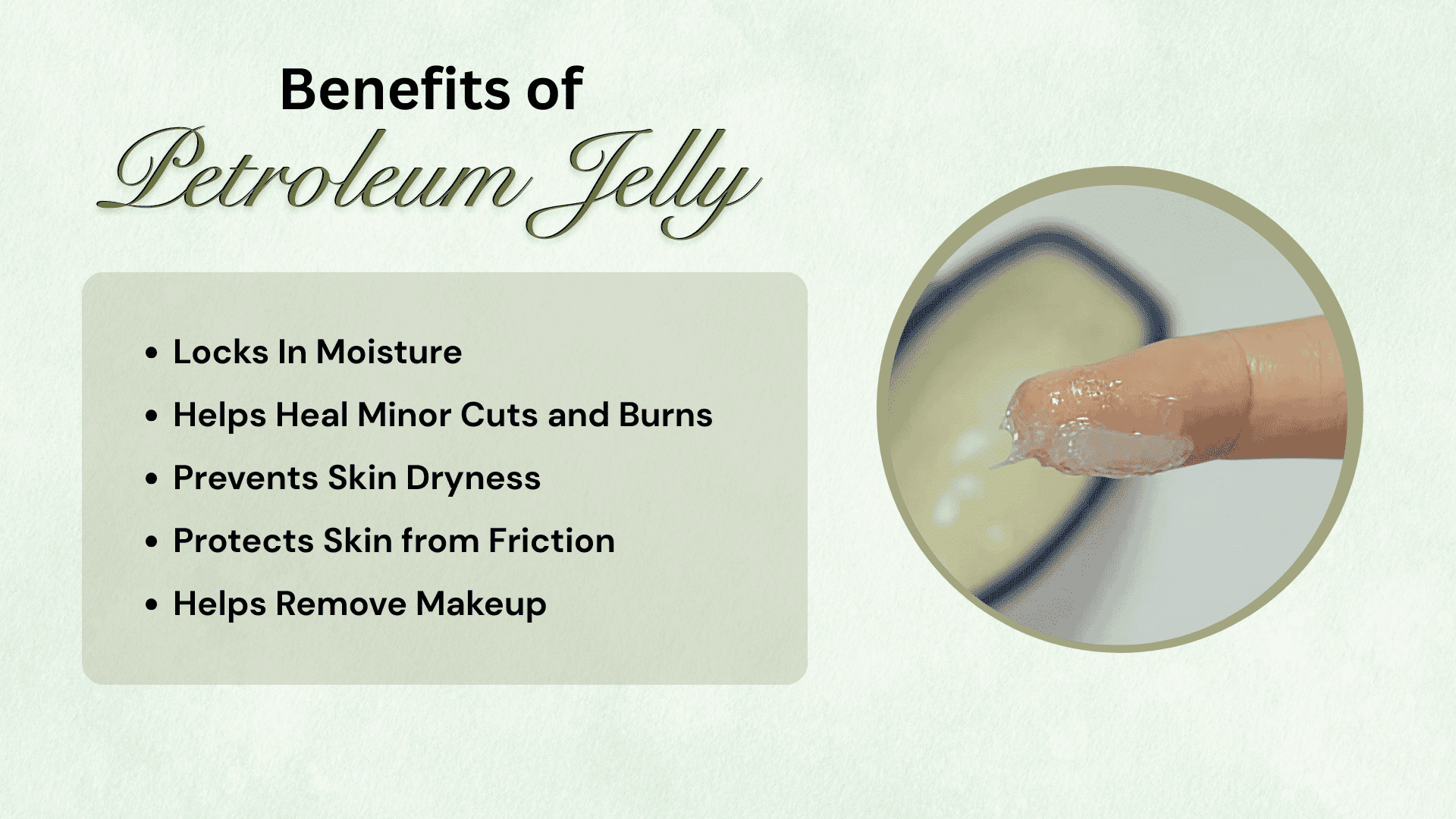
Petroleum jelly has stood the test of time as one of the most versatile skincare products available.
Below are some of its most well-known and widely recognized benefits:
1. Locks In Moisture
It acts as an occlusive barrier on the skin’s surface, preventing water loss throughout the day.
This makes it especially useful for people with dry or sensitive skin who need long-lasting hydration without frequent reapplication or the expense of expensive moisturizers.
This practice is even backed by the Korean skincare trend called “slugging,” where petroleum jelly is applied as the final step in a nighttime routine to seal in all previous skincare layers overnight.
2. Helps Heal Minor Cuts and Burns
By keeping small wounds moist, petroleum jelly supports the skin’s natural healing process.
Studies suggest that moist wound healing reduces scarring and speeds recovery compared to leaving minor cuts and burns exposed to the open air.
3. Prevents Skin Dryness
Applied to rough or cracked areas like heels, knuckles, and elbows, it effectively seals in the skin’s natural moisture.
Regular use can visibly soften dry and flaky patches over time, requiring very little product for noticeable, lasting results.
4. Protects Skin from Friction
It creates a smooth, protective layer between skin surfaces, significantly reducing chafing in high-friction areas.
Athletes, runners, and walkers commonly apply it before physical activity to prevent painful skin irritation during long hours of movement and exercise.
5. Helps Remove Makeup
It gently breaks down even stubborn, waterproof makeup without stripping the skin of its natural oils.
This makes it a soft, chemical-free option that works particularly well for people with sensitive skin around the eyes and face.
These benefits explain why petroleum jelly remains a trusted product in medicine cabinets and skincare routines across the world.
Possible Side Effects of Petroleum Jelly
Petroleum jelly is generally safe, but like any product, it may not work for everyone.
Here are some possible side effects to be aware of:
- May Clog Pores: Can block pores on oily or acne-prone skin, leading to breakouts.
- Traps Bacteria: Applying it to unclean skin may trap dirt and cause infection.
- Allergic Reactions: Rare cases of redness, itching, or irritation may occur after use.
- Not Safe to Inhale: Regular inhalation, especially in large amounts, may affect lung health.
- Not Ideal for Deep Wounds: Sealing deep or infected wounds can slow proper healing down.
Used with care and on the right skin type, most people can avoid these side effects altogether.
Is Petroleum Jelly Bad for You?
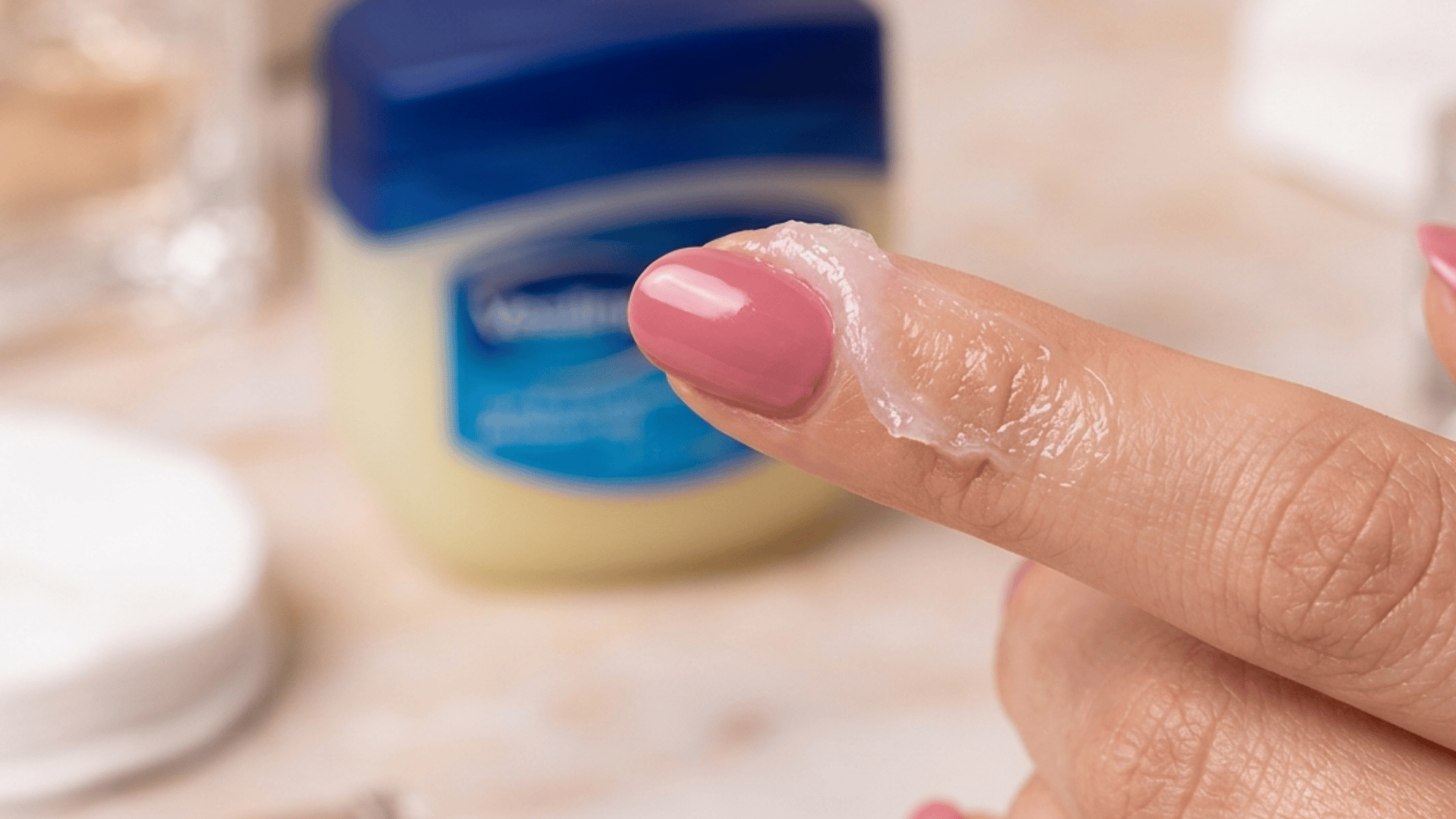
No, petroleum jelly, such as Vaseline, is generally safe, non-toxic, and effective for topical use.
The FDA recognizes it as a safe skin protectant, and it has been used in skincare and medicine for over 150 years.
It is highly refined, which makes it suitable for everyday use.
It works as an occlusive agent, meaning it forms a barrier on the skin to lock in moisture. It is not meant for consumption or internal use.
Is Petroleum Jelly Safe for Skin?
Yes, petroleum jelly is safe for most skin types. It works by sitting on top of the skin and forming a protective barrier that locks in moisture and shields skin from external irritants.
It does not get absorbed into the skin, which is what makes it so effective.
Here is what makes it generally skin-friendly:
- Non-irritating: Free from fragrances and harsh chemicals
- Hypoallergenic: Unlikely to trigger reactions in most people
- Dermatologist recommended: Widely used in clinical skincare routines
Does Petroleum Jelly Clog Pores? It is considered occlusive but not strongly comedogenic. For dry or normal skin, it rarely causes clogged pores.
Can It Cause Acne?It depends on skin type. Oily or acne-prone skin may react negatively, while dry skin types generally tolerate it well.
Is Petroleum Jelly Safe for Lips and Face?
Yes, petroleum jelly is safe for both lips and face when used correctly. It is gentle, fragrance-free, and forms a protective layer that keeps moisture from escaping.
Many dermatologists recommend it for sensitive facial skin as a simple, no-fuss option.
It can be used in several ways on the face:
- Lip Care: Soothes and protects chapped, dry lips effectively
- Dry Patches: Targets flaky areas around the nose and chin
- Under-Eye Area: Gently hydrates the thin, delicate skin overnight
- Overnight Skin Protection: Works as a light sleeping mask to retain moisture through the night
It is best applied on clean skin in small amounts for the face.
It is also commonly recommended by tattoo artists during the healing process for lip blush, as it keeps the treated area moist, protected, and free from dryness while the skin recovers.
What Reddit Users Say About Petroleum Jelly
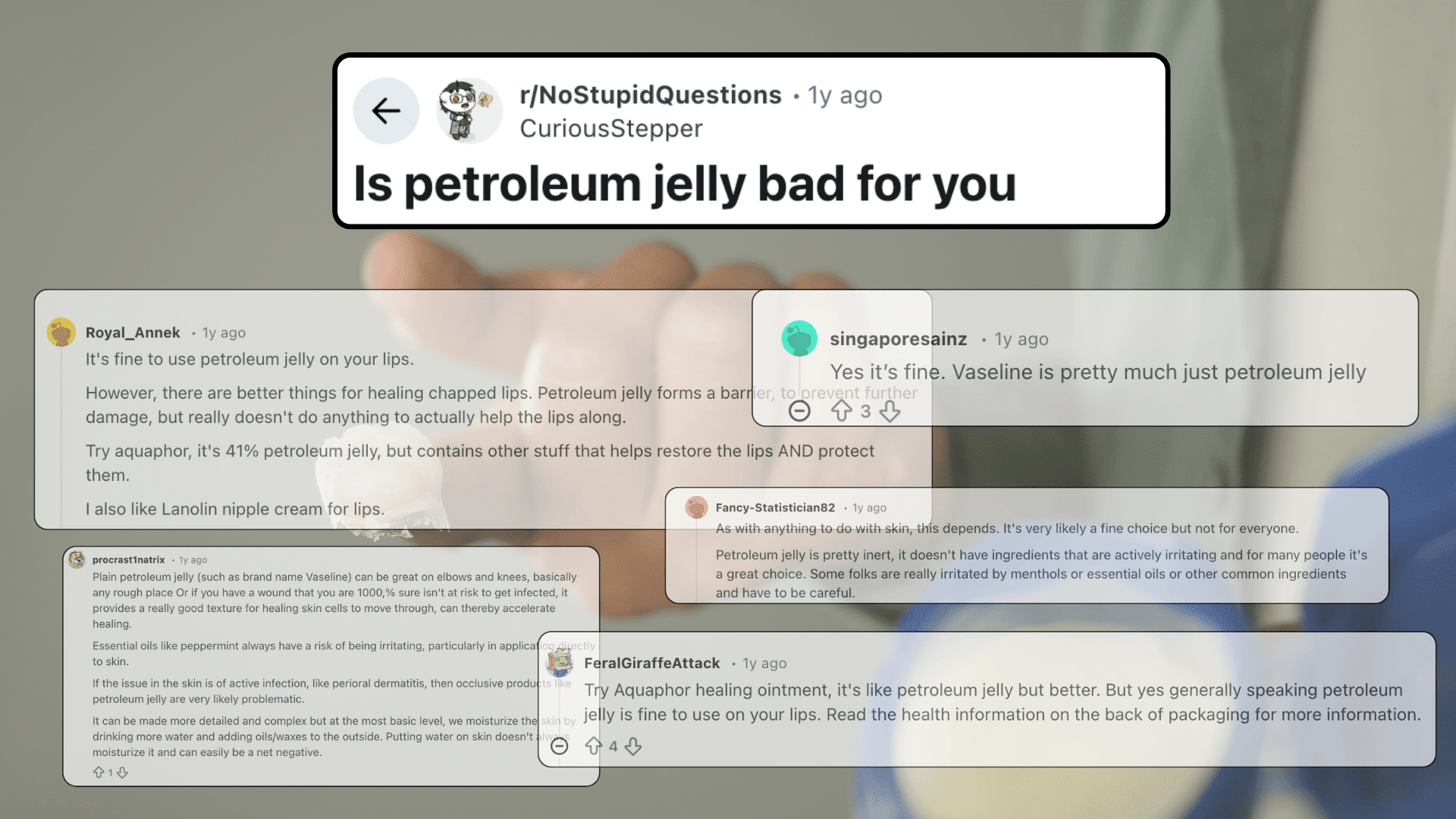
Reddit users have shared plenty of real-world experiences with petroleum jelly across various skincare discussions.
The overall take is largely positive, with a few practical tips and honest limitations worth noting.
- It is free from irritating ingredients, making it a reliable choice for those with sensitive or reactive skin.
- For the best moisture-locking results, users strongly recommend applying it right after washing while the skin is still slightly damp.
- It is commonly used on lips, elbows, knees, and other rough or dry patches with consistent, positive results.
- Many users recommend Aquaphor, a blend of petroleum jelly and healing ingredients, for more severely dry or chapped skin.
Overall, Reddit users view petroleum jelly as a simple, affordable, and dependable skincare product that delivers results when used the right way.
Safer Alternatives to Petroleum Jelly
If petroleum jelly feels too heavy for your skin, there are lighter, natural options worth trying.
Shea butter deeply moisturizes without a thick barrier.
Coconut oil absorbs quickly and offers mild antibacterial benefits.
Beeswax balm protects and softens, making it a popular choice for lips and hands.
Aloe vera gel hydrates without clogging pores, ideal for sensitive or acne-prone skin.
The best pick simply depends on your skin type and needs.
Petroleum Jelly: Worth It or Not?
After everything covered here, the answer is simple: Petroleum jelly is safe for most people when used the right way.
It has been trusted for over 150 years, backed by the FDA, and used in skincare routines worldwide. It locks in moisture, supports minor wound healing, and works well on lips, face, and dry skin.
Even the Korean skincare community has embraced it through the popular slugging trend.
That said, those with oily or acne-prone skin should be careful, and natural alternatives like shea butter or aloe vera are always worth considering.
Quality matters; always choose a refined, cosmetic, or medical-grade product for the best results.
Have you used petroleum jelly before?
Drop your experience or favorite use in the comments below!
Frequently Asked Questions
Is Petroleum Jelly Banned in Europe?
No. Petroleum jelly is not banned in Europe. Cosmetic-grade petroleum jelly is allowed when properly refined to remove harmful impurities. Many skincare and medical products sold in the EU still use it.
Do Dermatologists Recommend Vaseline?
Yes. Many dermatologists recommend Vaseline for dry skin, minor cuts, and skin protection. It is fragrance-free, simple, and effective at locking in moisture when applied to clean skin.
Which is Better Vaseline or Petroleum Jelly?
They are essentially the same. Vaseline is a brand of petroleum jelly. The main difference is in purification and quality control, as branded versions usually adhere to strict refining standards for skincare use.