
A random sore spot on the scalp can feel strange.
One moment, everything feels normal, and the next, a small patch suddenly hurts when touched.
When pain stays in one specific area, it often raises a simple question: why does my scalp hurt in one spot?
Sometimes the reason is harmless, like a tight ponytail or mild irritation.
Other times, it may be linked to inflammation, irritated hair follicles, or even nerve sensitivity.
Ahead, the possible reasons behind a tender scalp in one area, along with signs to watch for and simple ways to deal with it, will be explained.
What Does Scalp Tenderness in One Spot Mean?
Scalp tenderness in one spot means a specific area of your scalp feels sore, sensitive, or painful, sometimes even without an obvious reason.
Unlike general scalp discomfort that spreads across the whole head, this type of pain stays fixed in one place.
In most cases, it signals irritation, inflammation, or nerve sensitivity in that particular area. It can show up suddenly or build up slowly over time.
Here’s how it typically feels:
- Pain when touching or brushing your hair
- A sore or sensitive patch that stays in one spot
- Mild warmth or slight swelling in the area
- Pain when moving your hair or tying it up
The way the pain feels can actually tell you a lot.
For example, pain that gets worse when you pull your hair is very different from a burning or itchy patch that stays put. These small details matter.
The cause can vary from person to person, depending on symptoms, daily habits, and overall health.
Common Causes Why My Scalp Is Tender in One Spot
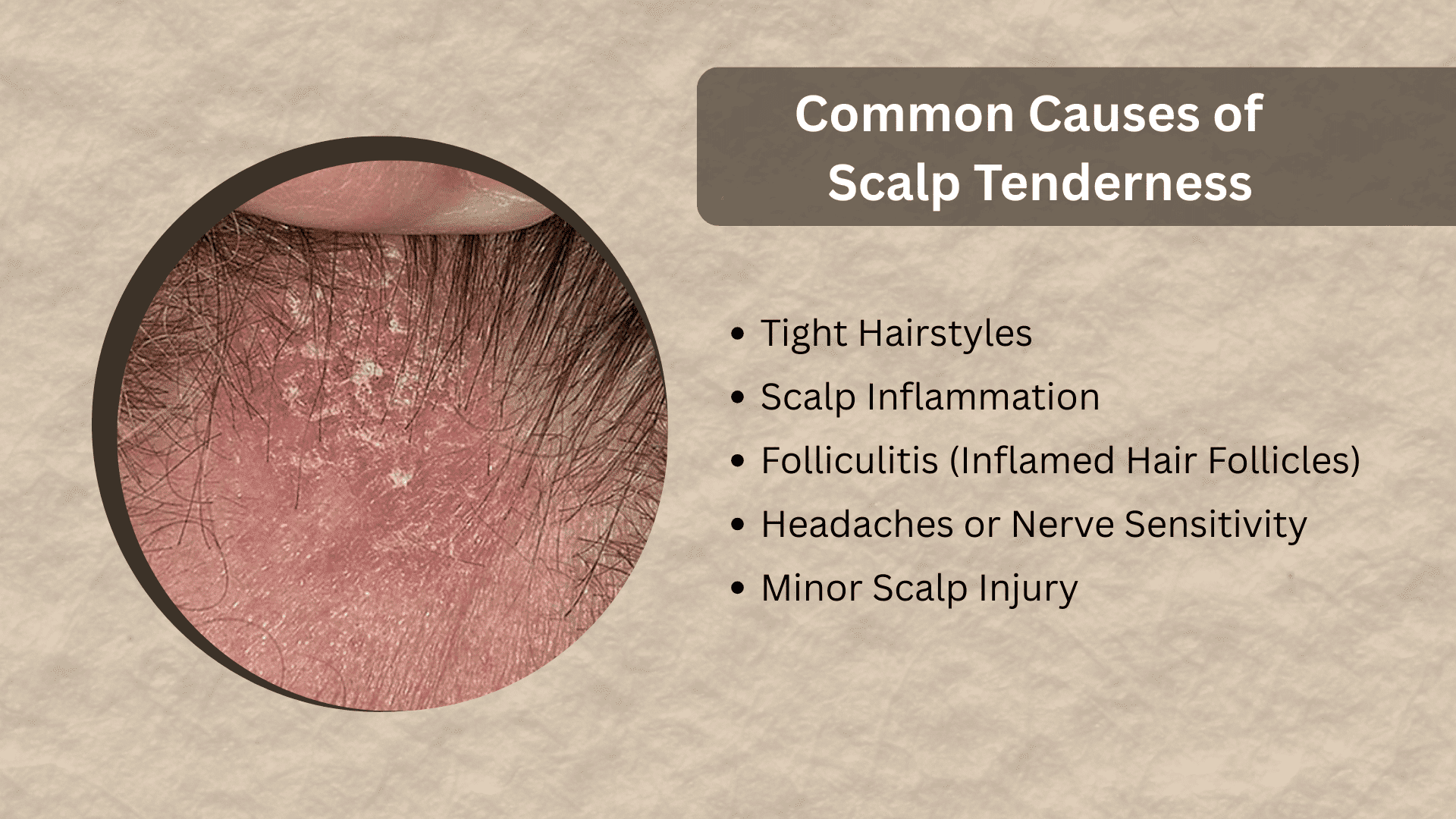
Several everyday habits and health conditions can lead to pain or soreness in one spot on your scalp.
Below are some of the most common causes:
1. Tight Hairstyles
One of the most frequent causes of localized scalp pain is wearing tight hairstyles.
Tightly pulling hairstyles stress hair roots and surrounding skin, which over time can cause soreness, especially where pulling is strongest.
Common tight hairstyles that can trigger this include:
- Ponytails: especially high or very tight ones worn daily
- Braids: tight braiding puts repeated pressure on the roots
- Buns: pulling hair up and securing it tightly strains the scalp
- Hair extensions: the added weight and attachment points create ongoing tension
The pain usually shows up right where the hair is being pulled the most. Switching to a looser style often brings quick relief.
2. Scalp Inflammation
Sometimes the scalp itself becomes inflamed, making even a light touch feel uncomfortable.
Inflammation causes the skin to react, and when it happens in one spot, that area can feel tender, warm, or itchy.
A few conditions that can trigger scalp inflammation include:
- Seborrheic dermatitis: a common skin condition that causes red, flaky patches and irritation on the scalp
- Psoriasis: causes thick, scaly patches that can feel sore and sensitive in specific areas
- Contact irritation from hair products: certain shampoos, conditioners, or styling products contain harsh ingredients that irritate the scalp skin
Inflammation might seem like minor redness or no visible signs, but the tenderness is real.
Identifying the product or condition causing the reaction is usually the first step toward feeling better.
3. Folliculitis (Inflamed Hair Follicles)
Each hair grows out of a tiny opening called a follicle. When one or more of these follicles gets irritated or infected, it can create a small but painful sore spot.
This is known as folliculitis, and it can be triggered by bacteria, sweat buildup, or friction from hats worn regularly.
Symptoms may include:
- Tender bumps: small raised spots that hurt when pressed
- Redness around the area: skin looks irritated
- Small pimple-like spots near the hair follicles: may contain fluid in some cases
Because it usually affects just one or two follicles at a time, the pain tends to stay localized.
4. Headaches or Nerve Sensitivity
Not all scalp pain starts at the scalp itself. Certain types of headaches can make the scalp feel tender and sore even when there is no visible irritation on the skin.
Two common examples include:
- Tension headaches: the muscles around the head and neck tighten up, which can make the scalp feel sensitive in specific spots
- Occipital neuralgia: a condition where the nerves running from the neck up to the scalp become irritated, causing sharp or aching pain in one area
In both cases, the pain often starts in the neck or base of the skull and works its way up to the scalp.
So if your scalp feels sore but your skin looks completely normal, a headache or a nerve issue could be the reason.
5. Minor Scalp Injury
Sometimes the cause is as simple as a small injury to the scalp. Even minor damage can leave one spot feeling sore for a few days.
Common causes include:
- Scratching: aggressive scratching from itchiness can irritate the skin and leave a tender patch
- Minor bumps: hitting your head lightly can cause a sore spot that lingers
- Sunburn on the scalp: exposed areas like the parting line can burn easily, leaving the skin feeling raw and sensitive
The pain from a minor injury is usually short-lived and fades on its own within a few days as the skin heals.
6. Skin Infections
A bacterial or fungal infection on the scalp can make a specific area sore and uncomfortable. Unlike general irritation, infections tend to get worse over time if left untreated.
Signs that a skin infection may be the cause include:
- Red patches: the affected area looks visibly inflamed
- Itching: a persistent itch that does not go away with regular washing
- Painful bumps: raised spots that feel tender when touched
If the soreness is getting worse rather than better, or if you notice any discharge or spreading redness, it is worth getting it checked by a doctor sooner rather than later.
When Scalp Tenderness Might Be Linked to Hair Loss?
Scalp pain and hair loss do not always go together, but in some cases, one can follow the other.
Conditions like traction alopecia caused by long-term tension on the hair can make the scalp sore and weaken the roots over time.
Inflammatory scalp disorders and stress-related hair shedding can also trigger both symptoms at once.
If you notice thinning or shedding around the tender spot, it is worth paying attention to rather than ignoring.
Symptoms That May Appear With Scalp Tenderness
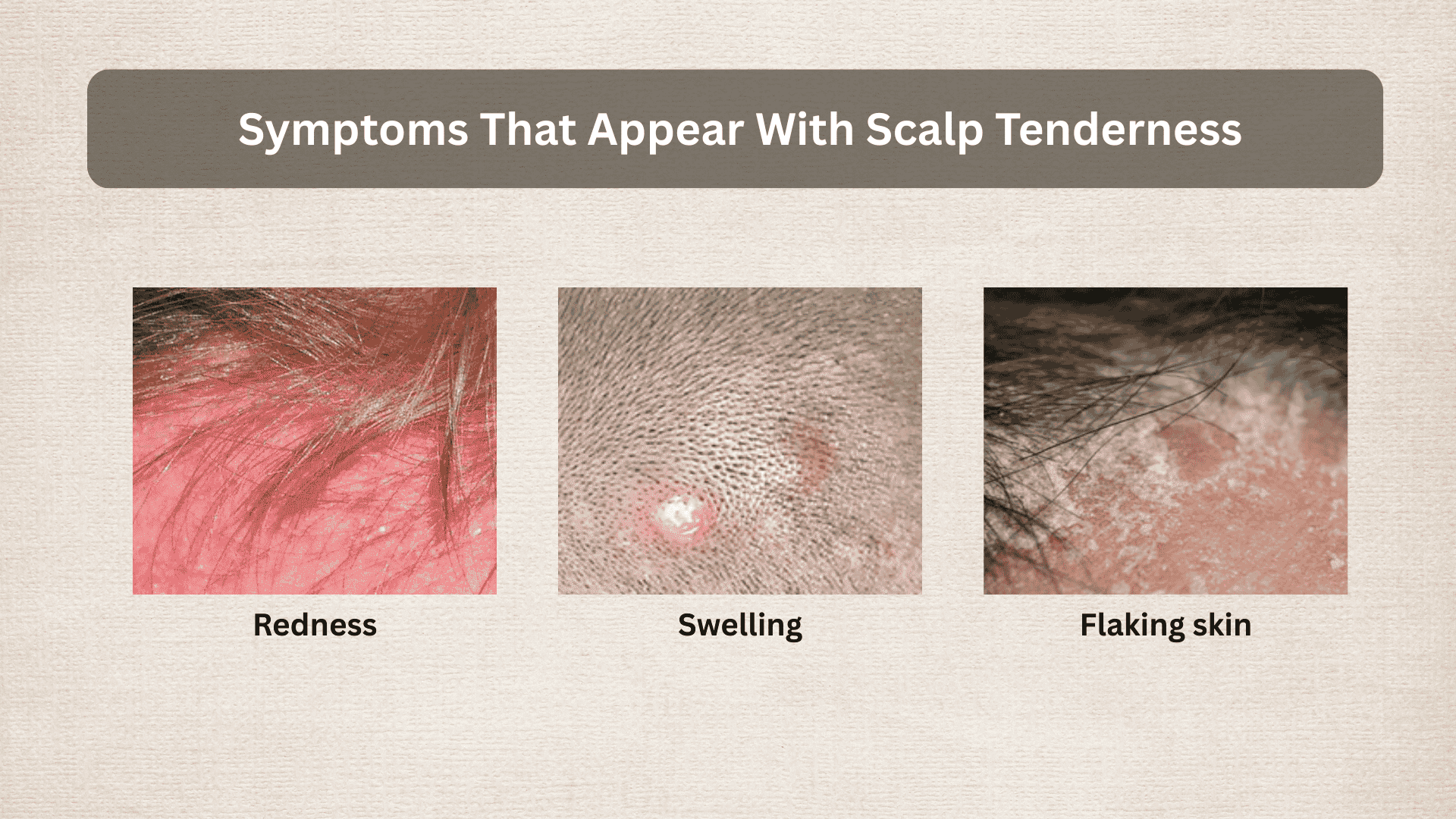
Scalp tenderness rarely shows up alone. Depending on the cause, you may notice one or more additional symptoms in or around the affected area.
Common symptoms that may appear include:
- Redness: the skin looks visibly irritated or flushed
- Swelling: a slightly raised or puffy feeling in the sore spot
- Itching: a persistent urge to scratch the area
- Flaking skin: dry or peeling skin around the tender patch
- Small bumps or pimples: raised spots that may feel sore when touched
- Hair sensitivity: even light contact with the hair feels uncomfortable
Paying attention to which symptoms appear together can go a long way in figuring out what is actually going on with your scalp.
|
When to See a Doctor? Most cases of scalp tenderness clear up on their own with simple care. However, it is best to see a doctor if you notice pain lasting more than a few days, swelling, pus, severe redness, or a spreading rash. Hair loss around the tender spot or a fever alongside the pain also needs professional attention. |
Conclusion
A sore patch on the scalp can feel confusing, especially when it appears suddenly and stays in one place.
As discussed, several factors can lead to this type of discomfort, including tight hairstyles, scalp inflammation, irritated hair follicles, headaches, minor injuries, or skin infections.
In many situations, the cause is simple, and the tenderness fades once the trigger is removed.
Small changes like loosening hairstyles, avoiding harsh products, or giving the scalp time to recover can often help.
However, ongoing pain, visible skin changes, or hair loss around the sensitive area should not be ignored.
If the thought “why is my scalp tender in one spot?” has crossed your mind, paying attention to symptoms is the first step toward finding the reason.
Have you experienced a sore scalp before? Share what it felt like or what helped in the comments below.
Frequently Asked Questions
Can Stress Cause Scalp Tenderness?
Yes. Stress can tighten the muscles around the head and neck, which may make certain areas of the scalp feel sore or sensitive. This often occurs alongside tension headaches.
Why is My Scalp Sore Even when My Hair is Clean?
Scalp soreness can still happen due to inflammation, irritated hair follicles, tight hairstyles, or nerve sensitivity. Clean hair does not always prevent underlying scalp irritation.
Can Dandruff Cause Scalp Pain?
Yes. Dandruff can irritate the scalp and cause itching, dryness, and mild inflammation. In some cases, this irritation may make certain areas feel sore or sensitive.