You start yoga to feel better, not to ache through it. But if you are new, shopping for yoga mats can feel overwhelming fast. Thin studio mats can feel uncomfortable under your knees, slippery surfaces make Downward Dog feel uncertain, and every product page seems to promise the same non-slip, eco-friendly miracle.
This guide helps you compare those promises with practical features. It focuses on beginner-friendly options for people in the United States who want more support, whether that means cushioning, extra room, or a surface that suits their practice, and narrows the choices to four ranked options for 2026. The buying criteria cover grip and non-slip features, thickness and cushioning, material descriptions, size and portability, and value.
Our top pick is Gayo for beginners who want more support, because it pairs a wide cork surface with 5mm overall cushioning and visual guides for referencing placement during early poses. You get an oversized footprint with printed alignment cues on a cork top. For hot-yoga style and fashion-forward design, Yoga Design Lab is the strongest alternative, with the choice depending on the model. For a dense cork-and-rubber feel with alignment markings, Tranquil Yogi is worth a close look.
Price is easier to judge when you compare specific options. Gayo lists at $69.97, while Ananday lists its Cork Yoga Mat at $118 for shoppers who specifically want a plant-based alternative. That gives you two different price points to consider alongside the features you expect to use, rather than treating the higher price as a measure of comfort. If you practice at home on hard floors, prefer cushioning beneath your wrists or knees, or are taller and tired of hanging off the edge, pay particular attention to thickness and dimensions before choosing.
How We Chose
We did not try to crown one mat for everyone. We organized the choices around common beginner concerns, then gave each recommendation its own lane so you can match the mat to how you actually practice. These are editorial buying criteria based on product features, not hands-on testing or lab-test claims.
Grip And Non-Slip Performance
You need a surface that suits your practice when your hands get damp. We prioritized grip descriptions and surface materials, with particular attention to whether a model is intended for warm or sweaty sessions. Cork is relevant here because it tends to feel grippier with light moisture, though your experience will still depend on the mat, your hands and feet, and the conditions in which you practice.
Thickness And Joint Cushioning
Thickness affects both comfort and balance. A thin mat can leave little padding between your knees and hardwood, while a very soft, thick mat may feel less steady in standing poses. For beginners who want more support, around 5mm overall thickness is a useful starting point: more material beneath you than a 3mm travel mat, without choosing thickness alone as a promise of stability or relief.
Eco Materials And Honest Sustainability Claims
Many mats use words like eco-friendly, natural, biodegradable, and sustainable very loosely. Look for specific materials you can understand, such as cork harvested from bark and natural tree rubber for the base, rather than vague green language. When you see broad environmental claims, it helps to know how regulators frame them, such as in the FTC Guides for the Use of Environmental Marketing Claims, so you can ask what part of the mat the claim actually covers.
Size And Portability
Standard mats can feel cramped if you are tall, broad-shouldered, or working on wide-stance poses. Extra width deserves attention, but so does portability. A heavier natural mat may suit a dedicated practice space at home yet be inconvenient to carry on the subway every day, so consider the trip to class as well as the space available when you unroll it.
Value For Money
Value depends on what you will use, not just the lowest price. We considered cushioning, dimensions and surface materials alongside practical details such as alignment markings and carrying accessories. A $69.97 mat may be worth the expense if those features suit your routine, but a higher price alone does not tell you whether a mat will feel comfortable.
The 4 Best Yoga Mats For Beginners Who Want More Support
Each mat below suits a different set of preferences, whether you are prioritizing cushioning, material choices, or a model intended for hot yoga. Gayo is our top beginner all-rounder recommendation for 2026, followed by a design-led range, a dense cork option with alignment references, and a plant-based alternative.
|
Mat |
Best For |
Standout Support Feature |
|---|---|---|
|
Gayo |
Beginners Wanting Extra Space, Alignment Reference Lines, And Sustainable Grip |
Oversized 72 x 26 Inch Surface With 5mm Overall Cushioning |
|
Yoga Design Lab |
Hot Yoga Styling And Fashion-Forward Eco Design |
Design-Led Range With Options Made For Sweaty Practice |
|
Tranquil Yogi |
Dense Support With Alignment References |
72 x 24-Inch Cork And Rubber Mat With 5mm Overall Thickness |
|
Ananday |
Shoppers Seeking A Plant-Based Cork Alternative |
Simple Cork Mat With Plant-Based Material Focus |
#1. Gayo: Best For Beginners Wanting Extra Space, Alignment Guidance, And Sustainable Grip
Gayo combines a 26-inch-wide cork surface with cushioning and placement references for beginners.
If you want extra room and a cork-and-rubber construction, start with Cork Yoga Mats from Gayo, which pairs a cork top with a natural tree rubber base in an oversized footprint. The width gives you more room to work with, while the printed markings offer a reference when you are thinking about hand and foot placement.
The specs make the comparison straightforward. This is a 72 x 26 inch mat with 5mm overall thickness, giving you two inches more width than the Tranquil Yogi option below. It weighs about 9 lbs, lists at $69.97, and uses sustainably sourced cork on top of natural tree rubber with printed alignment lines as visual reference cues while you learn. Like many cork surfaces, the top tends to grip better with a little moisture, though that is not a guarantee against slipping in every pose or practice condition.
Those dimensions are worth considering for home practice. If you are learning on wood or tile, the extra width gives your hands and feet more available surface in wide-legged poses and Warrior stances. The 5mm profile provides cushioning for Low Lunge and Tabletop, with comfort depending on your preferences and how much pressure you place on the mat. The alignment lines can also be useful early on, not as a rulebook or a substitute for teaching, but as visual checkpoints for noticing spacing when you do not have a mirror beside you.
You will still want to care for it like a natural product. Wipe it with a damp cloth using mild soap and warm water, let it fully air dry before you roll it, roll it cork-side out, and avoid leaving it in prolonged direct sun. Keeping that routine in mind is especially helpful if you plan to leave the mat in a regular home practice space.
Key Specs:
- Dimensions: 72 x 26 inches with 5mm overall thickness
- Weight: About 9 lbs
- Top Surface: Sustainably sourced cork with non-slip texture
- Base: Natural tree rubber for floor grip and cushioning
- Guides: Printed alignment lines for hand and foot placement reference
- Current Listed Price: $69.97
Pros:
- Oversized width gives taller bodies and wide stances more available space
- 5mm overall thickness provides cushioning beneath knees, wrists, and hips
- Cork tends to grip better with light moisture, relevant for warm flows
- Alignment lines give you visual placement cues while you build body awareness
- Natural cork and rubber construction offers an alternative to PVC-style foam
Cons:
- At about 9 lbs, it is substantial to carry and less convenient for daily studio commutes
- At $69.97, it is a purchase to weigh carefully if you are still deciding whether yoga suits you
- Alignment lines are most helpful early on; experienced practitioners with established body awareness may not want visual guides
Who It’s Best For: Beginners practicing at home or in a local studio who want 5mm cushioning and extra space to move, with cork-and-rubber materials and built-in placement references.
#2. Yoga Design Lab: Best For Hot Yoga And Fashion-Forward Eco Design
Yoga Design Lab is the pick for you if visual design matters when choosing your practice gear.
This is not a one-mat brand. Yoga Design Lab offers a range of premium yoga mats, accessories, and props designed around different practices and preferences, with an emphasis on fashion-forward design and bio-renewable materials. The company, founded in 2014 and based in Vernon Hills, Illinois, combines bold visuals with a sustainability-minded approach to its products. That range matters for beginners because you can choose a surface and thickness that fits how you practice rather than assuming every model suits every type of class.
If hot yoga is your preference, look closely at the models intended for it. Several options in the lineup are developed with high-heat, high-sweat sessions in mind, where the surface and its response to moisture deserve particular attention. You get color and pattern choices that look different from plain black studio mats, which may appeal if you enjoy expressive gear rather than a neutral design. For eco-conscious shoppers, the brand’s emphasis on bio-renewable inputs is a reason to examine individual material descriptions, not to assume the same environmental qualities across every product.
Support here depends on the model you select. The main appeal is the choice of design-led mats, including options for sweaty practice, rather than one oversized footprint with a single set of beginner features. If you practice mostly in studios and want a model intended for heated classes, that approach may suit you. Read the specific listing carefully: thickness and surface materials vary, as do care instructions, so match the version to your needs instead of treating the whole range as interchangeable.
Pros:
- Includes options intended for hot-yoga practitioners and sweaty sessions
- Brand emphasis on bio-renewable materials gives shoppers a direction for comparing individual models
- Bold, fashion-forward aesthetics stand out from plain-color mats
- Established U.S. brand with development history since 2014
Cons:
- Design-forward positioning and patterned finishes will not appeal if you want a plain, minimalist cork look
- Because it is a range rather than a single oversized beginner mat, you need to compare models for thickness and size instead of getting one-size support
Best For: Hot-yoga regulars and style-driven eco shoppers who want an expressive mat and are willing to choose the specific surface and thickness for their practice.
#3. Tranquil Yogi: Best For Dense Support With Alignment References
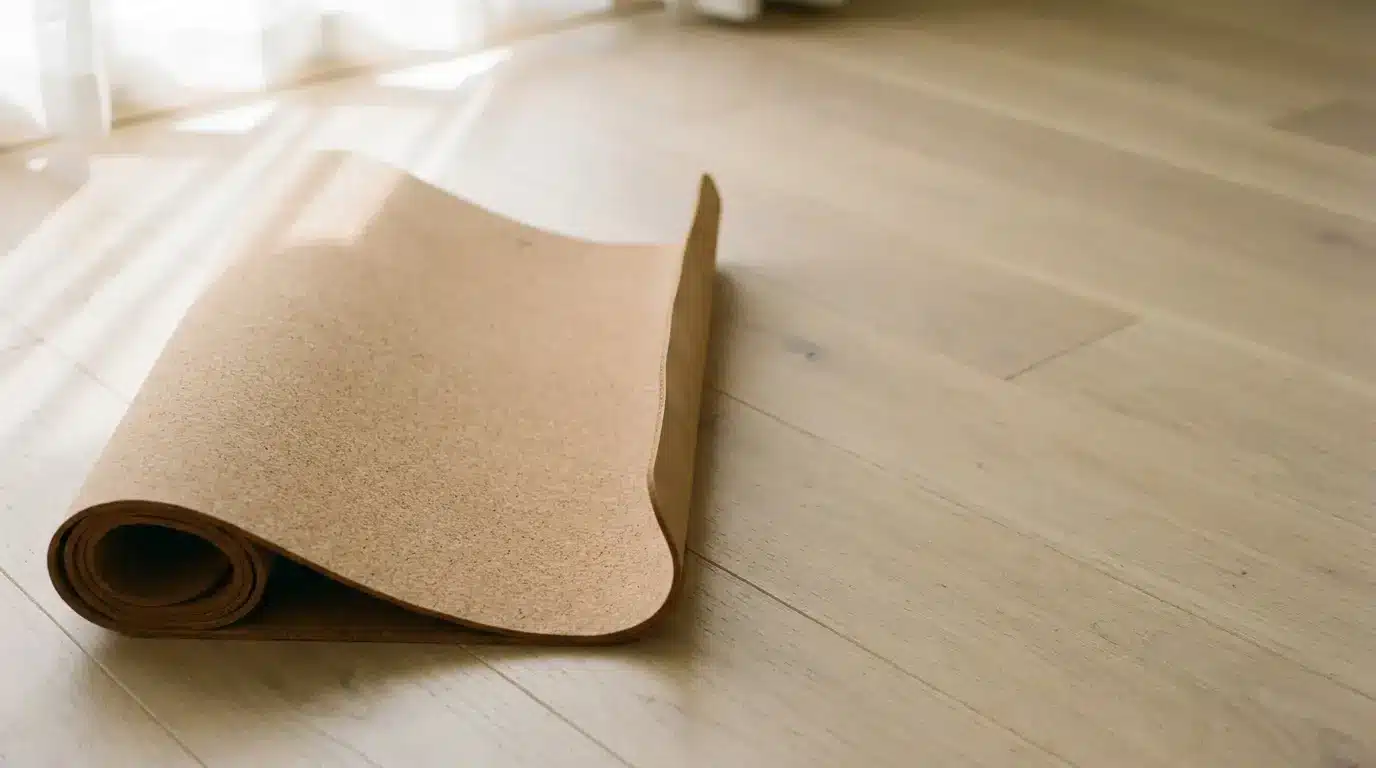
Tranquil Yogi’s Tranquility Cork Yoga Mat offers a dense 5mm construction with a natural cork top and natural rubber underside. Beginners who prefer a firm surface rather than plush foam may appreciate that design. The manufacturer describes medium grip on dry cork and increasing traction as the surface gets wet.
Its published dimensions are 72 x 24 inches, and it weighs 6.2 lbs. It has the same listed length and overall thickness as Gayo but is two inches narrower and lighter. For a beginner, that is a useful distinction: extra width may matter most at home, while a lower carrying weight can matter more on the way to a studio.
This mat includes alignment markings, so it is also an option for beginners who want visual placement references. Use the marks to notice symmetry and spacing, not to force your feet or hands into a single supposedly correct position. Your proportions and the pose you are learning still determine a comfortable stance, and a teacher can help interpret the guides.
The included carrying strap keeps the mat rolled for transport. At 6.2 lbs it is not a lightweight travel mat, but it is a more manageable carry than the 9 lb Gayo. The dense profile is the main support feature here; a folded blanket can still be useful for prolonged kneeling if you prefer more padding in one spot.
Pros:
- Dense 5mm construction offers a firm cork-and-rubber practice surface
- Alignment markings give beginners visual reference points
- Published dimensions help you compare usable space
- Included carrying strap simplifies transport
Cons:
- The 24-inch width offers less lateral space than Gayo
- Natural rubber is unsuitable for people who need to avoid latex
- Even at a lower weight than Gayo, it remains substantial to carry
Best For: Beginners who want dense cork support and alignment references in a narrower, lighter alternative to Gayo.
#4. Ananday: Best For A Plant-Based Cork Alternative Worth Exploring
Ananday is worth a look if plant-based materials are high on your list.
Ananday offers a Cork Yoga Mat listed at $118 with an emphasis on plant-based materials, making it an option for shoppers looking beyond basic synthetic constructions. For beginners who want more support, the appeal starts with material feel: cork offers a surface whose traction tends to increase with light perspiration, while its texture differs from PVC or TPE foam. If you practice slow flows or gentle vinyasa, or mainly use your mat at home, this option may suit a preference for cork and plant-based materials over the particular width offered by another pick.
The price gives you a clear comparison with Gayo. At $118, Ananday asks a larger investment than Gayo’s $69.97, so it makes most sense if you already know you enjoy yoga and place a high priority on its material direction. Expect the firm feel associated with cork rather than assuming that a higher price means plush foam softness. Keep your expectations realistic: a mat can provide a preferred surface and cushioning, but it does not replace gradual strength development, attention to alignment, or adjustments when a pose feels uncomfortable.
Pros:
- Cork surface offers traction that tends to increase with light moisture
- Plant-based material focus provides a clear alternative to synthetic foam
- Simple, calm aesthetic suits practitioners who prefer understated gear
Cons:
- At $118, it costs more than Gayo, so it is a larger commitment if you are just testing whether yoga sticks
- Cork firmness feels different from thick foam cushioning, which may surprise shoppers expecting a soft mat
Best For: Practitioners who want a plant-based cork alternative and are comfortable paying more for that material direction.
Final Choice Guide: Which Mat Should You Pick?
Choose Gayo if you are a beginner who wants extra width, 5mm overall cushioning, and alignment reference lines on a cork top at $69.97. It is our default top pick for home practice on hard floors and for learners who value placement references, provided its 72 x 26 inch dimensions and about 9 lb weight suit your space and carrying needs.
Choose Yoga Design Lab if hot yoga and expressive design appeal to you, and compare the individual models for the surface and thickness you need. Choose Tranquil Yogi if you want dense 5mm cork-and-rubber construction with alignment markings and a carrying strap in a narrower, lighter alternative to Gayo. Choose Ananday if a plant-based cork mat at $118 fits your values and budget. Before ordering, match the dimensions, weight, and cushioning to where you will practice and how you will get the mat there.
Frequently Asked Questions About Yoga Mats For Beginners
What Thickness Is Best For Beginner Joint Support?
For beginners who want more cushioning, around 5mm overall yoga mat thickness is a useful starting point in 2026. It gives you more material beneath knees in lunges, wrists in tabletop, and sit bones in seated poses than a 3mm travel mat, although density also affects how the surface feels.
On hardwood or tile, consider both the mat’s thickness and your preference for firm or soft padding. If you have ongoing joint sensitivity, extra padding may help with particular positions, such as a folded blanket under knees for Yin or knee pads for prolonged kneeling, rather than expecting thickness alone to solve discomfort.
How Does Cork Compare To PVC For Grip And Cleaning?
Cork and PVC have different surface textures. A cork yoga mat often feels grippier with light moisture, which is relevant when comparing options for warm flows and hot-yoga classes. Grip still depends on the particular mat and practice conditions, so choose according to the model’s intended use rather than relying on the material name alone.
For the cork care routine described here, wipe with a damp cloth using mild soap and warm water, let it fully air dry before rolling, roll cork-side out, and avoid prolonged sun exposure. When brands describe mats as eco-friendly or biodegradable, look for specifics about which layer the claim covers. The Federal Register notice on environmental marketing claims is a useful reminder that green terms should be qualified, not vague.
Which Size And Alignment Features Actually Help Beginners Most?
Extra width is worth considering alongside length. A 72 x 26 inch surface gives you more lateral room than a 72 x 24 inch mat when placing hands and feet in wide-legged poses. Length matters if you are over six feet or prefer extended Savasana without hanging off the end, so compare the listed dimensions with your own proportions.
Printed alignment lines serve as visual reference cues for noticing hand placement or foot spacing, but they do not replace instruction and do not guarantee proper form. Use them to build awareness while following cues from a teacher or trusted video series, without treating every marking as a position your body must match.
What Should You Expect To Pay For A Good Yoga Mat In 2026?
The two specific prices in this guide are Gayo at $69.97 and Ananday at $118. Gayo’s listing includes an oversized cork top, natural tree rubber base, and alignment references, so you can judge the price against features you expect to use. Ananday’s $118 price offers a different comparison for shoppers prioritizing its plant-based cork direction.
Consider the commitment carefully if you are sampling your first few classes. A larger purchase may make more sense once you know your practice preferences and how often you need to carry the mat. Either way, weigh dimensions and cushioning alongside the intended grip conditions, rather than choosing on color or price alone.