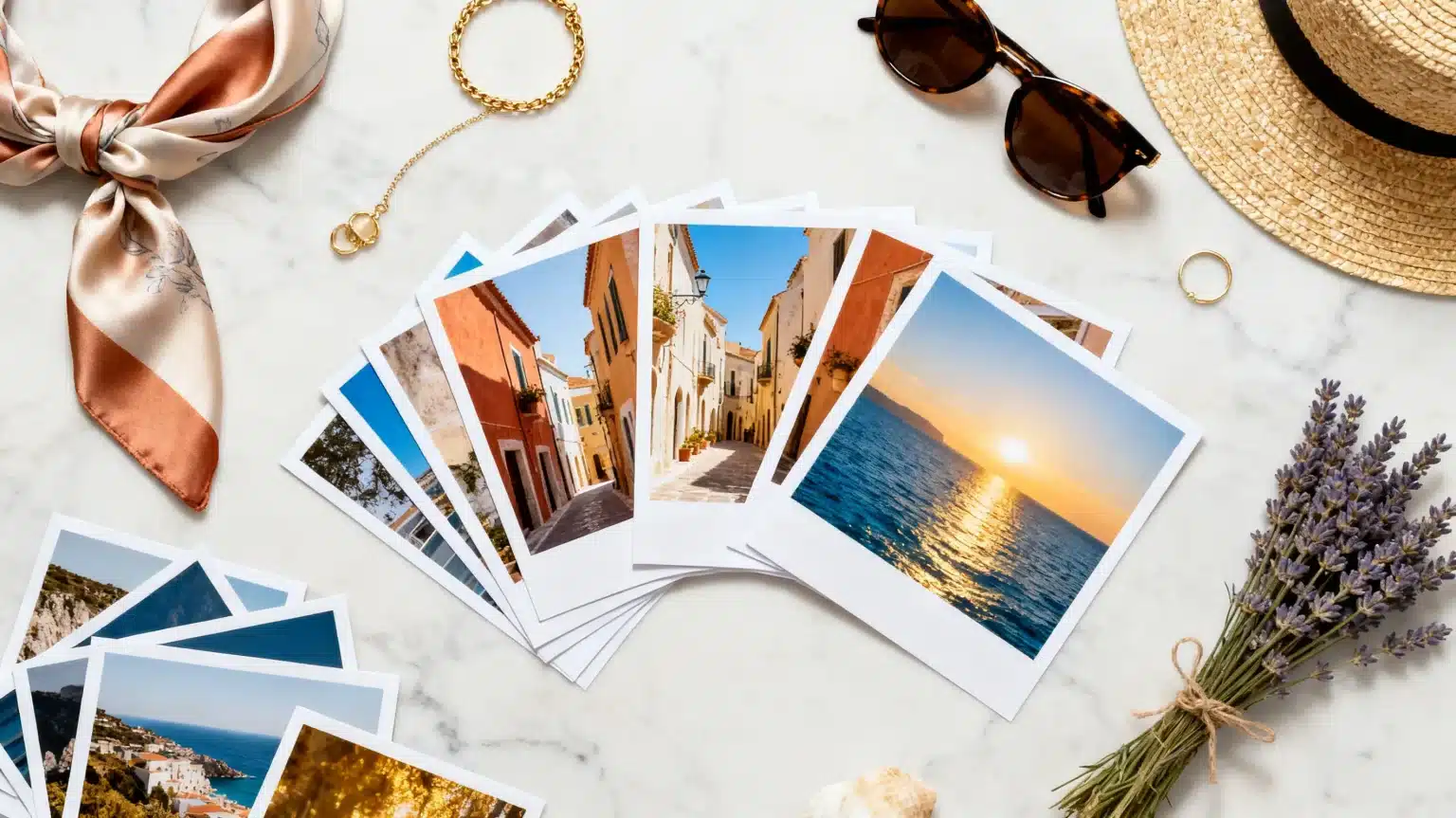
The best travel and style moments rarely stay neat and organized in your camera roll. They show up as a mix of sunlit streets, hotel mirrors, outfit details, coffee stops, airport selfies, and one really good photo you meant to post but never did. Over time, those images begin to feel too good to leave buried on your phone.
A photo book gives those moments a better home. It turns scattered pictures into something you can hold, flip through, and actually enjoy. More importantly, it lets you tell the story of how you traveled, dressed, and felt in a way that a feed or folder never quite can.
Why Travel and Style Photos Work So Well Together
Travel and style are naturally connected. Where you go shapes how you dress, and how you dress often reflects the mood of the place you’re in. A linen set in Lisbon, a sharp coat in Paris, or relaxed layers on a desert road trip all tell part of the same story.
That is what makes a travel-style photo book feel so personal. It is not just a collection of pretty pictures. It is a visual record of confidence, routine, discovery, and memory. When those moments are grouped thoughtfully, they become more meaningful than they seemed when you first took them.
Start With a Clear Theme
Before you open a layout tool or start selecting images, decide what the book is really about. A strong photo book usually has one clear thread running through it. That thread might be a single trip, a season of style, or a mix of both.
For example, you might build the book around:
- A destination trip with fashion-focused photos from each day
- A year of outfits captured during different travels
- One city and the looks inspired by it
- A personal style evolution shown through trips and events
The point is not to include everything. It is to choose a story that gives the book shape. When the theme is clear, the rest of the design choices become much easier.
Choose Photos That Tell a Story
It is tempting to use only your most polished shots, but a great photo book needs variety. The strongest pages usually combine a few standout images with more candid moments. That mix keeps the story feeling real.
Look for photos that show different sides of the trip or style moment. Include full outfits, close-ups of accessories, street scenes, hotel details, and unposed photos that capture movement or mood. A wide shot of a rooftop dinner may work better when paired with a detail of your shoes, bag, or table setting.
If you have too many photos, narrow them down by asking a simple question: does this image add something new? If the answer is no, leave it out. A cleaner selection makes the final book feel intentional instead of crowded.
Organize the Book Around Moments, Not Just Dates
A common mistake is arranging photos strictly by time. That can work for a travel diary, but it often makes the book feel stiff. A better approach is to organize pages around moments, moods, or scenes.
You might group pages by:
- Morning to evening looks
- Different neighborhoods or cities
- Packing, arrival, and exploration
- Casual days, dressed-up nights, and in-between moments
This creates more rhythm in the book. It also helps your reader move through the story the way they would remember it – by feeling and experience, not by clock time.
Use Layout to Make the Photos Feel Alive
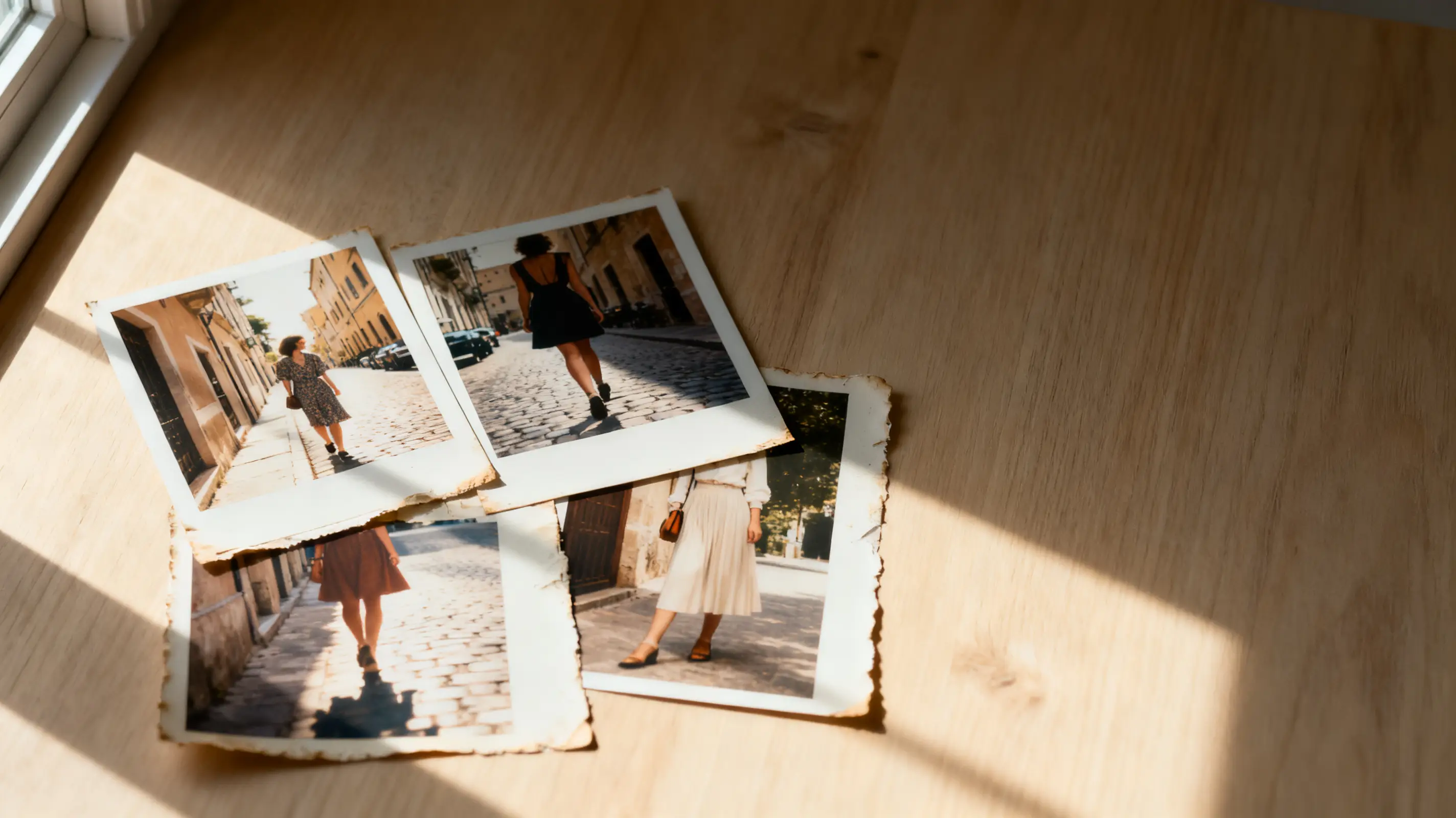
A good layout does more than make photos fit on a page. It guides the eye and sets the tone. A full-page image can create drama, while a grid of smaller photos can show detail and variety.
Mixing both is usually the best way to keep the book engaging.
Leave some white space so the pages do not feel cramped. Let a strong portrait or outfit shot breathe. If you have a series of photos from one moment, place them together so they feel connected. If a page is about a bold look or an iconic destination, give it space to stand on its own.
You can also use short captions to add context. A simple line like “First night in Marrakech” or
“My favorite coat for Rome” can make the memory feel sharper without overwhelming the design.
Make Style the Visual Thread
If your book includes both travel and fashion, style can become the thread that ties everything together. Repeating a color palette, type of outfit, or editing style helps the book feel cohesive.
Even if the locations change, the visual language can stay consistent.
This does not mean every page should look identical. It means the book should feel like it came from one point of view. Maybe your edits lean warm and natural, or maybe your outfits follow a simple neutral palette. Those small consistencies help the whole book feel polished.
If you want inspiration or compare formats, looking at a well-designed photo book can help you picture how your own story might come together.
Add Personal Details That Make It Yours
The most memorable photo books usually include details that only matter to you. These are the moments that remind you how the trip actually felt. A receipt tucked into a pocket, a sketch from a cafe, a note about the hotel where you borrowed a steamer – these small things can deepen the story.
You do not need to overdo it. A few meaningful details are enough. One or two captions about what you wore, where you were going, or why a certain day mattered can turn a nice book into something emotionally rich.
If you kept travel notes, save them. If you took screenshots of outfits before you packed, include them. These little pieces help connect the polished photographs to the real experience behind them.
Print It as Something You Will Actually Keep
A digital album is easy to forget. A printed photo book lives on a shelf, a coffee table, or a bedside stack where you can revisit it often. That physical presence gives your travel and style memories more weight.
When you print your book, think about how it will be used. A larger format can suit bold travel scenes, while a slimmer one may work better for a focused style story. Choose a cover that matches the mood of the photos inside, whether that feels clean, elegant, playful, or modern.
The goal is not perfection. It is to create something that feels true to your experience and enjoyable to revisit later.
Conclusion
Turning your best travel and style moments into a beautiful photo book is really about more than preserving pictures. It is about shaping memory into a story you can return to again and again.
When you choose a clear theme, edit with care, and design the pages around real moments, the result feels personal and lasting.
Start with the photos you already love, then build from there. Keep it simple, keep it honest, and let the book reflect the way those trips and outfits actually made you feel. When it is finished, you will not just have a collection of images – you will have a keepsake worth opening for years to come.