
Finding the right makeup shades can feel overwhelming, especially when nothing seems to sit right on your skin.
For Deep Autumn coloring, the problem is usually simple: the shades are too cool, too pink, or too light.
Deep Autumn makeup works differently. It leans warm, rich, and earthy, and when you get it right, every product looks like it was made for you.
Here, you will find exactly which shades suit your palette, how to build a full look step by step, and the most common mistakes to avoid.
What Is Deep Autumn Makeup?
Deep Autumn is a seasonal color analysis palette that blends the Autumn family’s warm, earthy tones with the Deep season’s intensity and contrast.
Those with this coloring typically have rich dark or auburn hair, warm olive or medium-to-deep skin, and eyes in shades of dark brown, hazel, or deep olive green.
Makeup for this palette leans into that natural depth, think burnt sienna, terracotta, bronze, chocolate brown, and warm taupe.
These shades work with your features rather than against them. Cool-toned nudes, icy highlights, or blue-based pinks tend to wash you out, while your ideal look stays grounded and deeply pigmented.
Key Features of a Deep Autumn Appearance
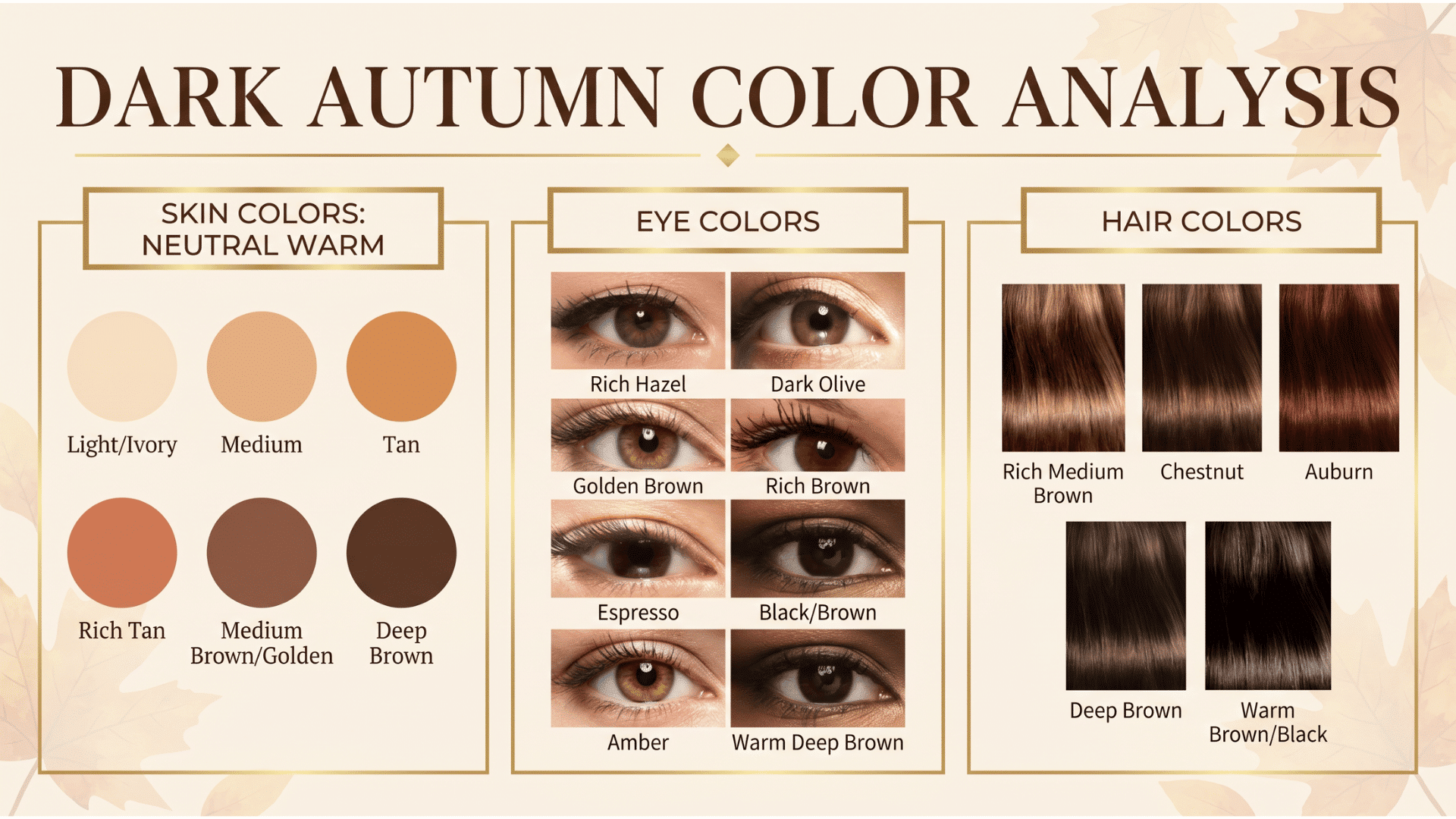
Deep Autumn coloring is defined by depth across all features. Look for a consistent richness that runs from skin to hair to eyes:
- Skin tone: Medium to deep, with golden, olive, or bronze undertones, never ruddy or cool
- Hair: Rich and dark, espresso brown, dark auburn, warm black, or deep chestnut
- Eyes: Dark brown, hazel, warm olive green, or amber
- Overall contrast: Moderate to high, striking but never stark
- Undertones: Consistently warm throughout, with no cool or neutral interference
If your coloring feels autumnal all at once, Deep Autumn is likely your season. When skin, hair, and eyes share that same deep warmth, the palette fits like a second skin.
Your Deep Autumn Color Guide
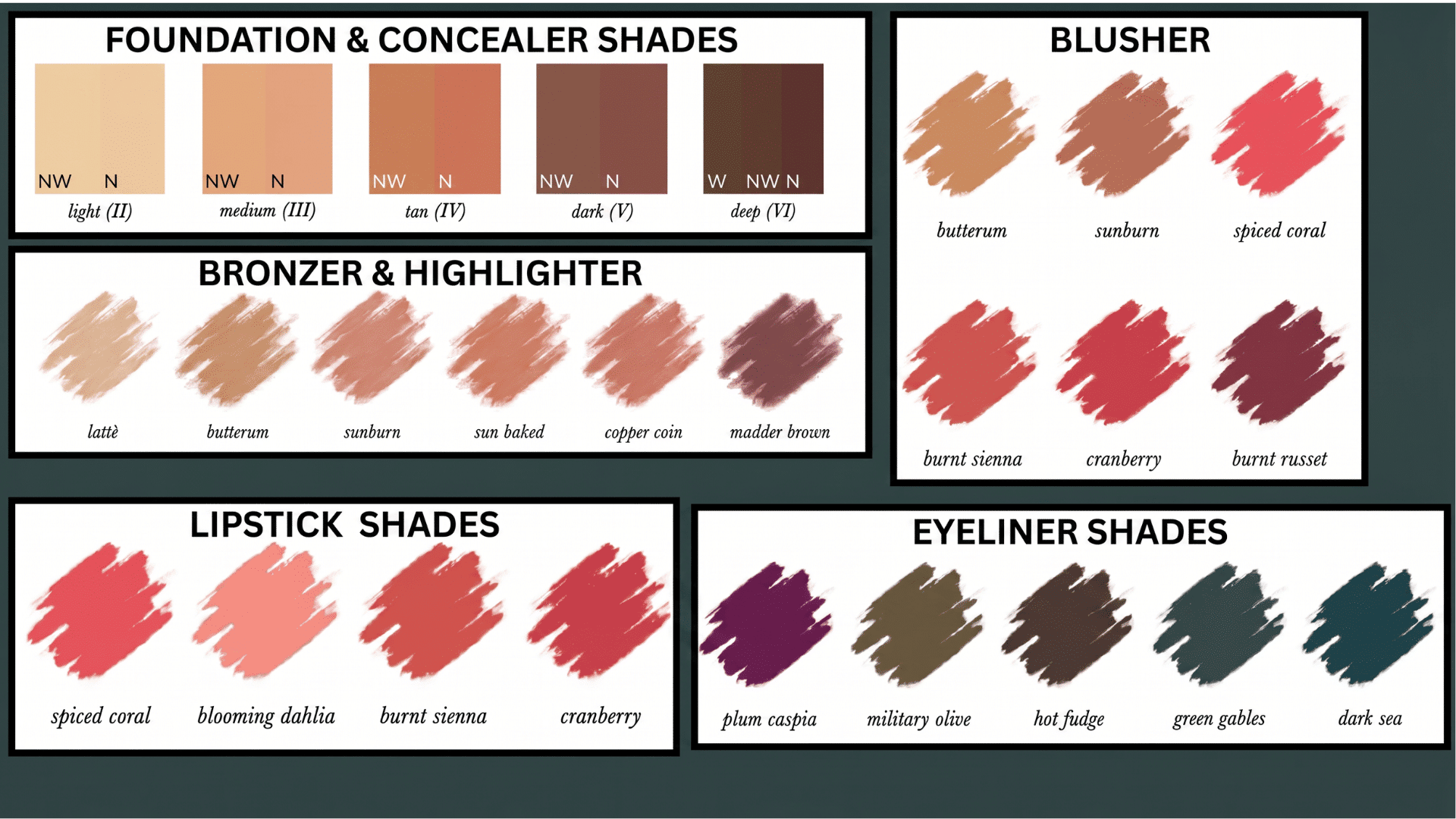
Read the table below to find your most flattering shades across every product:
| Category | Best Shades | Avoid |
|---|---|---|
| Lipstick | Terracotta, burnt orange, brick red, mocha, nude brown, caramel, russet, warm burgundy | Pink, purple, cool reds, blue-based berries |
| Eyeshadow | Bronze, copper, warm taupe, burnt sienna, chocolate brown, deep olive, khaki green | Grey neutrals, silver, icy or cool finishes |
| Blush | Warm peach, soft terracotta, muted coral | Pink or blue-based blush |
| Bronzer | Golden-brown, warm amber (matte or subtle shimmer) | Cool-toned bronzers |
| Highlighter | Gold, champagne, bronze | Silver, pearl |
| Eyeliner | Dark brown, warm black-brown, copper, bronze, deep olive, forest green | Pure cool black |
| Mascara | Brown-black | Cool black |
Pro tip: When in doubt, swatch in natural light. The right shade will melt into your features; the wrong one will sit on top.
Deep Autumn Makeup Looks in Practice
These three looks show how the Deep Autumn palette works across different occasions and levels of intensity. Each one uses the same core shades, just applied with a different hand.
1. Minimal Everyday Look
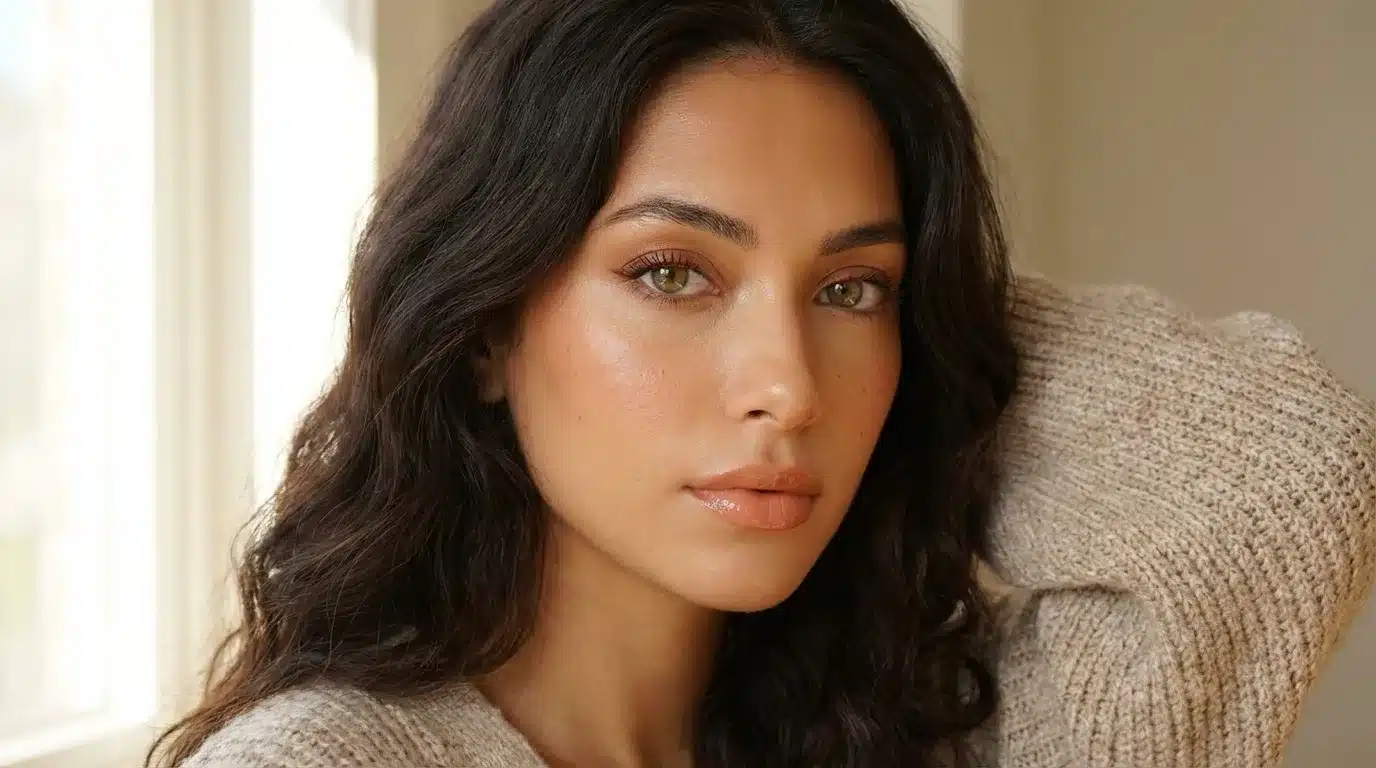
A natural, skin-first routine that brings out the warmth of a Deep Autumn complexion, no heavy products, nothing competing.
- Foundation: Light warm-beige, matched to your undertone
- Eyes: Caramel shadow wash on the lid, one coat of brown-black mascara
- Lips: Nude-brown lip gloss
- Blush: Soft peach, lightly applied
Ready in under ten minutes, this Deep Autumn makeup look works for any daytime setting polished enough to feel intentional, natural enough to look like your best skin.
2. Warm Smokey Eye Look
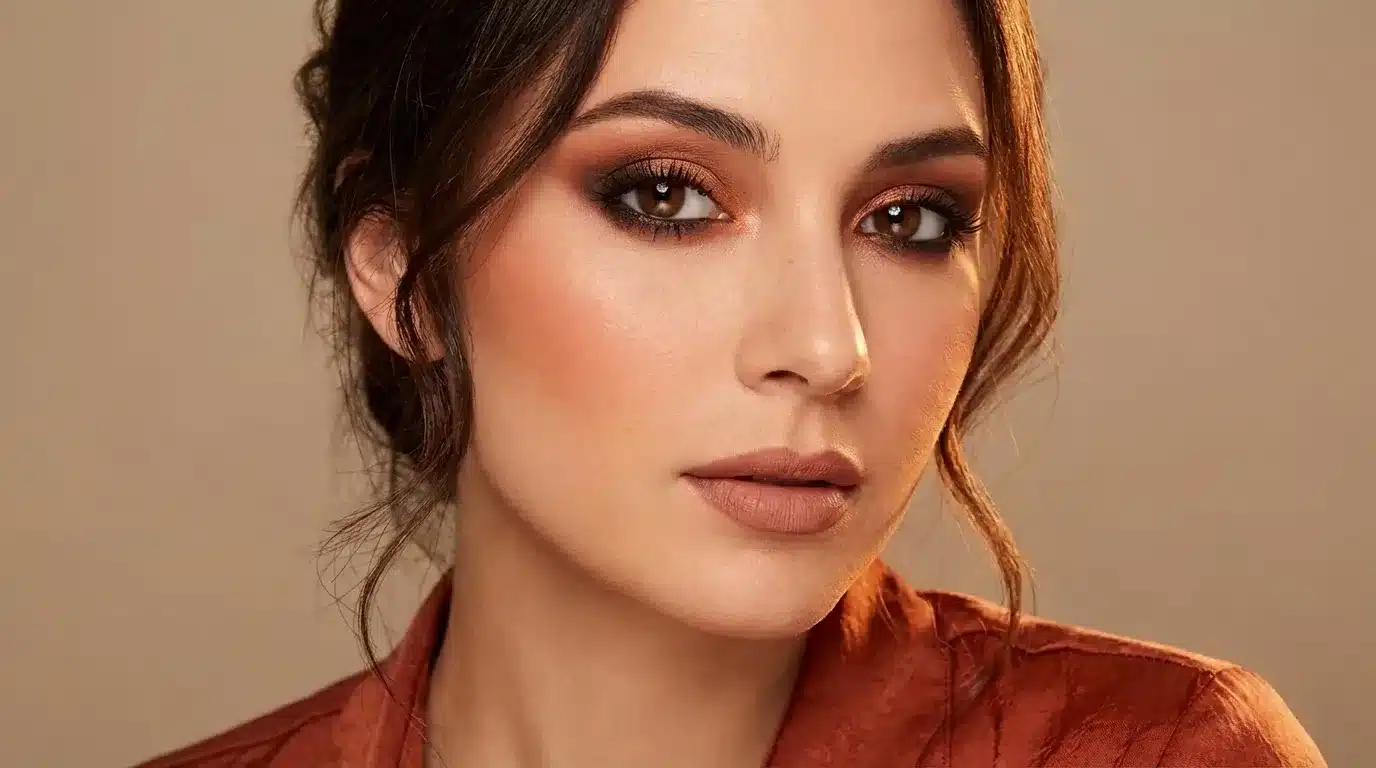
A rich, blended eye look that lets Deep Autumn’s warmth do the work, all earth and bronze, no cool tones in sight.
- Lid: Bronze eyeshadow as the base
- Crease: Burnt sienna, blended outward
- Lower lash line: Smudged for a smoky finish
- Inner corner: Copper for a luminous lift
- Lips: Nude brown to keep focus on the eyes
The secret to this Deep Autumn eye look is seamless blending; each shade should melt into the next with no visible edges. Perfect for evenings or any occasion where you want your eyes to lead.
3. Bold Lip-Focused Look
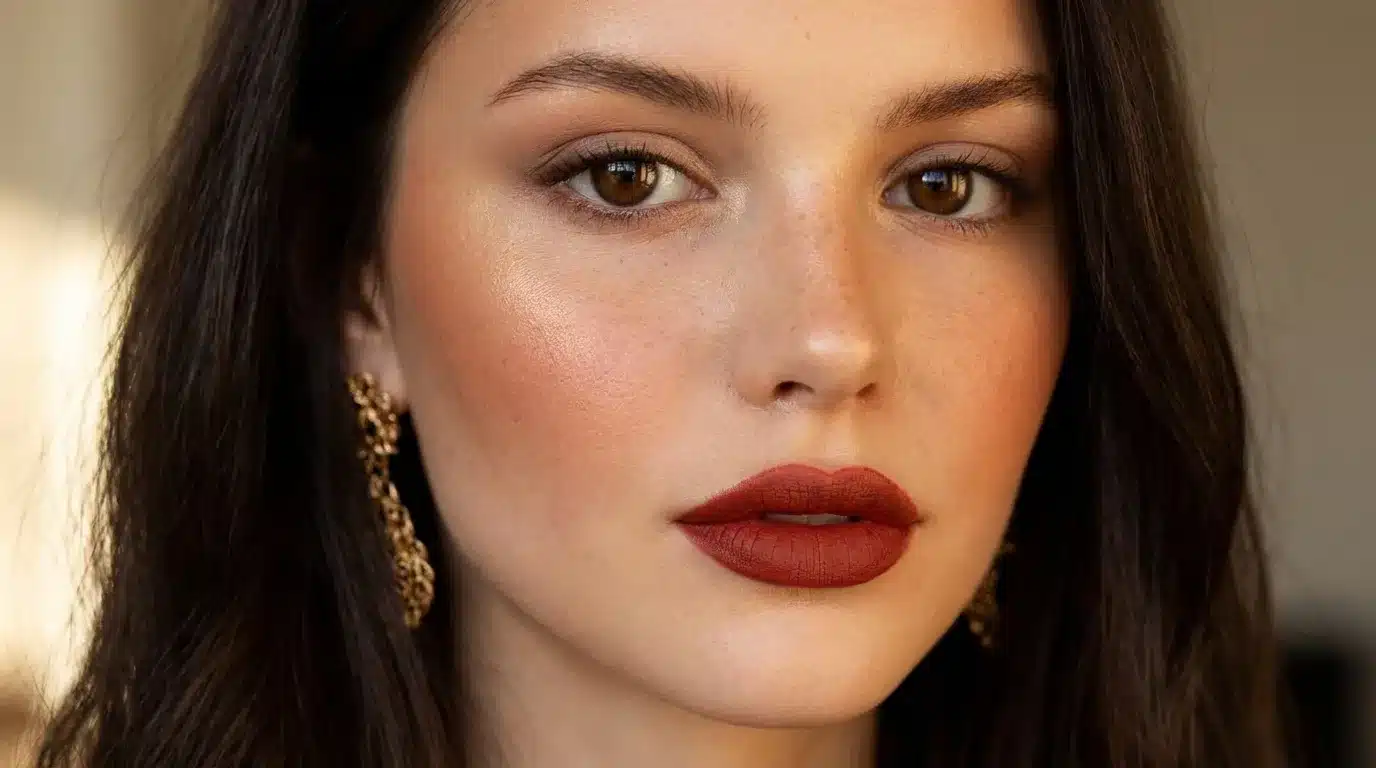
A pared-back Deep Autumn makeup look built around one statement shade, warm, matte, and completely in its element.
- Lid: Simple warm taupe eyeshadow
- Liner: Thin dark brown line on the upper lash only
- Lips: Fully lined and layered brick or mocha matte lip
- Blush: Soft terracotta, kept light
- Highlight: Barely-there gold, nothing more
Lip liner is everything here; it shapes the lip and locks the color in place all day. This Deep Autumn bold lip look works best when everything else stays quiet.
How to Build a Deep Autumn Makeup Look
Building a Deep Autumn look is about layering depth. Gradually start with a seamless base, and let each step reinforce the last.
Step 1: Build Your Base
The base sets the tone for everything that follows. Every product needs to stay warm, golden, or olive.
- Foundation and concealer should have golden, warm beige, or olive undertones that match your neck, and go one shade lighter and warmer for concealer.
- Setting powder needs a warm or golden tint; pure white or lavender powders grey out the skin and instantly cool down a Deep Autumn complexion.
Step 2: Build Eye Depth with Warm Tones
Deep Autumn eyes are built for dimension layer from light to dark, never a flat wash of color.
- Build from light to dark warm nude base, bronze or copper on the lid, burnt sienna or chocolate in the crease, espresso or olive-brown on the outer corner.
- Add light where it counts, gold or champagne in the inner corner, copper smudged along the lower lash line to tie it together.
Step 3: Choose Your Lip Intensity
Balance the lip against the eye. Deep Autumn can carry both, but not both at full volume.
- Match intensity to your eye, nude-brown with a heavy eye, brick red or mocha for balance, deep burgundy when the eye is minimal.
- Build and set the line first, layer in thin coats, blot, and reapply for lasting wear.
Step 4: Balance the Overall Look
A well-balanced Deep Autumn look feels cohesive and defined without being overdone.
- Build outward from the eyes, add blush last, then check the lip against the eye and scale one back if both are heavy.
- Checking in natural light before you finish artificial lighting makes deep shades appear heavier than they are.
The most successful Deep Autumn looks share one quality: every element feels intentional, like the colors chose you as much as you chose them.
Video Reference
For a visual walkthrough of this look, refer to this makeup tutorial video by Julie Dawn Beauty for step-by-step guidance.
Everyday vs Glam Makeup
Deep Autumn works across every occasion; the palette shifts in intensity, not in direction. Whether you have five minutes or fifty, the same warm tones apply.
| Feature | Everyday | Glam |
|---|---|---|
| Foundation | Light-medium, natural finish | Full coverage, semi-matte |
| Contour & blush | Soft peach, no contour | Terracotta blush, defined cheekbones |
| Highlighter | Skipped | Gold or bronze on cheekbones |
| Eyeshadow | Warm taupe or caramel wash | Layered bronze, burnt sienna crease, espresso outer corner |
| Eyeliner | None or soft brown | Dark brown or warm black-brown, winged or smudged |
| Lips | Nude-brown gloss or caramel tint | Deep mocha, warm burgundy, or brick red matte |
| Setting | Light setting spray | Powder set, then spray |
Going from everyday to glam doesn’t mean starting over, deepening the crease, swapping the lip, and adding a little more liner. The base stays the same; only the intensity changes.
How to Find Your Undertone for Deep Autumn Makeup?
Your undertone is the fixed warmth beneath your skin. Getting it right is the foundation of every Deep Autumn makeup decision.
- Vein Check: Green or olive veins in natural light confirm a warm undertone; blue or purple suggests you may sit outside the Deep Autumn palette.
- Fabric Test: If cream or off-white is more flattering than bright white against your face, your undertone is warm, and Deep Autumn shades will work naturally.
- Jewelry Test: Gold sitting warmly against the skin is the clearest signal that you belong in the Deep Autumn palette; silver, looking sharp or cool, suggests otherwise.
- Feature Check: Deep Autumn coloring shows as consistent warmth across skin, hair, and eyes; dark golden-brown hair, warm olive skin, and brown or hazel eyes tend to appear as a set.
If every test points warm, Deep Autumn makeup is your match. Once you know your undertone, every shade choice becomes easier; you stop guessing and start reaching for the right things first.
Common Deep Autumn Makeup Mistakes to Avoid
Even the right shades can fall flat if a few key rules are ignored. These are the most common missteps that work against Deep Autumn coloring, and the easiest ones to fix.
- Always blend foundation past the jawline and into the neck for a seamless finish
- Cool-toned setting powders create an ashy cast; always choose a warm or golden form
- Fill brows with warm taupe or soft brown, grey, or cool tones that look good
- Blush belongs on the apples of the cheeks, not high up on the cheekbones
- Warm artificial lighting is flattering but deceiving; always check the final look in daylight
Getting the shades right is only half the work; application and placement matter just as much. Avoiding these mistakes ensures the palette works for you, not against you.
A Reddit discussion about the Deep Autumn Makeup
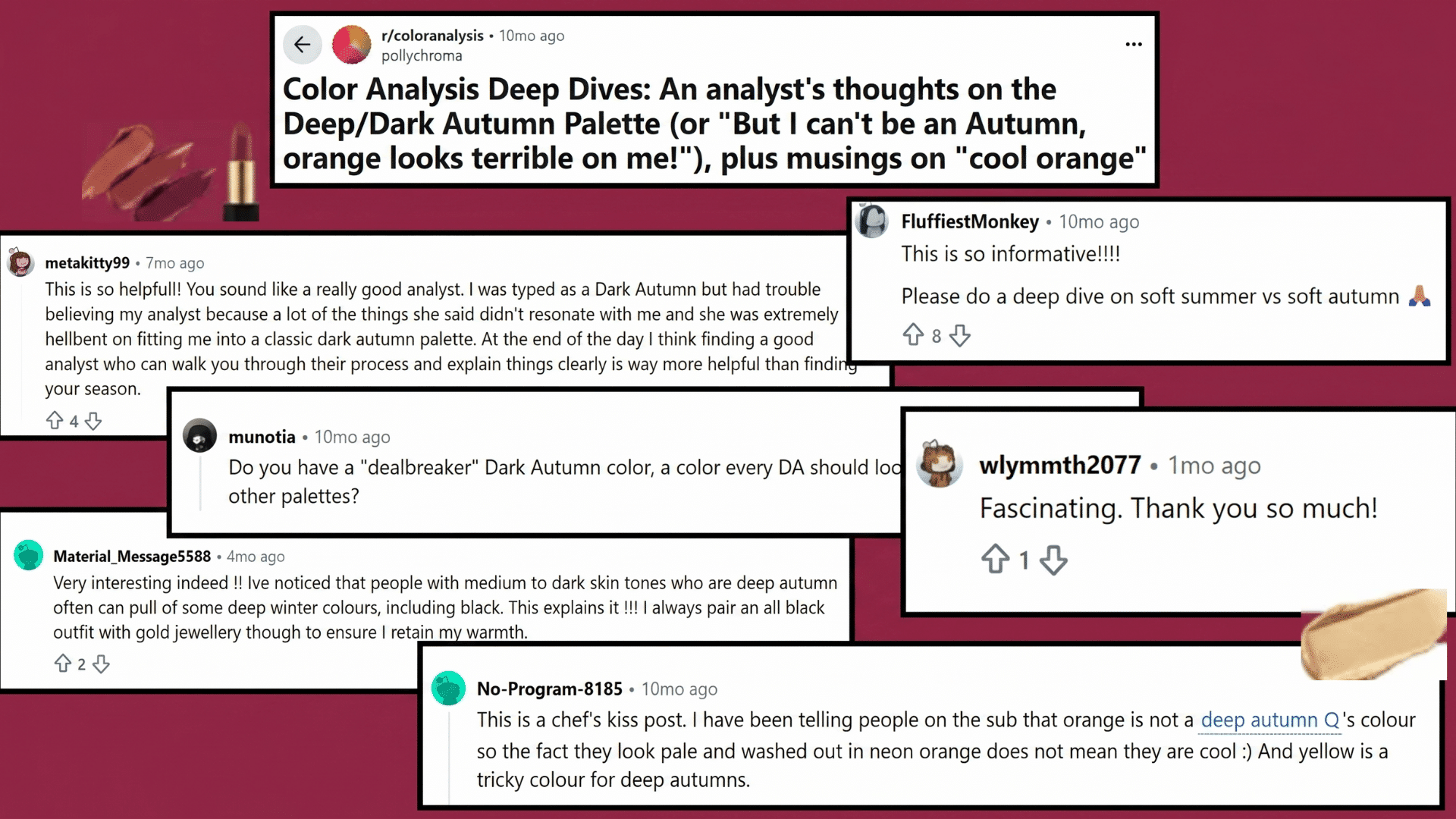
A Reddit discussion about the Deep/Dark Autumn color season gained widespread praise, with many commenters agreeing it explains everything across all color palettes and seasons.
Users shared how the post helped clear up long-held misconceptions, including the surprise that orange is not actually a core Deep Autumn color and that yellow tends to be tricky for this season.
Several people noted that Deep Autumns with medium to dark skin tones can often wear Deep Winter shades like black, provided warm accessories, such as gold jewelry, are used to anchor the look.
A key takeaway from the thread was that finding a good analyst who clearly explains their process matters far more than simply being assigned a season label.
The discussion also sparked requests for deep dives into other adjacent seasons, such as Soft Summer and Soft Autumn, reflecting a strong community appetite for more comprehensive color education.
Conclusion
A deep autumn makeup look isn’t about following trends; it’s about understanding your coloring and leaning into it fully.
Once you know which shades belong in your palette, the guesswork disappears. Terracotta replaces the pink blush that never quite worked.
Warm bronze replaces silver shimmer, and every product starts pulling in the same direction. From a barely-there everyday look to full glam, the palette stays consistent, only the intensity shifts.
Start with one product, get the undertone right, and build from there. The results will speak for themselves.
Tried a deep autumn makeup look? Share your experience in the comments below. Which shades made the biggest difference for you?
Frequently Asked Questions
Can Deep Autumn Makeup Work on Lighter Skin with Warm Undertones?
Lighter skin with strong golden or olive undertones can still work with the palette, just stay in the softer end with caramel, light terracotta, and muted bronze.
How Do I Stop My Deep Autumn Makeup from Looking Heavy or Overdone?
Build in thin layers, check in natural daylight, and never run both eyes and lips at full intensity at the same time.
Do Deep Autumn Shades Work Year-Round or Only in Autumn and Winter?
The palette describes your permanent coloring, not the season. Terracotta and bronze work just as well in July as in November.