
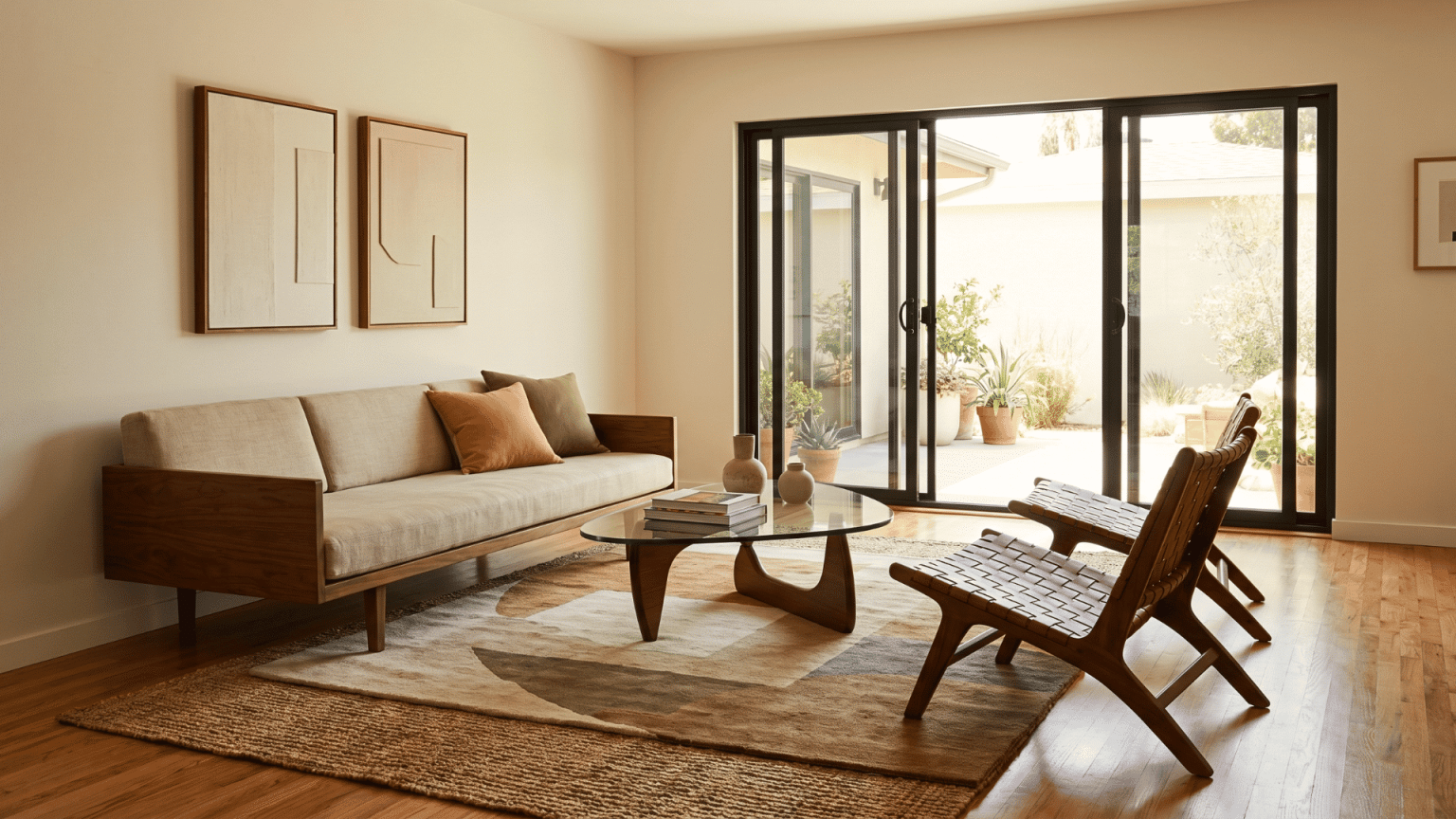
Many homes feel cramped and dated, lacking flow and warmth. Mid-century modern interior design fixes this with clean lines, open layouts, and natural materials.
This style keeps rooms practical yet stylish. Furniture is functional, yet each piece makes a statement. Natural light and airy layouts create a calm, welcoming vibe.
It works for small apartments and large houses alike. You can mix earthy tones with bold pops of color for personality. The look balances comfort, elegance, and functionality.
This section explains how materials, colors, and layouts work together. Each room can feel balanced and inviting. These ideas help create homes that are both practical and visually strong.
What is Mid-Century Modern Design?
Mid-Century Modern design emerged from Bauhaus and Scandinavian influences, focusing on minimalism, structure, clean lines, and geometric forms to create simple yet practical interiors.
Pioneers like Charles and Ray Eames, Eero Saarinen, and George Nelson shaped the style through iconic furniture and architectural ideas focused on usability and timeless visual balance.
The philosophy of mid-century modern centers on functional simplicity, where every element has a clear purpose and avoids unnecessary decoration, clean and practical living spaces.
It emphasizes human comfort and a strong connection with nature, using natural materials, open layouts, and large windows to create bright and balanced indoor environments.
Mid-Century Modern Style & Visual Elements
Mid-century modern design combines simplicity and functionality with a warm, inviting look. It focuses on clean forms and natural materials that make spaces feel open and practical.
- Lines & Shapes: Clean lines, organic curves, and geometric shapes create visual balance.
- Materials: Teak, walnut, oak, leather, and glass add texture and warmth.
- Color Palette: Earthy tones with bold accents like mustard, teal, and olive green.
- Lighting & Accessories: Statement lighting and minimal accessories highlight design.
The style’s enduring appeal lies in its balance of warmth, practicality, and visual clarity, creating timeless, comfortable spaces.
Mid-Century Modern Interiors: Room-by-Room Guide
Mid-century modern design brings style and function to every room.Read now to see how each space can transform.
1. Living Room
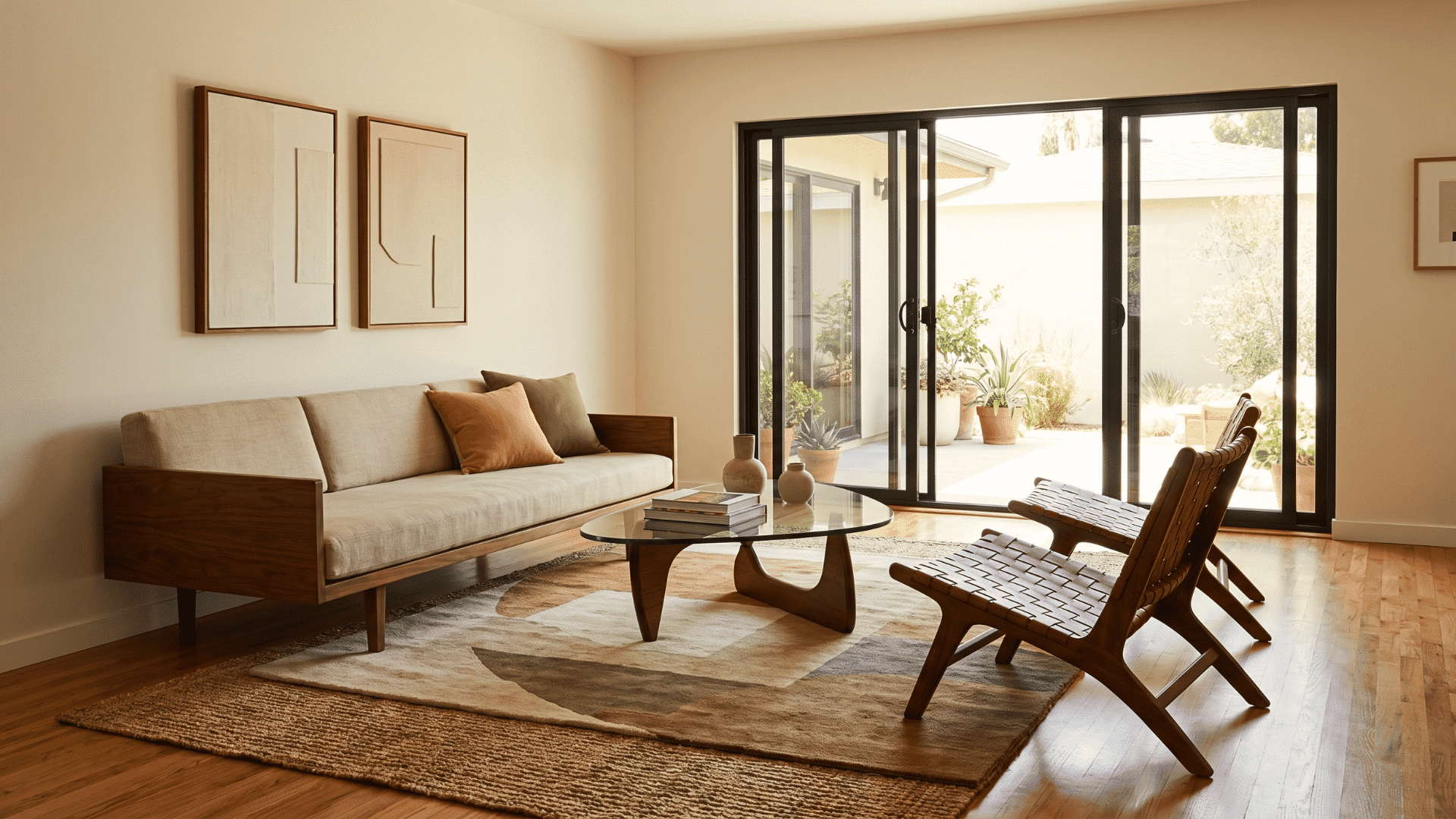
Low-slung sofas and sculptural chairs create a relaxed and open feel. Layered lighting highlights furniture and adds warmth to the space.
Accent rugs and minimalist artwork complete the look while keeping the area uncluttered. Large windows or glass doors enhance natural light and connect the indoors to the outdoors.
2. Kitchen
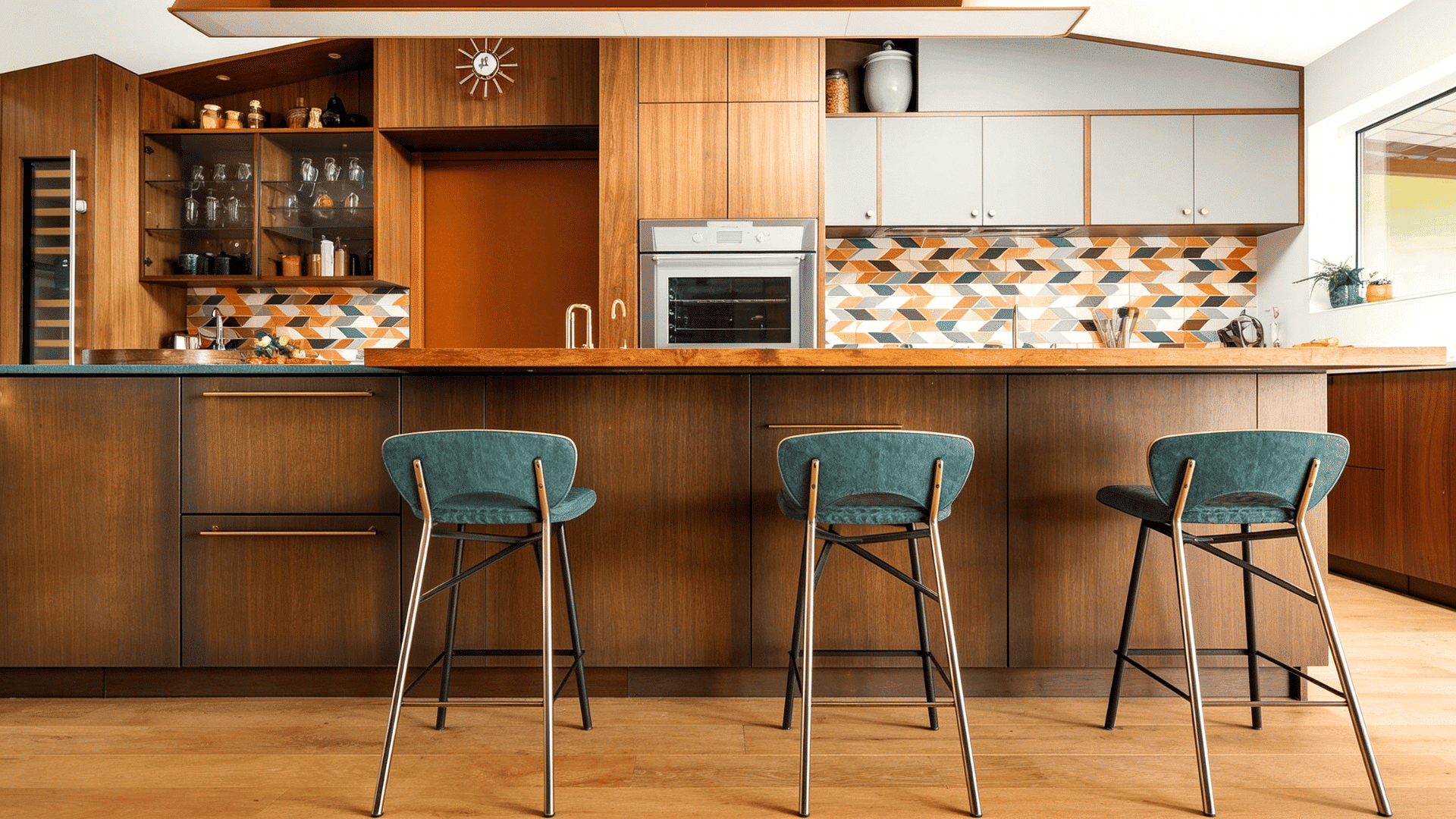
Wooden veneers and statement stools add warmth while keeping the kitchen functional. Geometric tiles and minimal hardware maintain clean, stylish lines.
Open shelving and integrated appliances enhance accessibility and visual flow. A simple color scheme keeps the space cohesive and airy.
3. Bedroom
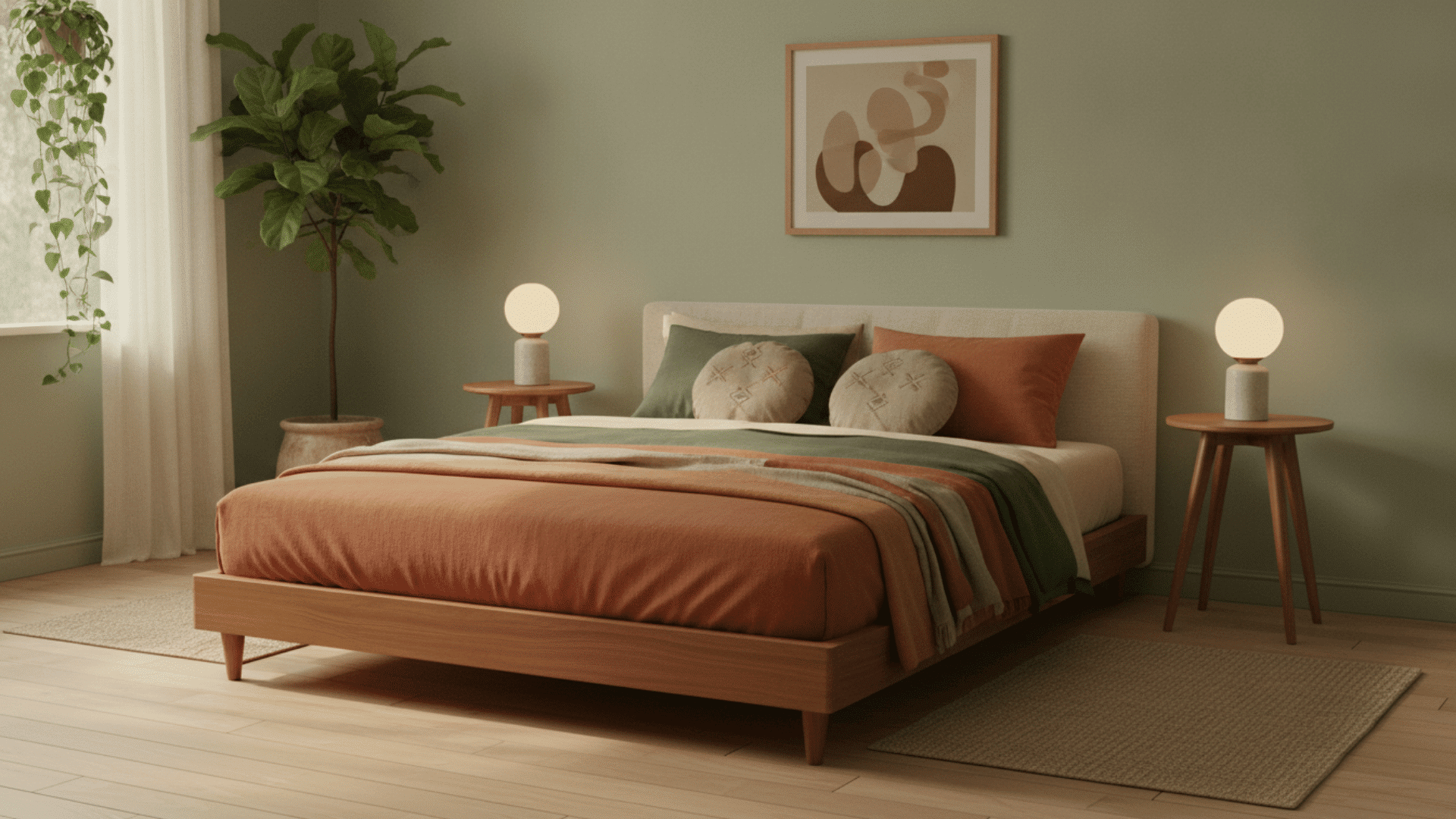
Platform beds and tapered furniture encourage calm and simplicity. Earthy linens and indoor greenery create a restful, natural atmosphere.
Soft lighting and curated decor elements foster a serene and inviting space. Minimal decorative accents help maintain a clutter-free, peaceful environment.
4. Bathroom
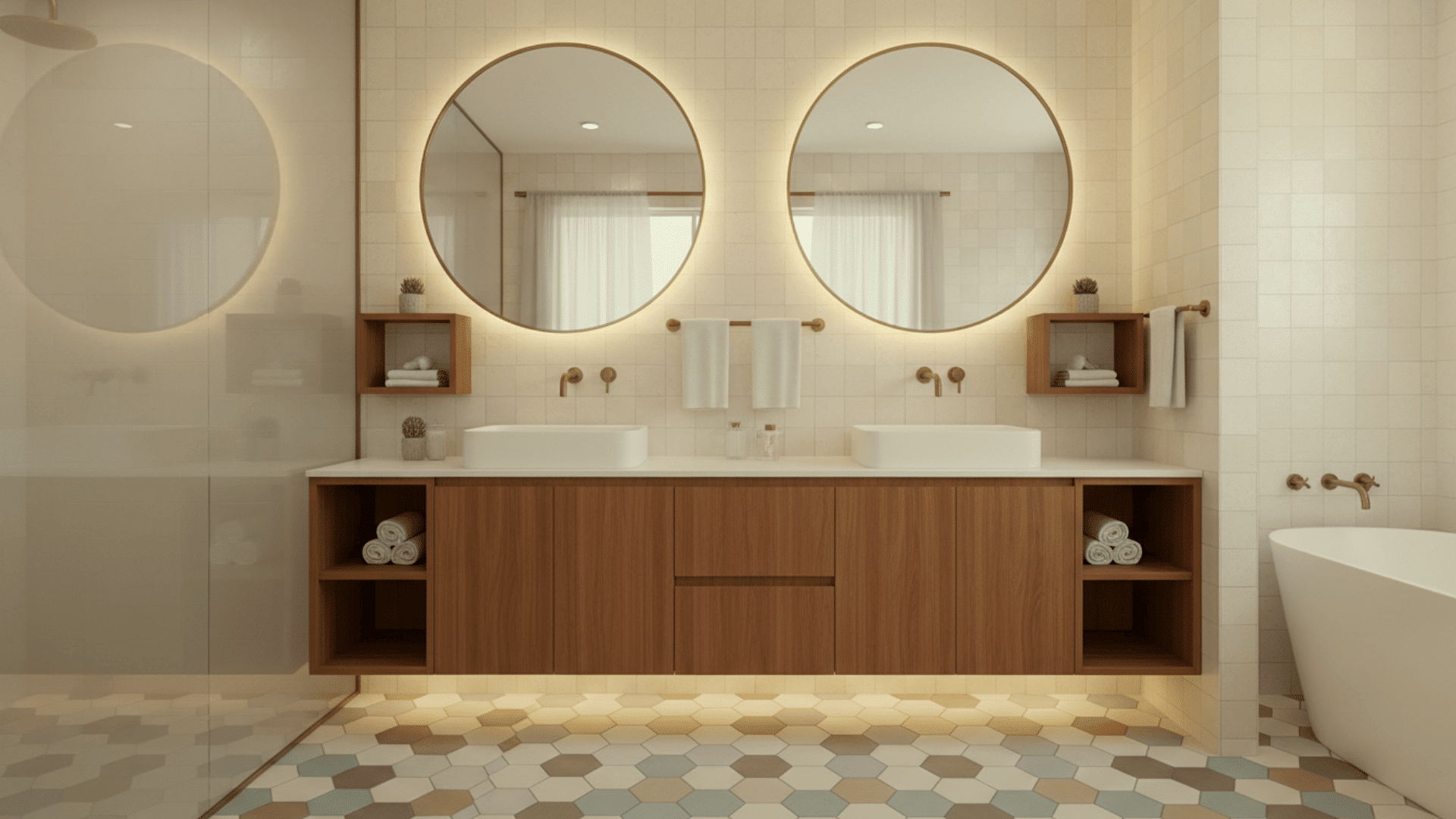
Floating vanities and geometric tiles maximize visual space. Natural textures and classic fixtures create a spa-like environment.
Wall-mounted storage and subtle lighting improve functionality and ambiance. Mirrors amplify light and make the bathroom feel larger.
5. Study/Office
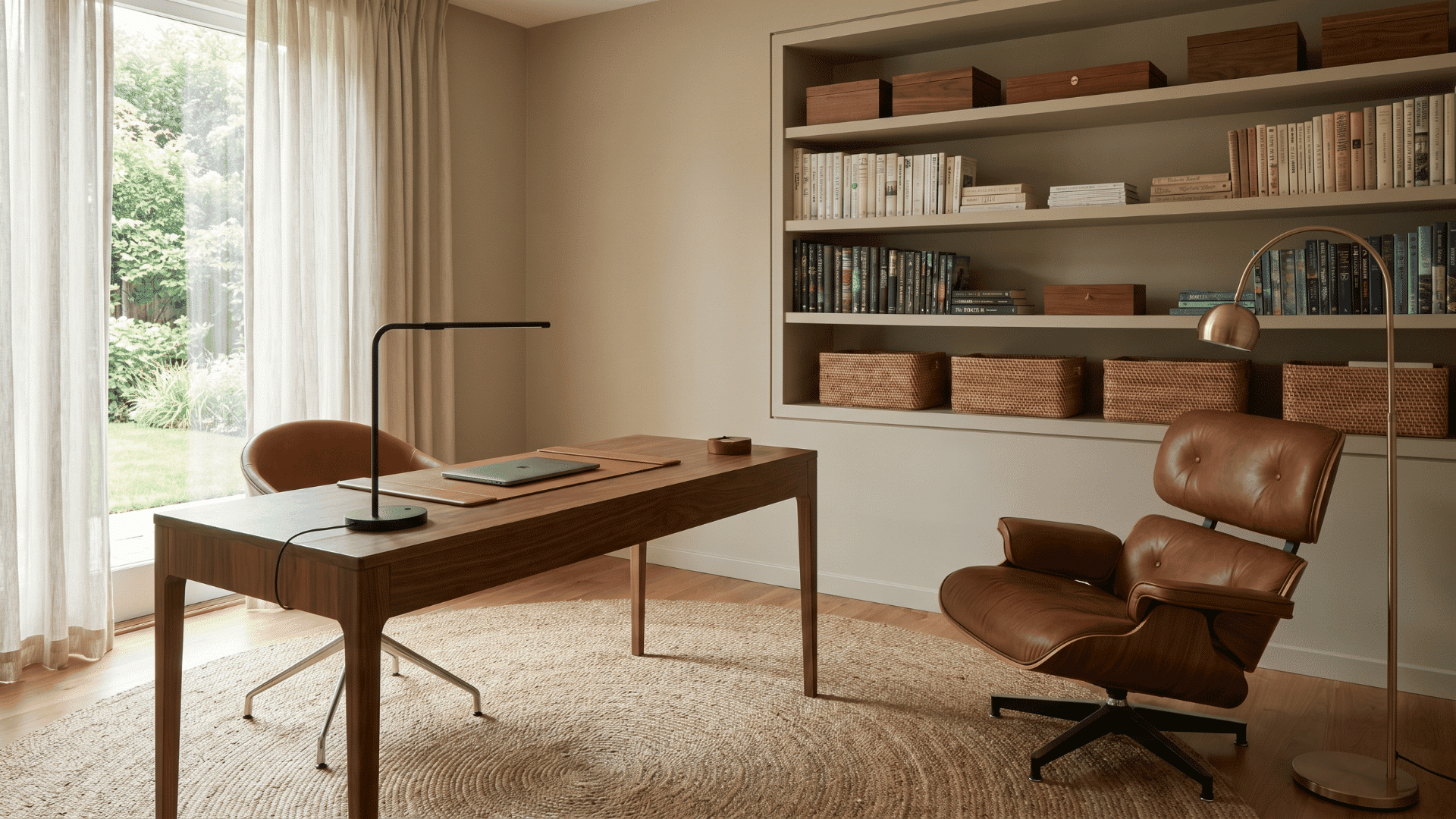
Minimal desks and Eames-style chairs keep the workspace organized. Neutral palettes maintain focus and a visually pleasing environment.
Task lighting and smart storage solutions optimize productivity and comfort. Clean surfaces and minimal decor reduce distractions for better concentration.
Mid-Century Modern vs Contemporary Interior Design
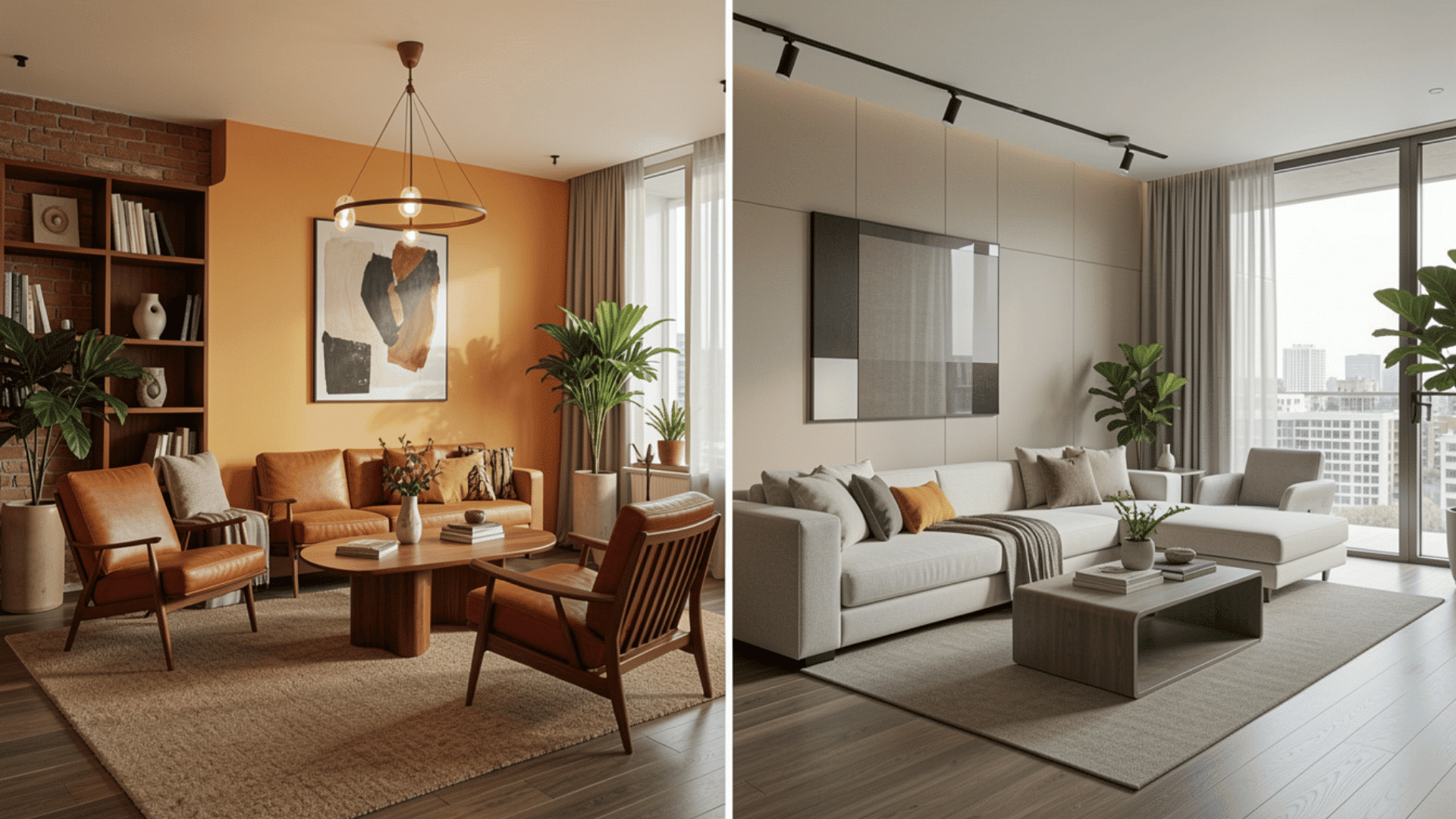
| Aspect | Mid-Century Modern | Contemporary Design |
|---|---|---|
| Style Focus | Clean structure with timeless, functional design approach. | Ever-changing style based on current trends and updates. |
| Materials | Natural materials like wood, leather, and glass dominate. | Mix of natural and synthetic materials depending on trends. |
| Furniture Style | Low-profile, tapered legs, simple geometric forms. | Flexible forms with experimental and trend-based designs. |
| Color Palette | Earthy tones with bold accent colors. | Neutral tones with occasional bold modern contrasts. |
| Layout Approach | Open, practical, and nature-connected spaces. | Flexible layouts focused on modern lifestyle needs. |
Both styles offer strong design value but serve different visual goals. Mid-century modern focuses on timeless structure, while contemporary design adapts to evolving trends.
Why Mid-Century Modern Still Matters in 2026
Mid-century modern design remains a favorite because of its timeless appeal, adaptability, and practical layouts.
- Timeless design with functional layouts that never go out of style.
- Versatile, working well in apartments, small homes, and large residences.
- Easily blends with contemporary, Scandinavian, Japandi, or Indian interiors.
- Focus on uncluttered spaces that enhance comfort and flow.
- Use of durable, high-quality materials that stand the test of time.
- Iconic furniture pieces add character without overwhelming the space.
Final Thoughts
Mid-century modern interior design transforms your home into a space that feels stylish and practical. It blends functionality with aesthetic appeal, making every room comfortable and inviting.
Using natural materials and clean layouts adds warmth and flow, while smart furniture choices save space. Even small apartments feel open and organized with this approach.
This style lets you add personal touches without clutter, keeping your home timeless. Mixing colors, textures, and lighting creates a cohesive, vibrant space.
What are your thoughts on using mid-century modern design in your home? Share your ideas or questions in the comments below!
Frequently Asked Questions
What Are the Drawbacks of Mid Century Modern Houses?
Mid-century homes may have smaller storage spaces, large glass walls that require upkeep, and sometimes dated mechanical systems that need upgrading.
How Do I Choose Colors for a Mid-Century Modern Room?
Stick to neutral or earthy base tones and add one or two bold accent colors like mustard, teal, or olive green to create interest.
How Do I Mix Textures without Overwhelming the Space?
Combine smooth surfaces like glass or metal with natural textures such as wood, leather, or rattan. Layering rugs, cushions, and plants adds depth while maintaining simplicity