
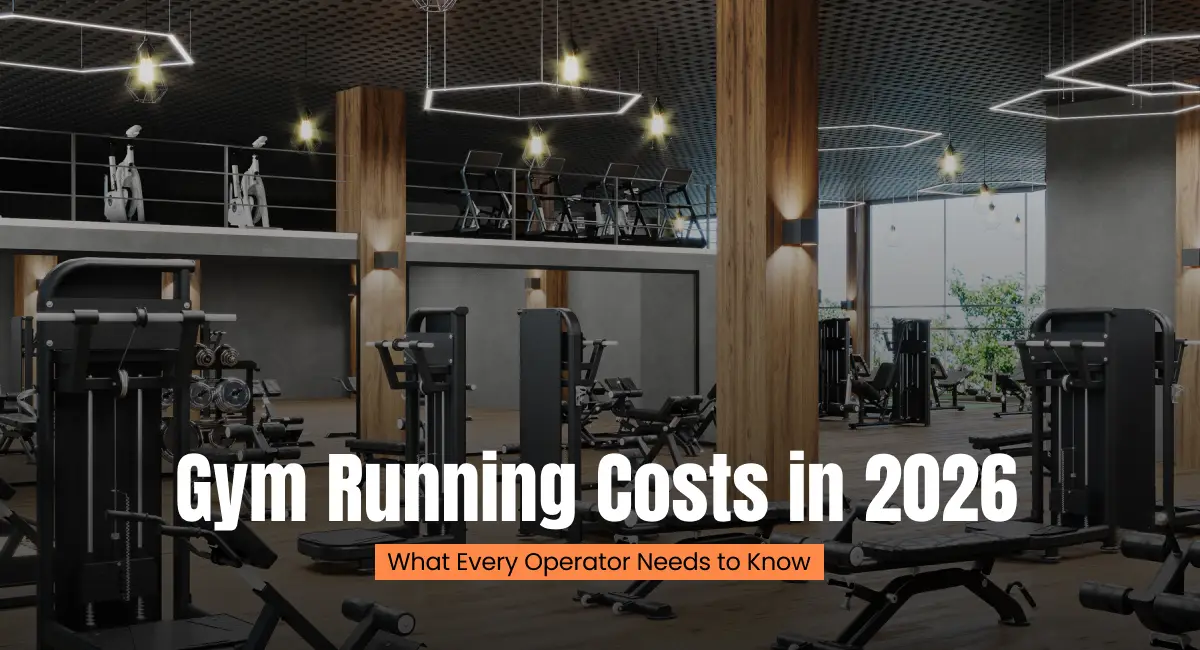
Gym running costs are the number most new operators underestimate. A small studio might run $5,000 a month while a full-service facility clears $50,000. Knowing where you land before you sign a lease or make a hire is what separates profitable gyms from stressful ones. Here is the real breakdown.
What Do Gym Running Costs Look Like Each Month?
There is no single figure because gym operating costs vary with size, location, staffing model, and services offered. The categories, though, stay consistent across almost every gym and bootcamp: rent, staffing, utilities, gym CRM software, and marketing all show up. Here is a realistic monthly picture for a mid-sized independent gym in 2026.
| Cost Category | Monthly Range |
|---|---|
| Rent and premises | $2,000 to $15,000 |
| Utilities | $1,000 to $3,500 |
| Staffing | $4,000 to $15,000 |
| Equipment maintenance | $300 to $800 |
| Insurance and licenses | $200 to $600 |
| Software and technology | $150 to $600 |
| Marketing | $500 to $2,000 |
| Total | $8,150 to $37,500 |
The spread reflects the gap between a lean boutique and a fully staffed facility. Pinpoint where you sit before you commit to that lease.
Rent: The Biggest Fixed Cost
Commercial rent is usually the single largest fixed expense. For a mid-sized independent space, budget $2,000 to $15,000 a month, depending on city, neighborhood, and square footage. A 3,000-square-foot space in a major metro can run $8,000 to $12,000. The same footprint in a suburb or rural town may cost $2,000 to $4,000.
The Bootcamp Advantage
Outdoor bootcamp operators often skip commercial rent entirely, using parks or public fields under a permit that costs a few hundred dollars a year. That makes outdoor fitness one of the lowest-overhead models around. The trade-off is weather dependency and no permanent branded home.
Utilities and Facility Costs
Gym utilities run higher than most businesses thanks to HVAC load, showers, and cardio equipment humming all day. Budget $1,000 to $3,500 a month for electricity, water, gas, and internet. Saunas, steam rooms, or pools push you to the top of that range. Energy-efficient equipment and smart HVAC controls trim it over time.
Staffing: Your Largest Variable Expense
Staffing typically eats 40% to 55% of total operating costs at a fully staffed facility. A gym with a manager, two full-time trainers, and a part-time front desk can expect $8,000 to $15,000 in monthly payroll before taxes and benefits. Many operators cut this with a hybrid model, renting floor space to independent trainers at $300 to $600 a month or working on a commission split.
The 24/7 Access Model
Keypad or app-based access control eliminates the need for a permanent reception desk. Setup runs $3,000 to $8,000, but the payroll savings from dropping front desk coverage often repay it within a year.
Equipment: Buy, Lease, or Maintain

Equipment cost depends on your gym type. A functional or bootcamp setup with kettlebells, rigs, and mats can be built for $5,000 to $20,000. A traditional cardio and resistance machine floor runs $30,000 to $100,000 or more. Leasing instead of buying preserves cash in year one, when flow is tightest, and lets you open with a better kit than an outright budget allows.
Then there is upkeep: $300 to $800 a month for maintenance and replacement across a mid-sized floor. When I helped a bootcamp owner map her first-year budget, the line that blindsided her was not rent. It was maintenance. She had penciled in a token number and ended up replacing worn mats and a snapped cable machine within eight months. That single category ran triple her estimate.
Insurance, Licenses, and Compliance
General liability insurance is non-negotiable. Most independent facilities pay $1,500 to $4,000 a year, and hiring trainers adds workers’ compensation on top. If you play recorded music, you also need licenses from ASCAP, BMI, and SESAC, which together run $500 to $1,500 a year. Business registration is minor: an LLC costs $50 to $500 in most states, plus annual reporting fees.
Software: A Hidden Line in Your Gym Running Costs
Most operators never tally software until the invoices pile up. A gym running separate tools for member management, scheduling, payments, communication, and program delivery pays $200 to $600 a month, plus processing fees on every transaction.
Those processing fees are the sneaky part. A platform charging 3% to 4% on $5,000 in monthly revenue burns through more than $1,800 a year with nothing to show for it. Consolidating onto a single system cuts both subscription costs and transaction drag.
FitBudd, for example, is coaching and gym software that gives operators a branded app with zero commission on payments. For a facility processing $5,000 a month at a standard 3.5%, moving to a zero-commission platform saves over $2,000 a year before any subscription savings.
Marketing and Member Acquisition
Marketing scales with your growth stage. New operators usually spend $2,000 to $6,000 on launch, then $500 to $2,000 a month once established. According to the Health & Fitness Association, Americans plan to spend roughly $60 billion on health and fitness in 2026, indicating strong demand. The national average membership sits around $69 a month, the latest industry benchmark, which gives you a revenue anchor to price against.
Retention beats acquisition almost every time. Research from Bain & Company found that increasing retention by just 5% can boost profits by 25% to 95%.
How to Budget Your Gym Running Costs?
Gym running costs are real, predictable, and manageable with a plan. The operators who build profitable gyms know their full cost structure before opening, track each category monthly, and decide deliberately where to cut friction and where to invest.
Build your model around your specific market and size, price memberships against it, and focus relentlessly on retention. That combination outperforms almost every other growth lever an independent gym or bootcamp has.