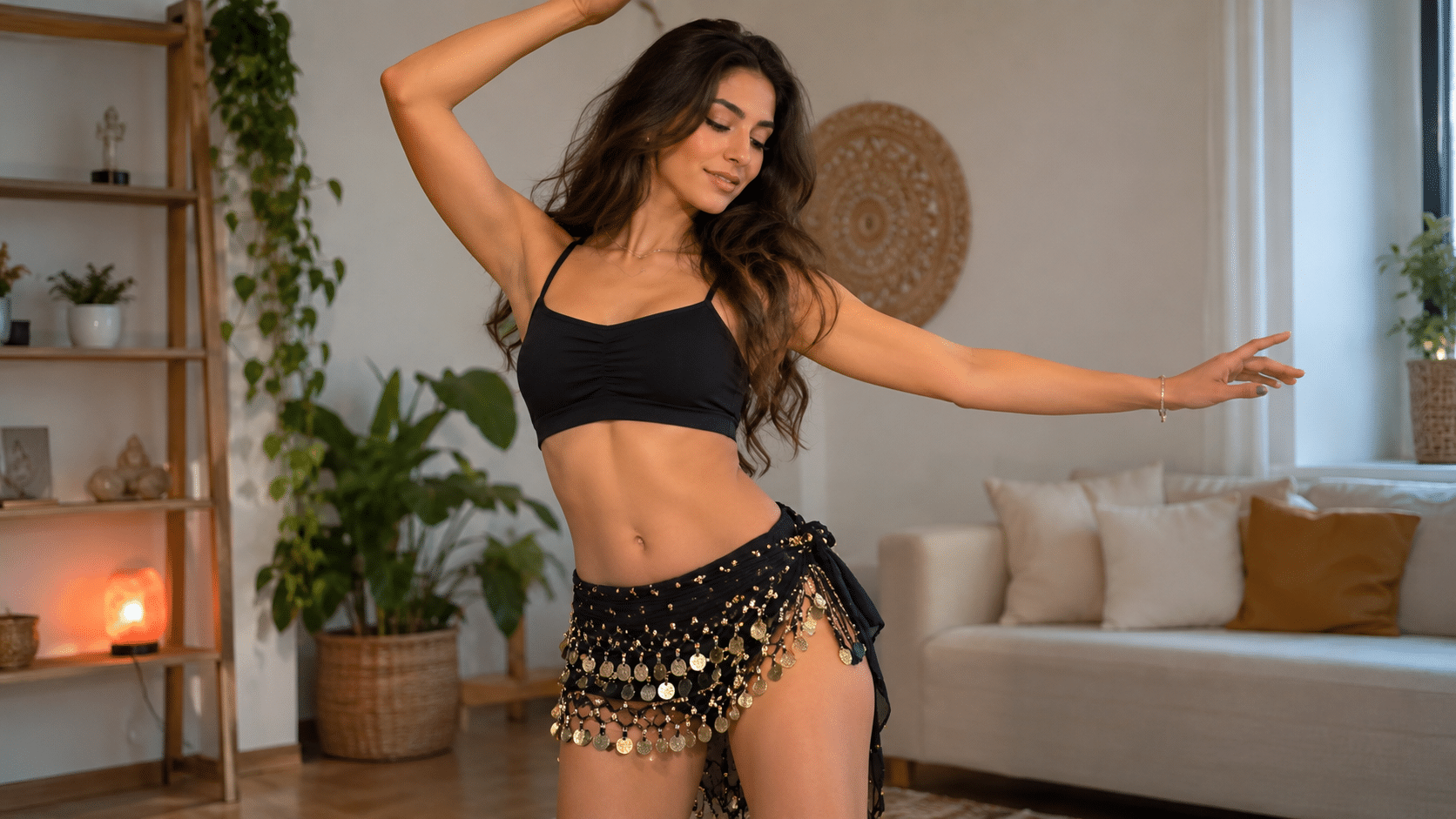
Looking for a fun way to get moving without complicated equipment or gym routines? A belly dance workout combines rhythmic hip movements, graceful arm patterns, and controlled muscle engagement to create an enjoyable, low-impact exercise experience. It’s an accessible way to improve coordination, develop core strength, and feel more confident moving your body.
The best part? You don’t need dance experience to begin. With a little space, comfortable clothing, and your favorite music, you can practice simple movements at home.
Whether you’re exploring belly dancing for the first time or adding variety to your dance fitness workout, these 10 beginner-friendly moves will help you build a routine that’s both effective and enjoyable.
Why Try a Belly Dance Workout at Home?
Belly dancing combines fluid movements with precise muscle control, making it an enjoyable alternative to conventional fitness routines.
Benefits of Belly Dance for Beginners
Regular practice can offer several benefits:
- Core engagement: Controlled hip and torso movements activate abdominal and back muscles.
- Better coordination: Learning movement patterns improves body awareness and balance.
- Greater mobility: Gentle rotations and isolations encourage comfortable movement through the hips and torso.
- Improved posture: Maintaining an upright position develops postural awareness.
- Stress relief: Dancing to music can improve your mood and make exercise more enjoyable.
Unlike routines focused entirely on repetitions, belly dancing encourages expression, rhythm, and creativity.
Can Belly Dancing Improve Core Strength and Support Weight Loss?
Yes, belly dancing can contribute to both goals.
Movements such as hip circles, figure-eights, and torso undulations engage muscles that stabilize your trunk. Repeating these movements can improve muscular control and endurance.
More energetic sessions also increase physical activity and calorie expenditure, potentially supporting weight management alongside balanced nutrition.
However, belly dancing cannot selectively eliminate belly fat, and it shouldn’t replace dedicated resistance training when building overall strength.
How to Prepare for Your First Belly Dance Workout
You don’t need expensive accessories or a dedicated studio to get started.
Create a Comfortable Home Dance Space
Choose a clear area where you can extend your arms and step sideways comfortably.
Wear flexible clothing that allows your hips and knees to move freely. Bare feet or supportive, non-slip footwear may work, depending on the floor.
A mirror is optional, but it can help you observe your posture.
Warm Up Before Practicing
Spend three to five minutes preparing your muscles.
Try marching gently, rolling your shoulders, shifting your weight between your feet, and making small hip circles.
Keep your knees relaxed and movements comfortable. If you have an injury or medical concern, seek appropriate guidance before beginning.
10 Easy Belly Dance Moves for Beginners
These foundational movements make belly dance for beginners approachable, even without previous dancing experience.
1. Hip Circles
Stand with your feet hip-width apart and knees slightly bent.
Slowly move your hips forward, sideways, backward, and around in a smooth circle.
Complete five circles in each direction.
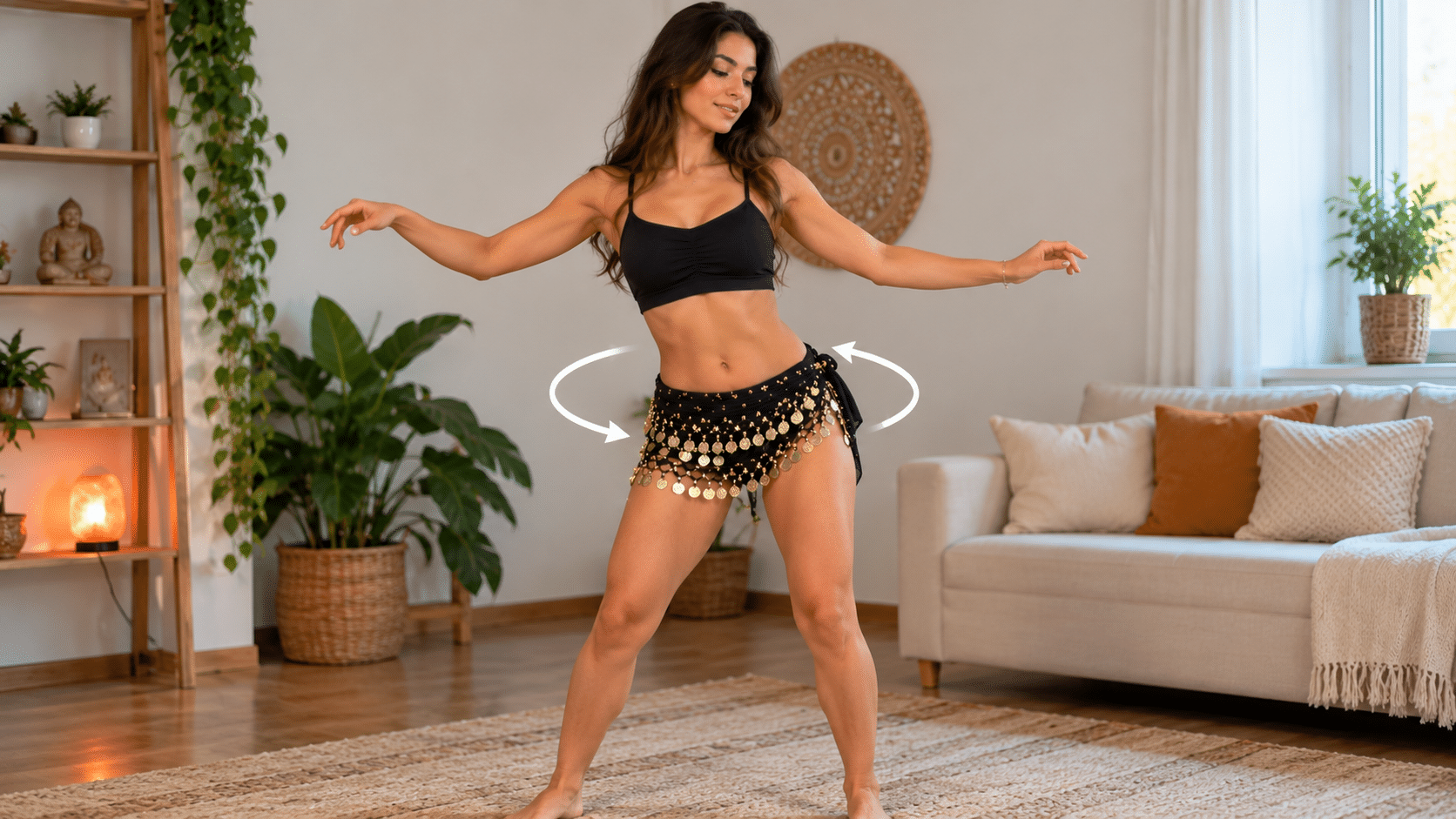
Beginner tip: Keep your upper body relatively steady and start with small circles.
2. Hip Drops
Shift your weight onto your left leg and place your right foot slightly forward, resting lightly on your toes.
Raise your right hip, then release it downward with control.
Repeat eight times before switching sides.
Beginner tip: Avoid forcefully dropping your hip or twisting your knee.
3. Hip Lifts
Stand tall with softly bent knees.
Straighten one knee slightly to lift that side of your hip, then return to neutral. Alternate sides.
Try eight repetitions per side.
Beginner tip: Keep your shoulders level rather than leaning sideways.
4. Figure-Eight Hips
Imagine drawing a horizontal figure eight with your hips.
Move one hip diagonally forward, sweep it outward, and guide it backward. Repeat on the opposite side.
Practice slowly for 30 seconds.
Beginner tip: Focus on creating a continuous movement rather than making large shapes.
5. Hip Shimmies
Begin with your feet hip-width apart and knees relaxed.
Alternate small knee bends to create a gentle, rapid vibration through your hips.
Continue for 20–30 seconds.
Beginner tip: Keep the movement light. Speed will develop naturally with practice.
6. Chest Lifts
Stand upright with your shoulders relaxed.
Gently lift your rib cage upward without arching your lower back, then return to neutral.
Repeat eight times.
Beginner tip: Think about creating space through your upper torso instead of pushing your chest forward.
7. Rib Cage Slides
Place your hands on your hips and keep your pelvis steady.
Shift your rib cage gently to the right, return to center, and slide left.
Continue for eight repetitions.
Beginner tip: Make the movement small enough to avoid straining your back.
8. Belly Undulations
Begin with a gentle chest lift.
Gradually soften your rib cage downward and allow the movement to travel through your torso into a small pelvic release.
Repeat slowly.
Beginner tip: Break the wave into separate movements before connecting them smoothly.
9. Snake Arms
Extend both arms outward with relaxed elbows.
Lift one shoulder slightly, followed by the elbow, wrist, and hand. Let the movement flow downward while the opposite arm rises.
Alternate for 30 seconds.
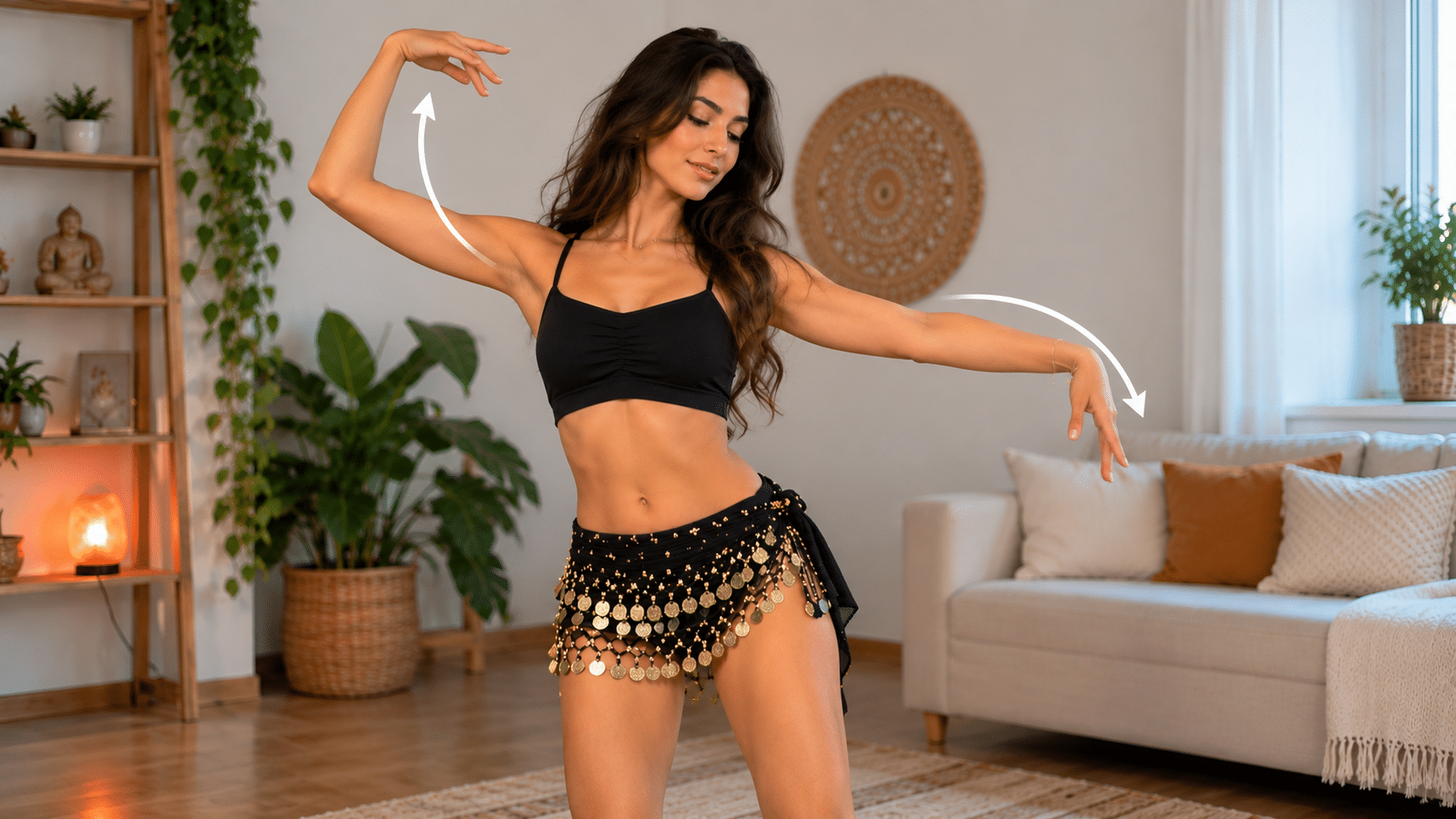
Beginner tip: Keep your neck relaxed and avoid raising your shoulders excessively.
10. Traveling Steps
Take two small steps to the right while gently swaying your hips.
Repeat to the left, maintaining an upright posture and natural arm position.
Gradually add hip lifts or soft arm movements.
Beginner tip: Master the footwork before combining multiple movements.
Belly Dance Workout Techniques for Better Movement
Good technique matters more than speed.
Maintain relaxed knees, breathe naturally, and avoid forcing your hips beyond a comfortable range.
Controlled movements help you develop coordination without unnecessary strain.
How to Combine the Moves Into a Simple Routine
Start with hip circles and figure-eights. Add hip drops, then introduce snake arms.
Once comfortable, connect these movements with traveling steps.
Practice each combination slowly before increasing the tempo.
Build a Simple 15-Minute Dance Fitness Workout
A short, consistent routine can help you develop movement skills without feeling overwhelmed.
A Beginner-Friendly Workout Schedule
Try this simple structure:
- Minutes 1–3: Warm up with marching, shoulder rolls, and gentle hip circles.
- Minutes 4–6: Practice hip lifts, hip drops, and figure-eights.
- Minutes 7–9: Alternate shimmies, chest lifts, and rib cage slides.
- Minutes 10–12: Combine snake arms, undulations, and traveling steps.
- Minutes 13–15: Slow down with gentle movements and comfortable stretches.
Adjust the pace to suit your fitness level.
How Often Should Beginners Practice?
Start with two or three sessions weekly, allowing recovery between workouts when needed.
As your coordination and stamina improve, gradually increase your practice time or frequency.
Consistency and comfortable technique are more valuable than rushing into advanced choreography.
Can You Take a Belly Dance Fitness Class Online?
Absolutely. Online instruction makes learning accessible without attending a physical studio.
Learning Belly Dance Without Previous Experience
Beginner-friendly lessons usually introduce one movement at a time before combining steps into choreography.
Recorded sessions let you pause, repeat challenging sections, and practice at your preferred pace.
Look for instruction that explains posture, movement control, and modifications clearly.
Finding a Beginner-Friendly Belly Dance Fitness Class
A structured program can be helpful once you’re comfortable with basic movements.
For example, the belly dance fitness class offered through Everdance includes guided hip movements, shimmies, torso isolations, and combinations that progress over time.
Choose a class that matches your experience, available time, and preferred intensity rather than focusing solely on calorie-burning claims.
Final Thoughts: Start Your Belly Dance Workout at Home
Belly dancing offers a creative way to stay active while improving coordination, mobility, and confidence.
You don’t need perfect rhythm or previous experience to enjoy the process. Begin with a few foundational movements, practice consistently, and let your skills develop naturally.
With just 15 minutes and your favorite music, a belly dance workout can become an enjoyable part of your weekly fitness routine.
Frequently Asked Questions
Is a Belly Dance Workout Good for Weight Loss and Core Strength?
Yes. Belly dancing engages the abdominal, hip, and back muscles while providing physical activity that can support weight management. The results depend on session intensity, duration, consistency, and overall lifestyle habits. Although it can improve core control and muscular endurance, belly dancing does not specifically burn abdominal fat. Combining dance with resistance training and balanced nutrition supports broader fitness goals.
What Are the Benefits of Belly Dance for Beginners?
Belly dancing can improve coordination, mobility, postural awareness, and confidence. Beginners learn to control different muscle groups while following rhythm and exploring expressive movements. It can also provide enjoyable aerobic activity when performed continuously at a suitable intensity. Because many foundational movements can be modified, newcomers can start gently and build their skills without immediately learning difficult choreography.
Can You Join a Belly Dance Fitness Class Online without Prior Experience?
Yes, many online classes are designed for complete beginners. They introduce basic hip movements, arm positions, and simple combinations through guided demonstrations. Recorded lessons are particularly useful because you can pause and repeat instructions whenever necessary. Start with a beginner-level program, move at a comfortable speed, and prioritize correct technique before attempting faster routines or more complex choreography.