Asian cooking is known for its bold flavours, fast cooking techniques, and emphasis on freshness. Behind many of these dishes is not just skill, but also the right set of tools. From high-heat stir-frying to delicate steaming, traditional Asian cooking utensils are designed to make food preparation faster, more efficient, and more precise.
Understanding these utensils can help home cooks recreate authentic flavours while also improving everyday cooking efficiency. Below is a simple guide to some of the most essential Asian cooking utensils and how they are commonly used in home kitchens.
1. The Wok: The Heart of Asian Cooking
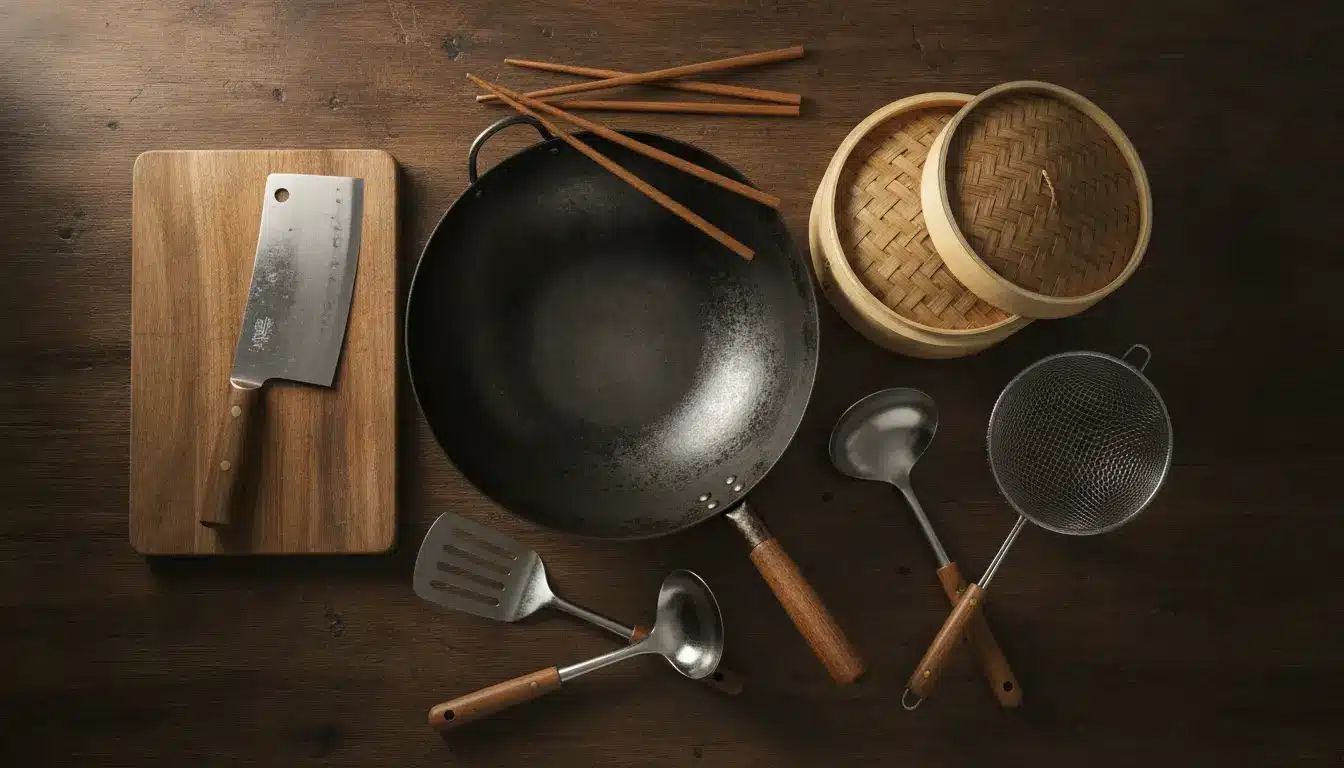
The wok is arguably the most important utensil in Asian cuisine. Its round base and sloping sides allow for quick, even heat distribution, making it ideal for stir-frying, deep-frying, steaming, and even boiling. The design also makes it easy to toss ingredients without spilling.
A wok is often made from carbon steel or cast iron, which can handle very high heat. This is crucial for achieving the signature “wok hei” or smoky flavour often found in restaurant-style dishes.
In home cooking, the wok is used for dishes like fried rice, noodle stir-fries, and braised meats. Its versatility makes it a must-have tool for anyone exploring Asian cuisine.
2. The Chinese Cleaver: A Multi-Purpose Knife
The Chinese cleaver is one of the most recognisable Asian kitchen tools. Unlike Western knives, it has a wide, rectangular blade that is surprisingly versatile.
It is commonly used for slicing vegetables, chopping meat, crushing garlic, and even transferring ingredients from the cutting board to the wok. Some versions are heavier and designed for cutting through bones, while lighter ones are used for everyday prep work.
Its flat surface also allows cooks to scoop and carry ingredients easily, making it both a cutting and serving tool in busy kitchens.
3. Wok Spatula and Ladle: Essential Stir-Fry Tools
When cooking in a wok, standard spatulas often fall short. That’s where the wok spatula and ladle come in.
The wok spatula is slightly curved to match the shape of the wok, allowing for efficient stirring and flipping of ingredients. It helps prevent food from sticking and ensures even cooking during high-heat stir-frying.
The wok ladle, on the other hand, is ideal for scooping sauces, soups, and braised dishes. Its deep bowl shape makes it useful for both cooking and serving.
Together, these tools help maintain control during fast-paced cooking, especially when preparing multiple ingredients at once.
4. Bamboo Steamers: Gentle and Healthy Cooking
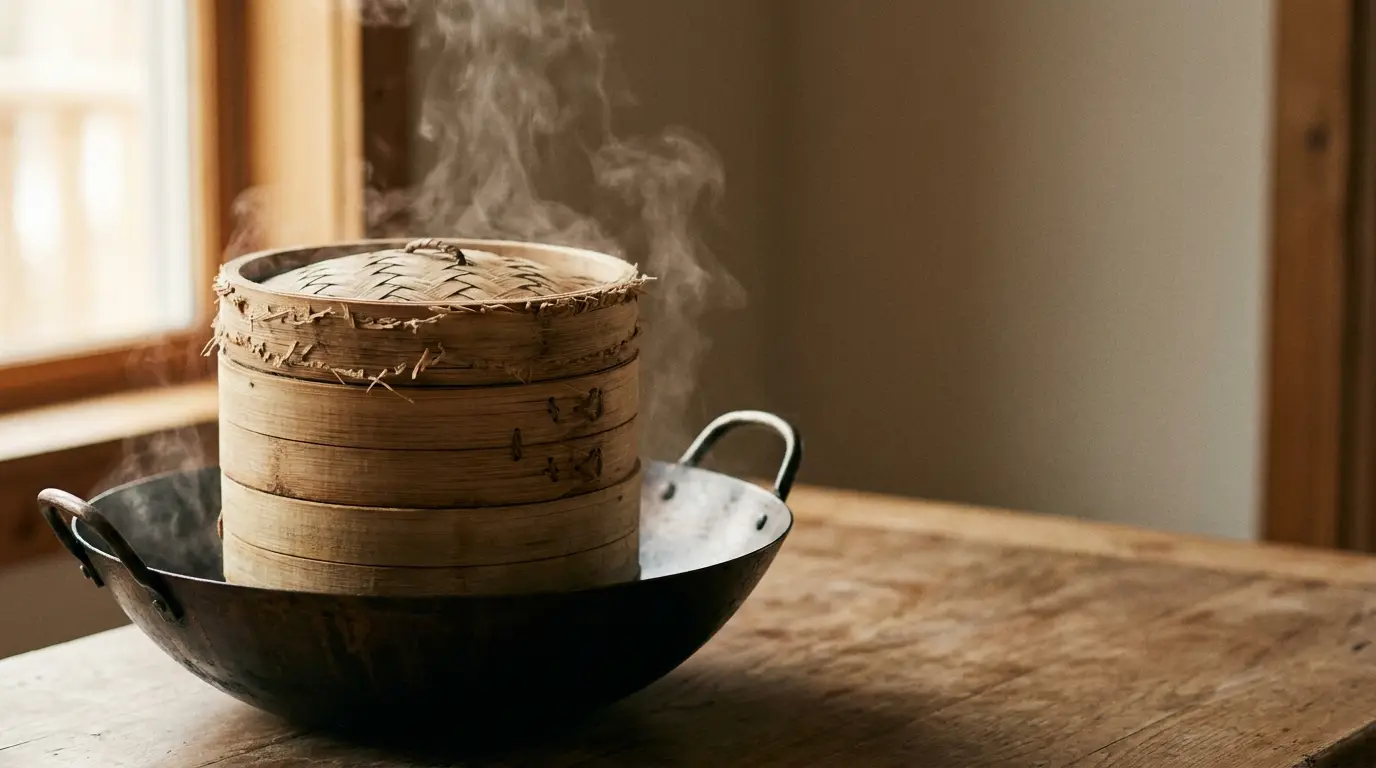
Bamboo steamers are a traditional tool used for steaming dumplings, buns, fish, and vegetables. They are stacked over a pot or wok of boiling water, allowing multiple dishes to cook at the same time.
One of their biggest advantages is that they preserve moisture and natural flavour without the need for oil. Bamboo also absorbs excess steam, preventing water from dripping back onto the food.
This makes bamboo steamers ideal for healthy cooking and delicate dishes that require gentle heat.
5. Long Cooking Chopsticks: Precision and Control
Long cooking chopsticks are another simple but useful tool in Asian kitchens. Unlike eating with chopsticks, these are longer and designed specifically for cooking.
They are often used for stirring noodles, flipping small ingredients, or handling food during deep-frying. Their length keeps hands safely away from hot oil or steam while still allowing precise control.
They are especially useful in recipes that require careful handling of delicate ingredients.
6. Strainers and Skimmers: For Frying and Draining
Asian cooking often involves frying, boiling, and blanching, making strainers and skimmers essential tools.
A spider strainer is commonly used to lift food out of hot oil or boiling water. It allows liquids to drain quickly while keeping food intact. Fine mesh strainers are also used to remove small particles from oil, helping maintain cleanliness and flavour in cooking.
These tools are especially useful in preparing fried snacks, dumplings, and noodle dishes.
Conclusion
Asian cooking utensils are designed with purpose and tradition in mind. Each tool—from the versatile wok to the simple bamboo steamer—plays a role in creating efficient, flavourful meals.
While modern kitchens may not require every traditional tool, understanding their function can help home cooks improve technique and explore new cooking styles. Whether you are stir-frying, steaming, or chopping, these utensils bring both practicality and authenticity to everyday cooking.