

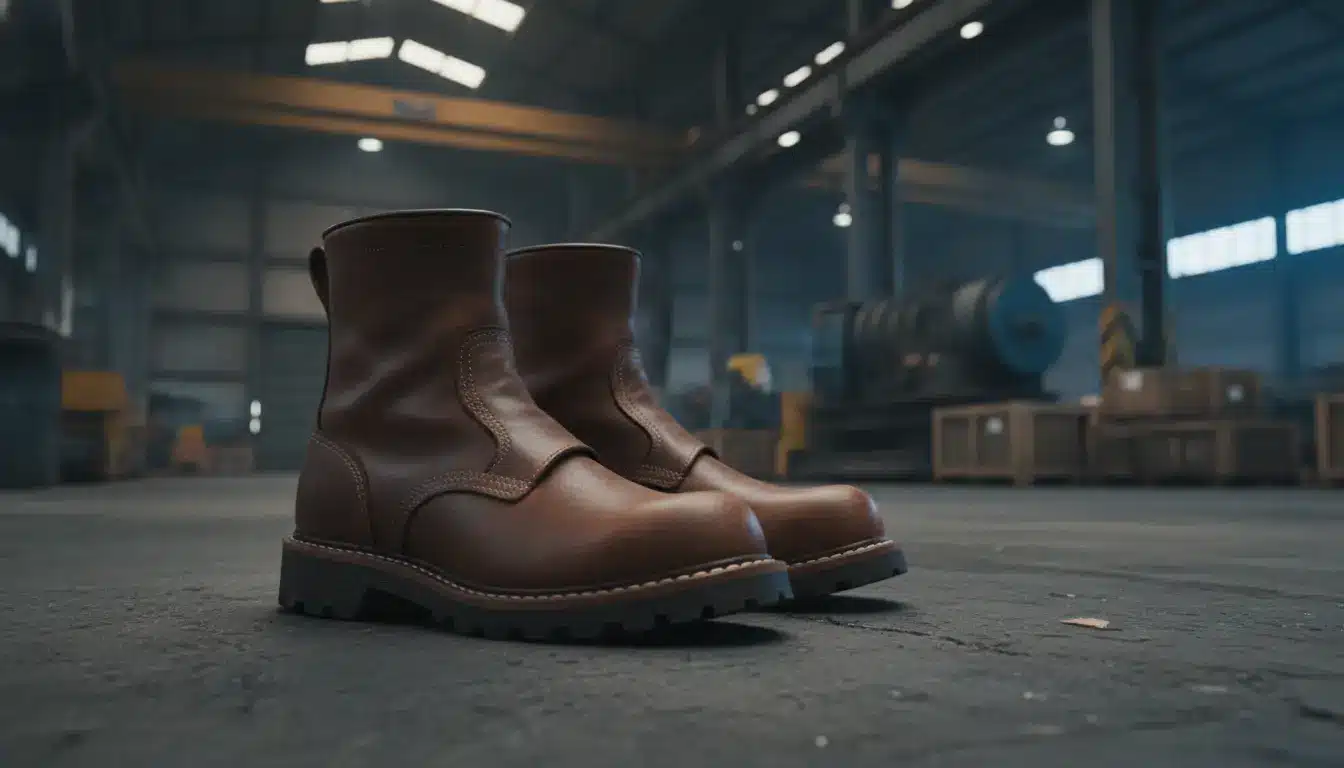
For a ten- or twelve-hour shift on hard ground, the boot that holds up is the one built around a supportive last, a cushioning system that survives past month four, and an outsole matched to the surface you actually stand on. Everything else is secondary.
Safety rating, waterproofing, and weight all matter, but they matter in service of one goal, which is getting your feet, knees, and lower back through the shift without the boot working against you. Pick on that basis and most of the marketing noise falls away.
The reason the stakes are high is documented. NIOSH links prolonged standing to low back pain, muscle fatigue, and leg swelling, and names shoe inserts and floor mats among the interventions that help.
It characterizes prolonged standing as more than an hour continuously or more than four hours across a day. Your boot is the intervention you wear all day, so it carries most of that load.
What Actually Reduces Fatigue Over a Long Shift
Cushioning is the first thing people reach for and the first thing they get wrong. The plush foam that feels great in the parking lot is usually flattened by the fourth month on concrete, and once it packs out the fatigue moves straight into your heels, arches, knees, and lower back.
Density matters more than plushness. A firmer EVA or polyurethane midsole gives back less initially and holds its rebound far longer, which is what you want across a year of slab time.
Arch support is the part that decides whether the fatigue compounds. A structured footbed distributes pressure across the whole foot instead of letting it pile onto the heel and the ball, and that even loading is what keeps your feet from aching by hour eight.
If your feet already argue with you at night, or you are managing plantar fasciitis, the American Podiatric Medical Association makes the case that heel pain is a treatable medical problem and not something to walk off.
A boot with a removable footbed matters here, because it lets you drop in an orthotic or a denser aftermarket insole without buying a new boot.
Which Outsole Belongs Under Your Feet
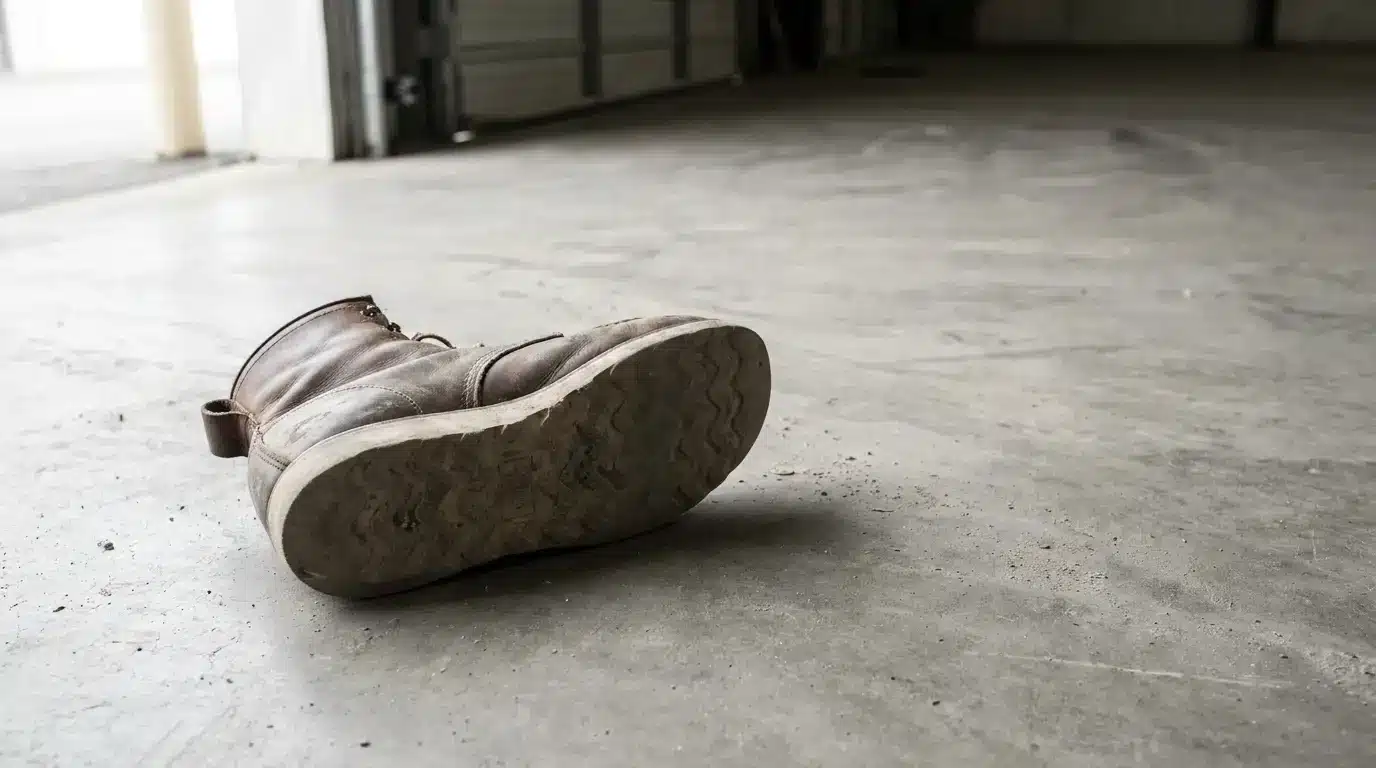
Match the outsole to the ground, not to the catalog photo. On flat concrete and shop floors, a wedge outsole puts a broad, uniform contact patch under the whole foot and spreads impact evenly, which takes the sting out of the heel-strike shock that a deep lug sole transmits on a hard slab.
That is why so many warehouse, plumbing, and mechanic guys end up in wedges. On mud, gravel, scaffolding, and broken ground, that logic flips. A lug sole bites into loose and uneven surfaces where a wedge would slide, so trades that move across dirt and rock want the aggressive tread.
Slip resistance is a separate spec from tread depth, so read it as its own line item. A boot can have deep lugs and still be rated poorly for slip resistance on wet, oily interior floors, and a flat wedge can carry a strong slip rating. If your shift includes wet concrete or kitchen-grade floors, the slip rating is the number that keeps you upright.
Comfort Is a Construction Question, Not a Marketing One
How a boot is built tells you whether the comfort lasts. Goodyear welt construction, where the upper and sole are stitched to a welt rather than cemented, lets a worn outsole be resoled instead of replaced, so a boot you have already broken in can keep going for years.
Paired with a genuine cushioning footbed, that construction is the difference between a boot that gets more comfortable and one that just wears out.
Georgia Boot is a fair example of how those pieces read on a real product line rather than in a slogan. Their catalog leans on Goodyear welt construction and a Comfort Core insole across a lot of models, spans soft toe through steel, composite, alloy, and met guard protection, and runs from wedge work boots to waterproof loggers, roughly in the $135 to $275 band on a retailer like Overlook Boots.
If you want to see how those specs sort out across models, you can explore men’s Georgia footwear and compare a wedge like the 8-inch tobacco against a waterproof composite-toe logger side by side. The point is not the brand name, it is that you can trace comfort claims down to construction, footbed, and toe type before you commit.
Do Not Skip the Safety Rating, But Read It Correctly
If falling objects, punctures, or electrical hazards are part of your day, the protection is not optional, and OSHA spells out when protective footwear is required for those exposures. The spec to look for on the boot is ASTM F2413, which sets the impact and compression, puncture-resistance, and electrical-hazard performance the cap and plate are tested against.
Composite toes run lighter and do not conduct temperature, which is the honest advantage over steel on a cold slab or an EH job. Steel toes give you the thinnest profile for the same protection. Neither should press your toes against the front of the boot, and if a safety toe does that, the fit is wrong, not the cap.
Fit and Break-In Decide Whether Any of This Works
The best-specced boot in the store fails if the fit is off, so buy on fit last and hardest. Try boots on at the end of the day when your feet are at their most swollen, size to your larger foot, and wear the actual thick work socks you put on for the job. You want about a thumb’s width of room at the toe and a heel and midfoot that lock in without pinching.
A well-fitted leather boot asks for a short break-in and then settles. What it should not do is hurt. A painful break-in is the boot telling you the fit or the last is wrong, and no amount of wearing it in fixes a boot that was never shaped for your foot.
Get those three things right, which are support, an outsole matched to your surface, and a fit confirmed on your own feet in your own socks, and the safety rating and waterproofing fall into place as the easy part. That is the order the guy behind the counter would put them in, because it is the order that gets you through the shift.