
Scroll through TikTok for more than five minutes, and you’ll hit a video of someone punching pastel yarn through fabric, turning a blank hoop into a fuzzy little cloud in real time. It’s oddly hypnotic. There’s a reason it keeps showing up next to your skincare routine videos and your “get ready with me” content: punch needle sits at the exact intersection of self-care and home decor that this generation can’t stop scrolling toward.
Unlike cross-stitch or knitting, punch needle gives you a finished, rug-like texture in an afternoon, not a month. That instant payoff is precisely why it’s become the craft of the moment, and why it’s worth understanding before you write it off as “just another Pinterest trend.”
Why Punch Needle Is Everywhere Right Now
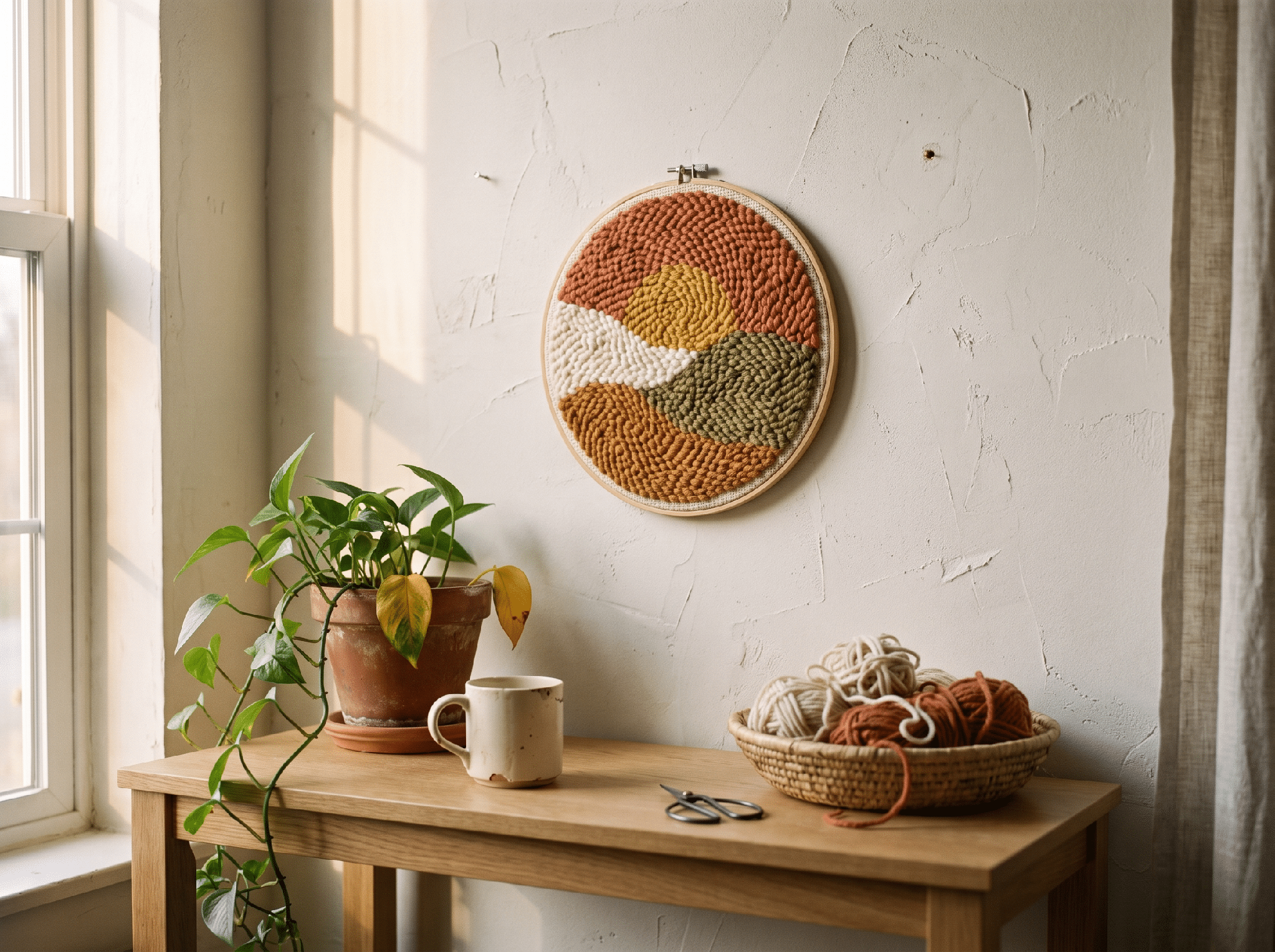
The numbers back up what your For You Page already told you. The global punch needle kit market was valued at roughly $0.4 billion in 2025 and is projected to hit $0.68 billion by 2034, according to a market report from marketintelo.com. North America alone accounts for about 38.2% of that market, and home decor projects, think framed wall art, throw pillows, coasters, make up 45.2% of what people are actually punching.
Social media gets most of the credit. A 2025 Michigan State University study found TikTok and YouTube are the biggest growth drivers behind punch needle and other fiber arts among 18- to 35-year-olds, and the hashtag #punchneedle has racked up close to a billion views. Mintel’s US Arts and Crafts Consumer Report 2025 adds another layer: 73% of U.S. adults crafted something in the past year, and 71% of Gen Z and Millennials specifically said they want crafting to feel like a community activity, not a solo one.
That combination- fast results, decor-worthy output, and a built-in audience of people posting their progress, is why brands built specifically for beginners have taken off. Punchora is one of the clearer examples: instead of sending you off to separately source monk’s cloth, an adjustable needle tool, a threader, and the right weight of yarn, it packages everything a first-timer needs into one kit. For someone who wants the aesthetic payoff without spending an evening comparing supplies on three different craft sites, that’s the whole appeal. You’re not learning to be a “crafter,” you’re just making the thing you saw on your feed, which is honestly the same impulse that got a lot of us into skincare fridges and jade rollers, an activity that also gives us a small ritual and a nice-looking result. If self-care through small rituals is your thing, it’s worth reading our piece on hobbies that double as self-care, since punch needle fits that same category more than people expect.
The Stress-Relief Case for Picking Up a Punch Needle
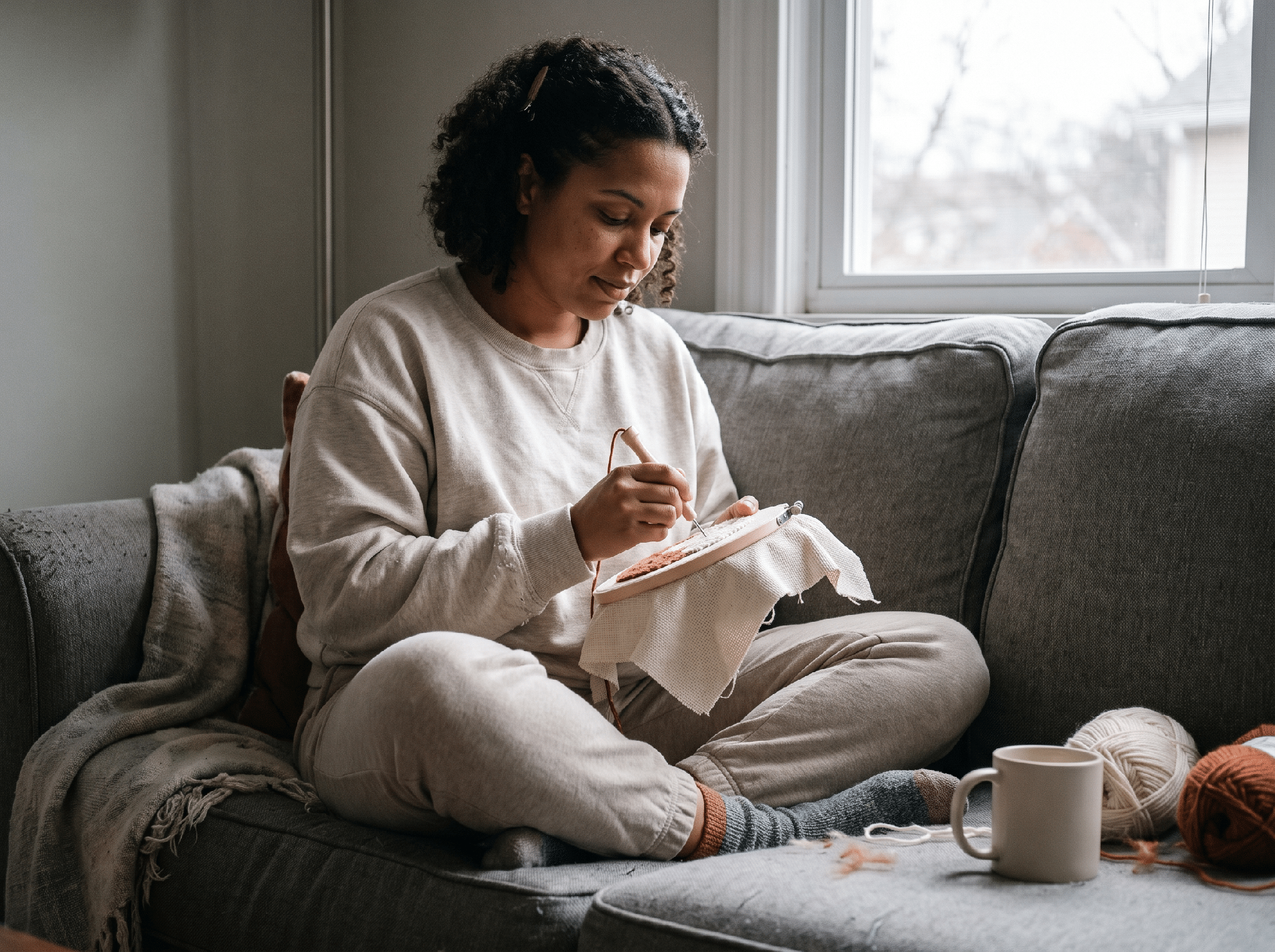
There’s a reason your hands feel calmer after twenty minutes of punching yarn: the repetitive motion works a lot like other things you already lean on for stress relief. A moderated network analysis published on PMC, the NIH’s research repository, found that craft creation practice supports stress reduction and self-efficacy among university students, meaning the effect isn’t just anecdotal. The American Psychiatric Association has also cited creative activity as a stress-management tool for a large share of Americans, with figures around 46% of adults using some form of creative practice to manage stress or anxiety.
Punch needle happens to check every box that makes a craft good for that purpose. It’s repetitive without being boring, it doesn’t require constant problem-solving once you’ve got the rhythm down, and you can see progress within minutes rather than waiting hours for a result. Compare that to something like counted cross-stitch, where a single mistake three rows back can force you to unpick an hour of work, and it’s easy to see why punch needle has become the low-frustration entry point into fiber arts. Think of it less as a hobby you’re supposed to get good at and more as twenty minutes where your hands are busy and your phone isn’t.
What You Actually Need to Get Started
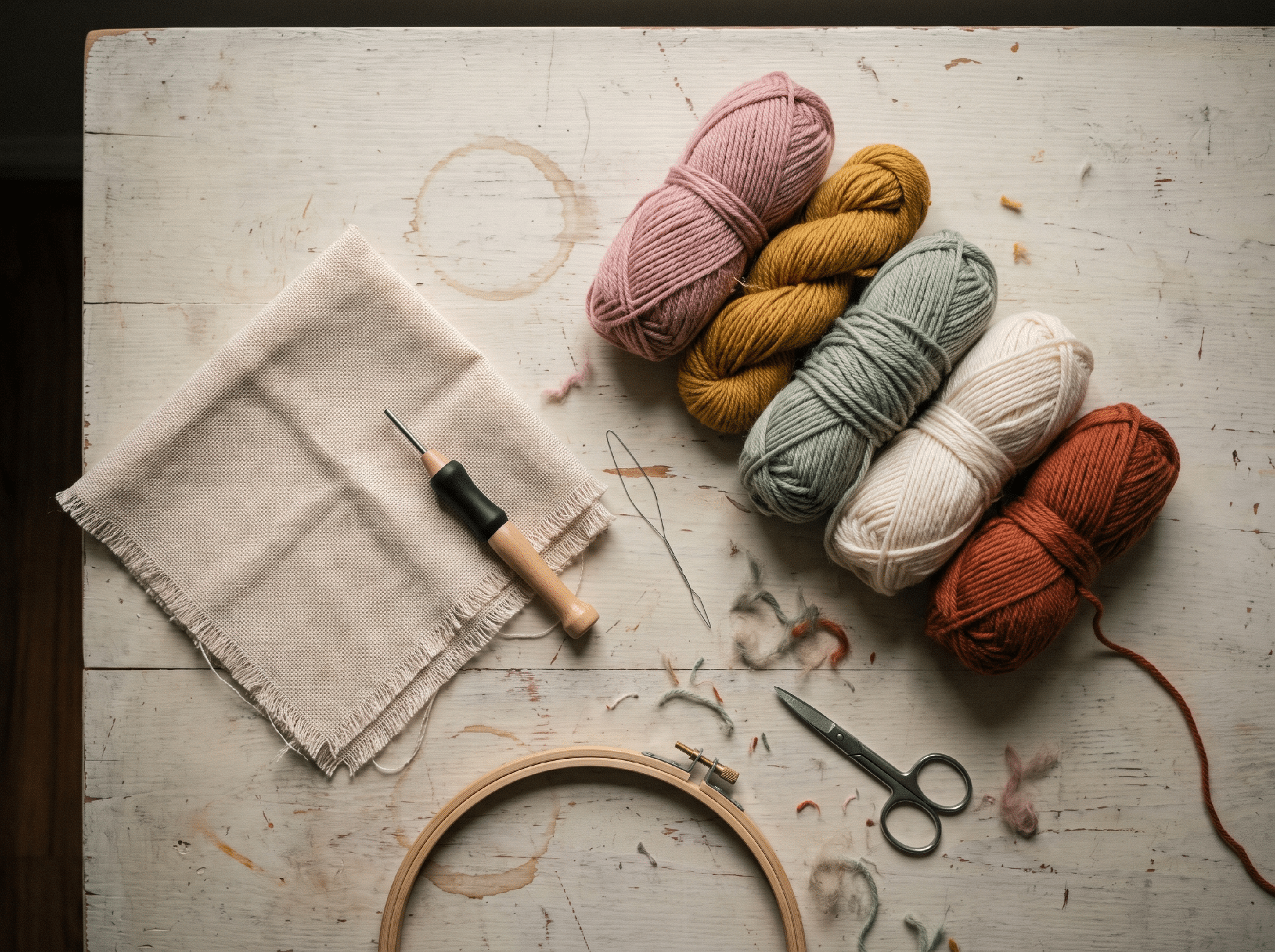
The supply list is shorter than most crafts, which is part of why it’s approachable. You need monk’s cloth (or weaver’s cloth if you want a tighter weave), an adjustable punch needle tool, a threader to guide your yarn through the needle, and yarn in whatever colors match the piece you’re picturing. An embroidery hoop or frame keeps your fabric taut while you work, which matters more than it sounds like it should; loose fabric is the number one reason beginner projects come out uneven.
If you’re the type who likes discovering small independent makers rather than big-box craft chains, it’s worth checking out small creative brands worth knowing for a sense of how much personality goes into this corner of the craft world. The loop-length setting on your needle tool is the other thing to pay attention to early: shorter loops give you a tighter, more detailed look, while longer loops read more like a shag rug. Neither is wrong, it just depends on what you’re making.
Your First Project, Step by Step
Start smaller than you think you should. A coaster or a mini hoop under six inches will teach you the technique without the frustration of a large canvas.
Thread your needle first, following the threading path stamped or printed on the tool itself, then pull about six inches of yarn through and out the back. From there, hold the needle like a pen, angle it against the fabric, and punch straight down until the base of the tool touches the cloth. Lift it back up without pulling it fully out, slide it a few millimeters over, and punch again. The loops form automatically on the underside of the fabric as you go.
Two mistakes trip up almost everyone at first. Loose fabric causes uneven loop height, so re-tighten your hoop the moment you notice slack. And dropped loops, where a loop pops out because the needle got twisted mid-punch, usually mean you’re rotating the tool as you lift instead of pulling it straight up. Slow down for the first few rows, and both problems mostly sort themselves out.
Turning It Into Decor You’ll Actually Display
Given that decor applications already make up 45.2% of punch needle projects, you’re in good company if your goal was never really “learn embroidery” but “make something for my wall.” Framed hoops work well for smaller pieces, while larger ones look better mounted flat against a wooden dowel and hung like a tapestry. Pillow covers are another popular option if you want the texture in a room without committing wall space to it.
For gift-giving or filling out a gallery wall, browsing handmade pieces for your space can give you a feel for how other handmade textures pair with a curated room. Punch needle art tends to read best against a neutral backdrop, plaster walls, linen curtains, unfinished wood, where the yarn’s texture stays the visual focus instead of competing with a busy pattern.
The Bottom Line
Punch needle isn’t going to replace your skincare shelf or your yoga mat, but it doesn’t need to. It’s a twenty-minute ritual that produces something you’ll actually want to hang up, backed by a market that’s growing fast enough to suggest this isn’t a passing TikTok fad. Start with a small kit, punch through one imperfect first project, and you’ll understand why nearly a billion views later, people still aren’t bored of it.