
Scrolling through azelaic acid before-and-after photos on Reddit and Instagram can leave you comparing your week-one skin to someone else’s month-three results, which is a setup for disappointment.
Progress with this ingredient rarely looks the same for two people, mostly because “before and after” means something different depending on whether the concern is active acne, rosacea-related bumps, or leftover dark marks.
One thing formulation training makes clear early on is that the percentage on the label tells you far less than people assume. Vehicle, frequency, and how consistently someone actually sticks with a product matter just as much.
It is important to know what real change looks like, on what timeline, and where community photos can mislead as easily as they inform.
Disclaimer: Photos and forum posts cannot diagnose acne, rosacea, or melasma. Prescription-strength azelaic acid, and any combination with retinoids, should be guided by a dermatologist rather than a routine copied from social media.
What Is Azelaic Acid?
Azelaic acid is a topical skincare ingredient dermatologists reach for when acne, redness, or lingering dark marks need a gentler option than harsher exfoliants.
It works in several ways at once: calming the inflammation behind active breakouts, helping keep pores from clogging with dead skin cells, and reducing the bacteria linked to acne.
It also interrupts the pigment-producing process responsible for post-acne dark marks, sun spots, and some forms of melasma, which is why it shows up so often in before-and-after posts focused on tone rather than texture.
Prescription-strength versions also calm the inflammatory bumps associated with rosacea. Unlike stronger acids, it tends to work gradually rather than through visible peeling, which is part of why patience matters here.
What Are the Benefits of Azelaic Acid?
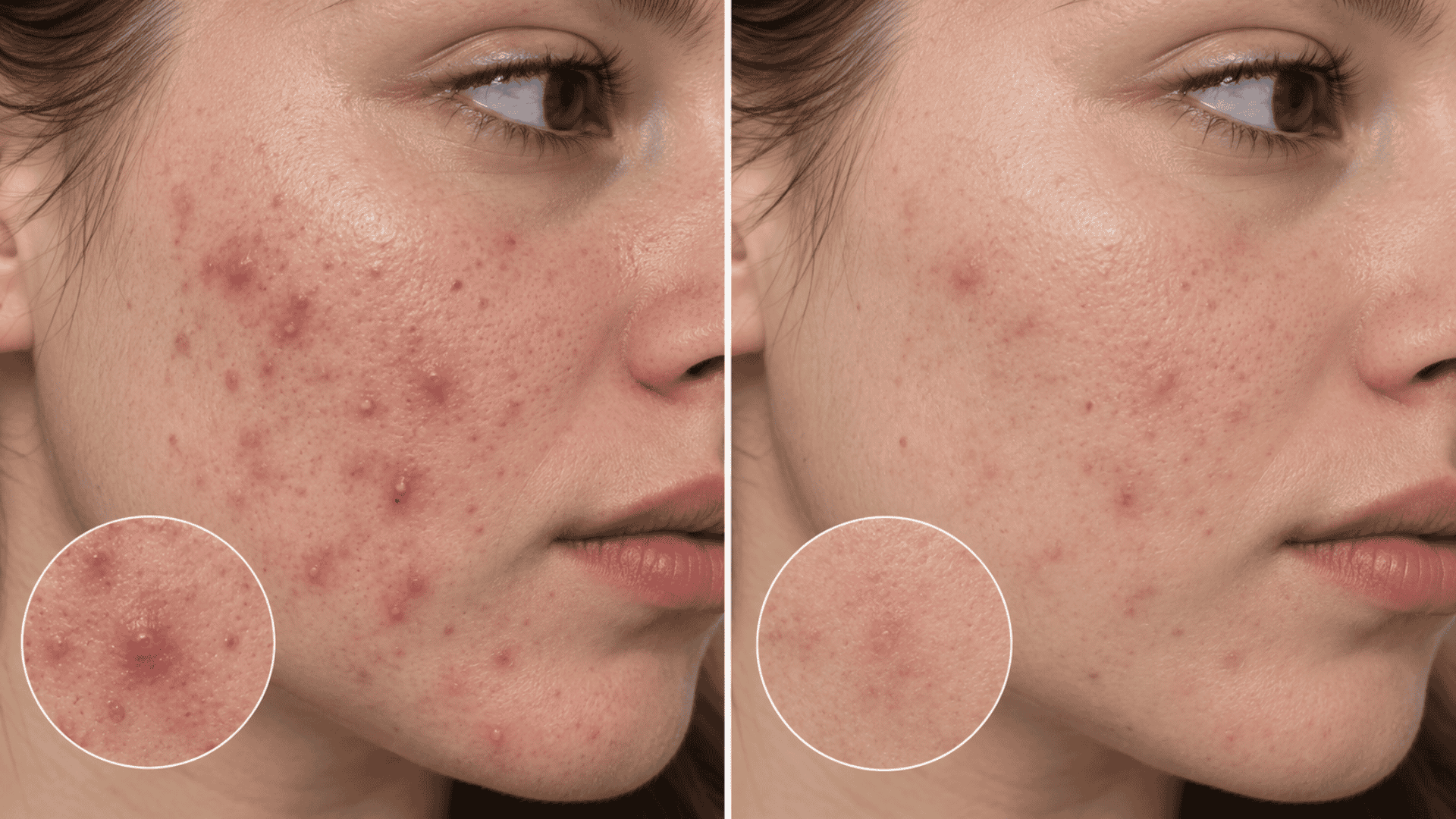
The visible change depends heavily on what you’re starting with, so acne photos need a different lens than pigmentation or redness photos.
1. Acne and Breakouts
Azelaic acid reduces inflammation, helps keep pores from clogging, and works against the bacteria linked to breakouts. In progress photos:
- Before: Frequent breakouts across the same areas, visible inflammation, and skin that feels congested and clogged to the touch.
- After: Noticeably fewer active pimples, calmer-looking skin overall, and any new breakouts clearing up faster than before.
Don’t expect a three-day fix here. The NHS treatment guidance on acne notes it can take two to three months of consistent use before real improvement shows.
2. Redness and Rosacea-Related Bumps
Prescription-strength azelaic acid is specifically studied for the inflammatory papules and pustules of rosacea, not for erasing visible blood vessels or permanent flushing.
- Before: Clustered inflamed bumps, patchy redness across the cheeks, and skin that feels reactive or tender to the touch.
- After: Far fewer papules and pustules, with the surrounding redness settling down noticeably once the bumps calm.
The AAD’s rosacea diagnosis guidance places noticeable change from topical treatment at roughly two to three months, not weeks.
3. Hyperpigmentation and Post-Acne Marks
Flat brown or gray-brown marks respond differently than raised or indented scarring, and lumping them together is where many before-and-after posts go wrong.
- Before: Flat brown or gray-brown patches left behind once an old breakout has fully healed and faded from view.
- After: Marks gradually lighten week over week, leaving a noticeably smoother, more even-toned complexion.
Structural scars, the pitted or raised kind, need different treatments entirely. Azelaic acid targets the color, not the texture.
Useful Tip: Take progress photos in the same room, same light, same distance, and same camera settings every time. Lighting alone can make redness and pigmentation look dramatically better or worse than they actually are.
Azelaic Acid Results Timeline: What Changes First?
Results rarely arrive all at once. Acne calms first, redness eases next, and pigment takes the longest to shift, so tracking each concern separately gives a clearer view of real progress.
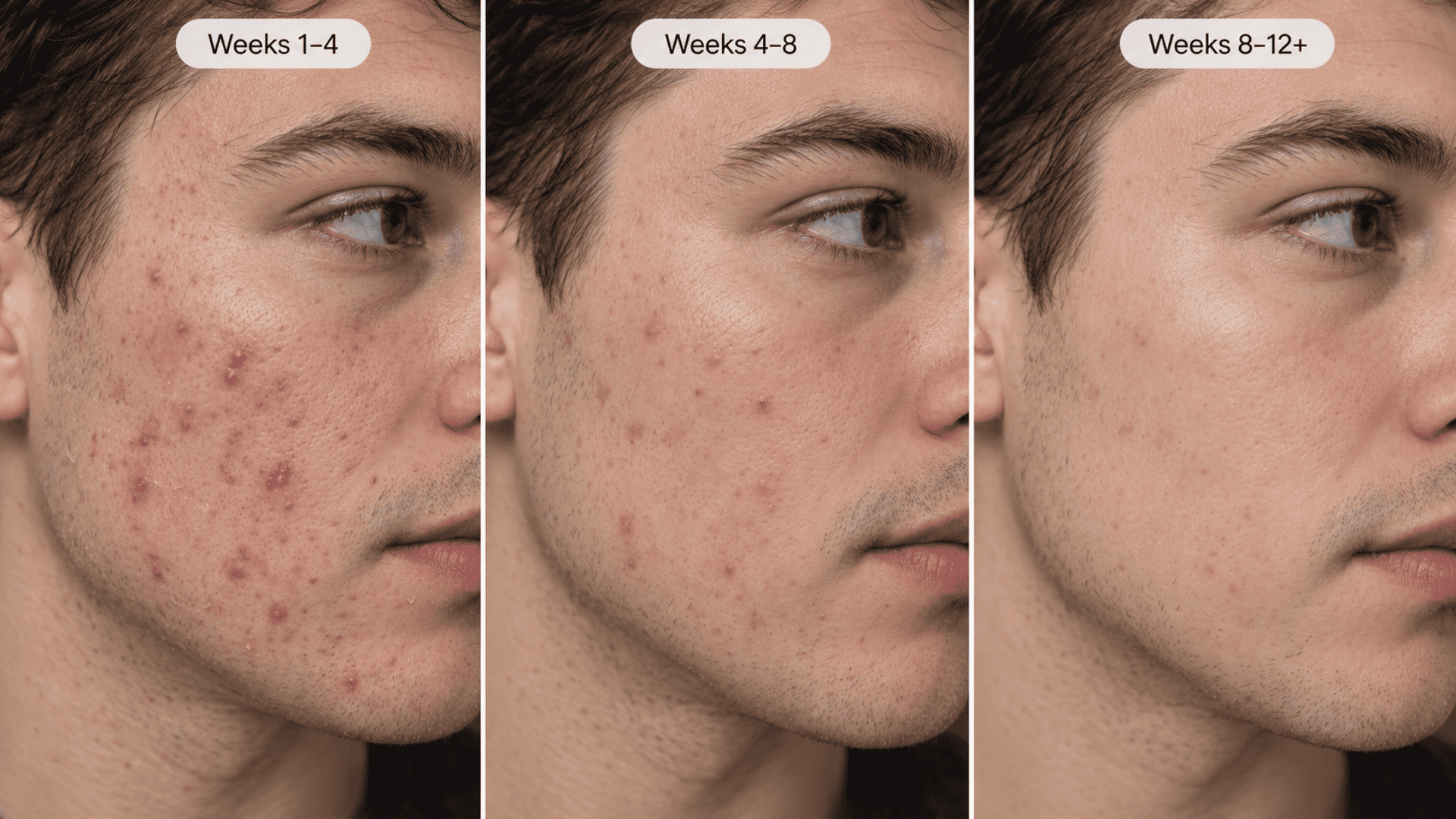
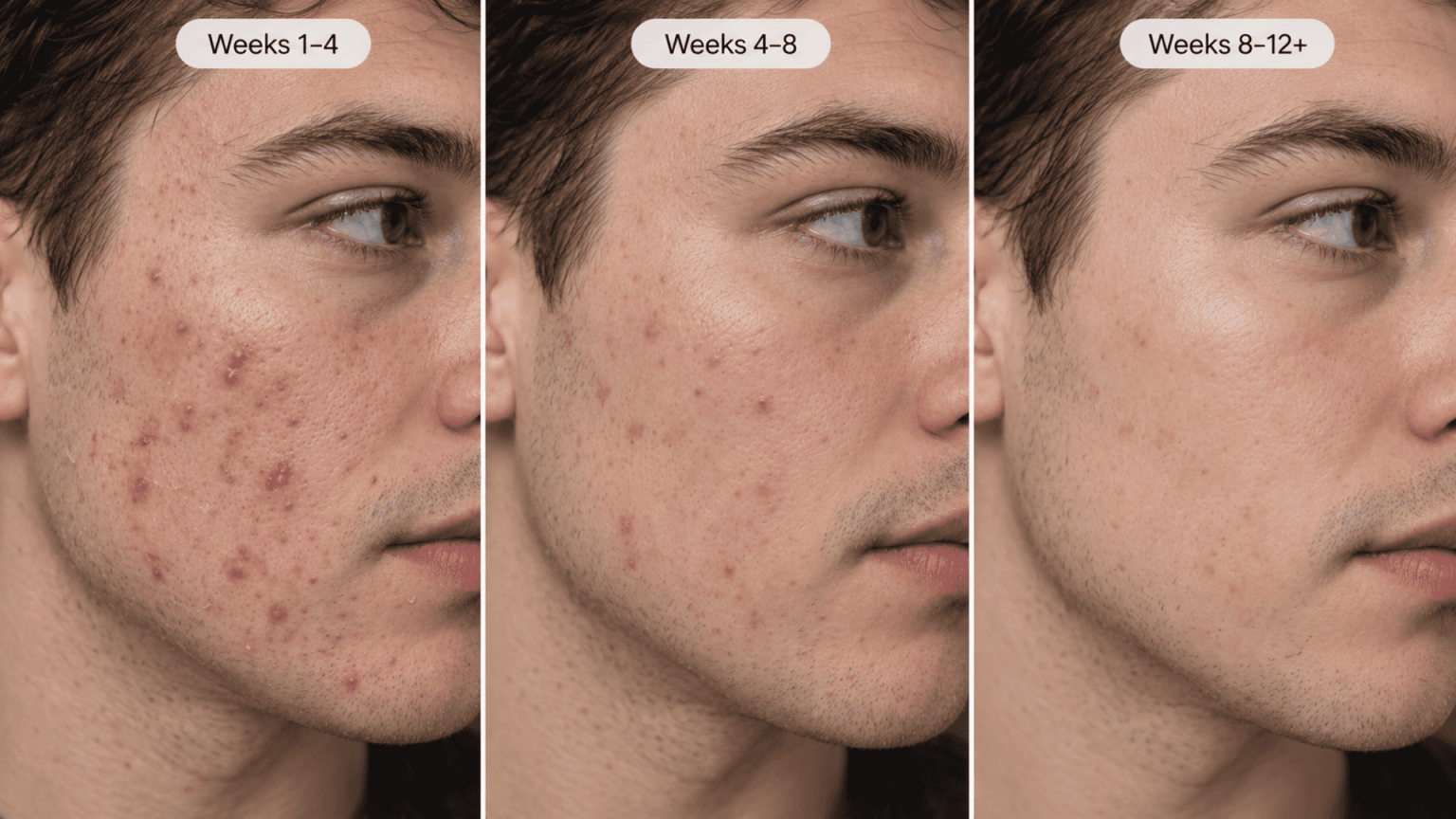
- Weeks 1 to 4: Skin may feel smoother, though mild stinging, itching, or dryness is common while your skin adjusts.
- Weeks 4 to 8: Active breakouts and inflammatory bumps often become less frequent.
- Weeks 8 to 12 and beyond: This is when longer-standing dark marks and overall tone become easier to judge in photos.
These ranges shift depending on concentration, formulation, and how consistently you use the product, so treat them as a general guide, not a promise.
How to Use Azelaic Acid Without Undoing Your Progress
Results depend less on percentage and more on how you introduce the product. These four habits determine whether azelaic acid works with your skin or against it.
- Pick the right strength: Over-the-counter formulas usually top out around 10%, while prescription creams and gels run from 15% to 20%.
- Build up gradually: Start once daily, and move to twice daily only if your skin tolerates it well.
- Apply to dry skin: Even slightly damp skin is the most common cause of the stinging and itching people complain about.
- Layer sensibly: Moisturize afterward if needed, and never skip daytime sunscreen, especially if dark marks are your main target.
Formulation Note: A 20% cream is not automatically stronger than a 15% gel in practice. Gels tend to deliver the acid into skin more efficiently than thicker cream bases, so the vehicle matters just as much as the number on the box.
What Real Users Say About Their Results
Community posts help gauge tolerability and set realistic expectations, but treat them as anecdotal rather than clinical evidence, since most routines involve more than one active ingredient.
Reddit Experiences
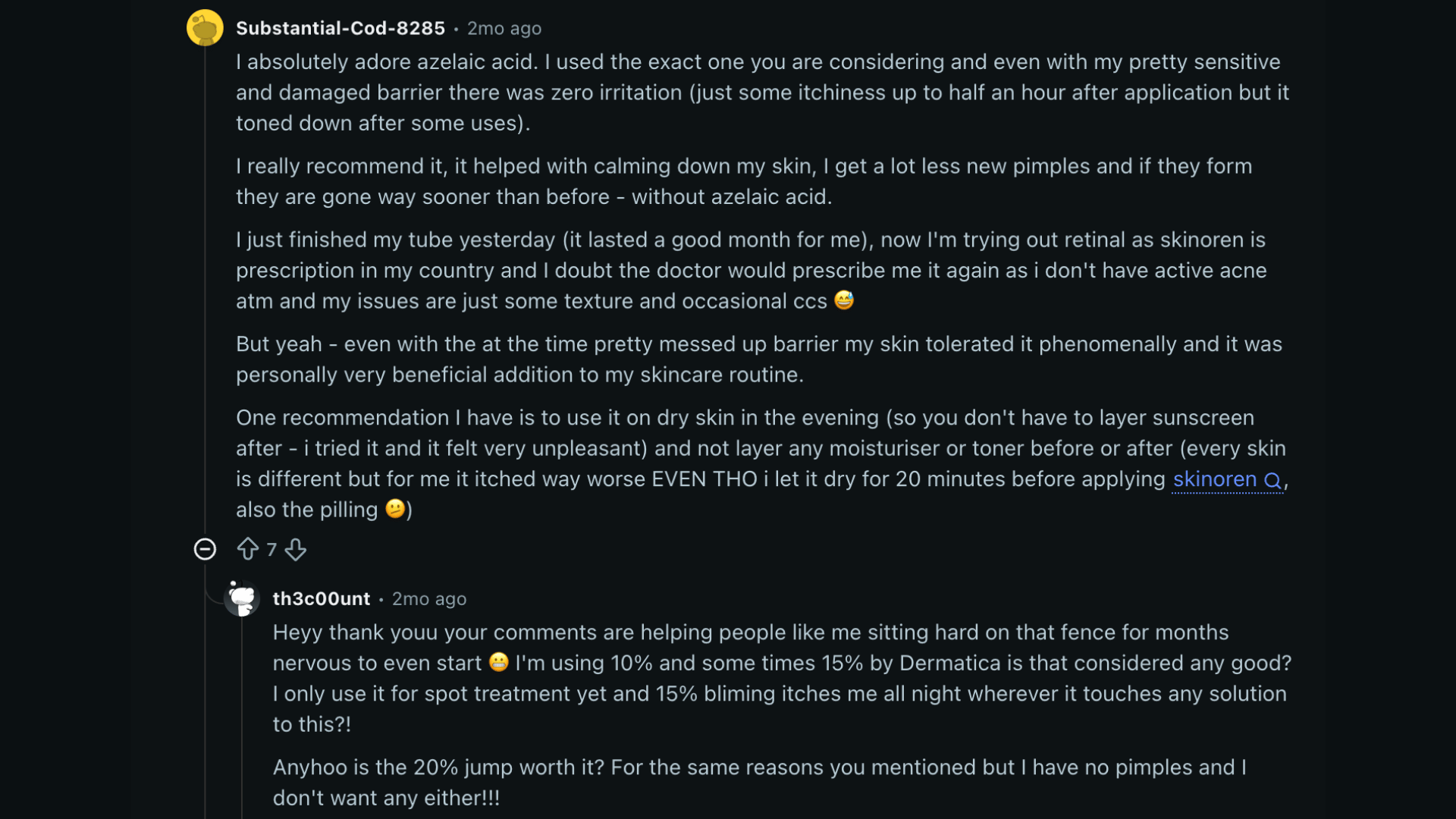
A recurring Reddit thread in skincare forums involves people comparing 15% and 20% azelaic acid, often between brands like Skinoren and Finacea.
Common themes include fewer new breakouts, calmer skin over a few weeks, and existing marks fading over a couple of months. Stinging and itching vary widely between users, and several point out that gel and cream versions of the same percentage can feel completely different.
One well-reasoned comment noted that a 15% gel can outperform a 20% cream simply because gels penetrate more efficiently, which is a useful reminder before assuming a higher number always means a stronger result.
Community Tip: Multiple long-term users mention letting skin dry fully before application and avoiding layering other products directly on top, since that combination is what triggers most of the reported itching.
Instagram Before-and-After Experiences
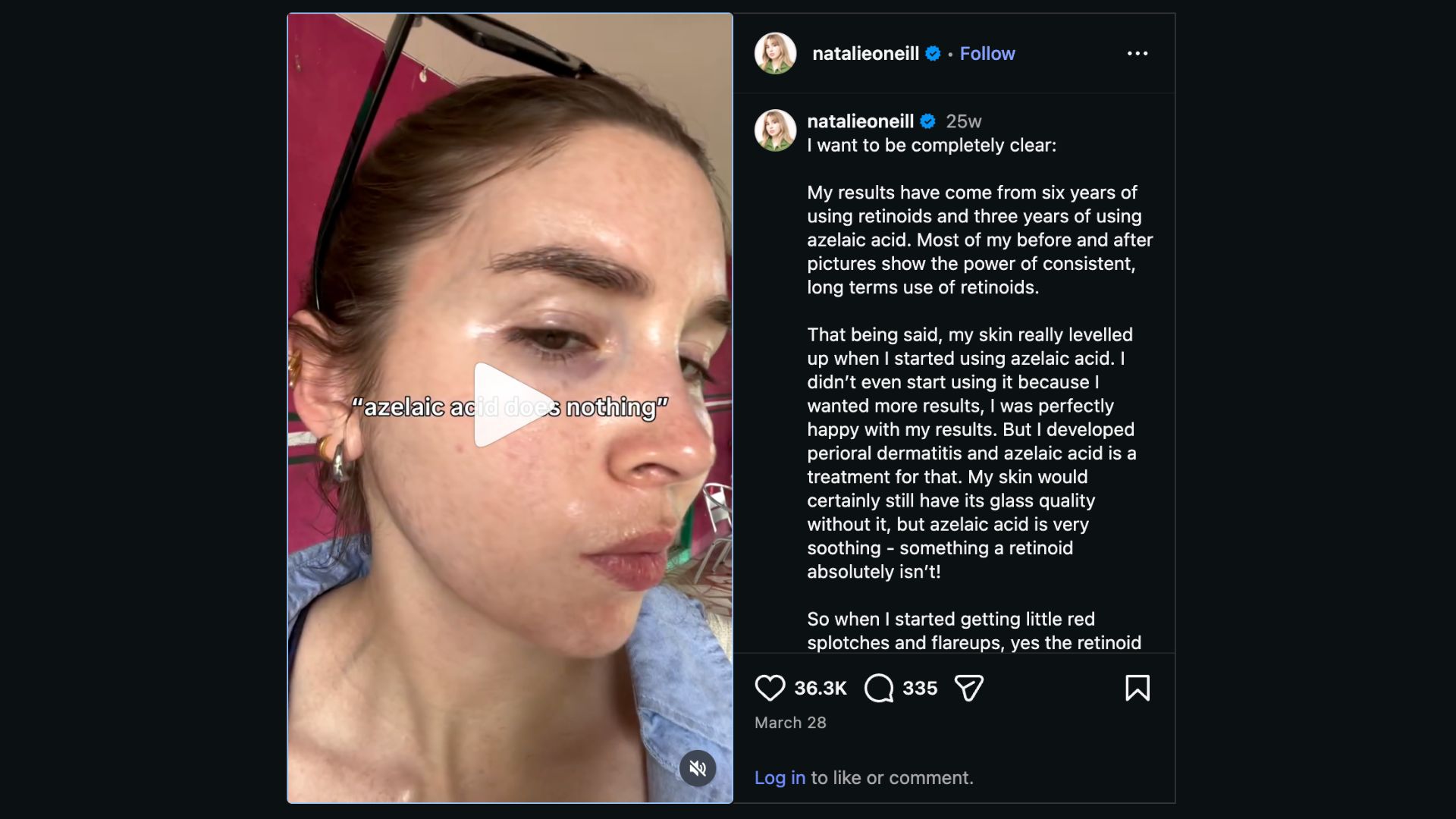
Instagram post discussing long-term azelaic acid and retinoid use for redness, flare-ups, and smoother-looking skin.
One frequently referenced creator, Instagram’s natalieoneill, attributes her long-term transformation to six years of retinoid use plus three years of azelaic acid, not azelaic acid alone.
She credits it with calming perioral dermatitis flare-ups and evening out tone, while crediting the retinoid for most of the resurfacing and anti-aging work. It’s a good reminder that a single dramatic photo rarely reflects a single ingredient.
YouTube and Dermatologist Discussions
Dermatologist Dr. Shereene Idriss recently clarified a viral debate around azelaic acid formulations on her channel, explaining that free-form, ionized, and the derivative potassium azeloyl diglycinate all offer real benefits, just with different textures and absorption profiles.
She also addressed common Reddit complaints, noting typical itching fades within two to three weeks, and that azelaic acid itself doesn’t cause purging or barrier damage, unlike retinoids or exfoliating acids often blamed alongside it.
Azelaic Acid Before-and-After Searches, Explained
Not every azelaic acid before-and-after search means the same thing. Here’s what each common variation actually covers, and what result you should realistically expect from it.
|
Azelaic Acid Before and After |
What to Realistically Expect |
|---|---|
|
With moisturizer |
May improve tolerability, but layering order depends on the specific formulation |
|
Wrinkles |
Not a primary use case, so don’t expect anti-aging results |
|
Acne scars |
Helps flat discoloration, not indented or raised scarring |
|
Rosacea |
Best evidence covers inflammatory bumps, not permanent facial redness |
|
Eyes |
Keep away from the eye area unless the product label says otherwise |
|
Black skin |
Particularly relevant for post-inflammatory dark marks, common after acne in deeper skin tones |
Precautions Before You Start
Start azelaic acid gradually. Mild dryness, itching, or burning can occur early. Stop if you have severe irritation, seek professional advice, and don’t assume facial redness automatically means rosacea.
>What Is the Best Time to Apply Azelaic Acid?
Azelaic acid works well in morning skincare routine or night, so timing comes down to routine rather than the ingredient itself.
Many people prefer applying it in the evening alongside other active ingredients, then following with sunscreen the next morning since photosensitivity isn’t a major concern.
If used during the day, sunscreen afterward is still essential, especially when targeting dark marks or pigmentation.
Final Takeaway
Progress is much easier to judge over months than from a daily mirror check. Active breakouts and inflammation tend to settle first, while lingering dark marks take longer, and structural scarring or visible blood vessels shouldn’t be judged by the same yardstick at all.
Formulation and tolerability deserve just as much attention as the percentage on the label when weighing azelaic acid before-and-after comparisons.
If you’re tracking your own results, drop a comment with your concentration, how long you’ve used it, and the specific concern you’re monitoring. That context makes before-and-after comparisons genuinely useful to others reading them.