
You probably roll onto your side without thinking about it. That’s the problem. Side sleeping feels natural because it’s what you’ve done for years, but it’s quietly costing you deeper sleep, fewer wrinkles, and less morning stiffness. And here’s the part nobody warns you about: switching to your back isn’t about willpower. It’s about strategy. The reason most people fail at back sleeping is they try it for one night, hate it, and quit before their body adapts. This guide gives you the actual retraining method, plus the honest downsides nobody mentions, so you can decide if the switch is worth it and make it last if it is.
What Side and Stomach Sleeping Actually Do to You
Let’s start with what you’re giving up. Stomach sleeping is the worst offender. It forces your neck into a rotated position for hours, which is a fast track to waking up with a crick. The Centers for Disease Control and Prevention frames sleep quality as a core part of public health, and positioning plays a bigger role in that than most people realize. When your spine isn’t neutral, your muscles spend the night compensating instead of recovering.
Side sleeping is better than stomach, sure. But it’s not neutral either. Your bottom shoulder takes constant pressure, your bottom hip bears weight, and if you’re a strict side sleeper, you might notice one side of your face looks more creased in the morning. That’s fluid pooling and skin compression at work.
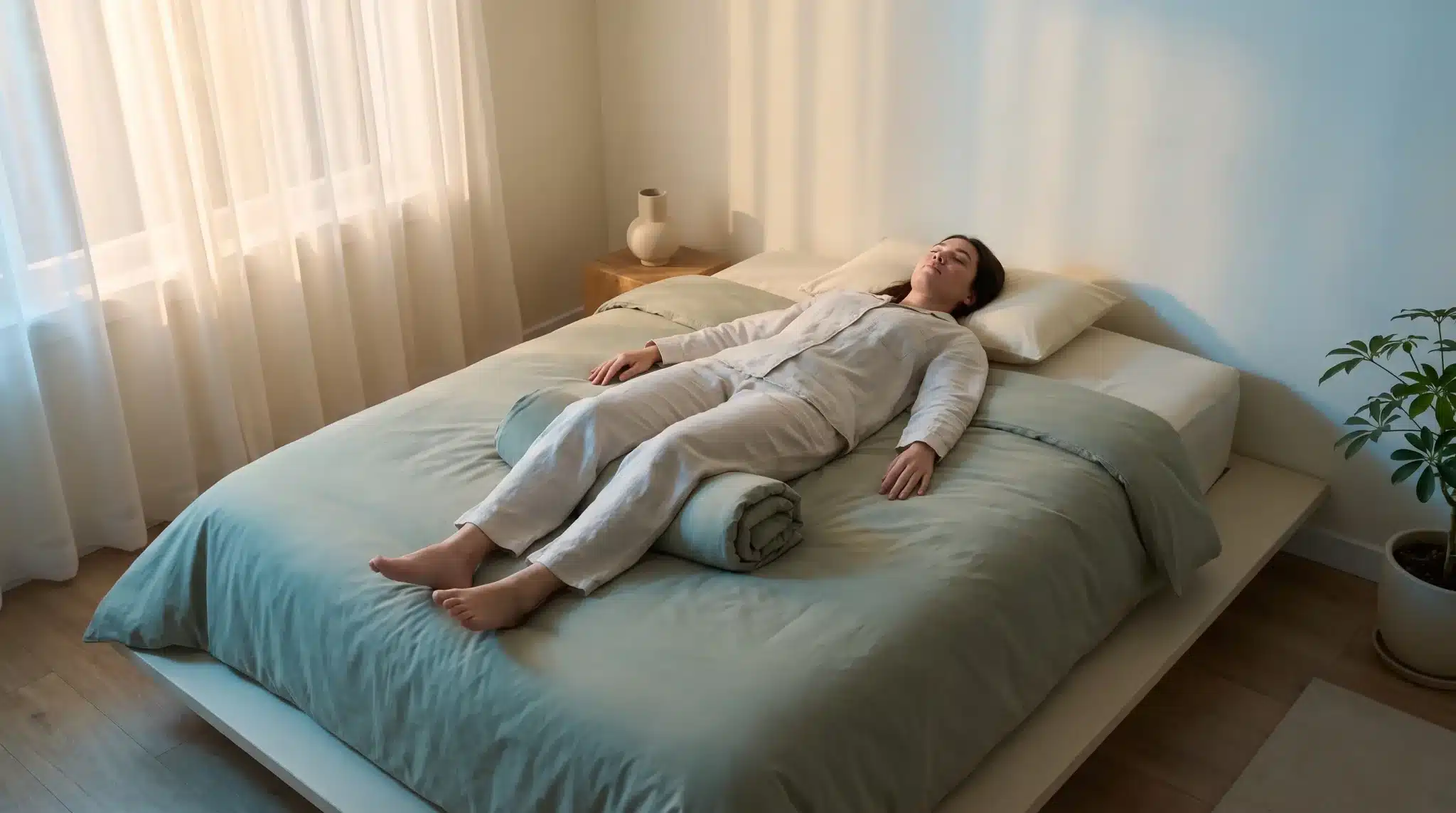
Back sleeping keeps your head, neck, and spine in a straight line. Gravity stops working against you and starts draining fluids evenly instead of letting them settle on one side. For anyone dealing with acid reflux, a slightly elevated back position also keeps stomach acid where it belongs. The trade-off? Snoring can get louder, and if you’re prone to sleep apnea, back sleeping can make breathing events worse. Talk to a doctor if that’s a concern for you. For everyone else, the neutral spine position is worth pursuing.
The Retraining Method That Works in About Three Weeks
Here’s the truth about habit change: your body will fight you for roughly 21 days before a new position starts feeling normal. That timeline comes straight from how long it takes to form a consistent sleep routine, and it applies to sleep posture just as much as it applies to waking habits. So plan for three weeks of mild discomfort, then expect things to click.
Week One: Build the Foundation
Start with your pillow setup. This is where most people fail. Your regular pillow, the one designed for side sleeping, will push your head too far forward when you lie on your back. You need a flatter pillow or no pillow at all, depending on your neck. The goal is to keep your forehead slightly higher than your chin, which maintains the natural curve of your cervical spine.
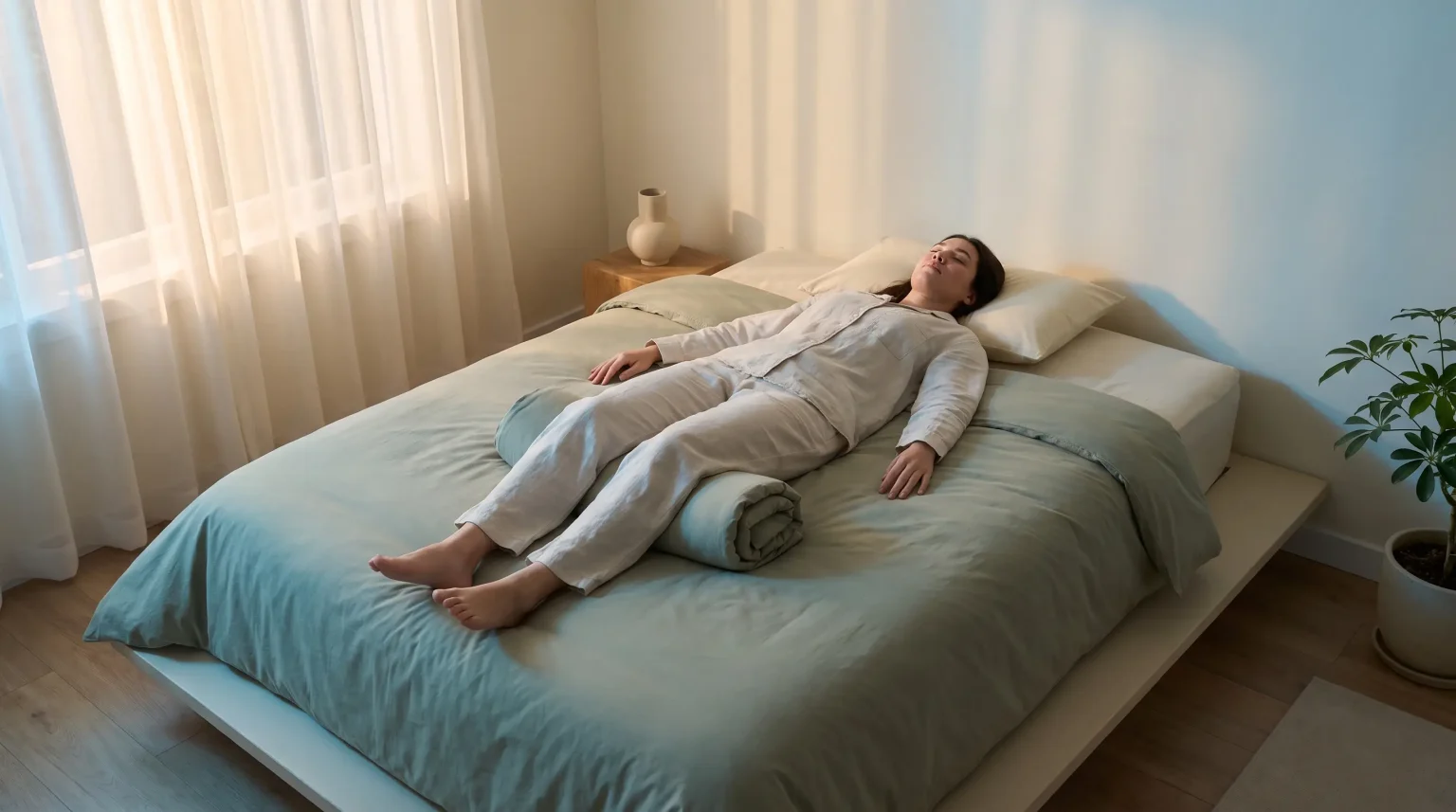
Next, address your knees. Place a pillow under them. This isn’t optional. Lying flat with straight legs pulls on your lower back, which is why so many people try back sleeping once, feel uncomfortable, and give up. A knee pillow tilts your pelvis slightly and takes the strain off your lumbar region. Do this from night one.
Week Two: Add Physical Barriers
Your body will try to roll to your side in the middle of the night. You won’t even notice it happening. So build a barrier. Place pillows on both sides of your body, tucked against your hips and ribs. When you start to turn, you’ll hit the pillow, and the discomfort of that contact will nudge you back to center.
Some people find a rolled-up towel under their lower back helpful during this phase. It provides gentle support and reminds your body where neutral feels like. Others use a light blanket tucked around their sides. Whatever works to keep you from completing that roll.
Week Three: Let It Become Automatic
By now, you should be spending at least part of the night on your back without consciously trying. Don’t panic if you still wake up on your side occasionally. That’s normal. The goal isn’t perfection. It’s increasing the percentage of time you spend supine until it becomes your default.
One trick that works well: when you wake up in the middle of the night and find yourself on your side, deliberately reposition onto your back before falling asleep again. Every time you do this, you reinforce the new pattern. Over a few nights, the number of times you catch yourself on your side will drop noticeably.
Quick Fixes When You Just Can’t Settle

Some nights are harder than others. You’ll lie there, feeling wide awake, convinced that back sleeping is a myth. Before you give up, try these two adjustments.
First, check your pillow height again. If your chin is pointing toward your chest, your pillow is too tall. Swap it for something thinner. Second, try a weighted blanket. The even pressure across your torso calms your nervous system and reduces the urge to shift positions. Many side sleepers report that the extra weight keeps them anchored on their back without them having to think about it.
And one more thing: if you can’t fall asleep on your back within 20 minutes, don’t fight it. Get up, read for a bit in a dim room, then come back and try again. Forcing yourself to stay still when your body isn’t ready just trains you to associate back sleeping with frustration. That’s the opposite of what you want. The National Sleep Foundation’s guidance on healthy sleep habits stresses consistency over force, and that applies here too.
What About Recovery and Pain?
Back sleeping is often recommended after surgery or injury precisely because it keeps weight off specific areas. But that’s a different situation than choosing back sleeping for daily wellness. After a procedure, you need positioning that protects the surgical site, which might mean sleeping at an incline or with specialized support, not just flat on your back.
If you’re recovering from something specific, you might want to look up resources on how to sleep on Your Back gradually, with the right support system in place. The principles are the same, but the pace is slower, and the stakes are higher. Your body needs time to heal, and that means you should prioritize comfort over strict positioning rules during recovery.
For everyday back pain, though, the neutral spine alignment of back sleeping is genuinely helpful. The National Institutes of Health has documented that maintaining proper spinal alignment during rest supports musculoskeletal recovery. If you wake up with a sore lower back, your sleep position is a likely culprit, and switching to supine with a knee pillow often resolves it within a week.
The Downsides Worth Knowing Before You Switch
I’m not going to pretend back sleeping is perfect. Snoring is the big one. When you lie on your back, your tongue and soft palate can collapse backward, narrowing your airway. If your partner has already mentioned your snoring, prepare for it to get louder before it potentially gets better. Some people find that’s a dealbreaker, and honestly, that’s fine. Side sleeping with a pillow between your knees is a solid alternative that still supports spinal alignment.
There’s also the adjustment period itself. The first few nights will feel wrong. You might sleep worse for a week. That’s temporary, but it’s real, and you should plan for it. Don’t start this experiment the night before a big presentation or a long drive.
Finally, back sleeping doesn’t work for everyone. Pregnant women, especially in later stages, are usually advised to sleep on their left side rather than their back due to circulation concerns. Anyone with severe sleep apnea should avoid back sleeping unless their treatment plan accounts for it. Those aren’t minor exceptions. They’re medical realities. Listen to your body over any article, including this one.
Making the Call
Here’s how I’d decide: try the three-week method, but with an escape hatch. Commit to the pillow setup, the knee pillow, and the barrier pillows for 21 days. Track how you feel each morning, not in a journal, just honestly in your head. If your back feels better and your sleep quality stays steady, keep going. If you’re waking up more often or feeling worse, go back to your old position without guilt.
The point of better sleep isn’t to conform to an ideal. It’s to wake up feeling restored. Back sleeping is a means to that end, not the end itself. Most wellness content tells you what to do but skips the messy middle. You now know the messy middle: three weeks of barriers, knee pillows, and the occasional night where you roll to your side and don’t care. That’s not failure. That’s the process. The only real mistake is quitting before your body has a chance to build the new default. Give it the full 21 days, then judge the results honestly. Your spine, your skin, and your mornings will tell you the truth.