

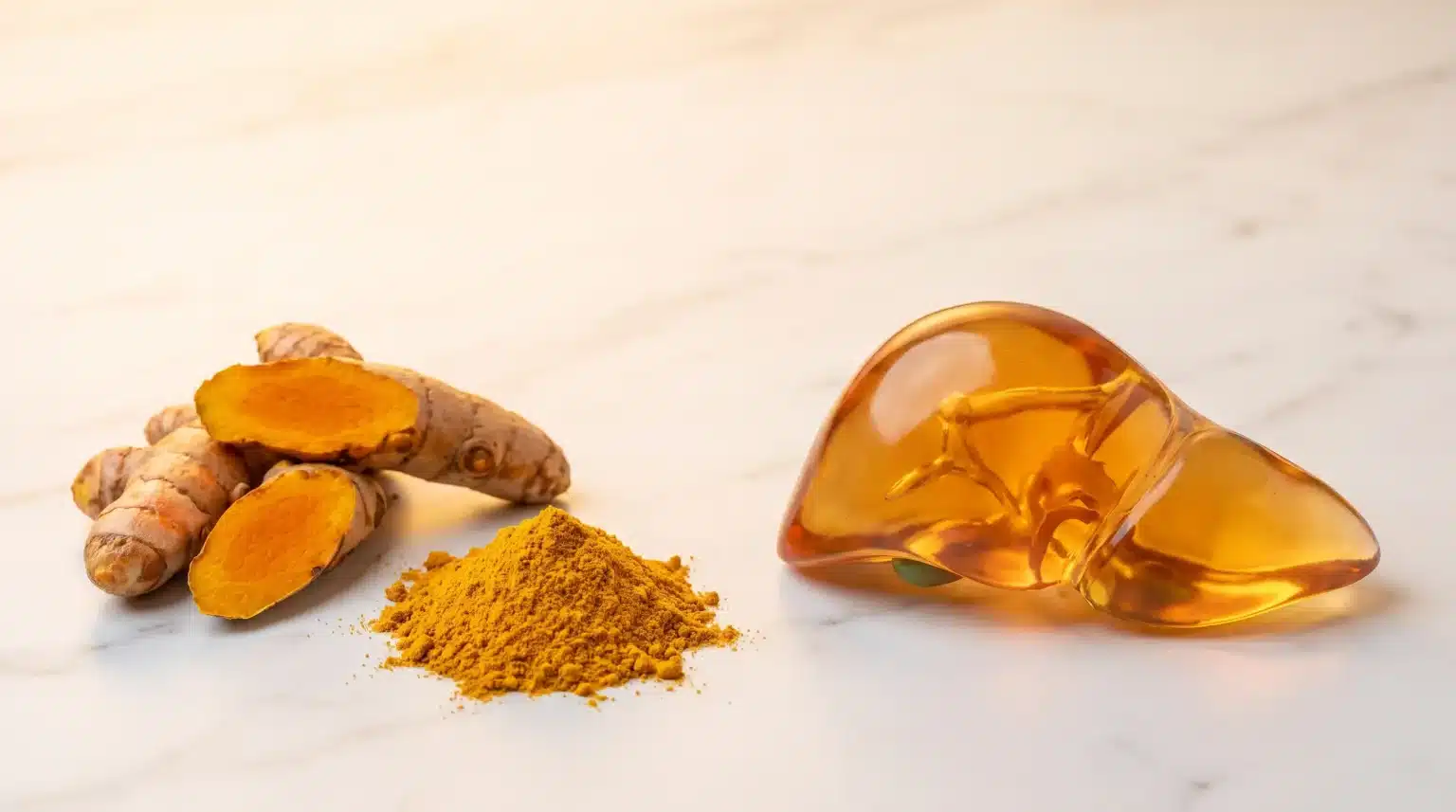
Turmeric has moved beyond the spice rack and become a popular addition to daily wellness routines for its best-known compound, curcumin. Curcumin has antioxidant properties that help support the body’s natural defenses against oxidative stress. Liver health also depends on nutrition, physical activity, alcohol awareness, and appropriate medical care. Turmeric cannot replace diagnosis or treatment, but its dose and formulation deserve careful attention. The sections below explain how turmeric affects liver function and what the doses should be.
How Turmeric Relates to Liver Health
Curcumin is the main compound for turmeric’s antioxidant activity. Antioxidants help protect cells from oxidative stress, which occurs when unstable molecules overwhelm the body’s protective capacity. Because the liver processes nutrients, alcohol, medications, and other substances, it is regularly exposed to oxidative stress.
A balanced diet, regular physical activity, and moderate alcohol intake remain central to liver care. People considering turmeric for liver health should review dosage, curcumin content, and absorption before choosing supplements. Reliable products clearly state their turmeric amount and explain how their formulation supports consistent use.
Turmeric also contains small amounts of fiber and minerals, including iron, magnesium, potassium, calcium, phosphorus, zinc, and vitamin B6. These nutrients do not make turmeric a treatment, but they help explain its long-standing place in traditional diets.
Why Curcumin Absorption Matters
The body absorbs curcumin poorly from standard turmeric powder. That difference matters because the amount listed on a label does not show how much curcumin the body actually absorbs into the bloodstream.
Bioavailability describes the proportion of a substance that enters circulation and remains available for the body to use. A formulation with improved bioavailability can deliver more usable curcumin without requiring a large serving of this household spice.
The Dose article states that its turmeric extract is 24 times more bioavailable than standard turmeric. That figure applies to the formulation described on the inspected page, not to turmeric products in general.
What the Dosing Guidance Says
The World Health Organization recommends roughly 1.4 milligrams of turmeric powder per pound of body weight as an acceptable daily intake. That way, a person weighing 180 pounds would consume about 252 milligrams.
Extracts differ in curcumin content, absorption, and serving size, so powder guidance does not provide a universal supplement dose. If you are considering supplements, turmeric spice typically contains 2% to 9% curcumin, while supplements may contain up to 95% curcumin. Look for supplements containing piperine to enhance curcumin absorption.
How to Read a Turmeric Supplement Label
Check the total turmeric extract from the amount of curcuminoids. Curcuminoids drive turmeric’s antioxidant activity, so their quantity tells you more than total turmeric weight alone.
Review the serving size and suggested frequency. Taking more capsules does not automatically improve results, especially when the extract already has enhanced absorption.
People taking prescription medications should consult a healthcare professional before taking supplements. Concentrated supplements can interact with medicines, increase bleeding risk, or cause digestive issues in some individuals.
Turmeric Powder and Extract Are Different
Turmeric powder works well as a culinary ingredient, but it contains a lower and less consistent concentration of curcuminoids than a standardized extract. Cooking also makes precise dosing difficult because spoon sizes, brands, and preparation methods vary.
A supplement provides a measured amount, which makes daily intake easier to track. The formulation still matters because two products with the same turmeric weight can deliver different amounts of absorbable curcumin.
People with gallbladder disease, liver disease, or persistent digestive symptoms should seek medical advice before starting a concentrated turmeric supplement. Turmeric should be an additional part of your care plan, not a replacement for blood tests, imaging, or clinical treatment.
Practical Steps for Daily Use
Check the serving size, extract amount, and curcuminoid information. Compare those details with the intended purpose, rather than choosing a product based on capsule count alone.
Take the supplement as directed on the label and avoid increasing the dose without professional guidance. Record the product, serving size, and start date so you can easily discuss changes in digestion or other symptoms with a clinician.
A person with jaundice, dark urine, unusual fatigue, abdominal swelling, or persistent upper-right abdominal pain needs medical evaluation. These symptoms require clinical attention rather than self-treatment with turmeric.
Conclusion
Turmeric fits best in a liver-support routine when its role is clear. Curcumin provides antioxidant activity, while formulation and absorption determine how much the body can use. The 1.4-milligram-per-pound guidance applies to turmeric powder as a spice, not every extract or capsule. Before starting a concentrated product, check the label, compare the serving with its intended use, and ask a healthcare professional about medications or existing liver conditions.