

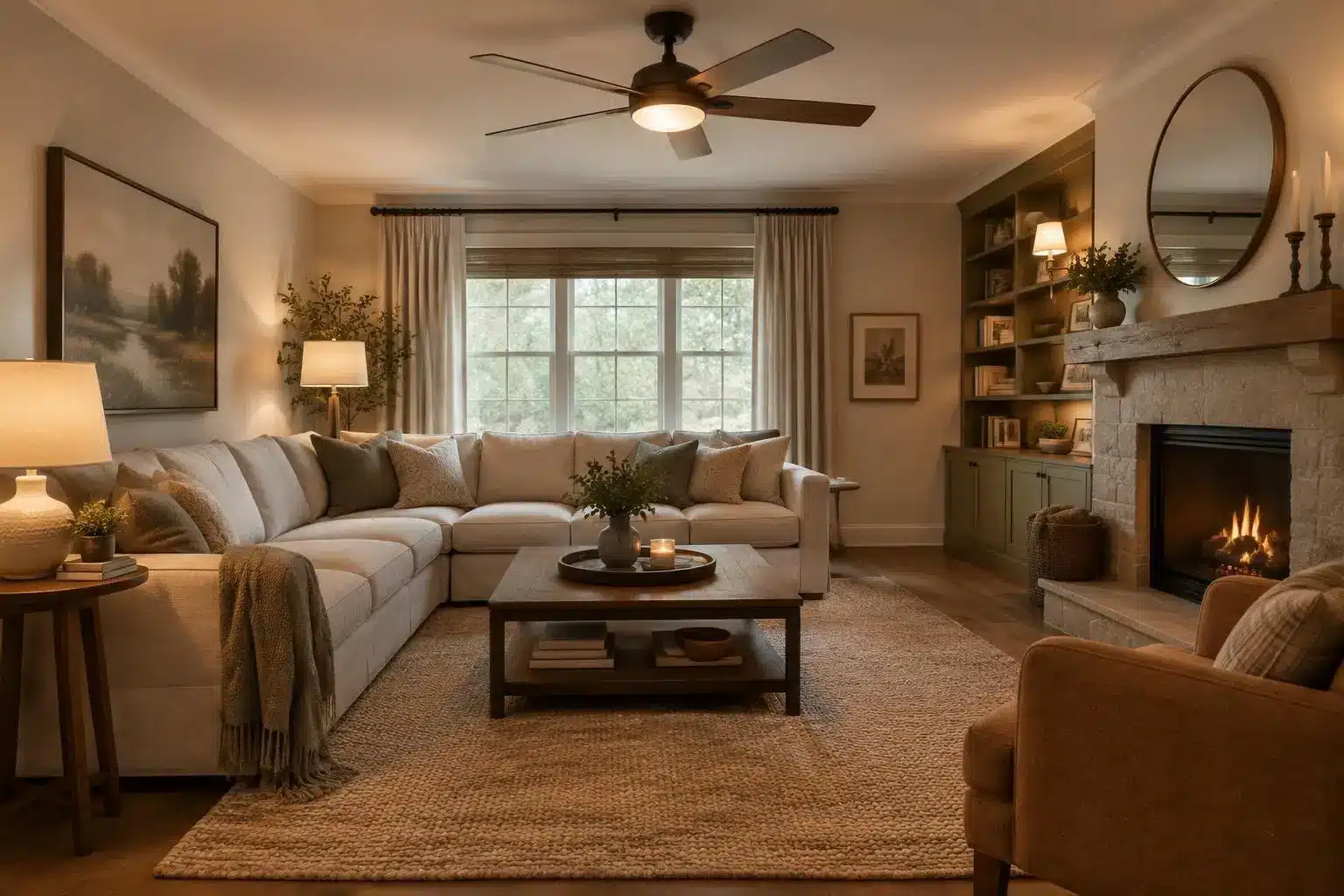
A room does not have to be stripped back to the studs to feel completely different. In many homes, the biggest visual improvements come from smaller decisions: the way lighting is layered, the height of the curtains, the finish on a cabinet pull, the scale of a ceiling fixture, or the way texture is repeated across the room. These details are easy to overlook because none of them seems dramatic on its own. Together, however, they determine whether a space feels considered or unfinished.
Before replacing furniture or planning a major renovation, it is worth looking at the elements that quietly shape how a room feels. A few thoughtful changes can improve balance, comfort, and character without changing the basic footprint of the space.
1. Start With the Details You Touch Every Day
Hardware is one of the easiest places to make a noticeable change. Cabinet pulls, door handles, faucets, switch plates, and curtain rods are small, but they are repeated throughout a room. When those pieces feel dated or disconnected from the rest of the interior, the entire space can feel less intentional.
That does not mean every metal finish needs to match. A room often feels more natural when finishes are coordinated rather than identical. Matte black can sit comfortably beside brushed nickel, for example, if the same tones appear more than once and the overall palette is restrained. The goal is repetition, not perfect uniformity.
These swaps are especially effective in kitchens, bathrooms, entryways, and built-in storage because the eye notices repeated details quickly. Updating several small pieces in the same visual family can make an older room feel more current without changing its cabinetry or layout.
2. Layer Lighting Instead of Relying on One Fixture
Lighting changes how every other design decision is perceived. A beautiful paint color can look dull under flat light, while a modest room can feel warm and dimensional when light comes from more than one level. Instead of asking one overhead fixture to do everything, think in layers.
Ambient lighting gives the room its general brightness. Task lighting supports specific activities such as reading, cooking, or working. Accent lighting adds depth by drawing attention to artwork, architectural details, shelving, or textured surfaces. Even a simple room feels more finished when these three roles are considered separately.
The overhead fixture can also work harder. In living rooms, bedrooms, family rooms, and other spaces where both illumination and air movement matter, ceiling fans with lights can combine two everyday functions without adding another visual element to the ceiling. The most successful choice is one that supports the room rather than dominating it, with a scale, finish, and light output that suit the space below.
Color temperature matters as well. Mixing very cool overhead light with warm lamps can make a room feel disjointed. Keeping light sources within a compatible range creates a calmer, more cohesive atmosphere.
3. Treat the Ceiling as Part of the Design
The ceiling is often the least considered surface in a room, even though it occupies a large part of the visual field. Paint, beams, molding, coffers, skylights, and ceiling fixtures all influence how tall, open, formal, or relaxed a room feels.
A plain ceiling does not necessarily need decoration, but it should still be part of the plan. In a room with strong architecture, the ceiling fixture should respect existing lines and proportions. In a simpler room, the fixture itself can provide structure and help establish a visual center.
This becomes particularly important in rooms with vaulted ceilings, exposed beams, or tall windows. A fixture that is too small can disappear into the volume, while one that hangs too low can interrupt sight lines and make the room feel compressed.
4. Use Vertical Elements to Change the Perceived Height
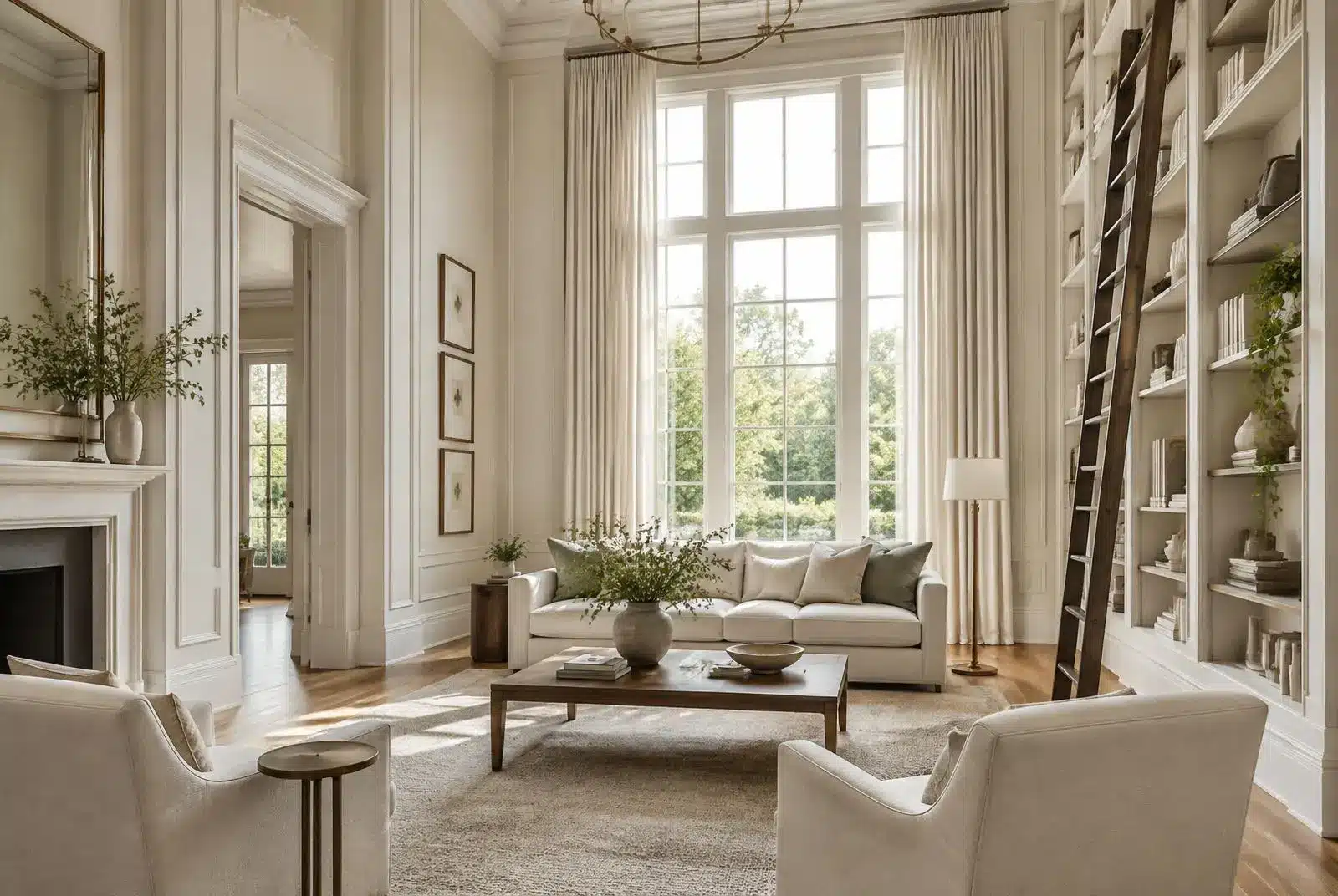
Vertical lines naturally draw the eye upward, which is why designers often use them to make a room feel taller. Hanging curtains closer to the ceiling, choosing full-height shelving, using tall mirrors, or adding vertical paneling can change the perceived proportions of a space without moving a single wall.
Window treatments are one of the simplest examples. When a curtain rod sits only a few inches above the window frame, the eye reads the window as a separate object. Raising the rod and allowing the fabric to extend toward the floor creates a longer visual line and gives the wall more presence.
These vertical elements should also work with what is happening overhead. Tall windows, long curtains, and a prominent ceiling fixture all pull attention upward, so their scale and placement need to feel deliberate rather than competitive.
5. Get Scale and Proportion Right
Many rooms that feel ‘off’ do not have a style problem; they have a scale problem. A rug may be too small for the seating group. Artwork may be hung too high. A coffee table may feel undersized beside a deep sectional. Individually these choices seem minor, but together they can make a room feel unsettled.
The same principle applies overhead. A tiny fixture in a large room can look lost, while an oversized pendant or chandelier can overwhelm a low ceiling. Before choosing anything, consider the width of the room, the height of the ceiling, the furniture arrangement, and the visual weight of the fixture itself.
Good proportion is less about following one rigid formula and more about making sure nearby elements feel as though they belong in the same room. The eye should move naturally from furniture to walls to ceiling without one element appearing accidentally small or unnecessarily dominant.
6. Choose One Functional Focal Point
Most successful rooms have a clear visual anchor. Sometimes it is architectural, such as a fireplace, a large window, or built-in shelving. In other spaces, it may be a dining table, a piece of art, or a statement light fixture. The room feels easier to understand when the eye has somewhere to land.
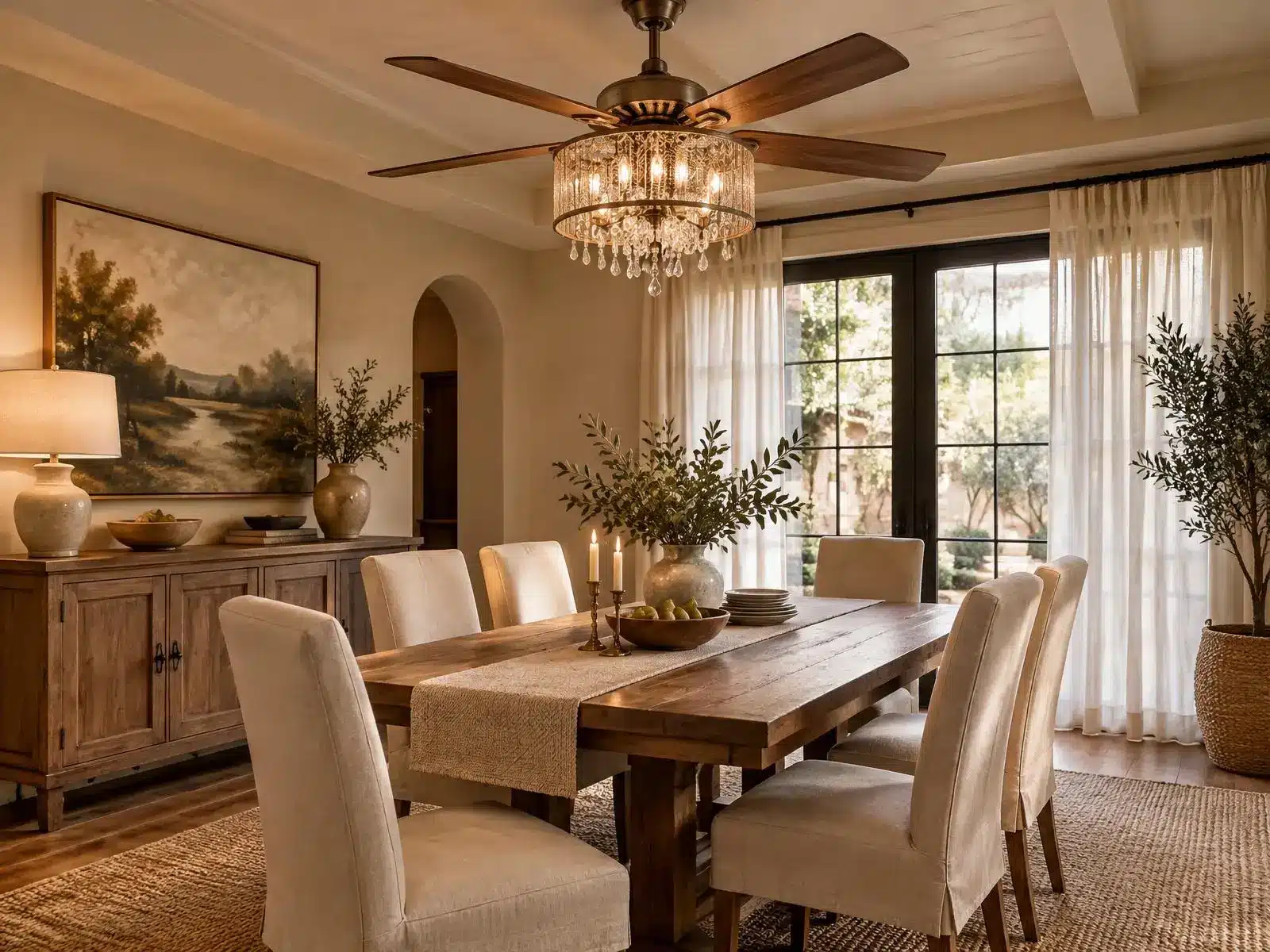
A focal point does not have to be purely decorative. In rooms where the overhead fixture is meant to become part of the visual identity of the space, chandelier ceiling fans with lights can combine decorative presence with everyday airflow. Crystal details, caged forms, sculptural frames, natural finishes, and restrained modern designs can all help establish a clear focal point while still serving a practical purpose.
The key is restraint. If the ceiling fixture is visually strong, nearby elements should support it rather than compete with it. A dramatic fixture, busy wallpaper, oversized art, patterned upholstery, and multiple metallic finishes can quickly become too much when they all demand equal attention.
7. Use Color to Connect the Room Instead of Matching Everything
A polished room rarely depends on every item being the same color. It is usually more effective to repeat a few tones in different places. A black frame may echo a black curtain rod. A warm brass lamp can relate to cabinet hardware. A wood tone in a ceiling fixture can pick up the finish of a table or shelving unit.
These small repetitions help the eye connect different parts of the room. They also make mixed materials feel intentional. When every finish appears only once, a room can feel assembled piece by piece. When key tones return in subtle ways, the space begins to feel cohesive.
Color changes do not need to be bold to be effective. Shifting from stark white to a warmer off-white, using a deeper tone on one architectural feature, or repeating a muted accent color in textiles and artwork can add depth without making the room feel themed.
8. Layer Texture Before Buying More Decor
When a room feels empty, the instinct is often to add more objects. Sometimes the real problem is not a lack of decor but a lack of texture. Smooth drywall, a flat sofa fabric, a hard floor, and a simple table can leave a space visually thin even when plenty of furniture is present.
Texture adds interest without adding clutter. Linen curtains, a wool rug, woven baskets, natural wood, plaster, stone, leather, brushed metal, and soft upholstery all reflect light differently and give the room more dimension. A limited color palette can still feel rich when the surfaces are varied.
The best results usually come from contrast. Pair something smooth with something tactile, something polished with something matte, or something structured with something soft. The room becomes more engaging because the materials are doing part of the decorative work.
9. Rearrange Before You Replace
Furniture placement can change a room as much as new furniture. Before buying anything, look at how people actually move through the space. Are walkways blocked? Is every piece pushed against a wall? Does the television control the entire layout? Are chairs positioned too far apart for conversation?
Pulling seating slightly inward, creating a clearer conversation area, opening a path to the windows, or turning a chair toward a focal point can immediately improve the room. In many cases, the pieces themselves are fine; they simply need a better relationship to one another.
This is also the moment to reconsider what the room does not need. Removing one unnecessary side table or an extra accent chair can create more breathing room than adding another decorative object.
10. Remove the Details That Make a Room Feel Busy
A room can contain beautiful individual pieces and still feel chaotic. Too many competing finishes, undersized accessories, exposed cords, inconsistent light temperatures, and several statement pieces can prevent the eye from resting.
Editing is part of decorating. Group small objects rather than scattering them across every surface. Hide cables where possible. Limit the number of dominant finishes. Let one or two elements carry the strongest visual weight and allow the rest of the room to support them.
The goal is not minimalism for its own sake. It is clarity. A layered room can still feel calm when its colors, materials, lighting, and proportions are working together.
11. The Best Rooms Balance Looks With Everyday Comfort
A room can photograph beautifully and still be unpleasant to live in. Good design has to account for the way people actually use the space: how they move through it, where they sit, how much light they need, how warm or cool the room feels, and how easy it is to maintain.
That is why the most effective changes are often practical as well as visual. Better lighting improves both mood and function. Thoughtful furniture placement improves circulation. A well-chosen overhead fixture can contribute to comfort while also helping define the room. Durable finishes can look refined without creating more work.
A room usually feels complete when its smaller decisions work together. Lighting, scale, texture, proportion, color, airflow, and furniture placement do not need to be expensive, but they do need to feel intentional. When those details are right, even a familiar room can feel entirely new.
Frequently Asked Questions
What Interior Design Change Makes the Biggest Difference?
Lighting and furniture arrangement often create the most noticeable change because they affect both the appearance and function of the entire room. Paint and textiles can also have a strong impact with relatively little disruption.
How Can I Completely Change a Room Without Renovating?
Start by rearranging furniture, improving lighting, updating small hardware, changing curtains or rugs, repainting key surfaces, and replacing one dated focal fixture. These changes can alter the balance and mood of a room without structural work.
What Makes a Room Look More Expensive?
Good proportion, controlled color, layered lighting, consistent finishes, and a mix of textures often make a room feel more considered. The effect usually comes from restraint and coordination rather than from buying the most expensive pieces.
What Is the 3-5-7 Rule in Decorating?
It is a simple styling guideline that uses odd-numbered groupings, often three, five, or seven objects, to create a more natural visual rhythm. It is useful for shelves, tabletop decor, and small displays, but it should be treated as a flexible principle rather than a strict rule.
How Do You Make a Room Feel Finished?
Look for balance between lighting, textiles, artwork, furniture scale, and decorative details. A room tends to feel finished when there are no obvious gaps in function and no single element looks disconnected from the rest of the space.