

A yacht is often thought of in terms of size, speed and luxury, but modern yacht design is increasingly focused on how people actually spend time on board. Space for entertaining, comfortable accommodation, outdoor living and flexible layouts can be just as important as performance.
The Sunseeker Manhattan 68 is a good example of this approach. At just over 21 metres long, it sits in a size range that provides substantial living space while remaining smaller than many larger superyachts. Its design combines indoor and outdoor areas with a layout intended to support both relaxed cruising and social occasions.
1. A Yacht Designed Around Everyday Living
One of the most noticeable aspects of the Manhattan 68 is the emphasis on using the yacht as a living environment rather than simply as a means of travelling on water.
The design provides multiple areas where passengers can spend time, whether that means relaxing outdoors, dining with guests, or retreating to a quieter interior space.
This approach is increasingly relevant to modern yacht owners. A yacht may be used for short coastal trips, extended weekends, or longer cruising, so flexibility can be an important consideration.
2. The Outdoor Spaces Encourage Socialising
Outdoor areas play a major role in the layout.
The flybridge provides an elevated area for enjoying views while underway or relaxing at anchor. Meanwhile, the cockpit creates another useful space closer to the water and can be used for dining, relaxing or spending time with family and friends.
Making Better Use of the Flybridge
A flybridge can serve several purposes depending on how the yacht is being used. It can be a place for outdoor dining, informal gatherings, or simply enjoying the surroundings.
Its elevated position can also provide a different perspective when cruising, making it one of the more versatile areas on a yacht of this size.
The Cockpit as a Social Space
The cockpit is positioned to connect the interior with the outdoor environment. This makes it practical for people who want to move between indoor and outdoor areas throughout the day.
For warm-weather cruising, spaces like this can become a natural gathering point.
3. Interior Design Focuses on Natural Light
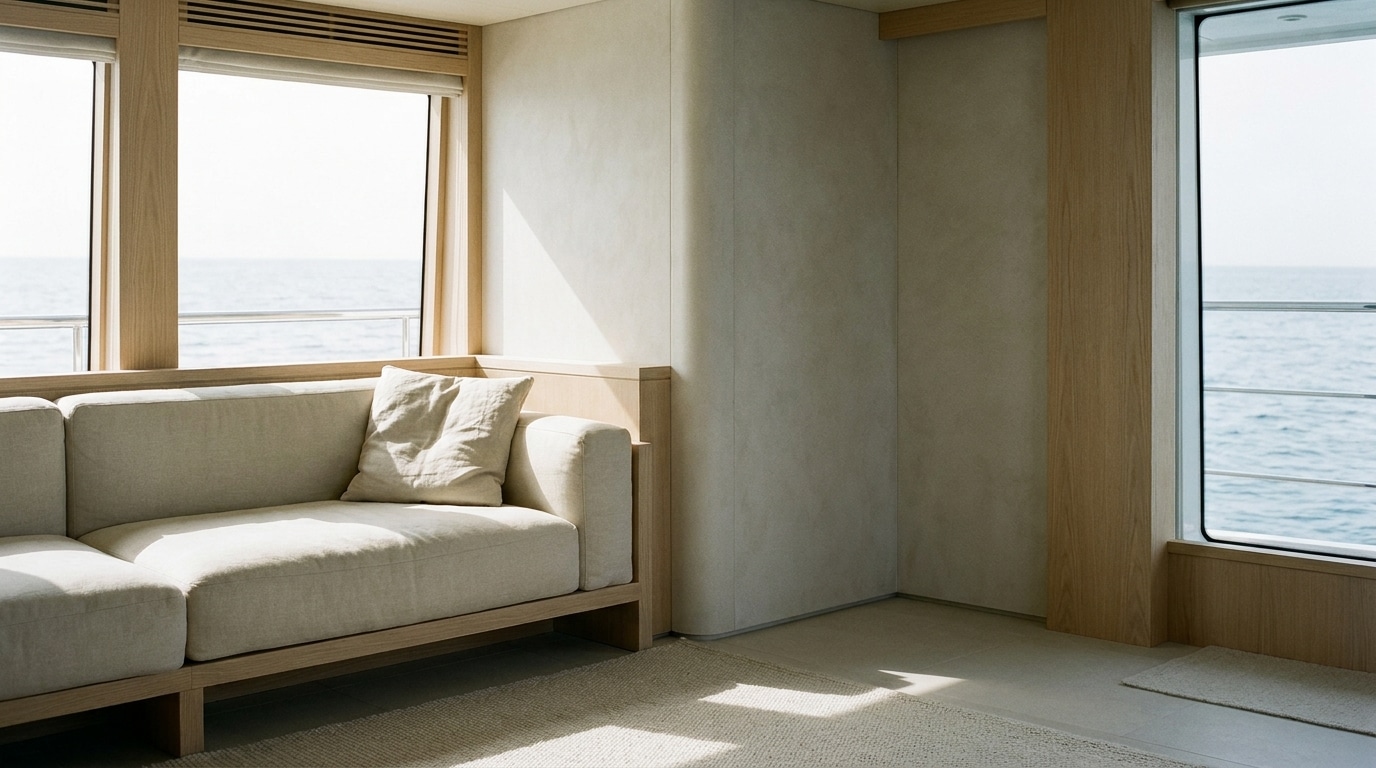
Inside, the Manhattan 68 uses large areas of glazing and an open approach to create a bright living environment. The manufacturer describes the interior as having an apartment-like feel, with spaces intended to be comfortable for extended time on board.
This is important because interior comfort can have a significant impact on the experience of cruising. A yacht needs to function not only when the weather is perfect but also when passengers want to spend time indoors.
The combination of natural light, seating areas, and practical living spaces gives the interior a residential character.
4. Flexible Accommodation
The Manhattan 68 is listed with four cabins and three ensuites or dayhead facilities. Its layout can also be configured around different priorities, including three or four cabins, a private office or additional guest accommodation.
This flexibility can be useful for different types of owners.
A family might prioritise additional sleeping accommodation, while someone who frequently works while travelling may place greater value on having a dedicated office space.
The ability to adjust the layout also demonstrates how modern yacht design is moving toward more personalised interiors.
5. Size and Proportions
The yacht has a length overall of 21.21 metres, or approximately 69 feet 7 inches, with a beam of 5.26 metres and a draft of 1.60 metres. Its listed half-load displacement is approximately 39,809 kilograms.
These dimensions provide enough volume for multiple living areas while keeping the yacht within a size category that is more manageable than much larger vessels.
For potential owners, dimensions are important not only because of interior space but also because they influence marina requirements, berthing options, handling and ongoing operating considerations.
6. Performance Is Part of the Equation
The Manhattan 68 is offered with twin MAN V8 engine options producing either 1,000 PS or 1,200 PS per engine. The listed top speed is up to 32 knots, while the stated range at 10 knots is up to 550 nautical miles.
Performance specifications are useful when comparing yachts, but cruising style matters just as much.
Some owners may prefer travelling at higher speeds for shorter journeys, while others may value economical cruising over long distances. The ability to consider both performance and range gives buyers a better idea of whether a particular yacht matches their intended use.
7. Fuel and Water Capacity Matter for Cruising
The yacht has a listed fuel capacity of 4,000 litres and fresh-water capacity of 900 litres.
These figures are important because onboard capacity affects how long a yacht can remain away from marina facilities.
However, actual range and consumption depend on factors such as speed, sea conditions, load, engine use and onboard equipment. Specifications should therefore be viewed as a starting point rather than a guarantee of real-world cruising distance.
8. Choosing a Yacht Is About Lifestyle as Well as Specifications
Technical figures can tell you how large a yacht is, how fast it can travel and how much fuel or water it can carry. They do not necessarily explain whether the yacht will suit a particular owner’s lifestyle.
For some people, outdoor entertaining may be the priority. Others may care more about guest accommodation, privacy, office space or longer-distance cruising.
The Manhattan 68 illustrates why yacht selection is often about balancing these different needs. Its combination of outdoor spaces, flexible accommodation, interior living areas and cruising performance provides several ways to use the vessel.
Final Thoughts
The Sunseeker Manhattan 68 represents a modern approach to yacht design, combining substantial living space with outdoor areas and cruising capability. Its 21.21-metre length, four-cabin accommodation, flybridge, multiple social areas and twin-engine options give it a broad range of potential uses.
For anyone researching yachts in this size category, the key lesson is that specifications are only one part of the decision. Layout, accommodation, outdoor space, cruising requirements, operating costs, and personal preferences all deserve consideration.
A yacht should ultimately work for the way its owner plans to spend time on the water. Looking beyond appearance and headline performance figures can help buyers make a more practical and informed choice.