A diploma holds the record of years of study, demanding deadlines, and a hard-earned achievement. After graduation, it often ends up in a drawer, out of sight and vulnerable to creases or handling. A thoughtfully chosen frame brings the document into view and protects it during display. Before selecting one, graduates should check the diploma’s size, condition, and intended location. Those details guide the practical choices that make a display look considered.
Start with the diploma’s exact dimensions, including any raised seal or irregular edge. Compare them with the frame opening and mat before considering finish or style. Browsing degree frames helps graduates compare profiles and finishes, but the document should guide the choice. A narrow border keeps attention on ornate lettering, while a wider mat gives the diploma space beside other wall art.
Why Presentation Matters
A frame gives the diploma a defined place in a room. Without one, a document can disappear among desk clutter or blend into a shelf. A clear border draws the eye to the credential and makes it easy for visitors to recognize. The frame’s proportions and finish also help the diploma sit comfortably with nearby furnishings.
Display conditions affect how well paper holds up over time. Direct sunlight can fade ink and discolor a diploma, even behind glazing. Keep the frame away from unshaded windows, kitchens, and bathrooms, where sunlight, grease, steam, or humidity can cause problems. A hallway, study, or home office keeps the document visible without putting it near crowded work surfaces or passing bags.
Choose a Frame That Fits
Measure the diploma instead of assuming it matches a standard paper size. Certificates vary, and raised seals add thickness. Record the width and height at the outer edges, then check what the listed frame size measures: the opening, mat, or finished frame. These dimensions differ, so read the sizing details before ordering.
A mat adds space around the text, but its opening must leave names, dates, signatures, and seals uncovered. For an unusual layout, compare a mat-free option with a custom opening. Check the frame’s depth, too. The paper should sit securely without pressing a raised seal against the glazing. A proper fit keeps the credential easy to read.
If the diploma came with a protective sleeve, remove it before framing unless a framer confirms the material is safe for long-term contact. Sleeves can trap moisture or press against raised seals.
Protect the Paper
Paper can be damaged by light, moisture, and direct contact. Ultraviolet-filtering glazing limits exposure to harmful rays, while standard glass or acrylic protects against dust and accidental touches. Check the product details to confirm which glazing the frame includes, since protection varies. Even with filtering, keep the diploma out of direct sunlight.
Wash and dry hands before handling the document. Remove clips, tape, or adhesive tabs that touch the paper, and never press on an embossed seal or force a curl flat. For a fragile or older diploma, ask a professional framer about archival materials and mounting methods. A reversible mount avoids adhesive on the original and allows later inspection.
Leave a small gap between the frame and nearby furniture so its edge does not collect scuffs during routine use. Dust the glazing with a soft, clean cloth, and follow the frame maker’s care instructions.
Make the Display Feel Intentional
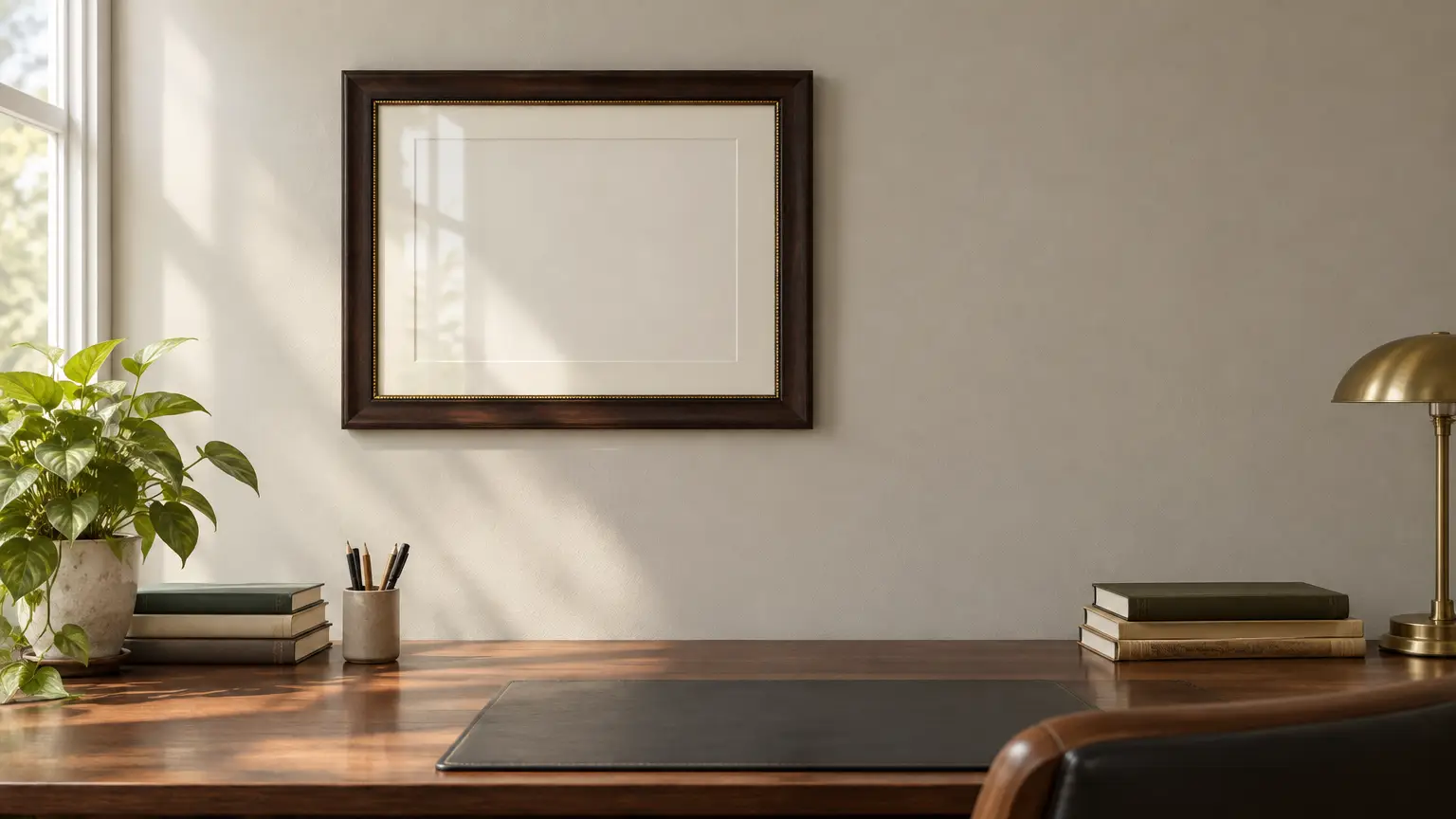
Intentional home decor ideas have a deep meaning. Choose a finish that complements the diploma without drawing attention away from it. Dark wood adds warmth to cream paper, while black creates a crisp border around traditional certificates. Gold can echo a seal or printed detail, but an elaborate frame can compete with the lettering. A restrained profile keeps small text easy to read across a typical room.
Plan the location before hanging the frame. Place its center near eye level, accounting for furniture, door swings, and nearby artwork. Above a desk, the diploma connects the display with work; in a hallway, it stays visible throughout the day. Use a level and hanging hardware suited to the wall type so the frame stays secure.
Before drilling, mark the hanging point and check for pipes or wiring inside the wall. For heavier frames, use hardware rated for the frame’s weight rather than relying on a small nail.
Conclusion
Before ordering, write down the diploma’s width and height, note any raised seal, and choose a place for the display. Then compare the measurements with the frame opening, mat, glazing, and hanging requirements. Select a finish that suits the room while keeping the document easy to see. Measuring first prevents a poor fit and gives graduates a practical plan for protecting and displaying their achievement.