

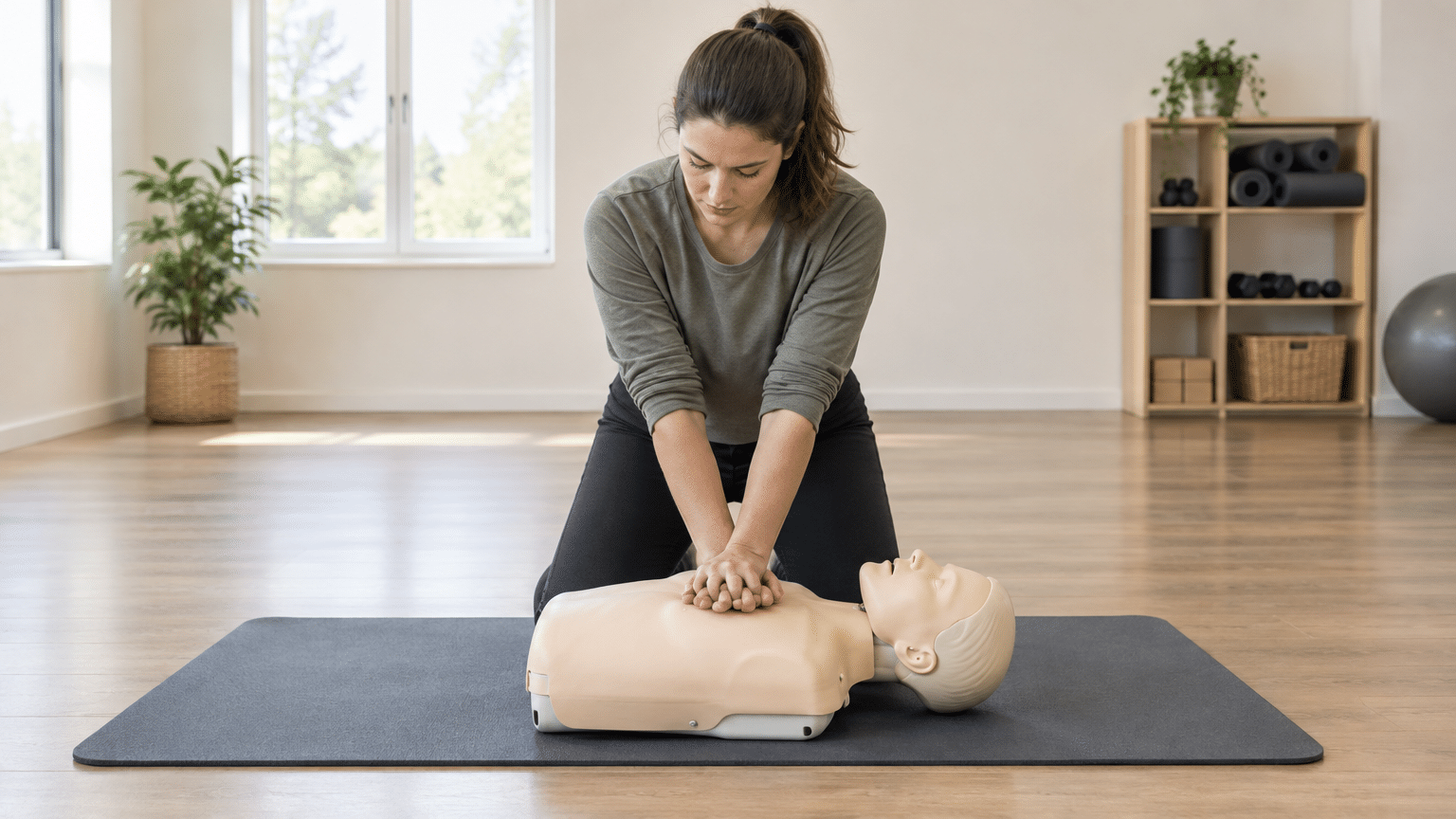
Fashion advice rarely covers the dress code for a CPR class. Yet it matters more than you’d think. You’ll kneel on a mat, lean over a mannequin and practise hands-on skills. If your employer has asked you to complete WSIB approved first aid in Toronto, here’s a practical outfit plan so you can focus on the skills, not your clothes.
This guide is general advice for Ontario learners. Your provider’s confirmation email is the final word on what to wear and bring.
Why Does Your Outfit Matter in a First Aid Class?
Because a first aid class is physical. It isn’t a seminar where you sit still.
You’ll spend time kneeling and getting up from the floor. You’ll practise chest compressions, which take real effort and can make you warm. You’ll practise bandaging, positioning and checking someone. And you’ll move between stations.
The right outfit keeps you comfortable and mobile. The wrong one distracts you, limits your movement or makes you self-conscious. That’s the opposite of what you want when you’re learning something new.
What Should You Wear on Top?
Think layers and breathable fabric.
- A soft, breathable tee or top. Cotton or a blend works well. It should stretch when you reach and lean forward.
- A light layer you can remove. A cardigan, zip-up or overshirt lets you adjust if the room is warm or cool.
- Sleeves that push up. You’ll want your forearms free for compressions and bandaging.
- A modest neckline. You’ll lean over a mannequin, so choose something that stays in place.
Skip bulky knits, stiff blazers and anything that restricts your shoulders. A heavy sweater gets hot fast once you start compressions.
What Should You Wear on the Bottom?
Choose clothes you can kneel in.
- Stretch trousers, joggers, leggings or relaxed jeans. They let you kneel and crouch without pulling.
- Longer shorts or capris are fine in warm weather, if you’re comfortable kneeling on a mat.
Skip tight skirts, narrow pencil skirts and anything you can’t kneel in easily. If you wear a dress, make sure it’s long enough and loose enough to move in. When in doubt, choose trousers.
What Shoes Work Best?
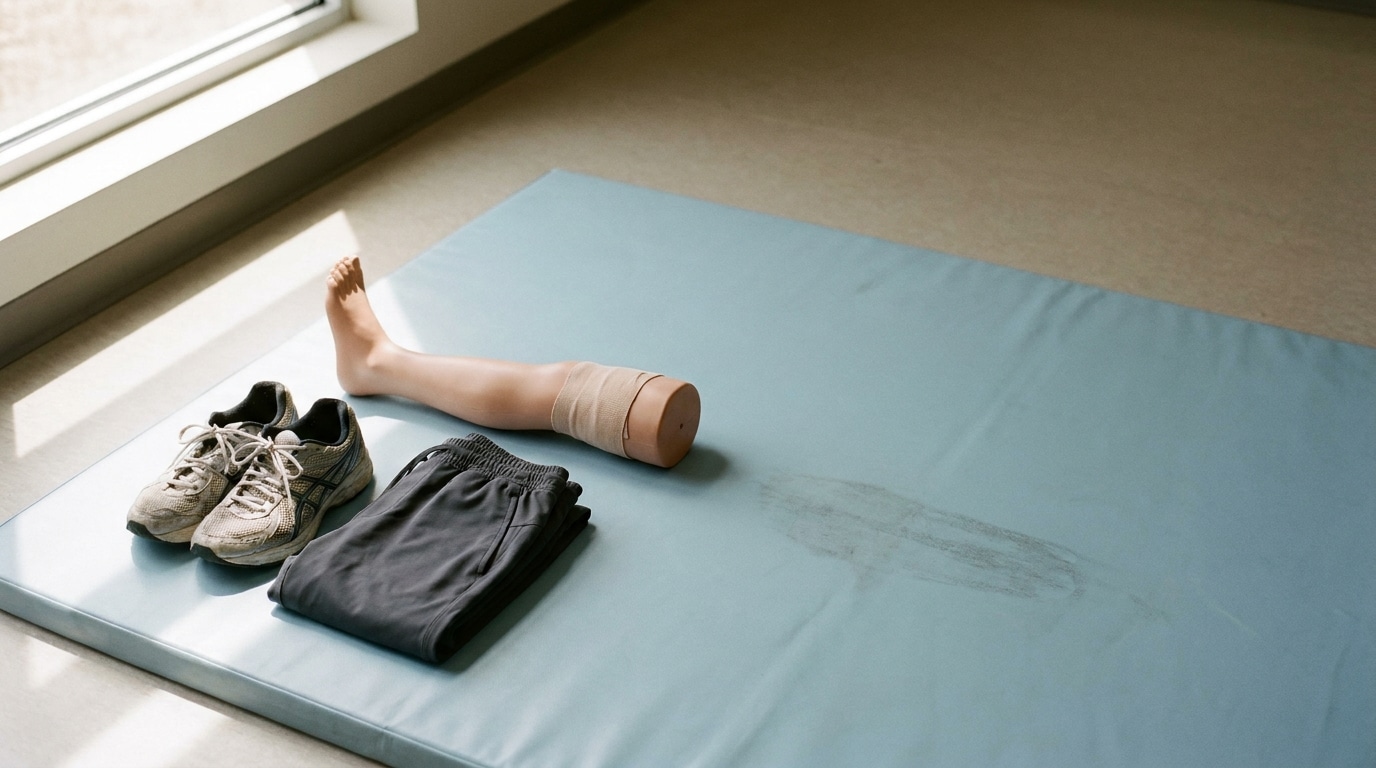
Flat, closed shoes. Sneakers are the easiest answer.
You’ll be on your feet, then on your knees, then on your feet again. Shoes with grip and support help. Heels, open sandals and slippery soles don’t suit a class like this.
If you’re coming from the office in dress shoes, pack a pair of sneakers.
What About Hair, Nails and Jewelry?
Small details make a difference when you’re working with your hands.
- Hair. Tie it back. Hair falling across your face is annoying when you lean over a mannequin.
- Nails. Shorter nails are easier. Long nails and press-on nails can be uncomfortable during compressions, and they can poke through disposable gloves.
- Rings and bracelets. Take them off or keep them minimal. They can snag, scratch the mannequin or dig into your hand.
- Watches and long necklaces. They can swing into your way. Tuck them in or leave them at home.
- Gloves. Disposable gloves are common in first aid training. If you have a latex sensitivity, tell your provider before the class so they can plan around it.
None of this is a rule. It’s what tends to make practising more comfortable.
What Should You Bring?
Check your confirmation email first, since providers have their own lists. These are common items:
- Anything your provider asks for. According to the Toronto page, a CPR pocket mask is required for participation. Ask the provider what to bring or whether one is provided.
- Water. Compressions are tiring.
- A small snack. Classes can run through lunch.
- Something to take notes on. A notebook or your phone works.
- A charged phone. You may need it for your certificate details.
- Your online work, if your course is blended. The page says blended students receive online access within 24 hours of registering, with an eight-hour online portion to finish before the in-person session.
What If You’re Coming Straight From Work?
Many people book a class around a busy week. If you’re heading from the office:
- Pack a change. A spare top and comfortable trousers can live in your bag.
- Wear the layers you can adjust. Take off the blazer before you start.
- Keep dressy items safe. Leave jewelry and delicate accessories in a pouch or at home.
- Allow time to change. Give yourself a few extra minutes so you aren’t rushing.
It’s the same idea as packing for the gym. A small bag makes the class easier.
What Does Ontario Require From Employers?
If you’re taking the class because of work, a few rules sit behind it. Ontario’s workplace first aid requirements are set by WSIB Regulation 1101. It applies to workplaces with WSIB-covered employers. If you aren’t sure whether your business is covered, the WSIB can confirm. The Ontario Occupational Health and Safety Act (OHSA) also sets general duties for employers to protect workers.
The thresholds depend on how many workers are on a shift:
- 1 to 5 workers per shift: at least one worker with Basic First Aid
- 6 or more workers per shift: at least one worker with Intermediate First Aid
- 200 or more workers per shift: a first aid room with a qualified attendant
Certificates are valid for three years. On June 22, 2026, the WSIB aligned its First Aid Program with the national CSA Z1210:24 standard. Emergency First Aid became Basic First Aid, and Standard First Aid became Intermediate First Aid. The thresholds did not change, and earlier certificates stay valid until they expire. Only providers the WSIB lists can deliver the new certifications.
What Will You Learn?
According to the Toronto page, courses include hands-on skills testing with an AED trainer. They cover life-saving skills such as bleeding control, CPR, and recognizing heart attacks and strokes. The page also lists a three-year certificate for First Aid and CPR/AED Level C, certificates within 48 hours, a free skills practice retake within 90 days, and a minimum grade of 75% with 100% attendance.
To compare dates and locations, find your Coast2Coast First Aid class and check the details with your provider.
Why Does It Matter?
Because what you learn in that class can matter far more than what you wear to it. According to Heart & Stroke, about 60,000 cardiac arrests happen outside hospitals in Canada every year, and only one in 10 people survives. Nearly half happen to people under 65.
Heart & Stroke also says that doing CPR and using an AED can double a person’s chance of survival. Every minute without CPR or defibrillation lowers the odds by about 10%. For an adult, the guidance is 100 to 120 compressions per minute, which is about two every second, at least 5 cm (2 inches) deep and no more than 6 cm (2.4 inches). Comfortable clothes help you practise that properly.
If you are looking for first aid training near Bloor Street West and Ossington Avenue, the Palmerston neighbourhood, or surrounding areas in Toronto, you may reach out to Coast2Coast First Aid & Aquatics in that area.
FAQs
Q: What should I wear to a first aid and CPR class?
A: Comfortable, breathable layers, stretch or relaxed trousers you can kneel in, and flat closed shoes. Tie your hair back, keep nails short, and take off rings and bracelets. Check your provider’s confirmation email for anything specific.
Q: Is there a dress code for first aid training?
A: Providers may have their own guidance. I found no dress code on the Toronto page, so check your confirmation email or ask the provider.
Q: What should I bring to the class?
A: Follow your provider’s list. The Toronto page says a CPR pocket mask is required for participation, so ask whether to bring one. Water, a snack and a way to take notes also help.
Q: How long is a First Aid and CPR/AED Level C certificate valid?
A: Coast2Coast’s Toronto page lists three years. BLS, for healthcare providers, is valid for one year.
Q: How many first aiders does a small workplace need in Ontario?
A: It depends on workers per shift. For one to five, at least one worker should hold Basic First Aid. For six or more, at least one should hold Intermediate First Aid. Confirm how it applies to you with the WSIB.