
An outdoor entertaining area can be comfortable in the morning but become too hot by midday. When clouds arrive or light rain begins, a fixed-roof pergola may offer more protection than an open structure, but it cannot easily adjust to changing conditions.
A louvered pergola offers a more flexible approach to outdoor living. Instead of using a permanently open or solid roof, it features adjustable roof blades that can be tilted to control sunlight, shade and airflow.
When the louvres are open, sunlight and air can pass through the roof. Tilting them changes the balance between light and shade, while closing them can create a more sheltered space, depending on the pergola’s design and weather resistance.
Some systems operate manually, while others use an electric motor to adjust the roof with a remote control.
For Australian homeowners, this flexibility can make patios, decks and outdoor dining areas more comfortable during different seasons.
This guide explains how a louvered pergola works, what happens when the roof opens and closes, how manual and motorised systems differ, and what you should know about weather protection, installation and maintenance.
What Is a Louvered Pergola?
A louvered pergola is an outdoor structure with an adjustable roof made from a series of rotating blades called louvres.
Unlike traditional pergolas with fixed beams, open rafters or solid roofing panels, a louvered pergola allows the roof position to be changed according to the weather and the desired level of shade.
The louvres are generally fitted within a supporting frame and connected to a mechanical operating system.
By changing the angle of the blades, homeowners can manage how much sunlight enters the covered area without replacing or removing any roof components.
What Are Pergola Louvres?
Louvres are elongated roof blades designed to rotate around a supported axis.
They are usually made from materials such as aluminium, which provides strength without the moisture-related swelling associated with timber.
The blades are arranged across the roof and connected through a mechanism that allows them to move together.
When the blades rotate, the openings between them change.
This movement gives homeowners control over the amount of sunlight and ventilation passing through the roof.
The louvre profile, rotation range and sealing arrangement vary between products.
How Is a Louvered Pergola Different From a Traditional Pergola?
Traditional pergolas often use fixed beams or rafters to create partial overhead shade.
Some are left open, while others incorporate climbing plants, polycarbonate sheets, metal roofing or other permanent coverings.
A louvered pergola uses movable roof blades instead.
This allows the roof to respond to changing conditions without requiring separate shade sails or removable coverings.
For homeowners comparing outdoor roofing options, a louvered pergola can provide an alternative to a conventional fixed-roof structure.
The main advantage is the ability to adjust the overhead coverage rather than accepting one permanent roof position.
How Does a Louvered Pergola Roof Open and Close?
A louvered pergola works by rotating a series of connected roof blades within a supporting frame.
The blades move together through a linkage or drive mechanism, allowing the roof to open, tilt or close.
This movement changes the amount of sunlight, shade and airflow entering the outdoor area.
The exact operation depends on whether the pergola uses a manual mechanism or an electric motor.
What Happens When the Louvres Are Fully Open?
When the louvres are open, gaps appear between the roof blades.
These openings allow sunlight to pass into the covered area and provide a path for air to move through the roof.
This setting may be useful during cooler weather when homeowners want additional sunlight.
It can also help create a more open atmosphere beneath the pergola.
However, the amount of light entering the space depends on the sun’s position, the orientation of the blades and the pergola’s surrounding environment.
What Happens When the Louvres Are Partially Open?
Partially opening the louvres allows homeowners to balance sunlight and shade.
For example, tilting the blades can help reduce direct overhead sunlight while retaining some ventilation.
This can be useful during warm afternoons when a fully open roof would expose the area to too much sunlight.
The angle can be adjusted as the sun moves throughout the day.
However, partially open louvres do not provide reliable rain protection because water can enter through the gaps.
What Happens When the Louvres Are Closed?
When the louvres are closed, the blades form a more continuous roof surface.
On systems designed for rain protection, the closed blades overlap or interlock to direct water away from the covered area.
Water is typically channelled towards integrated gutters or drainage outlets.
The level of protection depends on the roof design, installation quality, seals and drainage system.
A closed louvered roof should not automatically be treated as completely waterproof under every weather condition.
Wind-driven rain, severe storms and unsuitable installation conditions can affect performance.
How Do Motorised Louvres Operate?
A motorised pergola uses an electric drive system to rotate the roof blades.
The motor transfers movement through the operating mechanism, allowing the louvres to open or close without manual adjustment.
Depending on the product, operation may be controlled through a handheld remote, wall-mounted switch or compatible smart control system.
For example, a motorised louvered pergola allows homeowners to adjust the roof position using remote control operation.
Some advanced systems also offer automated controls, although these features are product-specific and should be confirmed before purchase.
What Are the Main Components of a Louvered Pergola?
A louvered pergola contains several components that work together to support and operate the adjustable roof.
Understanding these parts can help homeowners compare products and identify maintenance requirements.
The quality of the entire system affects how smoothly the louvres operate and how well the pergola handles outdoor conditions.
Adjustable Roof Blades
The louvres are the most visible working components.
They rotate to regulate the amount of sunlight and air entering the space.
The blade profile also influences how water is directed when the roof is closed.
Different manufacturers use different designs, so the rotation range and weather resistance may vary.
Supporting Frame
The frame supports the louvres and transfers loads through the posts, connections and foundations.
Many modern louvered pergolas use aluminium framing because it offers strength, corrosion resistance and relatively low maintenance requirements.
The supporting structure must be designed for the relevant loads, including wind and other conditions applicable to the installation site.
Operating Mechanism
The operating mechanism connects the louvres and controls their movement.
In manual systems, this may involve a hand crank and mechanical linkage.
In motorised systems, an electric motor drives the connected blades.
Correct alignment is necessary to maintain smooth operation.
Gutters and Drainage Channels
Pergolas designed for rain protection often incorporate drainage channels within the roof or frame.
When the louvres are closed, water is directed into these channels and towards the intended outlet.
Some systems route water through structural posts, while others use separate drainage arrangements.
The exact design depends on the manufacturer.
Fixings and Foundations
The pergola must be securely attached to an appropriate supporting surface.
Freestanding structures commonly require engineered footings or suitable anchoring arrangements.
Wall-mounted systems also require connections capable of transferring the relevant structural loads.
Fixings should be selected according to the substrate, pergola design and environmental conditions.
Manual vs Motorised Louvered Pergolas: What’s the Difference?
Manual and motorised pergolas use the same basic principle of adjustable roof blades.
The main difference is how the louvres are operated.
Manual systems require physical adjustment, while motorised systems use an electric drive mechanism.
Both can provide effective shade and ventilation when correctly designed and installed.
How Does a Manual Louvered Pergola Work?
A manual pergola generally uses a crank or similar mechanical control.
Turning the mechanism rotates the connected roof blades.
This allows the user to adjust the roof without an electrical connection.
Manual systems may be suitable for smaller outdoor areas or homeowners who prefer a straightforward operating arrangement.
However, adjustment requires physical effort and access to the control point.
How Does a Motorised Louvered Pergola Work?
A motorised system uses an electric motor to move the roof blades.
The user activates the motor through the supplied control system.
This can make adjustment more convenient, especially for larger pergolas or roofs that are frequently opened and closed.
Motorised systems require suitable electrical supply arrangements and may involve additional maintenance for electrical components.
Manual vs Motorised Pergola Comparison
| Feature | Manual Pergola | Motorised Pergola |
| Operation | Hand-operated crank or mechanism | Electric motor |
| Power requirement | Generally no electricity required | Requires a suitable power source |
| Convenience | Requires manual adjustment | Adjusted through the control system |
| Installation | Mechanical installation | Mechanical and electrical requirements |
| Maintenance | Hinges, linkages and moving components | Moving components plus electrical equipment |
| Initial cost | Often lower for comparable systems | Often higher due to motor and controls |
| Power outage | Can generally operate without electricity | Depends on system and backup provisions |
| Best suited to | Simpler installations and occasional adjustment | Frequent adjustment and convenience-focused designs |
The better option depends on budget, accessibility and how often the roof will be adjusted.
How Does a Louvered Pergola Control Sunlight and Shade?
One of the main benefits of a louvered roof is its ability to manage sunlight without permanently blocking the sky.
Traditional solid roofing provides consistent coverage but cannot be opened to admit direct sunlight.
A louvered roof gives homeowners more flexibility by allowing the blade angle to change throughout the day.
Adjusting the Louvres During Summer
During hot weather, tilting or closing the louvres can reduce direct sunlight reaching the area beneath.
This may make outdoor seating and dining spaces more comfortable.
The most effective blade position depends on the roof orientation and the sun’s location.
A pergola exposed to afternoon sunlight may require different settings from one receiving mostly morning sun.
Allowing More Sunlight During Winter
In cooler weather, opening the louvres allows additional sunlight into the outdoor space.
This may be beneficial for patios connected to living rooms or kitchens.
A solid roof can reduce daylight entering nearby windows throughout the year.
An adjustable pergola allows homeowners to vary the roof coverage according to seasonal needs.
Managing Glare
Direct sunlight can create glare on outdoor tables, screens and surrounding windows.
Tilting the louvres can reduce some direct light while maintaining an open atmosphere.
This may be useful for outdoor workspaces or entertaining areas where glare affects comfort.
However, a louvered roof does not eliminate sunlight entering from the sides.
Additional screening or shading may be needed for low-angle morning or afternoon sun.
How Does a Louvered Pergola Improve Ventilation?
Louvered pergolas allow air to move through openings in the roof when the blades are tilted or open.
This can help reduce the feeling of trapped heat beneath the structure.
However, the amount of ventilation depends on wind conditions, surrounding walls and the pergola’s design.
Air Movement Through the Roof
Warm air can rise towards the roof of a covered outdoor area.
When the louvres are open, the gaps may provide a route for air movement.
This can be useful in partially enclosed patios where a solid roof would otherwise restrict overhead ventilation.
The effect varies according to the surrounding environment and weather conditions.
Balancing Shade and Airflow
Partially open louvres can provide shade while retaining roof openings.
This allows homeowners to adjust the balance between direct sunlight and ventilation.
For example, an outdoor dining area may benefit from tilted louvres during a warm afternoon.
The settings can then be changed if the temperature or sunlight conditions change.
What Happens When Side Screens Are Installed?
Side screens or panels can improve privacy and reduce sunlight entering from the sides.
However, enclosing the pergola may also reduce natural airflow.
If the space includes several side screens, ventilation should be reviewed as part of the overall design.
Motorised or adjustable screens may provide flexibility, depending on the selected product.
Are Louvered Pergolas Waterproof?
A louvered pergola can provide rain protection when its roof is closed, but the level of weather resistance depends on the system.
Products designed for wet-weather use generally incorporate overlapping blades, seals and drainage channels.
However, no pergola should be assumed completely waterproof in every storm or wind condition.
How Does the Roof Keep Rain Out?
When compatible louvres close, their edges form a roof surface intended to direct rainfall towards the drainage system.
The frame may include gutters or internal channels to collect water.
For effective operation, the blades must close correctly, and the drainage system must remain clear.
The roof also needs appropriate installation levels and connections.
Can Water Enter Through the Louvres?
Water may enter when the blades are partially open or when the system is exposed to weather beyond its intended performance limits.
Wind-driven rain can also enter from the sides of an open pergola.
The manufacturer should provide information about suitable operating conditions and rain protection.
Closing the roof does not make an open-sided pergola equivalent to a fully enclosed building.
What Happens During Heavy Rain?
Heavy rainfall places greater demand on the roof’s drainage system.
If gutters become blocked by leaves or debris, water may overflow.
The system’s performance also depends on rainfall intensity, wind exposure and installation quality.
Homeowners should follow the manufacturer’s weather guidance and keep drainage channels clear.
Should Louvres Stay Closed During Storms?
Not necessarily.
The correct position during strong winds, hail or severe weather depends on the manufacturer’s instructions and the pergola’s engineering specification.
Some products require particular blade positions under certain wind conditions.
Do not assume that closing the roof is always the safest response.
Follow the operating instructions for the installed system, especially during severe weather warnings.
What Are the Benefits of a Louvered Pergola?
Louvered pergolas offer several advantages for homeowners who want more control over their outdoor living spaces.
Their main benefit is the ability to change roof coverage according to sunlight, shade and weather conditions.
This flexibility can make outdoor areas suitable for a wider range of activities.
Adjustable Outdoor Comfort
A fixed roof provides the same overhead coverage regardless of the time of day.
A louvered roof allows homeowners to adjust that coverage.
The blades can be opened when additional light is wanted and tilted when shade is preferred.
This makes the structure adaptable to different seasons and activities.
Modern Architectural Appearance
Many louvered pergolas feature clean lines and contemporary aluminium finishes.
They can complement modern homes, outdoor kitchens and landscaped entertaining areas.
Colour choices and frame configurations vary between manufacturers.
The final appearance should suit the home’s existing architecture and surrounding outdoor features.
Better Use of Outdoor Areas
An adjustable roof can make a patio or deck more versatile.
For example, the same space may be used for breakfast in natural sunlight and shaded afternoon dining.
Where the product is designed for rain protection, closing the roof may also provide shelter during suitable wet-weather conditions.
However, outdoor comfort still depends on wind exposure, temperature and surrounding shade.
Reduced Routine Material Maintenance
Aluminium pergolas generally do not require the same painting or staining maintenance as untreated timber structures.
Powder-coated finishes can provide durable surface protection when properly maintained.
However, moving components, gutters and control systems still need periodic attention.
Low maintenance does not mean maintenance-free.
Where Can You Install a Louvered Pergola?
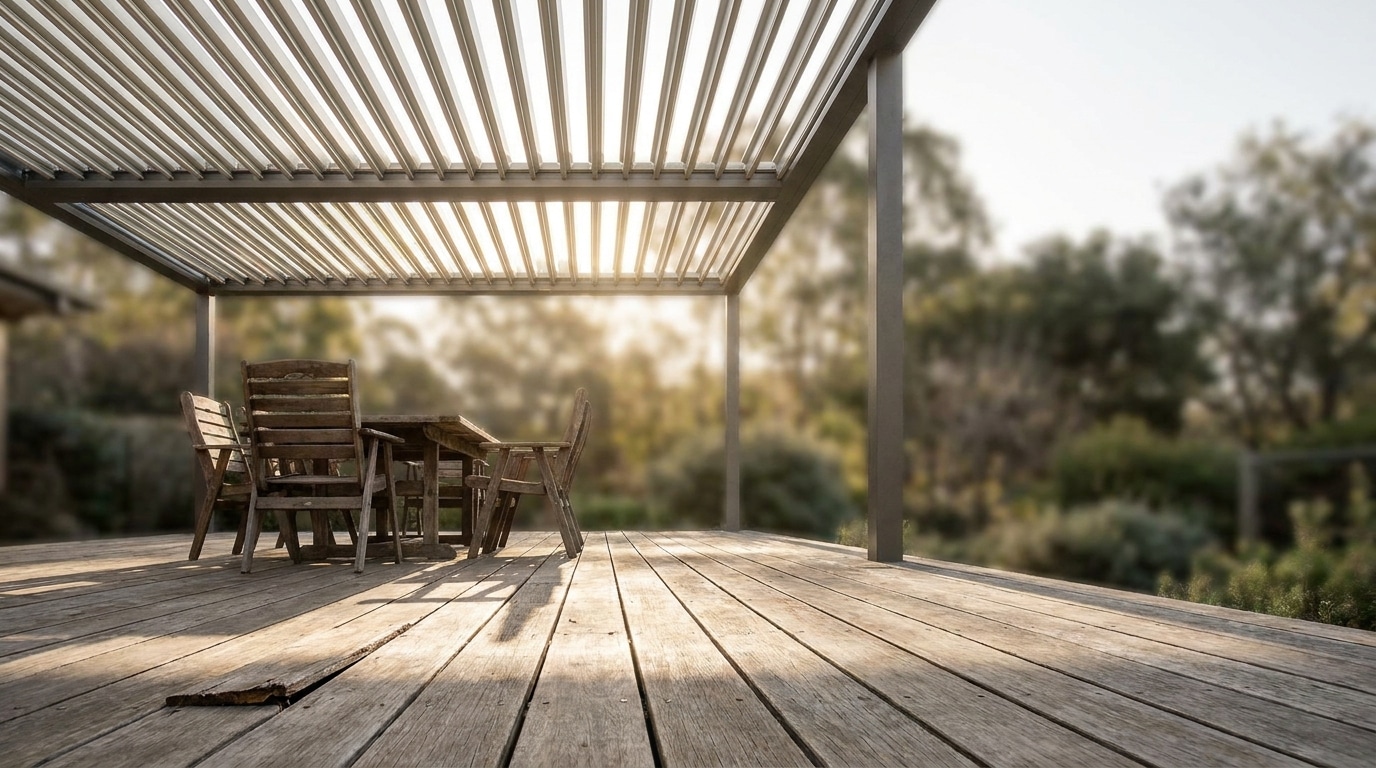
Louvered pergolas can suit several outdoor locations, including patios, decks, courtyards and poolside areas.
The appropriate configuration depends on the available space, ground conditions and relationship to the existing building.
The structure must also be suitable for the environmental and structural requirements of the property.
Outdoor Dining Areas
A louvered roof can help manage direct sunlight over an outdoor dining table.
This is useful when the area receives different levels of sun throughout the day.
The pergola can also provide a more defined entertaining space.
If the area includes an outdoor kitchen, allow suitable clearances and follow equipment installation requirements.
Decks and Patios
Louvered pergolas can be installed over suitable decks or paved patios.
However, the existing structure must be checked for the pergola’s loads and fixing requirements.
A deck may require additional structural support.
Paving alone should not be assumed suitable for anchoring pergola posts.
Poolside Areas
A pergola can provide adjustable shade near a swimming pool.
This may help create a comfortable seating or relaxation area.
The selected materials and fixings should suit the surrounding environment, particularly where moisture and pool chemicals may affect components.
Pergola placement must also comply with applicable pool barrier and safety requirements.
Small Courtyards
A wall-mounted pergola may be suitable for a compact courtyard connected to the house.
Adjustable louvres can help preserve daylight when the roof is open.
However, the design must allow adequate clearance, drainage and suitable wall connections.
A site assessment can help determine whether a wall-mounted or freestanding structure is more appropriate.
Freestanding vs Wall-Mounted Louvered Pergolas
Louvered pergolas are available in freestanding and wall-mounted configurations.
Both use adjustable roof blades, but their structural arrangements differ.
The correct design depends on the property’s layout and the intended location.
Freestanding Pergolas
A freestanding pergola uses posts to support the structure independently of the house.
This configuration can suit garden seating areas, poolside spaces and detached outdoor entertaining zones.
The posts require appropriate foundations or engineered fixing systems.
Freestanding structures also need suitable drainage arrangements and access for maintenance.
Wall-Mounted Pergolas
A wall-mounted pergola is connected to an existing building and supported by an appropriate combination of wall connections and posts.
This can create a covered space directly beside the home.
However, the building wall must be suitable for the proposed structural loads.
Weatherproofing around the connection also requires careful detailing.
Which Configuration Should You Choose?
| Feature | Freestanding Pergola | Wall-Mounted Pergola |
| Location | Independent outdoor areas | Beside an existing building |
| Structural support | Posts and foundations | Building connections and supporting posts |
| Common applications | Gardens, pools and detached patios | Courtyards, decks and adjoining entertaining areas |
| Design flexibility | Can be positioned away from the house | Integrates with the building |
| Installation requirements | Suitable foundations and drainage | Structural wall assessment, support and weatherproofing |
The final configuration should be selected according to site conditions and engineering requirements.
What Materials Are Used in Louvered Pergolas?
Material selection affects durability, appearance and maintenance.
Aluminium is commonly used for modern adjustable pergola systems because it is lightweight relative to many traditional structural materials and does not swell or rot like timber.
However, the quality of the complete structure depends on more than the frame material.
Aluminium Pergola Frames
Aluminium offers good corrosion resistance and can be manufactured into profiles suitable for adjustable roof systems.
Powder-coated finishes are commonly used to provide colour and additional surface protection.
The aluminium grade, profile design and coating specification should match the installation environment.
Coastal properties may require additional attention to fixings and maintenance.
Moving Components and Hardware
The operating mechanism may include pivots, linkages, fasteners and other moving parts.
These components must be suitable for outdoor exposure.
Poor-quality or unsuitable hardware can affect operation over time.
Ask about the manufacturer’s maintenance instructions and replacement parts availability.
Motor and Electrical Components
Motorised pergolas include an electric motor and control system.
Electrical components must be suitable for the intended outdoor environment.
The required power supply and electrical protection depend on the selected product.
Where electrical work is required, it should be completed by an appropriately licensed electrician.
How Much Does a Louvered Pergola Cost in Australia?
The cost of a louvered pergola depends on its size, design, materials and operating mechanism.
Manual pergolas often have a lower initial price than comparable motorised models because they do not include an electric drive system.
However, the total project cost can increase when installation, foundations and additional features are included.
Factors That Affect Pergola Prices
Common pricing factors include:
- Pergola dimensions and roof coverage
- Manual or motorised operation
- Freestanding or wall-mounted design
- Frame materials and finishes
- Site preparation and foundations
- Structural engineering requirements
- Electrical connections
- Drainage arrangements
- Delivery and installation
- Optional lighting and screens
Custom installation requirements can affect the final cost even when a standard pergola kit is used.
Manual vs Motorised Pergola Costs
Manual systems generally use a simpler operating mechanism.
Motorised pergolas include additional electrical components and controls.
The difference in price depends on the product range and available features.
When comparing quotes, check whether installation and electrical work are included.
What Should a Pergola Quote Include?
A clear quote should identify the pergola model, dimensions and included components.
It should also explain any additional requirements for foundations, installation, delivery and electrical work.
Ask whether guttering, drainage connections, lighting and other accessories are included.
Warranty terms and ongoing maintenance requirements should also be reviewed before purchase.
Do Louvered Pergolas Need Council Approval in Australia?
Council and building approval requirements depend on the state, local planning controls, pergola dimensions and installation location.
Some smaller structures may qualify for exempt development under applicable rules.
Others may require planning approval, building approval or engineering documentation.
Homeowners should confirm the relevant requirements before installation.
Check Local Planning Rules
Planning requirements can vary according to the property’s location and characteristics.
Factors may include building height, setbacks, site coverage and whether the structure is attached to the home.
Heritage controls, bushfire-prone land and other site restrictions may also affect the approval process.
Do not assume a pergola is exempt simply because it is supplied as a DIY kit.
Confirm Structural Requirements
A pergola must be suitable for the site’s wind conditions and other relevant structural loads.
The supporting foundations and connections must also be appropriate.
Australian building requirements may involve relevant provisions of the National Construction Code and applicable structural standards.
The manufacturer or a qualified building professional should confirm the required documentation.
Electrical and Drainage Requirements
Motorised pergolas may require electrical installation.
Any regulated electrical work must be performed by a suitably licensed professional.
Drainage arrangements should also comply with applicable requirements and avoid directing water towards neighbouring properties or vulnerable building areas.
How to Maintain a Louvered Pergola
Regular maintenance helps keep the roof operating smoothly and reduces the likelihood of preventable problems.
Even aluminium pergolas require periodic cleaning and inspection.
The appropriate maintenance schedule depends on the product and environmental exposure.
Clean the Louvres and Frame
Remove dust, leaves and other debris from the roof and frame.
Use cleaning products approved for the surface finish.
Avoid abrasive tools or unsuitable chemicals that could damage protective coatings.
For elevated components, use safe access methods rather than climbing onto the roof.
Keep Gutters Clear
Blocked drainage channels may prevent water from leaving the roof correctly.
Inspect gutters and drainage outlets for leaves and accumulated debris.
Cleaning may be required more frequently when the pergola is installed beneath trees.
Inspect the Operating Mechanism
Check whether the louvres open and close smoothly.
Unusual noises, uneven movement or resistance may indicate an issue requiring attention.
Do not force the operating mechanism if the blades become jammed.
Follow the manufacturer’s instructions for inspection and lubrication, where applicable.
Maintain Motorised Components
Motorised pergolas may require additional checks of controls, electrical connections and operating components.
Electrical repairs should be carried out by qualified personnel.
If the motor stops working, consult the product manual before attempting adjustments.
Avoid dismantling electrical components without appropriate training.
Common Louvered Pergola Problems and How to Prevent Them
Louvered pergolas can develop operational or maintenance issues when components become blocked, misaligned or damaged.
Many problems can be reduced through proper installation and routine care.
However, structural defects and electrical faults require professional attention.
Louvres Not Closing Properly
Poor closure may result from debris, misalignment or an operating mechanism problem.
Inspect for visible obstructions without forcing the blades.
If the problem continues, arrange a professional inspection.
Water Leaking Through the Roof
Water entering through a closed roof may indicate blocked drainage, damaged seals or incorrect alignment.
Wind-driven rain may also enter under conditions beyond the system’s rated performance.
Check the manufacturer’s guidance before assuming the roof is defective.
Motorised Roof Not Responding
A motorised roof may stop responding because of a control, power supply or motor-related issue.
Follow the troubleshooting steps provided by the manufacturer.
If electrical inspection or repair is required, use a suitably qualified professional.
Unusual Noise During Operation
Unexpected noise may indicate debris, mechanical wear or movement within the operating system.
Avoid continuing to operate the roof if the mechanism appears damaged.
Early inspection can help prevent further problems.
How to Choose the Right Louvered Pergola for Your Home
Choosing a louvered pergola involves matching the product to your outdoor area and how you intend to use it.
Size, orientation, operating method and weather performance all influence the result.
An attractive pergola may still be unsuitable if its dimensions, foundations or roof operation do not meet the property’s needs.
Measure the Available Space
Measure the proposed installation area and identify nearby walls, doors, windows and other obstacles.
Check that the structure will not interfere with access or existing outdoor features.
Allow room for supporting posts and any side accessories.
Review Sun Orientation
The direction of the sun influences how the louvres will perform.
Consider when the area receives direct sunlight and where shade is most needed.
The blade orientation should be reviewed alongside the pergola’s position.
Decide Between Manual and Motorised Operation
Manual systems may suit homeowners who prefer a simpler mechanism and do not need frequent adjustment.
Motorised systems may be preferable for convenience and regular use.
If choosing motorised operation, confirm electrical supply requirements and control features.
Check Weather Performance
Ask about the roof’s intended rain protection, drainage design and wind requirements.
Confirm whether the system has any restrictions on operating the louvres during severe weather.
The selected product should suit the property’s exposure.
Review Installation and Warranty Details
Before purchasing, confirm the installation method and any foundation requirements.
Review the warranty documentation and maintenance conditions.
Check whether replacement parts and technical assistance are available for the operating mechanism.
Louvered Pergola Buying Checklist
A practical checklist can help homeowners compare different pergola systems before making a decision.
It also helps identify potential installation requirements that may affect the total project cost.
Before Choosing a Pergola
- Measure the intended installation area.
- Decide between freestanding and wall-mounted designs.
- Review the property’s sun orientation.
- Choose manual or motorised operation.
- Confirm the available sizes and colours.
- Check weather and wind performance specifications.
- Review the drainage system.
- Identify power requirements for motorised models.
- Confirm structural and foundation requirements.
- Check whether approvals are needed.
- Review warranty and maintenance information.
- Request an itemised quote.
Completing these checks can help prevent unsuitable purchases and unexpected installation work.
For larger or more complex projects, professional site assessment and structural advice may also be appropriate.
Is a Louvered Pergola Worth It?
A louvered pergola can be a practical addition for homeowners who want more control over their outdoor environment.
Its adjustable roof provides flexibility that a conventional fixed-roof pergola cannot offer.
By opening, tilting or closing the louvres, homeowners can change the amount of sunlight, shade and ventilation entering the covered area.
However, the value of the investment depends on how frequently the space is used and whether the roof’s features meet the property’s needs.
For some households, a traditional fixed roof may provide sufficient protection at a lower cost.
For others, the convenience of adjustable louvres may make an outdoor dining area, patio or courtyard more versatile throughout the year.
Make Your Outdoor Space More Flexible With a Louvered Pergola
A louvered pergola works by rotating adjustable roof blades to manage sunlight, shade and airflow.
Manual systems use a mechanical control, while motorised versions allow the roof to be adjusted electrically.
When correctly designed and installed, certain systems can also provide rain protection through overlapping blades and integrated drainage channels.
The best pergola depends on the size of the area, its orientation, local weather conditions and your preferred operating method.
If you’re planning to upgrade a patio, deck or outdoor entertaining space, explore the manual and motorised pergola options available from Unique Pergolas.
Compare roof configurations, dimensions, installation requirements and available accessories to find a system suited to your outdoor space.
Frequently Asked Questions
How Does a Louvered Pergola Control Sunlight and Shade?
A louvered pergola controls sunlight and shade by rotating adjustable blades within its roof. When the blades are open, sunlight can pass through the gaps. Tilting them reduces direct sunlight while allowing some airflow. Closing the blades creates greater overhead coverage. The amount of shade depends on the blade angle, sun position and pergola orientation. This flexibility allows homeowners to change the roof setting throughout the day rather than relying on a permanently open or solid roof.
Can a Louvered Pergola Keep Rain Out?
A louvered pergola can provide rain protection when it is designed with suitable overlapping blades, seals and drainage channels. When the roof closes, water is directed towards the system’s gutters or outlets. However, protection varies between products and depends on installation quality, rainfall intensity and wind conditions. Some water may enter during severe or wind-driven rain. Homeowners should review the manufacturer’s weather performance information and operating instructions before relying on the pergola for wet-weather shelter.
Does a Motorised Louvered Pergola Need Electricity?
Yes, a conventional motorised louvered pergola requires an appropriate power source to operate its electric motor and control system. Depending on the model, the roof may be adjusted using a remote control, wall switch or compatible smart control. Electrical requirements vary between products, so the power supply should be confirmed before installation. Where electrical work is required, it must be completed by a suitably licensed professional. Manual pergolas generally operate without an electrical connection.
Can You Install a Louvered Pergola Yourself?
Some louvered pergolas are supplied as DIY kits, but installation suitability depends on the structure, site conditions and the homeowner’s skills. The pergola must have appropriate foundations, fixings and structural support. Wall-mounted systems also require suitable connections to the building. Motorised models may need licensed electrical work. Before attempting installation, review the manufacturer’s instructions and confirm any building approval requirements. Professional installation may be preferable for larger structures or sites with challenging conditions.
How Long Does a Louvered Pergola Last?
The service life of a louvered pergola depends on its materials, construction, installation quality, environmental exposure and maintenance. Aluminium systems can provide long-term outdoor performance when appropriately specified and maintained. However, moving components, seals, coatings and electrical equipment may require attention over time. Coastal conditions, debris accumulation and incorrect operation can increase wear. Regular cleaning, gutter maintenance and inspections can help preserve performance. Homeowners should review the manufacturer’s warranty and maintenance instructions rather than assuming a fixed lifespan.