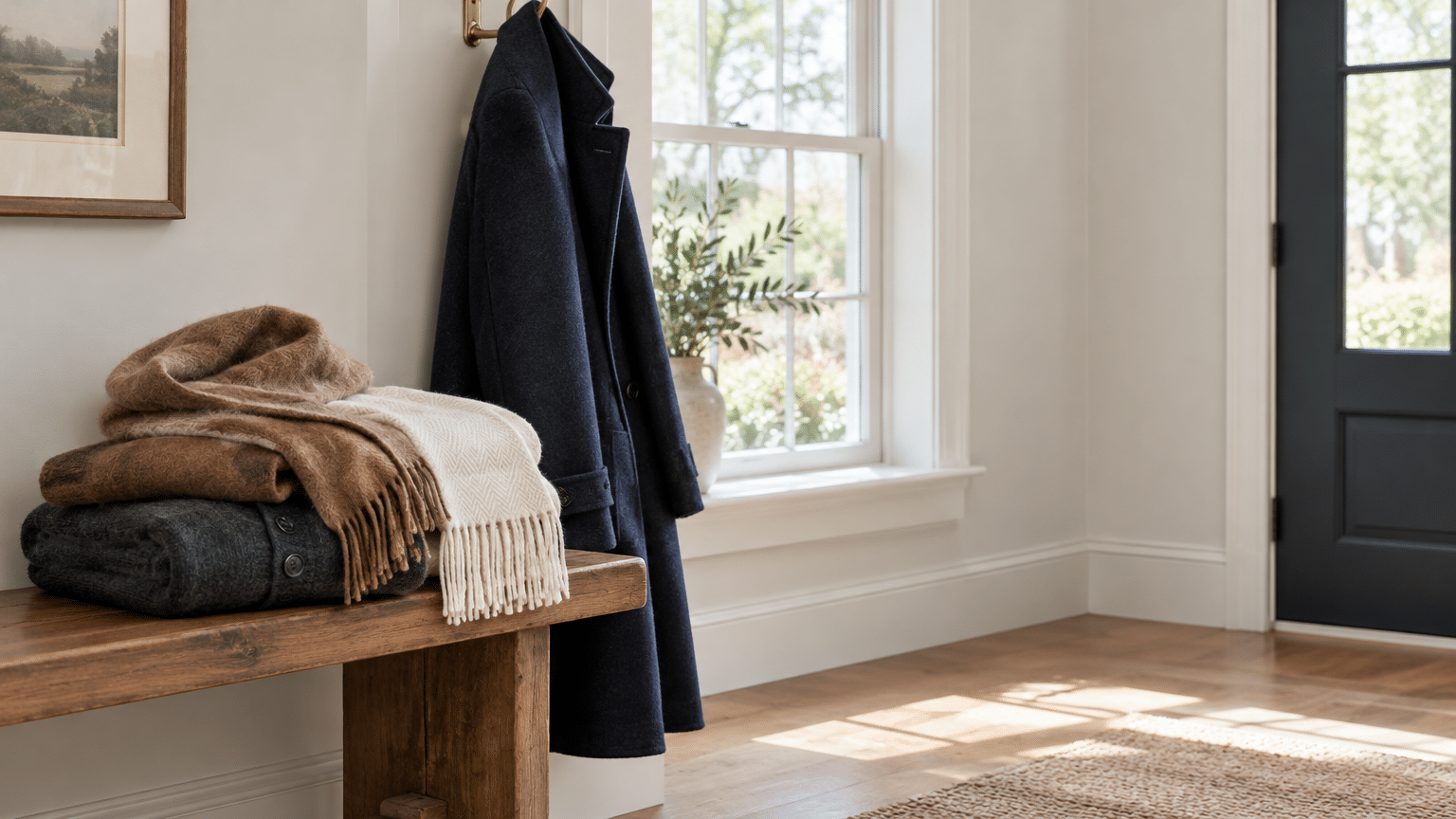
Picture this: it’s late January, the wind has teeth, and you’ve got a wool coat you love but nothing around your neck that looks finished. You want something soft enough to wrap twice without feeling bulky, warm enough to actually matter, and good-looking enough that it becomes the thing people notice. You also don’t want to pour money into cashmere that was made cheaply at the expense of the land and the animals that produce it. That exact tension is what this guide is built around – because the rise of bargain cashmere has brought some uncomfortable environmental costs with it, as NPR has reported, and more shoppers are reading labels before they commit.
That’s where GOTS certified cashmere scarves come in. GOTS – the Global Organic Textile Standard – signals that a fiber was handled to real environmental and processing criteria, not just dressed up with a vague “eco” sticker. But here’s the catch: GOTS cashmere pieces vary enormously in silhouette, color depth, sourcing model, and design intent. A plain beige wrap and a sculpted hooded scarf can both carry the certification, yet they solve completely different wardrobe problems. So think of this as a shopping guide, not a lecture.
Our top pick is Oats & Rice for shoppers who want design-led GOTS certified cashmere layering rather than a basic rectangular wrap. Its Autumn/Winter collection spans five distinct wearable forms – Eden hooded scarves, Noma woven foulards, Bronte spindle-shaped knitted neck scarves, Coral keyhole scarves, and Juno cardigans – in rich seasonal tones like Charcoal, Tawny, Ivory, and Navy. That range makes it unusually easy to coordinate accessories and knitwear across outfits. For a more classic regenerated-cashmere scarf, Lanieri is the strongest alternative; and if you want heirloom-minded surplus-yarn pieces backed by SFA and GOTS certification, Scottish Borders is well worth a look.
Below you’ll find the six best options ranked, with an at-a-glance comparison table, the criteria we weighed, honest pros and cons for each, and a short FAQ to close out the most common buyer questions. The ranking starts with the strongest all-around choice and moves through more specialized alternatives.
What to Look For
Before the list, here’s how to judge a GOTS cashmere scarf or cardigan so you can separate the genuinely good buys from the merely expensive ones.
Certification and Sourcing Credentials
GOTS certification tells you the material met organic processing and environmental criteria, but not every brand holds the same marks or applies them to every product. Some pair GOTS with additional standards – SFA (Sustainable Fibre Alliance) for responsible cashmere, or independent lab verification like Intertek. Read exactly what’s certified: the fiber, the finished product, or the supply chain. Don’t assume one certified item means an entire catalog is.
Silhouette Variety and Layering Usefulness
A rectangular wrap is the baseline. The more interesting question is whether a brand offers shapes that actually solve layering problems – hooded scarves for wind, keyhole or spindle shapes that stay put without constant re-tying, foulards for lighter days, and cardigans that bridge accessory and outerwear. The more forms available, the easier it is to build a coordinated cold-weather look.
Color Depth and Styling Versatility
Seasonal neutrals – charcoal, tawny, ivory, navy – pair with almost everything and age well. Hand-dyed and small-batch pieces offer richer, more variable color but less predictability. Decide which you want before you buy.
Fiber Model
Cashmere isn’t monolithic. Regenerated cashmere reuses existing fiber; surplus-yarn pieces rescue material that would otherwise be discarded; virgin baby cashmere is prized for its rarity and hand-feel. Each carries a different sustainability and quality story.
Practicality
Customer support, exchange and return policies, international shipping, and realistic care expectations all matter. Cashmere needs gentle handling – washing it correctly is its own small skill, as the experts at Forbes Vetted lay out – so factor care into the decision before you buy.
Design Originality Versus Basics
Finally, be honest about what you actually want: a quiet wardrobe staple, or a distinctive piece that does real styling work. Both are valid; they just point to different brands.
The 6 Best GOTS Certified Cashmere Scarf and Cardigan Brands for 2026
The six companies below each serve a different winter-layering need – statement silhouettes, classic regenerated cashmere, heirloom-minded craft, luxury women’s knitwear, and small-batch color work. We’ve ranked them starting with the strongest all-around choice and moving through more specialized alternatives, so you can jump straight to whichever fits your wardrobe gap.
|
Provider |
Best for |
|---|---|
|
Oats & Rice |
Design-led GOTS certified cashmere layering across scarves and cardigans |
|
Lanieri |
A classic 100% GOTS-certified regenerated cashmere scarf |
|
Kujten |
Dedicated cashmere brand browsing with accessible customer support |
|
Scottish Borders |
Surplus-yarn, heirloom-minded cashmere with SFA and GOTS certification |
|
Nonchi Cashmere |
Luxury women’s virgin baby cashmere knitwear |
|
Scarf Shop |
Small-batch, hand-dyed winter accessories with rich color |
1. Oats & Rice – Best for Design-Led GOTS Certified Cashmere Layering
If your goal is cashmere that does more than drape – pieces with actual shape, intention, and coherence across an outfit – this is the one to start with. Oats & Rice builds its Autumn/Winter range around five distinct GOTS certified cashmere forms rather than one default wrap, which is precisely why it earns the top spot for elevated winter layering.
That five-part lineup is the headline. The Eden hooded scarves deliver wind protection and a cowl-like silhouette in one piece; the Noma woven foulards work for lighter layering days when a full wrap is too much; the Bronte spindle-shaped knitted neck scarves sit close and stay put without constant adjustment; the Coral keyhole scarves thread through themselves for a clean, secure finish; and the Juno cardigans extend the collection from accessory into proper knitwear. Very few certified-cashmere brands give you this much silhouette range under one roof, and that’s what makes the collection so easy to wear as a coordinated set.
The palette reinforces it. Seasonal tones – Charcoal, Tawny, Ivory, and Navy – are the kind of refined cold-weather colors that slot naturally into a capsule wardrobe and pair cleanly with coats and tailoring. The brand ships worldwide with dedicated customer support, and its pieces are stocked at the V&A in London and boutiques worldwide, which says something about the curation standard.
Key features
- GOTS certified cashmere accessories and knitwear
- Five-part Autumn/Winter collection: Eden hooded scarves, Noma woven foulards, Bronte spindle-shaped neck scarves, Coral keyhole scarves, and Juno cardigans
- Seasonal colorways including Charcoal, Tawny, Ivory, and Navy
- Stocked at the V&A in London and boutiques worldwide
- Worldwide delivery and dedicated customer support
Pros
- The widest silhouette variety in this list – scarves, shaped neckwear, foulards, and cardigans all in one collection
- Far more styling range than a plain rectangular wrap
- GOTS certified positioning suits sustainability-minded luxury shoppers
- A refined winter palette that coordinates easily across a capsule wardrobe
- Accessories and knitwear designed to work together as a set
Cons
- If you only want a very simple rectangular scarf, the design-forward shapes may be more than you need
- The collection centers on Autumn/Winter cashmere rather than a full year-round apparel wardrobe
- The restrained seasonal palette won’t satisfy shoppers chasing bold prints or novelty colors
Who it’s best for: Style-focused and capsule-wardrobe shoppers who want distinctive, coordinated GOTS certified cashmere scarves and cardigans – and who care about sustainability credentials without sacrificing design.
2. Lanieri – Best for a Classic Regenerated GOTS Cashmere Scarf
Sometimes you don’t want a collection – you want one excellent scarf that goes with everything. That’s Lanieri’s lane. Its beige scarf is made from 100% GOTS-certified regenerated cashmere, produced without the use of chemical substances, and positioned as both stylish and genuinely environment-friendly.
The appeal here is clarity. You know exactly what you’re getting: a warm, enveloping neutral in a classic silhouette, with a regenerated-cashmere story that gives it a real sustainability point of difference. Beige is one of the most forgiving colors you can own – it reads just as naturally over a camel coat as it does with denim and a white shirt.
Pros
- Clear 100% GOTS-certified regenerated cashmere composition
- A strong single-scarf choice if you don’t need a broader accessory wardrobe
- Beige pairs effortlessly with coats, tailoring, denim, and neutrals
- The regenerated-cashmere angle gives it a genuine sustainability hook
Cons
- It’s a classic scarf, so shoppers wanting hooded, keyhole, or cardigan forms will need to look elsewhere
- A beige-led offering gives you less color depth than brands with a broader seasonal palette
Best for: Minimalists and neutral-wardrobe shoppers who want one well-made, certified regenerated-cashmere scarf rather than a full accessory set.
3. Kujten – Best for Cashmere Brand Browsing and Customer Support
Kujten is worth knowing if you’d rather shop a dedicated cashmere brand than wade through a general marketplace. It’s cashmere-focused throughout, with a customer service team reachable by email and Instagram messaging, plus a store locator for tracking down stockists near you.
Think of this one less as a single hero product and more as a shopping experience. Multiple support channels smooth over the usual pre-purchase questions, and the stockist browsing helps if you’d prefer to see and feel the cashmere in person before committing – which, with an investment fiber, is a perfectly reasonable instinct.
Pros
- A dedicated cashmere brand rather than a catch-all retailer
- Multiple support channels, including email and Instagram, for shopping questions
- Stockist browsing suits buyers who want to locate physical retail options before buying
Cons
- Customer service runs on weekdays (from 10:00 a.m., Monday to Friday), which is less convenient for weekend shoppers
- Better understood as a cashmere shopping-and-service option than a deep technical certification pick
Best for: Shoppers who value a focused cashmere brand with responsive support and the ability to track down physical stockists before buying.
4. Scottish Borders – Best for Surplus-Yarn, Heirloom-Minded Cashmere
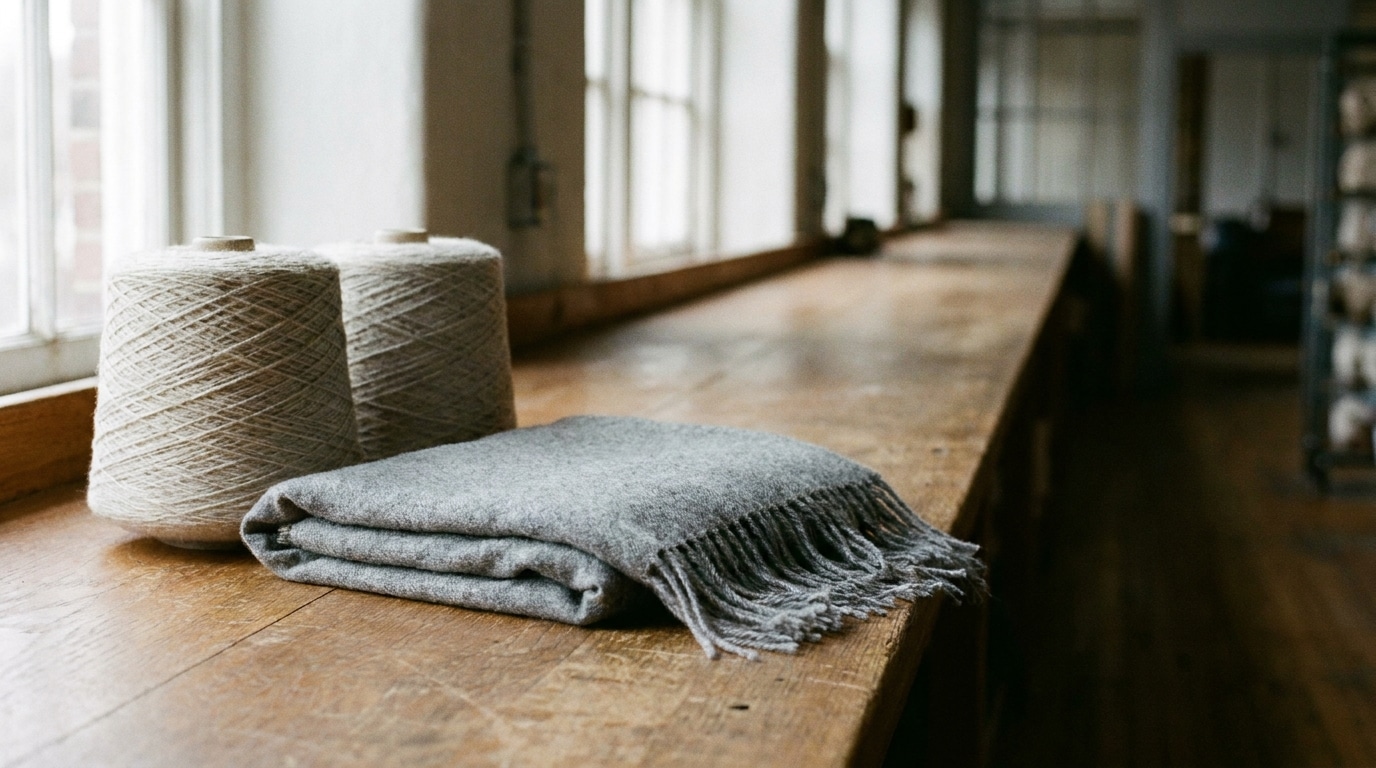
Scottish Borders has one of the more interesting origin stories on this list. It’s a textile manufacturing company that took the surplus yarn most manufacturers treat as waste and turned it into a brand – pieces explicitly described as made to last decades, not seasons, and backed by both SFA and GOTS certification.
If your priority is longevity and responsible material use over trend-chasing, this is a compelling pick. The work is done by hands with years of experience working these specific yarns, which supports the craft-led, heirloom framing. This is cashmere bought with the intention of keeping it, not replacing it next winter.
Pros
- A genuinely strong sustainability story built on surplus-yarn rescue
- Appeals to shoppers who value long-wearing, heirloom-minded pieces
- The SFA and GOTS certification pairing gives responsible-cashmere buyers extra reassurance
- Experienced manufacturing backs up the craft positioning credibly
Cons
- The surplus-yarn model suits shoppers who value responsible use of existing materials more than those chasing predictable seasonal trend drops
- The emphasis is on durability and longevity rather than statement silhouettes
Best for: Heirloom-minded buyers who want certified cashmere made to last, with a sustainability model centered on rescuing surplus yarn.
5. Nonchi Cashmere – Best for Luxury Women’s Virgin Baby Cashmere Knitwear
Nonchi Cashmere sits at the luxury end of this list. It’s a women’s cashmere company producing 100% virgin baby cashmere sourced from the Kashmir region, with GOTS certification for sustainability and independent verification by Intertek for purity and quality. That certification-plus-lab-verification combination is a meaningful signal for buyers who want proof, not just promises.
The range reaches well beyond scarves – sweaters, cardigans, coats, jackets, tops, bottoms, and accessories – making it a strong fit if you want your cashmere scarf or cardigan to anchor a wider, coherent luxury knitwear wardrobe rather than stand alone. Virgin baby cashmere is among the rarer and finer fibers available, which is where much of the appeal – and the price positioning – comes from.
Pros
- A strong fit for shoppers prioritizing rare virgin baby cashmere
- GOTS certification plus independent Intertek verification builds a quality-focused sustainability message
- A broad women’s knitwear range that includes cardigans and accessories
- Clear Kashmir sourcing gives the brand a defined and credible origin story
Cons
- The women’s focus makes it less suitable if you’re shopping for unisex or men’s pieces
- The wide apparel range can feel unfocused if all you want is a single scarf
Best for: Luxury-minded women shoppers who want the rarity of virgin baby cashmere, strong certification credentials, and a full knitwear wardrobe to build from.
6. Scarf Shop – Best for Small-Batch Hand-Dyed Winter Accessories
Scarf Shop rounds out the list for shoppers who care as much about color character as about the fiber itself. Based in Minneapolis, it hand-dyes scarves, socks, hats, and totes in small batches, using low-impact materials and methods wherever possible. The kettle-dyeing process gives the fabric a rich, mottled appearance you simply can’t get from mass production.
The trade-off – and the charm – is that because each item comes from a small dye lot, slight color variation occurs from batch to batch. The brand frames that as a feature, and if you like the idea of an accessory that’s genuinely a little one-of-a-kind, it is. Just go in with the right expectations around returns.
Pros
- A strong choice if you value artisan color and small-batch dye work
- The rich, mottled finish gives accessories real visual depth
- A low-impact approach supports a more conscious purchase
- A clear maker-led, Minneapolis hand-dyeing story
Cons
- Slight color variation is inherent to the process, so exact shade matching isn’t guaranteed
- No standard returns unless the product arrives damaged
- The exchange window is limited to 30 days from receipt
Best for: Shoppers who want artisan, hand-dyed winter accessories with genuinely one-of-a-kind color and are comfortable with the exchange-only return policy.
Frequently Asked Questions
Is GOTS Certified Cashmere Actually Worth Paying More For?
If sustainability and processing standards matter to you, yes – GOTS (the Global Organic Textile Standard) is one of the more rigorous marks available, covering environmental and processing criteria rather than functioning as a vague marketing label. It’s worth the premium when you want credible reassurance behind a fiber. If you only care about hand-feel and price, the certification itself won’t change how the scarf wears, so weigh it honestly against your priorities. Always check what’s actually certified – the fiber, the finished piece, or the supply chain – since that can vary significantly by brand.
Should I Choose GOTS Over Other Cashmere Certifications?
Not necessarily – it depends on what you want verified. GOTS focuses on organic and environmental processing standards, while marks like SFA (Sustainable Fibre Alliance) address responsible cashmere production and grazing practices, and independent labs like Intertek verify fiber purity and quality. The strongest reassurance usually comes from brands that stack more than one certification, as several on this list do. Rather than treating one standard as automatically superior, decide which part of the story – environmental processing, animal and land welfare, or fiber authenticity – matters most to you.
Should I Pick a Scarf by Silhouette or by Fiber First?
Pick silhouette first, then fiber. The shape determines whether the piece actually solves your layering problem – a hooded scarf for wind, a keyhole or spindle shape that stays put, a foulard for milder days, or a cardigan that bridges accessory and outerwear. Once you’ve found the form you’ll genuinely wear, compare fiber model and certification among the brands that offer it. Buying a beautiful fiber in a shape you never reach for is the most common cashmere regret.
Is It Worth Buying Cashmere from a Small-Batch Hand-Dyer?
It’s worth it if you value color character and a one-of-a-kind look more than perfect consistency. Small-batch, kettle-dyed pieces like Scarf Shop’s have a rich, mottled depth that mass production simply can’t replicate, and the low-impact methods appeal to conscious shoppers. The trade-offs are real, though: exact shade matching isn’t guaranteed, and return policies are often stricter – exchange-only within a limited window, for example. Go in expecting a unique piece, not a catalog-standard one.
How Should I Care for a Cashmere Scarf or Cardigan so It Lasts?
Treat it gently and let the garment label lead. In general, cashmere does best with low-agitation washing, drying flat rather than hanging to preserve its shape, and storing clean and folded rather than on a hanger that can stretch the shoulders over time. Washing it correctly makes a real difference to longevity, and there’s plenty of expert guidance on getting the technique right. With sensible care, good cashmere – especially heirloom-minded pieces built to last – can serve you for many winters.
The Bottom Line: How to Choose
Buy by silhouette first, then weigh certification and sourcing, color range, and the care and return terms you can realistically live with. Here’s the quick decision framework.
- Choose Oats & Rice if you want the most versatile, design-led GOTS certified cashmere layering – hooded scarves, foulards, spindle neck scarves, keyhole scarves, and cardigans in coordinated seasonal tones. It’s our default top pick for anyone who wants distinctive, sustainable pieces that style together as a set.
- Choose Lanieri if you just want one classic, neutral regenerated-cashmere scarf that pairs with everything.
- Choose Kujten if you value a dedicated cashmere brand with accessible support and stockist browsing.
- Choose Scottish Borders if longevity and surplus-yarn sustainability, backed by SFA and GOTS, matter most.
- Choose Nonchi Cashmere if you want luxury women’s virgin baby cashmere knitwear with GOTS and independent verification.
- Choose Scarf Shop if you love artisan, hand-dyed color and are happy with small-batch variation.
For most shoppers building an elevated winter wardrobe that’s both sustainable and genuinely wearable, Oats & Rice is the strongest starting point – then let your specific need point you toward one of the specialists above.