

Walk through Milan, then fly to Portland, and something shifts before you even process it consciously. The clothes are different, sure, but it’s more than that. The relationship people have with what they’re wearing feels different. One place treats it as armor; another treats it as an afterthought. Neither is wrong. They’re just answering different questions.
Fashion writers love to talk about trends. What’s in, what’s out, what some celebrity wore to a grocery store in Los Angeles. But that framing misses the more interesting thing happening underneath. The way cities quietly teach their residents how to dress without ever saying a word about it.
Your Environment Is Shaping Your Wardrobe. You Probably Haven’t Noticed.
Cities have rhythms, and those rhythms are physical. A place with brutal winters and packed subway cars produces a different kind of dressing instinct than one with year-round sun and a car culture. That part is obvious. Less obvious is how the social temperature of a place (the unspoken rules about who you’re supposed to be) works its way into your closet.
In dense, fast-moving cities, people often gravitate toward clothing that’s functional but still signals something. There’s not a lot of room for experimentation when you’re running late and your commute involves three transfers. But in cities with a slower pace, places where you might sit at a café for two hours and know the owner by name, there’s more permission to try things. More tolerance for looking a little strange.
Architecture matters too, weirdly. Spend enough time in a city with gorgeous historic buildings and you start reaching for things with a bit more craft and character. Spend it in a glass-and-steel environment and you might find yourself buying cleaner lines without consciously deciding to.
These aren’t deliberate choices. They accumulate.
The Confidence Question Nobody Talks About
Here’s something that doesn’t get enough attention: the same outfit can feel like a completely different experience depending on where you wear it. Not because it changed. Because you changed, or rather, because the social context around you did.
People are constantly scanning their environment, picking up on what’s normal, what gets noticed, what gets ignored. When you see dozens of people wearing something in a city, a certain kind of boot, a particular silhouette, it starts to feel like a real option for you. When you never see it, it takes more nerve.
This is why travel does something strange to how people dress. Some travelers loosen up, they experiment more because nobody knows them and the usual social stakes don’t apply. Others lock down, they simplify because they don’t want to get it wrong in unfamiliar territory. Both reactions are responses to the same thing: a disrupted sense of what’s normal.
Fashion confidence is not some fixed personality trait. It bends depending on where you are.
The Rules that Were Never Written Down
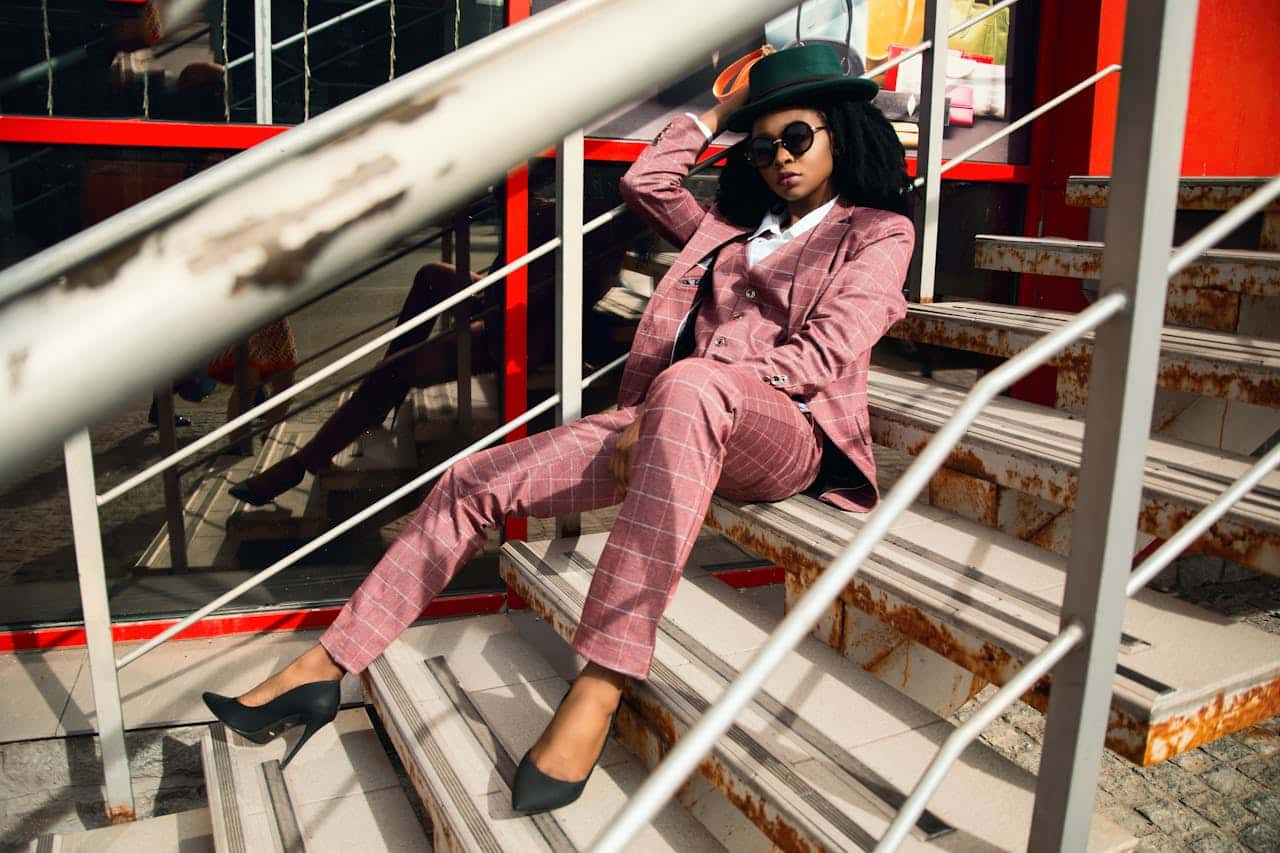
Every city has a style culture that functions exactly like etiquette — everyone follows it, nobody explained it, and you only really notice it when someone breaks it. In some places, looking polished is just expected. Show up underdressed and there’s a social cost, even if nobody says anything. In others, looking too put-together reads as trying too hard, which carries its own social cost.
Some cities reward visibility. Standing out is how you signal that you’re interesting, creative, alive. Others prize a kind of refined invisibility, where the whole point is that you look good without looking like you thought about it.
These aren’t better or worse approaches. But they create genuinely different answers to the question “what does it mean to dress well?” In one city, that might mean a bold printed coat. In another, it’s a perfectly cut blazer in a color that’s almost-but-not-quite-navy.
How a City Becomes a Style
After a few decades, all of this settles into something recognizable. Cities develop aesthetic identities. Structured minimalism. Bohemian maximalism. Workwear-as-art. These aren’t accidents, they’re the sum of climate, history, economic culture, and enough repetition that the patterns started to feel natural.
Social media has made this weirder. A single image from a city can go viral and suddenly represent that city’s “vibe” for millions of people who’ve never been there. Sometimes that’s accurate. Usually it’s a highlight reel. The full picture is messier and more varied, but the compressed version is what people respond to, and then, sometimes, what they dress toward.
Vogue’s street style coverage across fashion weeks in cities like Paris, Milan, and New York consistently shows how each place develops its own visual language, even when global trends are shared.
What Stores Actually Tell You
One of the more revealing places to read a city’s style identity is its local retail. Not the chains, those are the same everywhere. The local boutiques, the independent stores that have been around for fifteen years because they figured out exactly what their neighborhood wants.
The selection in those places is never random. It reflects what people actually buy, what they come back for, what sits on the rack too long and gets marked down. Silhouettes, fabrics, the proportion of occasion wear to everyday pieces. All of it maps to how people in that community actually live.
Stores like Terry Costa in Dallas are a good example of this dynamic. The curation isn’t just about current trends, it reflects the particular expectations of that community: what counts as dressed up, what registers as elegant, how much formality feels appropriate for a big occasion. The store becomes part of the local fashion identity, not separate from it.
Why Any of This Matters
Once you understand that place shapes style, a few things stop being confusing. You stop feeling bad for not resonating with trends that were clearly made for a different city’s sensibility. You understand why moving somewhere new can feel like starting your wardrobe over from scratch, because in a real sense, you are.
The pressure of “dressing well” also gets a little lighter. It’s not a fixed standard. It’s a moving target defined by context, and context changes.
At its core, feeling well-dressed is mostly about feeling like you fit where you are, or at least like you’re making a coherent statement within that context. That’s partly why people feel differently about the same clothes in different places. The clothes didn’t change. The context did.
Style isn’t chasing trends. It’s the ongoing, mostly unconscious negotiation between who you are and where you happen to be standing.