
You eat well, hit the gym, and still feel like something’s off. That’s because true wellness goes way beyond physical health.
Most people focus on just one or two areas of their lives and leave the rest unattended. Over time, those gaps start to show.
The 7 dimensions of wellness give you a complete picture of what a balanced, healthy life actually looks like.
In this blog, you’ll learn what each dimension means, how they connect, and what happens when one falls behind.
By the end, you’ll have a clear, practical understanding of where you stand and what you can do about it. Ready to find out which dimension you’ve been overlooking?
The 7 Dimensions of Wellness
The 7 dimensions of wellness provide a framework for understanding health as a whole. They go beyond the physical and touch every major area of life.
The seven dimensions are:
- Physical: Taking care of your body through movement, food, and rest
- Emotional: Understanding and managing your feelings
- Social: Building and maintaining healthy relationships
- Intellectual: Keeping your mind active and growing
- Spiritual: Finding purpose and meaning in life
- Environmental: Living in spaces that support your health
- Vocational: Doing work that fulfills you
These dimensions don’t work in isolation. Each one connects to the others. When one area suffers, others feel the impact too.
For example: poor sleep (physical) can make you irritable (emotional), which strains your relationships (social). That’s why balance across all seven matters.
Understanding the 7 Dimensions of Wellness
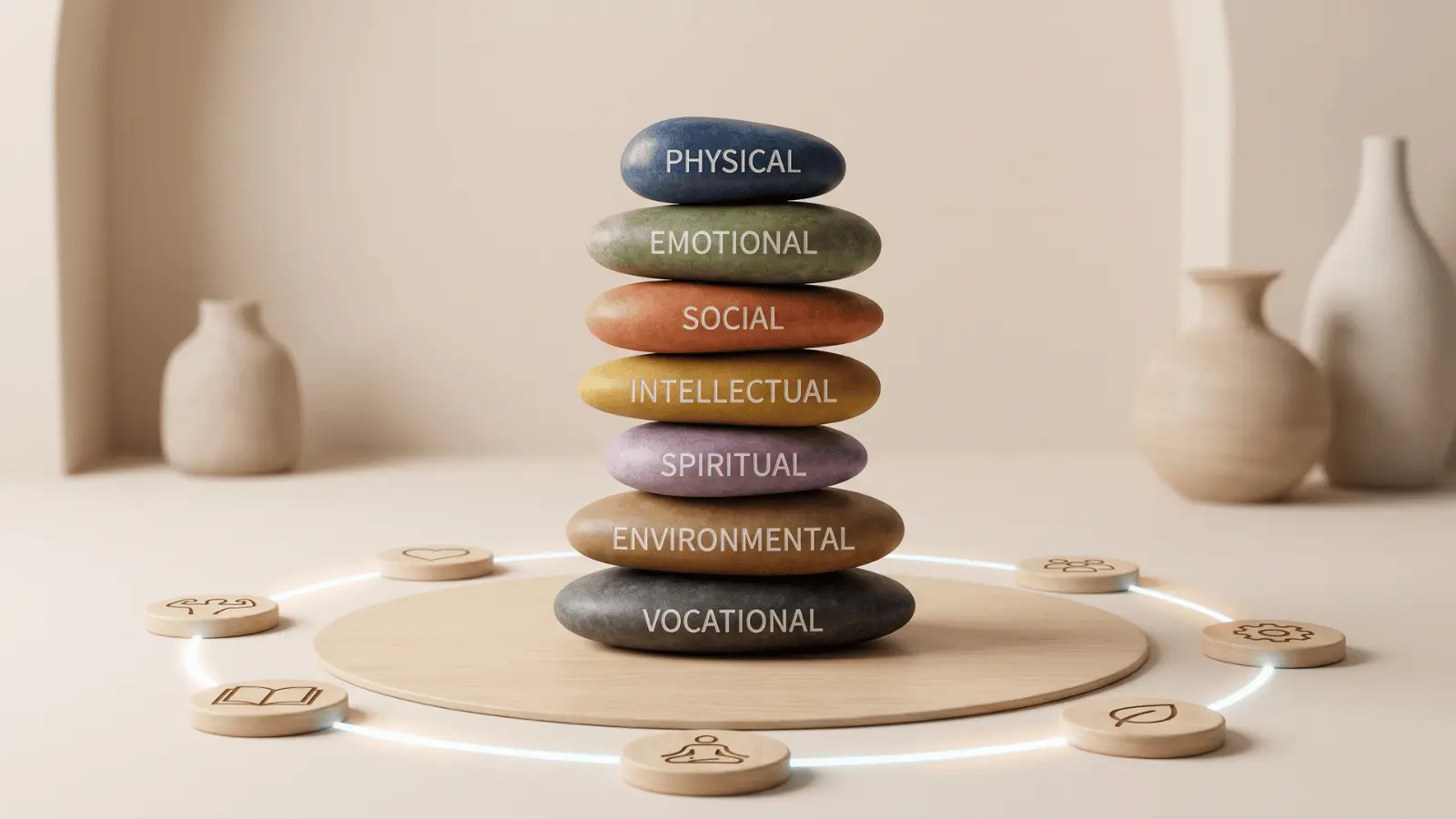
Wellness is more than just physical health. It covers every part of your life, from your emotions and relationships to your work, purpose, and surroundings.
1. Physical Wellness: The Foundation of Your Health
Physical wellness is about how well you care for your body. It’s the most visible dimension, and often the one people start with.
It includes:
- Regular exercise and movement
- A balanced, nutritious diet
- Enough quality sleep
- Routine medical check-ups
Your physical health doesn’t just affect your body. It directly impacts your mood, focus, and energy levels. When your body is well-rested and nourished, your brain works better, and your emotions stay more stable.
On the flip side, neglecting physical health leads to fatigue, brain fog, and a weakened immune system. Over-exercising without recovery can cause injury and chronic stress.
2. Emotional Wellness: Mastering Your Emotions for Balance
Emotional wellness means understanding your feelings and responding to them in healthy ways. It’s not about being happy all the time.
It’s about handling both good and bad emotions without letting them control you. This includes coping with stress, processing grief, and managing anxiety.
Here’s why it matters beyond just “feeling good”:
- Chronic stress raises cortisol, which weakens your immune system
- Unmanaged emotions can lead to physical symptoms like headaches or digestive issues
- Emotional health affects decision-making, focus, and relationships
A common misconception is that emotional wellness means staying positive. In reality, it’s about being honest with your feelings and having the tools to work through them.
Journaling, therapy, mindfulness, and talking to trusted people are all effective ways to strengthen this dimension.
3. Social Wellness: Building Meaningful Connections
Humans are wired for connection. Social wellness is about the quality of your relationships, not just the quantity.
Healthy social wellness includes:
- Maintaining close, supportive friendships
- Setting and respecting boundaries
- Actively engaging with your community
- Communicating clearly and honestly
Strong social bonds provide emotional support during hard times. They also give you a sense of belonging and purpose, which feeds directly into emotional and spiritual wellness.
When social wellness breaks down, the effects are serious. Loneliness and isolation are linked to depression, anxiety, and even shorter life spans.
You don’t need a large social circle. A few deep, genuine connections go a long way.
4. Intellectual Wellness: Fostering Lifelong Learning
Your brain needs exercise just like your body does. Intellectual wellness is about keeping your mind engaged, curious, and growing.
This looks different for everyone. It could be:
- Reading books or exploring new topics
- Taking up a creative hobby like painting or writing
- Solving puzzles or learning a new skill
- Having thought-provoking conversations
Mental stimulation strengthens neural connections and improves problem-solving. It also builds resilience, helping you handle life’s challenges with a clearer head.
When intellectual wellness is neglected, people often report feeling stuck, bored, or without direction. A disengaged mind can quickly drift into negativity or low motivation.
Curiosity is a simple but powerful tool for staying mentally well.
5. Spiritual Wellness: Finding Purpose and Meaning
Spiritual wellness is often misunderstood. It doesn’t require religious belief. It’s about connecting with something larger than yourself and finding meaning in your life.
This could come from:
- Practicing meditation or mindfulness
- Exploring your core values and beliefs
- Volunteering or contributing to a cause
- Spending time in nature and reflection
When you have a strong sense of purpose, life feels more directed. You’re less likely to feel anxious or lost because you have a foundation to return to.
Spiritual wellness reduces existential stress and promotes mental clarity. It quietly supports every other dimension by giving you a reason to care for yourself and others.
6. Environmental Wellness: Creating a Harmonious Space
Your surroundings affect how you feel, think, and function. Environmental wellness is about living and working in spaces that support your well-being.
This includes:
- Keeping your home or workspace clean and organized
- Spending time in natural environments
- Reducing exposure to pollution and toxins
- Making sustainable choices that benefit the planet
A cluttered or chaotic environment raises cortisol and drains mental energy. Studies show that natural light, greenery, and open spaces improve mood and boost creativity.
Environmental wellness is also broader than your personal space. It includes how you treat the planet and your responsibility to the world around you.
Small steps like decluttering one room or taking a daily walk outside can make a noticeable difference.
7. Vocational Wellness: Aligning Work with Purpose
Most people spend a huge portion of their lives working. Vocational wellness is about making sure that time is meaningful.
It’s not just about having a job. It’s about having work that:
- Aligns with your values and skills
- Offers a sense of achievement and growth
- Connects you with others in a meaningful way
- Feels worth the effort you put in
When your work fulfills you, it feeds your social, intellectual, and emotional wellness all at once. You feel productive, valued, and engaged.
Job dissatisfaction is one of the biggest drivers of chronic stress and burnout. It spills into your personal life, damages relationships, and can erode your physical health over time.
If your current role feels misaligned, small shifts, like seeking new responsibilities, learning new skills, or exploring a career change, can help restore this balance.
Balancing the Dimensions for Optimal Wellness

No single dimension matters more than the rest. True wellness comes from keeping all seven in reasonable balance.
This doesn’t mean equal time or attention to each one every day. It means being aware of where you’re thriving and where you’re falling short.
Common imbalances include:
- Pouring everything into work (vocational) while skipping sleep (physical)
- Prioritizing social life while neglecting alone time for reflection (spiritual)
- Focusing on physical fitness while ignoring emotional struggles
When one dimension takes over, the others suffer. Burnout, isolation, or a lack of meaning are often signs that the balance has tipped too far.
The key is adaptability. Life changes, and your wellness focus will shift too. What matters is that you keep checking in and adjusting.
How to Know Which Dimension Needs Your Attention First?
It’s easy to feel overwhelmed when looking at all seven dimensions at once. A simple self-check can point you in the right direction without overcomplicating things.
Try this quick method:
- Rate yourself from 1 to 5 in each dimension. 1 means struggling, 5 means thriving
- Look for your lowest scores, Those are your starting points, not your failures
- Ask yourself which area has felt “off” the longest. Chronic gaps need attention first
- Notice patterns. If multiple dimensions score low, there’s often one root cause behind them all
For example: a low vocational score might be draining your emotional and social wellness too. Fix the source, and other areas often improve on their own.
Once you’ve identified your weakest dimension, focus there first. Pick one small habit, stick to it for two weeks, then reassess.
Conclusion
Wellness isn’t a single goal. It’s a balance across multiple areas of your life, all working together. The dimensions of wellness show you that true health goes far beyond the physical.
You now know what each dimension means and how a gap in one area quietly affects the rest. Start by reflecting on which dimension needs the most attention right now.
Even one small change can shift how you feel day to day. Progress, not perfection, is the goal.
Want to keep building on this? Check out other blogs for more practical tips on living a healthier, more balanced life.
Frequently Asked Questions
Who Created the 7 Dimensions of Wellness?
Dr. Bill Hettler, co-founder of the National Wellness Institute, developed the model in 1976. A seventh dimension was added later by researchers to make it more complete.
Is One Dimension of Wellness More Important than The Others?
No. All dimensions carry equal weight. However, physical and emotional wellness tend to have the most immediate impact on your daily life and functioning.
Can You Be Doing Well in Some Dimensions but Struggling in Others?
Yes, and it’s very common. All seven dimensions overlap and interact, so a gap in one area will quietly affect the others over time.