

Have you started feeling that your skin feels drier than usual, your hair is lacking the bounce that it once had, and that you no longer fit in your favorite jeans?
If you answered yes to any of these changes, welcome to menopause.
These changes aren’t random at all. They all point to one common denominator and that is low estrogen in the body.
Menopause quietly reshapes your body. While these changes can overwhelm you at first, please be assured that you can take some very effective measures to take back control and feel more confident in your body and your skin.
Keep reading to learn more.
Your Skin Looks Different
The reason your skin looks drier, less elastic and thinner than before is not because they reformulated your favorite moisturizer. It’s because of declining estrogen levels in your body. Hormonal changes have a lot of say in how your skin looks and feels. Estrogen is responsible for maintaining collagen levels, improving elasticity and making your skin look more hydrated and thicker. But when estrogen levels go down, they take your skin health with them. As a result, collagen production decreases, the skin becomes thinner and less hydrated and wrinkles and fine lines become more prominent.
All these factors contribute to skin that looks more crepey.
So, can you turn back the clock? Well, to some extent, yes.
Eating a diet rich in antioxidants and healthy fats can supplement the skin with essential nutrients needed for a more radiant and healthy looking skin. Getting restful sleep can also help.
And there are certain topical treatments that can make a visible difference as well.
Alloy Health has a range of solutions that can help you power through menopause. Alloy’s cream for crepey skin, for instance, is formulated with estriol and peptides that hydrate and firm up the skin, making it look smoother.
Body Weight and Distribution Challenges
If your exercise routine and diet have stayed the same since before your menopause began but you feel like your body doesn’t look the same, there’s a reason behind it.
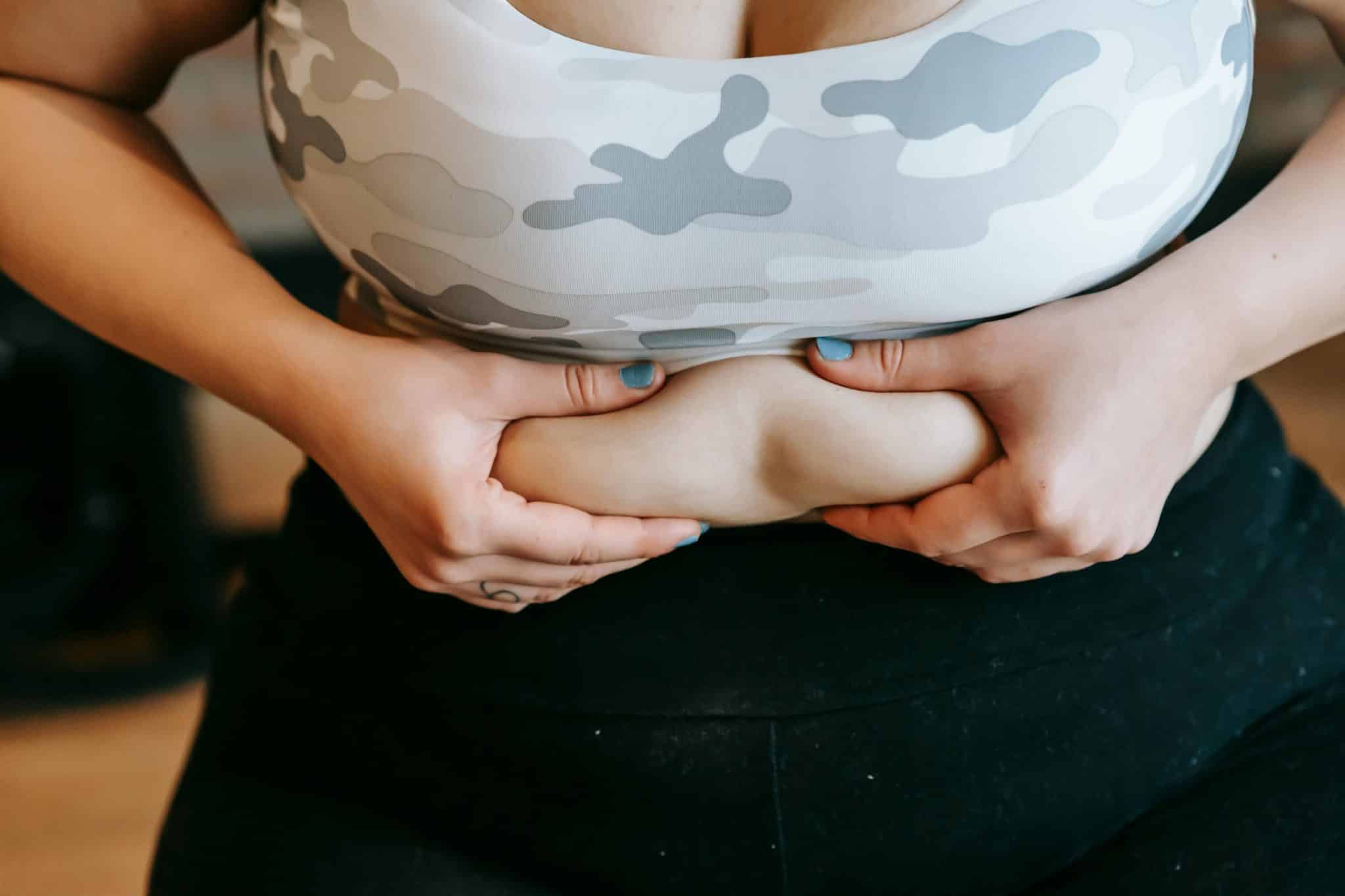
A sharp decline in estrogen dramatically affects your metabolism and how fat is stored in the body. The most commonly observed change one might see is in how the fat is distributed. Before menopause begins in women, fat is usually stored around the hips and thighs which is ideal for your child-bearing years. However, once menopause sets in, the body stops following this “rule’ of fat distribution. You might have noticed how you have developed a ‘belly pooch’ that refuses to go away regardless of your extensive exercise routine or calorie counting habits.
This sudden weight gain is linked to hormonal changes and muscle loss due to decreasing estrogen levels in the body.
Besides this, it’s important to note that muscle tissue burns more fat at rest. When muscle mass declines, the body doesn’t burn as much fat as it used to and this leads to more weight gain. Moreover, sleep disturbances at night and appetite changes can make weight changes more likely.
You can manage these changes by being more active, eating a balanced diet and avoiding foods that are high in unhealthy fats and sugars.
Muscle Strength Takes a Hit
Have you started feeling that carrying groceries feels a little harder than usual or that workouts that previously felt easy to do now feel a little more challenging? During menopause, noticing these little changes is pretty common.
However, these small changes shouldn’t be ignored. Muscle strength begins to take a hit during the menopausal years, partly because of declining hormone levels and partly due to the natural aging process.
Estrogen is tasked with the responsibility of muscle repair, recovery and maintenance. And when it starts dwindling in production, the body becomes less efficient at preserving lean muscles, and as a result, it contributes to sarcopenia (age-related muscle loss). With less lean muscle in the body, you may feel that your strength suffers a setback.
But this can be improved. There are a few things that can be done to slow down muscle loss. Eating more good quality protein, engaging in resistance training and weight bearing exercises and getting enough sleep at night can all help maintain muscle strength.
Bone Loss Is a Big Concern
Did you know that during the first 5 to 7 years of menopause, women can lose up to 20% of their bone density?
That’s a lot. We know.
Your bones are a living tissue that constantly breaks down and rebuilds all the time and estrogen plays a very important role here. It controls the cells that break down old bone tissue, preventing bone loss.
However, with depleting estrogen levels, this makes room for the breakdown process to outpace the bone rebuilding process. This leads to a gradual decrease in bone mass and density, increasing the risk of osteopenia and eventually osteoporosis. The bones become weaker and more fragile, and more prone to fractures.
But can you do anything about this?
Of course, you can. Making a few lifestyle changes can help slow down this process and support long term skeletal health. Engaging in strength training, consuming foods rich in or fortified with calcium and vitamin D and avoiding excessive alcohol can all slow down bone loss.
Menopause can make you feel like you’re losing yourself. But remember that it’s completely normal and there are different ways you can counter these changes. Strategies like using estriol and peptide rich moisturizers and lifestyle changes like eating well, getting enough sleep, moving more and avoiding excessive alcohol can all work together to help you feel beautiful and confident in your body.
These lifestyle adjustments don’t just manifest as physical changes; they also boost your mental health, helping you tackle body-image issues you might have started experiencing when your menopause started setting in.
Learning how menopause works can greatly help you thrive without letting it take control of your life.