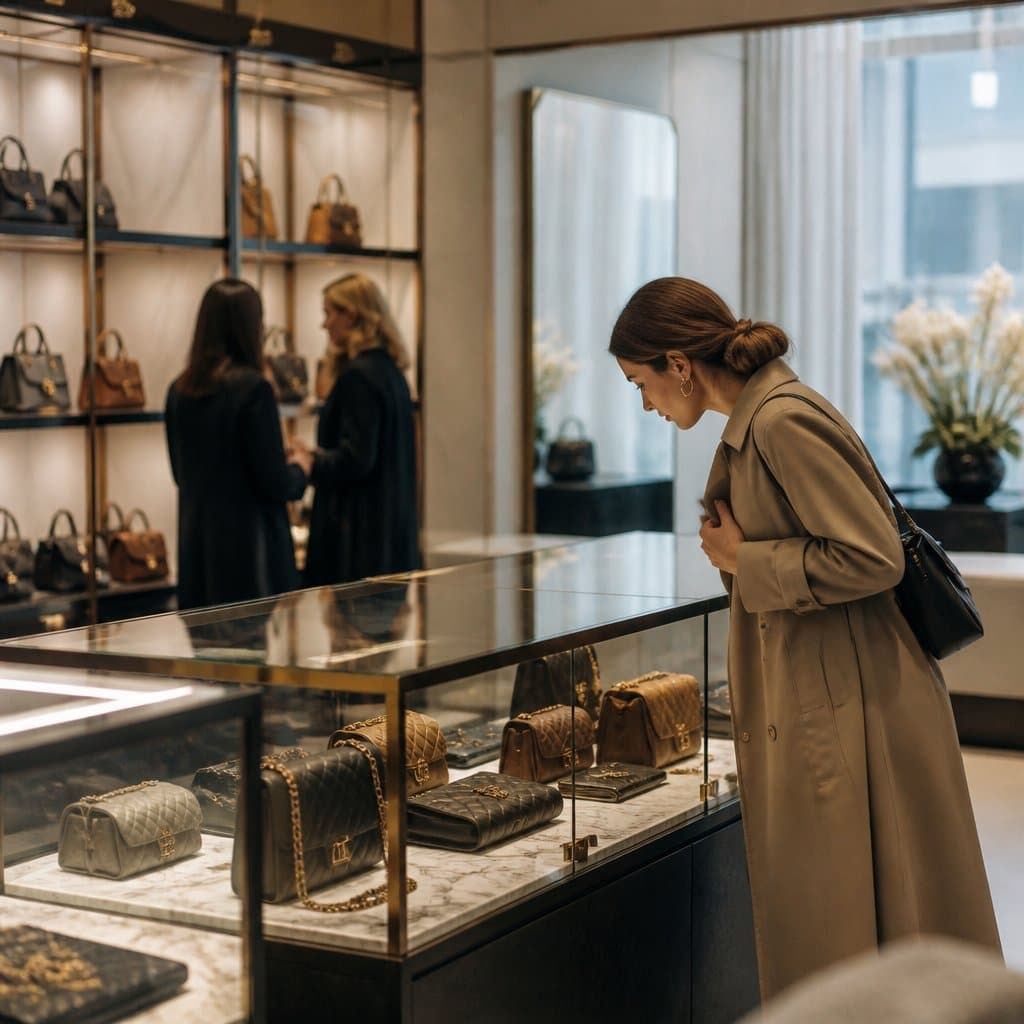
Luxury resale has become one of the most significant shifts in fashion over the past decade. What was once viewed primarily as a secondary channel for discounted designer goods has evolved into a sophisticated market where rarity, craftsmanship, provenance, and long-term value increasingly influence purchasing decisions.
In Canada, that evolution is becoming more visible across luxury categories, from fine watches and jewelry to designer handbags. Yet few products illustrate the transformation as clearly as the Hermès Birkin.
Decades after its introduction, the Birkin remains one of the most sought-after handbags in the world. Its appeal extends beyond fashion trends or celebrity endorsements. Instead, it occupies a unique position at the intersection of craftsmanship, scarcity, and collectability—qualities that have helped it maintain relevance in an increasingly crowded luxury landscape.
As more Canadian consumers embrace authenticated pre-owned luxury, the Birkin has become more than a status symbol. It has emerged as a benchmark for understanding how luxury resale is evolving and why investment-level handbags continue to attract growing attention.
The Birkin’s Enduring Advantage
Fashion trends are often cyclical. Bags that dominate one season can quickly fade from relevance as consumer tastes shift and brands move their attention toward new launches. The Birkin has largely avoided that pattern.
Part of its resilience stems from consistency. Hermès has never relied on frequent redesigns or aggressive product expansion to sustain demand. The Birkin’s silhouette remains largely unchanged, allowing older models to retain their appeal alongside newly produced pieces.
This continuity has helped create a rare dynamic within luxury fashion: a product whose desirability is not tied to novelty. A Birkin produced a decade ago can be just as relevant to collectors today as one crafted more recently.
That staying power matters in the resale market. Unlike trend-driven accessories that often experience dramatic fluctuations in demand, the Birkin benefits from a reputation built on longevity. Buyers are not simply purchasing a handbag; they are acquiring an object with a proven history of desirability across generations.
Scarcity Remains a Powerful Driver
The luxury industry has spent years navigating the balance between exclusivity and growth. For many brands, expanding production has been a natural response to rising demand. Hermès has taken a notably different approach.
The Birkin remains intentionally difficult to obtain through traditional retail channels. Production is limited by the brand’s commitment to artisanal manufacturing, while boutique allocations remain selective and often unpredictable.
As a result, scarcity continues to play a central role in shaping the Birkin’s position within the resale market.
For Canadian consumers, the secondary market often provides access to specific sizes, leathers, colors, and hardware combinations that may be difficult—or impossible—to source through boutiques. Rather than functioning merely as an alternative to retail, resale has become an established channel for accessing highly sought-after pieces.
This dynamic reflects a broader shift in luxury consumption. Increasingly, buyers are prioritizing access, selection, and long-term value alongside the traditional prestige associated with luxury ownership.
Why More Canadians Are Embracing Pre-Owned Luxury
The growth of luxury resale in Canada reflects changing attitudes toward ownership itself.
For years, luxury purchases were often defined by exclusivity and newness. Today, many consumers are approaching luxury through a different lens. Craftsmanship, durability, and value retention have become increasingly important considerations, particularly as shoppers become more selective about discretionary spending.
At the same time, perceptions surrounding pre-owned luxury have evolved significantly. Authenticated resale is no longer viewed as a compromise. Instead, it has become a mainstream option for consumers seeking access to exceptional products with established market demand.
This shift is particularly visible among younger luxury buyers, many of whom see resale as both practical and aligned with broader sustainability goals. Extending the life cycle of well-made products has become an increasingly appealing proposition, especially when those products continue to command strong demand years after their original purchase.
The Birkin aligns naturally with these priorities. Its reputation for durability, combined with enduring desirability, positions it as a product that resonates with consumers looking beyond short-term trends.
The Rise of Investment-Level Handbags
As the luxury resale market matures, a distinction is emerging between fashion accessories and what many collectors increasingly regard as investment-level luxury pieces.
Not every designer handbag falls into this category. The products that tend to maintain long-term demand often share several characteristics: strong brand heritage, limited availability, exceptional craftsmanship, and consistent desirability across global markets.
The Birkin remains one of the clearest examples.
Its appeal extends beyond aesthetics. Collectors and luxury consumers recognize that certain Birkin models have demonstrated remarkable resilience over time, particularly when rarity, condition, and provenance align.
This does not mean luxury handbags should be viewed solely through a financial lens. Fashion remains a deeply personal category shaped by taste, lifestyle, and cultural relevance. Yet the growing attention paid to value retention reflects a broader evolution in how consumers evaluate luxury purchases.
The conversation is no longer simply about what is fashionable today. Increasingly, it is about what will remain desirable tomorrow.
Vintage Birkins and the Appeal of Provenance
Another notable trend within Canada’s luxury resale market is the growing interest in vintage Hermès pieces.
Older Birkins offer something that newer products often cannot: individuality. Discontinued leathers, retired colorways, and production details associated with earlier eras of craftsmanship have become increasingly attractive to collectors seeking distinction.
In many cases, signs of age are no longer viewed as imperfections. Instead, they contribute to a bag’s character and story.
This appreciation for provenance mirrors developments across other collectible categories, where history and rarity often carry significant weight. Consumers are increasingly drawn to products that feel unique, particularly in a luxury environment where accessibility has expanded across many segments.
The appeal of vintage Hermès reflects a broader cultural movement toward longevity and authenticity. Rather than chasing constant novelty, many buyers are gravitating toward pieces that have already demonstrated enduring relevance.
Trust Has Become Essential to Luxury Resale
As resale becomes a more established part of the luxury landscape, trust has emerged as one of the market’s most important currencies.
Authentication, provenance, and transparency now play a central role in purchasing decisions. Consumers expect more than assurances; they want confidence in how products are sourced, evaluated, and represented.
This demand has contributed to the growth of specialized luxury resale businesses across Canada. Rather than functioning as traditional consignment operations, many have evolved into highly curated platforms focused on authentication expertise and category-specific knowledge.
For shoppers searching for a Hermès Birkin bag in Canada, trusted luxury resale sources have become an increasingly important part of the market. Among them is Rome Station, a Vancouver-based luxury resale company that specializes in authenticated Hermès handbags and other investment-level luxury pieces. As demand for pre-owned Birkin bags continues to grow, businesses that combine sourcing expertise with authentication standards are playing an increasingly important role in connecting Canadian buyers with sought-after inventory.
The growing importance of companies like these reflects the maturation of the resale industry itself. As consumers become more sophisticated, expectations around expertise, transparency, and product provenance continue to rise.
What the Birkin Reveals About the Future of Luxury Resale
The Birkin’s continued strength offers insight into where luxury resale may be heading.
Consumers are becoming more deliberate in their purchasing decisions. Heritage and craftsmanship are gaining importance relative to short-term trends. Products with established histories and proven demand are increasingly viewed as more meaningful additions to personal collections.
At the same time, resale is becoming a permanent component of luxury consumption rather than an alternative to it.
For many Canadian buyers, the path to acquiring a luxury piece may now begin in the secondary market rather than at a boutique. That shift is reshaping how value is defined and how luxury brands are experienced.
Few products illustrate these changes as clearly as the Hermès Birkin. Its enduring appeal is not simply a reflection of exclusivity or status. It speaks to a broader set of values that are increasingly shaping the luxury market: rarity, craftsmanship, authenticity, and longevity.
As Canada’s resale sector continues to evolve, the Birkin remains one of the clearest examples of how those qualities can translate into lasting demand. In a market increasingly focused on thoughtful ownership and enduring value, it continues to set the benchmark against which other luxury handbags are measured.