Most diets tell you what to eat and what to avoid. The ayurvedic diet works differently; it asks what your body needs right now.
Rooted in one of the world’s oldest healing traditions, this system doesn’t hand you a fixed meal plan. Instead, it looks at your body’s current state and adjusts your food around that.
In this blog, you’ll learn how the dosha system works, what principles guide food choices, and why the same food can help one person and harm another.
If you’ve ever felt like no diet quite fits you, this might be the perspective that finally makes sense. Let’s get into it.
What Is Ayurvedic Diet?
The ayurvedic diet is a food system rooted in Ayurveda, one of the world’s oldest healing traditions. At its core, food is chosen to counter internal imbalance, not to follow a universal set of rules.
It centers on whole, fresh, and natural foods eaten with full attention.
Here’s what sets it apart from other diets:
- It’s not one-size-fits-all; it changes per individual
- Food is a tool to correct an imbalance, not just to nourish
- It’s not a “healthy food list”, it’s a complete system
Many people assume it’s just about eating clean. It’s much more structured than that.
The Core Idea: Eating Based on Your Dosha
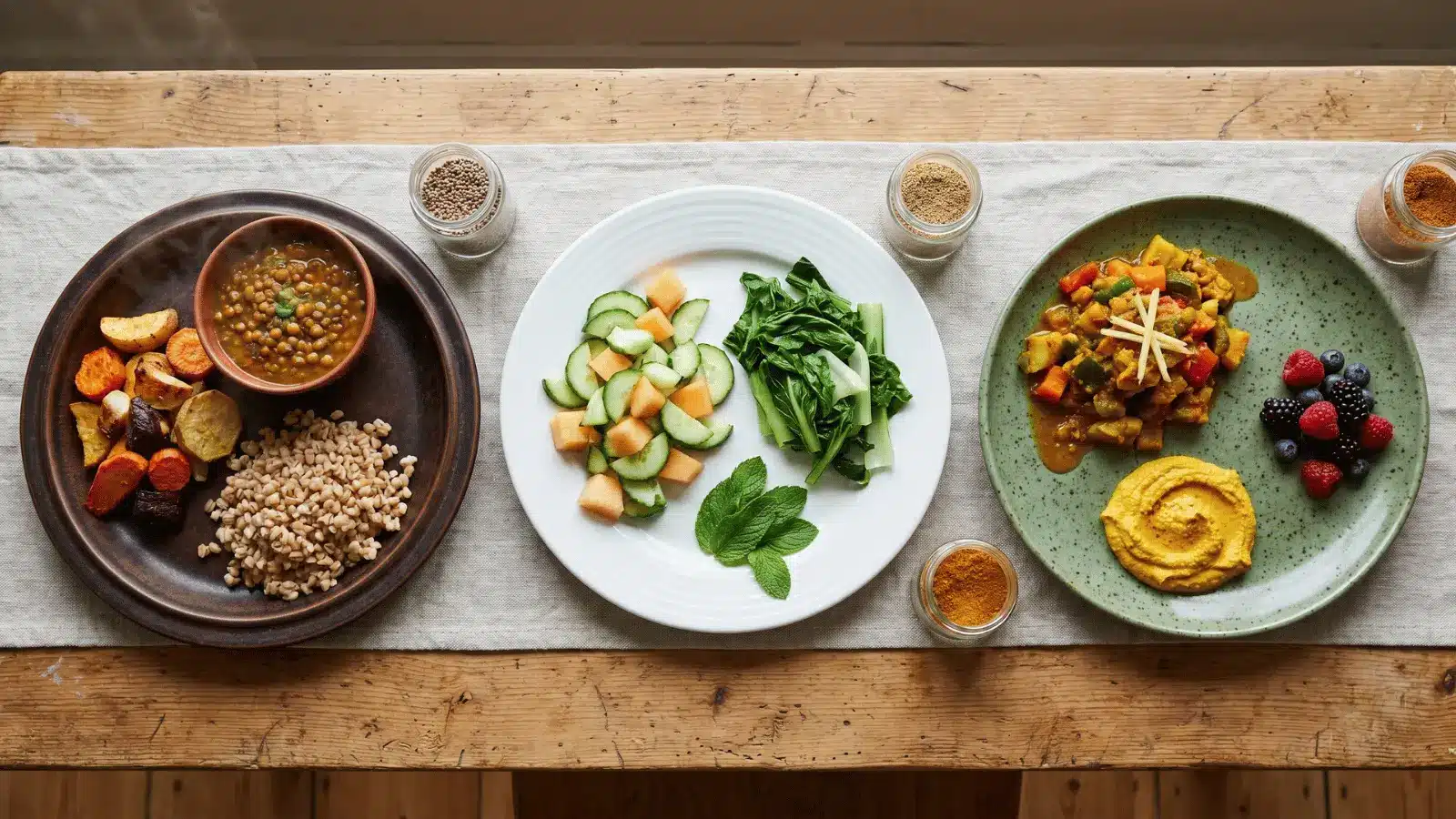
Everything in the ayurvedic diet connects back to three doshas, Vata, Pitta, and Kapha. Each dosha has natural qualities:
- Vata: dry, cold, light
- Pitta: hot, sharp, intense
- Kapha: heavy, slow, oily
When one dosha goes out of balance, your body starts showing symptoms. You might feel too cold, too inflamed, or unusually sluggish.
The response? Eat foods that carry the opposite qualities.
People think you should eat according to your dosha type. That’s not how it works. You eat for yourimbalance, whatever is off in your body right now.
Key Principles that Define the Ayurvedic Diet
Regardless of dosha type, a few core rules apply to everyone following the ayurvedic diet. These principles form the foundation of how the system works on a daily basis.
- Whole foods first: Fresh, natural, and closest to their original form
- Warm, cooked meals: Pre-broken-down food eases the load on digestion
- Mindful eating: Calm, distraction-free meals for better absorption
- Avoid processed foods: Packaged items slow digestion and build up toxins
All four principles connect back to one idea: digestion. In Ayurveda, even the right food eaten under the wrong conditions can create problems rather than solutions.
💡 Tip: Eating your largest meal at midday when digestive fire is naturally strongest is one of the simplest Ayurvedic habits to start with and often the one that makes the most noticeable difference early on.
What Each Dosha Eats and Why
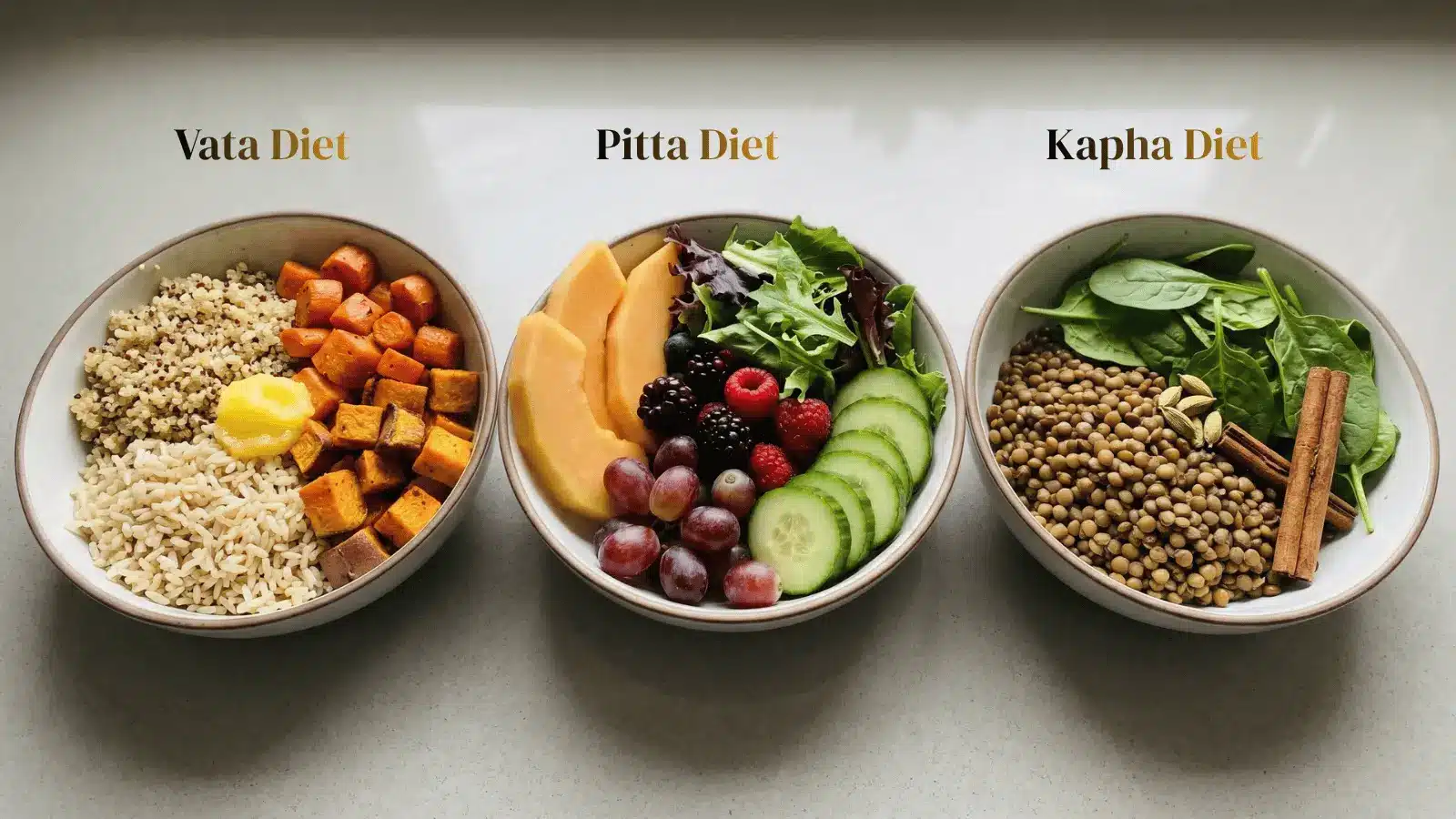
The food choices for each dosha follow the same law of opposites, but applied to very specific imbalances.
1. Vata Diet Logic (Dry + Cold Imbalance)
Vata imbalance shows up as dryness, cold extremities, irregular digestion, and anxiety.
Warm, moist, and grounding foods are the fix; cooked grains, ghee, root vegetables, and warming spices like ginger and cinnamon work well here.
Raw, cold foods like salads and smoothies increase dryness and make the imbalance worse.
2. Pitta Diet Logic (Hot + Intense Imbalance)
Pitta imbalance brings excess heat, inflammation, acid reflux, sharp hunger, and irritability.
Cooling and calming foods help reduce that heat;fruits, leafy greens, cucumber, and mild spices are all strong choices.
Spicy, fried, or fermented foods are the worst options here. They add heat to a system that already has too much.
3. Kapha Diet Logic (heavy + Slow Imbalance)
Kapha imbalance creates heaviness, slow metabolism, congestion, low energy, and weight gain. Light, dry, and stimulating foods help here.
Vegetables, legumes, and spices like black pepper and turmeric activate digestion.
Oily, heavy, or sweet foods deepen the sluggishness. They’re exactly the opposite of what’s needed.
For a quick and easy reference, you’ll find a clear, detailed table summarizing all of this right after this section.
How Food Selection Actually Works in Ayurveda?
Every food carries specific qualities, hot or cold, dry or oily, heavy or light. These qualities interact directly with your body’s current condition.
The logic is simple: if your body has too much of one quality, you eat foods that carry the opposite.
This is called the law of opposites, and it’s the engine behind every food decision in Ayurveda.
| Body Condition | Quality to Counter It | Food Approach | Example Foods |
|---|---|---|---|
| Feeling cold | Warmth | Eat warm, heating foods | Ginger, cooked grains, soups |
| Feeling dry | Moisture + oiliness | Eat moist, oily foods | Ghee, avocado, sesame oil |
| Feeling heavy or sluggish | Lightness | Eat light, easy-to-digest foods | Leafy greens, lentils, light spices |
| Feeling overheated | Cooling | Eat cooling, calming foods | Cucumber, coconut, fresh fruits |
| Feeling anxious or scattered | Grounding | Eat dense, grounding foods | Root vegetables, cooked oats, nuts |
| Feeling inflamed | Soothing | Eat mild, anti-inflammatory foods | Turmeric, leafy greens, mild herbs |
This has nothing to do with calories or macros. It’s purely about how a food’s natural qualities interact with what your body is experiencing right now. Once your condition shifts, your food choices shift with it.
Common Dietary Rules Unique to Ayurveda
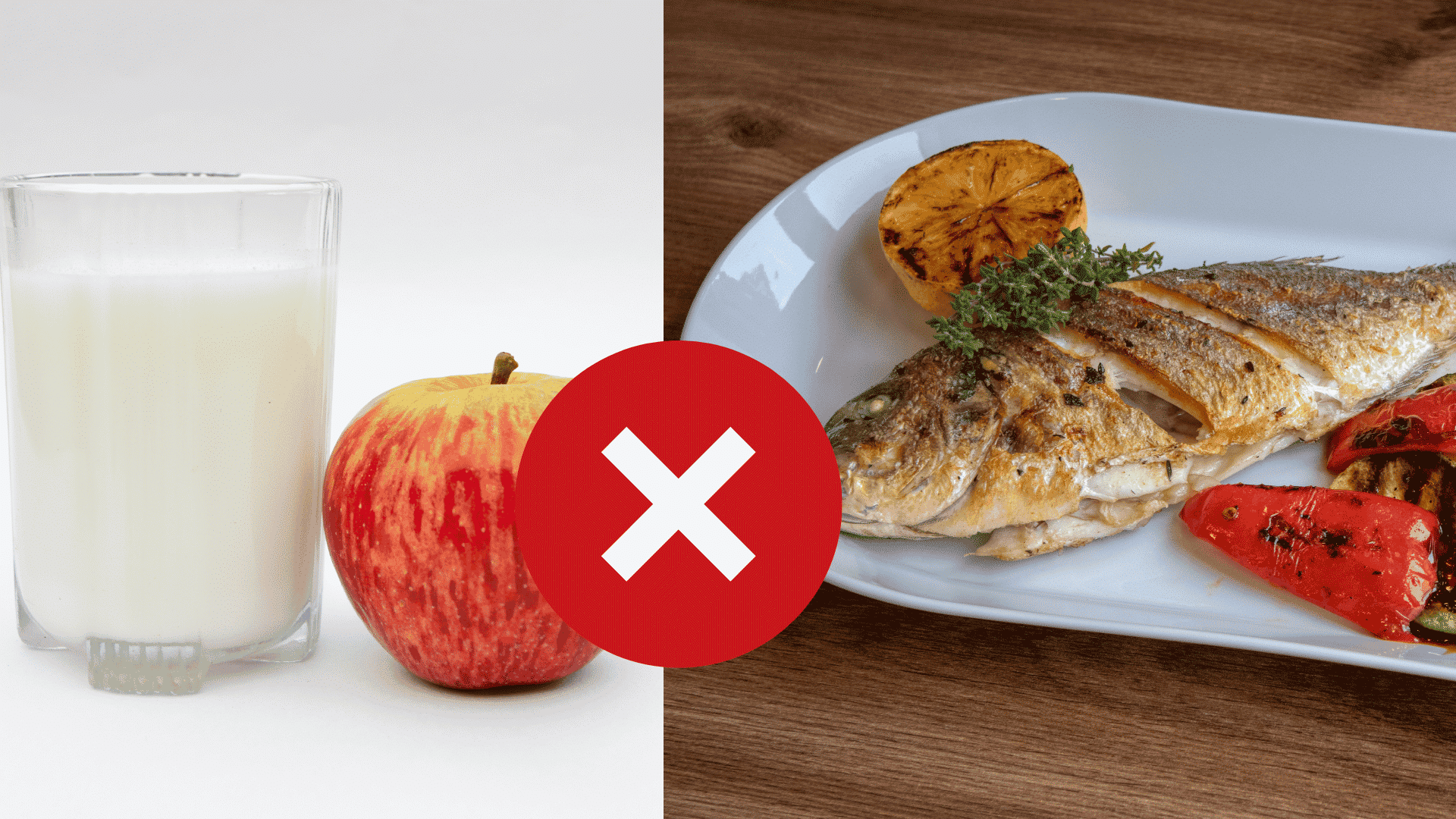
Beyond dosha-based food choices, Ayurveda follows a set of dietary rules rarely found in any other nutrition system.
These habits shape how food is combined, timed, and prepared for better results:
Food Combining
Certain foods should never be eaten together in Ayurveda. Milk and fruit, fish and dairy, or beans and cheese are classic examples.
These combinations are believed to confuse digestion, slow nutrient absorption, and allow toxins to quietly accumulate inside the body over time.
Seasonal Eating
Your plate should shift with the weather, not stay fixed year-round. Lighter, cooling foods suit warmer months, while heavier, warming meals belong in winter.
Eating out of sync with the season puts unnecessary strain on digestion and can gradually push a dosha further out of balance.
The Role of Ghee
Ghee holds a unique place in Ayurvedic cooking that no other fat quite matches.
It is believed to strengthen digestive fire, improve nutrient absorption, and carry the healing properties of spices deeper into the body’s tissues when used consistently in daily meals.
Why This Diet Focuses on Balance, Not Restriction
There’s no fixed list of “good” or “bad” foods in the ayurvedic diet. The same food can be helpful for one person and harmful for another.
Ghee is great for Vata, but should be kept minimal for Kapha. Spicy food can benefit Kapha but worsen a Pitta imbalance.
Context decides everything; your body’s current state, the season, and how the food is prepared all factor in. This makes it one of the most flexible dietary systems around.
It adapts to you, not the other way around. Restriction isn’t the point; making the right call for the right moment is.
Limitations and Scientific Perspective
The ayurvedic diet carries thousands of years of traditional wisdom, but modern science has only validated parts of it so far.
Going in with an informed perspective helps you get the most from the system without unrealistic expectations:
What Science Supports: Several ayurvedic principles align with what modern nutrition research consistently recommends. These areas have solid backing across multiple studies and dietary guidelines. (Source)
- Eating whole, fresh, minimally processed foods
- Mindful, distraction-free eating habits
- Reducing packaged and heavily processed foods
- Prioritizing cooked meals over raw foods for easier digestion
Where Evidence Remains Limited: Some foundational elements of the system still lack strong clinical validation through conventional scientific methods. (Source)
- The dosha classification system in modern medicine
- Food combining rules, like avoiding milk with fruit
- Consistency of dosha assessments across practitioners
- Specific therapeutic claims tied to individual foods
A Balanced Takeaway
None of this makes the system without value. Many people report genuine improvements from following ayurvedic dietary principles. The strongest approach is to treat it as a complementary framework, useful alongside, not as a replacement for, evidence-based nutrition and medical advice.
Final Thoughts
The ayurvedic diet is not a fixed meal plan; it is a system that reads your body and responds accordingly.
Every principle covered here, from dosha logic and food qualities to seasonal eating and mindful habits, points back to one idea: balance over restriction.
A well-structured ayurvedic diet plan does not ask you to follow someone else’s rules. It asks you to pay attention to what your body is telling you right now and adjust from there.
That shift in thinking is what makes an ayurvedic lifestyle feel sustainable rather than temporary.
Science supports some parts, tradition carries the rest, and personal experience fills the gap between the two.
Start small, stay consistent, and let the results speak for themselves.
Tried an ayurvedic approach to eating? Share your experience or favorite dosha-balancing meal in the comments below!
Frequently Asked Questions
How Do I Find out Which Dosha I Am?
Start with a dosha self-assessment based on your physical traits and digestion patterns. A certified Ayurvedic practitioner gives the most accurate result.
Is the Ayurvedic Diet Good for Weight Loss?
Weight loss isn’t the goal. But Kapha-balancing foods can support metabolism naturally. Any weight change is a side effect of restored balance, not the target.
What Should You Eat First Thing in The Morning According to Ayurveda?
Warm water or herbal tea is recommended first. Follow it with a light, warm breakfast. Cold or raw foods are best avoided in the early morning.