


Feet up. Stress down. That’s the whole idea.
Long hours on your feet or sitting all day can leave the body feeling heavy and drained. This simple yoga pose offers an easy way to pause and reset.
Legs Up the Wall may look like doing nothing, but it gently supports circulation, eases tension, and brings the body into a calm state without effort.
This guide breaks down one of the simplest yet most effective yoga poses out there.
No complicated moves. No strain. Just a few quiet minutes that help the body feel lighter, more relaxed, and ready to take on the rest of the day or wind down at night.
What Does Legs Up The Wall Mean?
Think of it as the easiest reset button the body can get. Legs Up the Wall is a simple yoga pose where the back stays on the floor while the legs rest straight up against a wall.
No balancing, no effort, just letting gravity do its thing.
The position gently shifts blood flow, takes pressure off the lower body, and puts the body into a calm, supported state.
It looks almost too easy to matter, but that’s exactly what makes it so effective.
How To Do It Correctly?
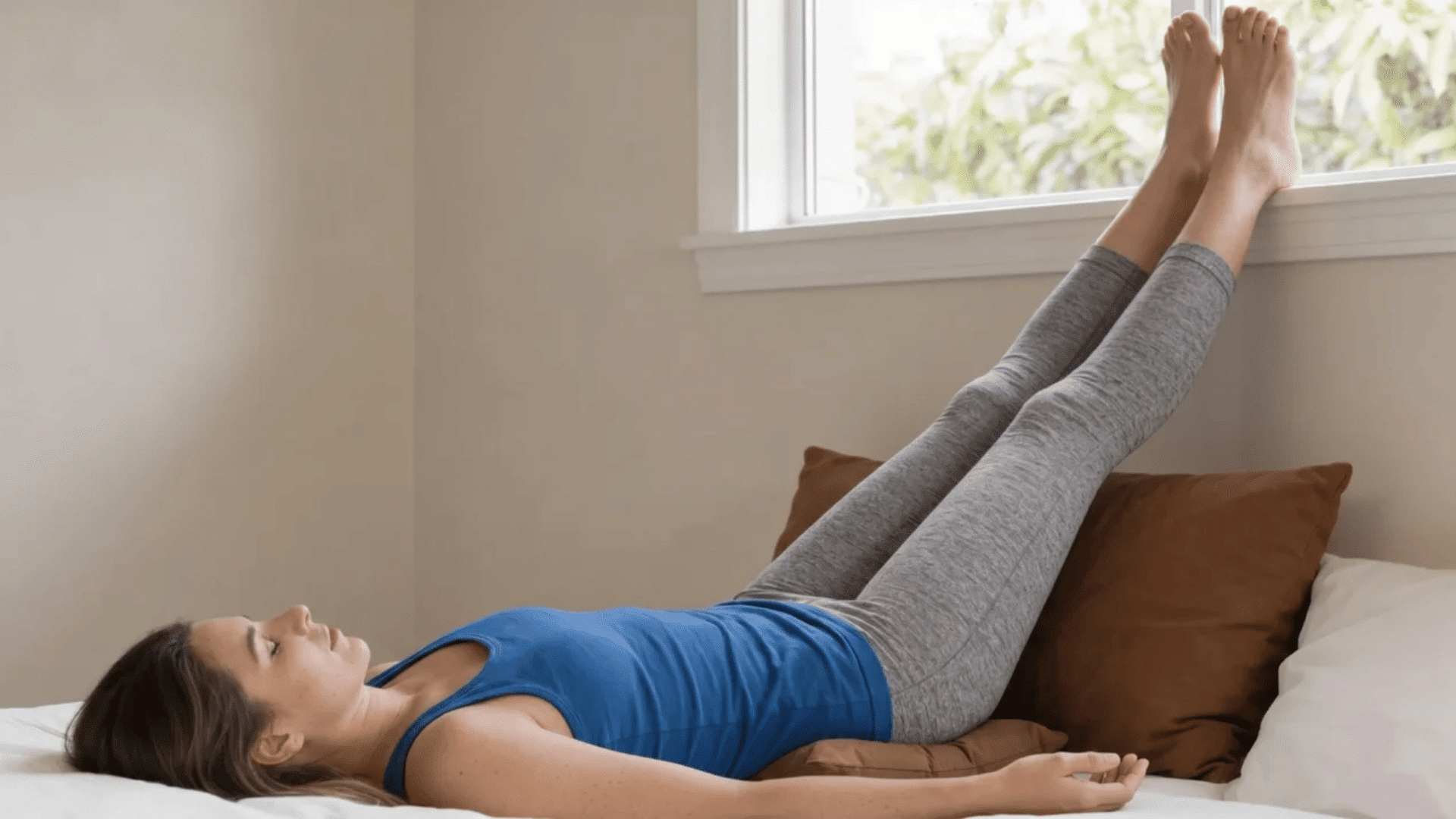
Getting into this pose is simple, but small tweaks make a big difference in comfort and results.
- Position: Sit sideways next to a wall. Gently lie back while swinging the legs up. No rush, no struggle.
- Alignment: Bring hips as close to the wall as feels comfortable. Let the legs stay soft, not stiff. Arms can rest by the sides with palms facing up.
- Support: Place a cushion or folded blanket under the hips or lower back for extra ease. This adds a light lift and feels more relaxing.
The goal is not perfection. The goal is comfort. If it feels easy and calming, it’s being done right.
Legs up The Wall Benefits
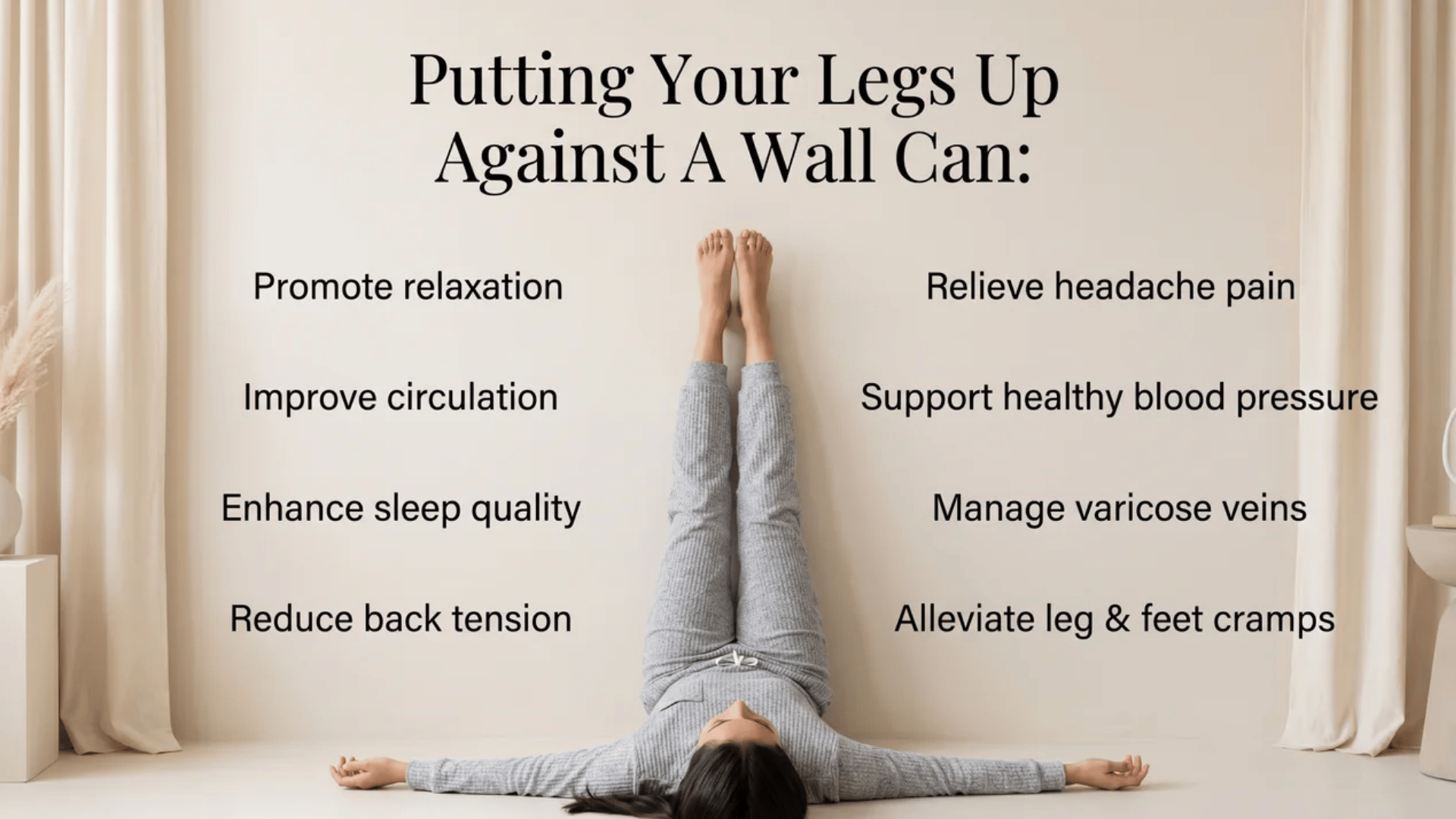
These simple leg benefits on the wall may look easy, but it quietly does a lot for the body and mind.
- Improves Blood Circulation: Helps blood flow back to the heart, which can reduce swelling in feet and ankles.
- Reduces Leg Fatigue And Swelling: Gives tired legs a break and eases that heavy, puffy feeling after long hours on your feet.
- Promotes Relaxation And Stress Relief: Signals the body to slow down, helping stress melt away and calm kick in quickly.
- May Support Better Sleep: Prepares the body for rest, making it easier to fall asleep and stay asleep.
- Eases Lower Back And Hip Tension: Takes pressure off the lower back while gently loosening tight hips.
- Helps With Mild Headaches: Can ease tension headaches by improving circulation and calming the body.
- Supports Lymphatic Flow: Encourages natural fluid movement that helps clear waste from the body.
- Gentle For Beginners: Simple, low-effort pose that almost anyone can do without needing strength or flexibility.
A few minutes in this position can go a long way, making it a solid addition to any daily routine.
How Long Should You Do Legs Up The Wall?
Start small and gradually increase the duration as you go, based on your pace and comfort.
Stay relaxed and avoid pushing too long. Comfort matters more than duration.
| Level | Recommended Duration | Purpose |
| Beginners | 2–4 minutes | Get comfortable with the pose |
| General Practice | 5–20 minutes | Improve circulation and relax |
| Ideal Range | 10–15 minutes | Maximize restorative benefits |
When To Avoid Or Be Careful
Keeping your legs on the wall may feel easy, but the body still needs the right conditions to enjoy it safely. A little awareness goes a long way here.
People with eye conditions like glaucoma should skip this pose. The inverted position can increase pressure in the eyes, which may make things worse instead of better.
Those dealing with serious heart issues should check with a doctor before trying it. Even gentle poses can affect blood flow, so it’s better to be sure it’s safe.
If there’s any neck or back injury, comfort comes first. Adding support like a cushion can help, but if there’s even slight pain or strain, it’s best to avoid the pose altogether.
During pregnancy, small adjustments can make a big difference. The pose may still be possible with modifications, but proper positioning is important to stay comfortable and supported.
Best Time To Do Legs Up The Wall
Timing can change how effective this pose feels. It works at different points in the day depending on the goal.
- After Work Or Long Sitting: Helps reduce leg heaviness and swelling caused by inactivity
- Post-Workout: Aids recovery by easing muscle fatigue and improving circulation
- Before Bed: Calms the body and supports better sleep by slowing the nervous system
- During Stressful Moments: Acts as a quick reset to relax the mind and body
Keeping the timing aligned with the goal makes the results more noticeable. Even 10 minutes at the right time can make a clear difference.
Tips To Make It More Effective
A few small changes can make this simple pose feel even better and more relaxing.
- Breathing: Slow, deep breaths help the body relax faster.
- Environment: A quiet, dim space makes the pose more calming.
- Consistency: Daily practice improves results over time.
- Add-ons: Eye mask, music, or cushions add extra comfort.
Conclusion
Legs Up the Wall shows that doing less can sometimes give more.
No pressure to get it perfect, just a simple position that helps the body reset and slow down.
A few quiet minutes can ease heavy legs, calm the mind, and bring a sense of balance that often gets lost in busy routines.
It slips easily into the day, whether it’s a short break, post-work recovery, or a gentle way to unwind before bed.
Every body responds a little differently, and that’s part of the experience.
Tried it already or planning to give it a go? Drop a comment and share what changed, what felt good, or even what didn’t. Real feedback makes it easier for others to try it too.
Frequently Asked Questions
What Chemical Is Released when You Stretch?
Stretching releases endorphins, which are neurotransmitters produced by the central nervous system and pituitary gland. These chemicals act as natural pain relievers and mood elevators, contributing to the feeling of relaxation, euphoria, and reduced muscle soreness.
What Are the 4 Happy Hormones?
The four primary “happiness hormones” are dopamine, serotonin, oxytocin, and endorphins, which are neurotransmitters that regulate mood, pleasure, bonding, and pain relief.
What Muscles Benefit from Legs up The Wall?
Legs Up the Wall provides passive stretching that can help release tension in the hamstrings, calves, and lower back.