


Walk into a good bakery and your eyes reach the glass before they reach the menu board. The case is the first piece of styling a customer meets. It sets a price expectation, signals freshness and quietly decides what gets ordered. Most small shops still treat it as equipment rather than design.
The gap shows up fastest in frozen product. A gelato counter, a grab and go cabinet or a wall of pints all run on foodservice freezers built for constant door traffic. Good equipment is invisible when it works. When it stops working, the whole shelf looks tired long before anything actually spoils.
Why Does a Glass Door Change a Counter?
A solid door turns product into inventory. Nobody browses a white metal box, so anything behind it has to be listed on a board and imagined. Glass turns the same storage into a shop window. The stock does its own advertising, and the customer arrives at the till already decided.
There is a practical side too. A browsing customer who can see the shelf spends less time holding a door open. That matters in a small unit where the same cabinet is opened hundreds of times across a shift. Visibility is a merchandising choice and an operational one at once.
What Does a Case Tell You Before You Order?
Customers read a case in about two seconds, mostly without noticing they are doing it. Four signals do almost all the work.
- How full the shelves look, and whether gaps are deliberate.
- Whether items face forward or sit at odd angles.
- Whether labels are legible from standing height.
- Whether the glass is clear, fogged or frosted at the edges.
None of that is on the menu. All of it feeds the same judgment about whether the shop is looked after. A half empty case at four in the afternoon reads as either popular or neglected, and the surrounding tidiness decides which.
Cold Storage Quietly Sets the Menu
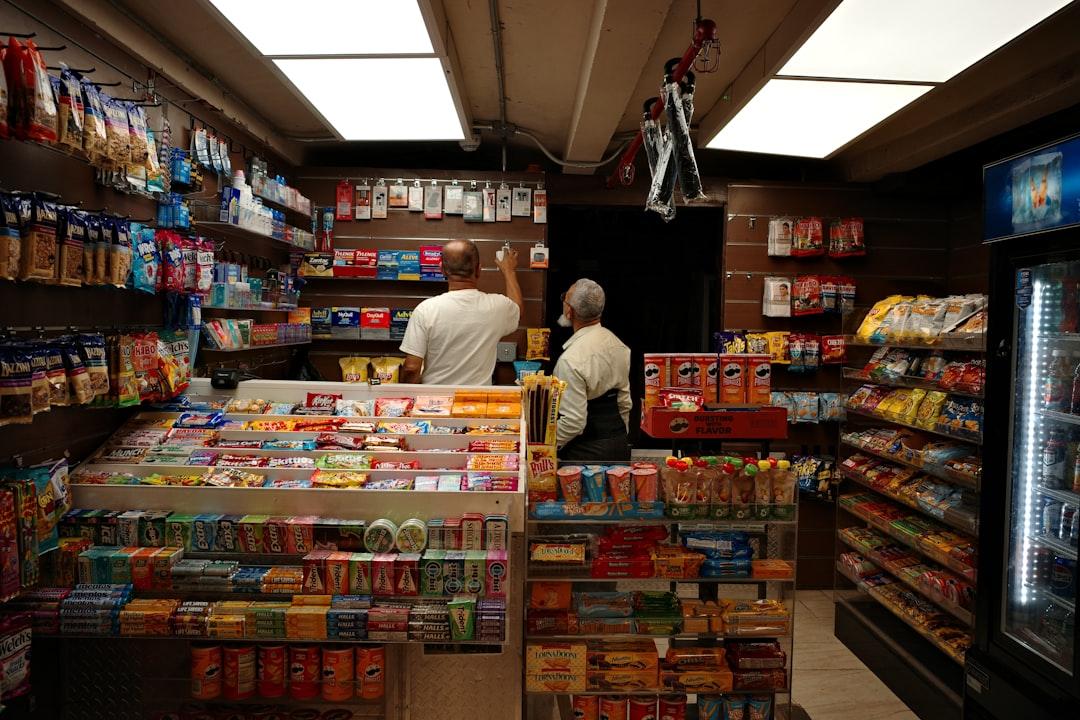
Every small food business runs into the same ceiling. You can only sell what you can hold at temperature, in the footprint you have, with the door swings your layout allows. That constraint shapes the menu far more than most owners admit.
It is why a tiny cafe carries three desserts rather than nine. It is why a corner shop stocks single serve items near the door and bulk packs at the back. The layout is not laziness. It is the cold chain deciding the range, and the menu board catching up afterwards.
Merchandising Borrows From Fashion Retail
Food display and clothing display run on the same grammar. Sight lines, facing, color blocking and negative space all transfer directly. A rail of sweaters arranged by shade and a shelf of sorbet arranged by shade are solving one problem.
Second hand shops understand this better than most chains do. A good thrifting run works because the hunt is visible, with density and surprise doing the selling. A freezer cabinet can borrow the same energy by grouping flavors rather than lining them up alphabetically.
Color is the underused tool. Deciding which shades sit well with olive green is the same exercise as deciding whether pistachio, lemon and berry belong on one shelf. Put the loudest color at eye level and let the neutrals hold the edges.
Where Does the Waste Actually Happen?
Refrigeration is doing more work globally than most people picture. Figures on the role of refrigeration in the economy put 12% of global food production lost to insufficient cold chains. Better cold chain infrastructure could save around 475 million metric tons of food a year. There are roughly 5.4 billion refrigeration systems running worldwide, and the sector accounts for about 20% of global electricity use.
Those numbers describe farms, trucks and warehouses more than shop floors. Still, the shop floor is where a customer sees the result. Campaigns aimed at cutting food waste usually start in the home kitchen, though a poorly planned case pushes losses upstream and downstream at once.
What Small Shops Get Wrong About Display
The same three mistakes turn up in independent shops everywhere.
- Buying capacity for the busiest week of the year, then running a half empty case for the other fifty one.
- Treating the case as storage, so back stock and display stock share a shelf.
- Choosing a cabinet before choosing the layout, which locks the queue into an awkward shape.
Each one is a design decision disguised as a purchase. Fixing them costs attention rather than money, which is why the best small shops often look more expensive than they are.
Where Design and Cold Storage Meet
A display case is a piece of retail theater that happens to run on a compressor. Treat it as furniture and it will look like furniture. Treat it as a shop window and it earns its footprint.
Three habits carry most of the benefit for a small food business.
- Style the case once a day, in daylight, from the customer side of the glass.
- Keep back stock somewhere the customer cannot see.
- Group by color and category rather than by delivery date.
Frequently Asked Questions About Display Freezers
Why Do Cafes Use Glass Door Freezers?
Glass turns stored product into visible product, so the stock advertises itself without extra signage. It also lets a customer decide before opening the door. The result is a shorter decision at the counter and less time spent holding a cabinet open.
Does a Display Case Really Affect Sales?
Presentation is the first information a customer gets, and it arrives before any menu copy. Facing, fill level and lighting all shape the judgment about freshness and price. Those judgments happen in a couple of seconds and are hard to undo afterwards.
What Should a Well Merchandised Case Look Like?
Items should face forward, sit at consistent depth and carry labels readable from standing height. Gaps should look intentional rather than accidental. Color grouping is easier for a customer to scan than alphabetical or delivery order.
How Much Food Is Lost to Weak Cold Chains?
Around 12% of global food production is lost because cold chains are insufficient. Stronger infrastructure could save roughly 475 million metric tons annually. The same figures put refrigeration at about 20% of global electricity use, spread across some 5.4 billion systems. Most of that loss happens well before the retail shelf, in transport and storage.