

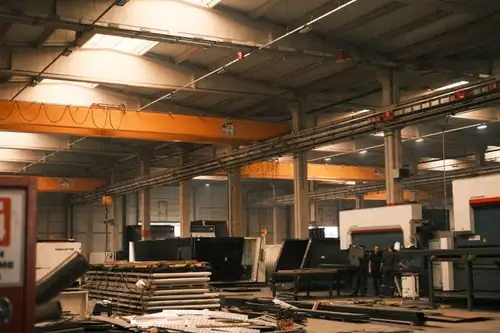
A productive warehouse depends on far more than having enough floor space and shelving. Every day, workers receive shipments, move pallets, retrieve inventory, prepare orders, and load outbound freight, often while operating around heavy equipment.
Choosing the right tools can make these processes faster and safer, while poor equipment planning creates bottlenecks and unnecessary downtime. Maintenance is equally important because even dependable machinery eventually requires inspections, repairs, and replacement components.
Whether managing a distribution center, manufacturing warehouse, or smaller storage facility, operators should think about equipment as an interconnected system. From lift equipment and conveyors to storage solutions and safety tools, each component contributes to keeping goods and people moving efficiently.
Keep Lift Equipment Ready for Daily Work
Warehouses and industrial facilities often rely on aerial equipment for maintenance, installation, inventory access, and other work performed above floor level. JLG equipment includes boom lifts, scissor lifts, and telehandlers used for a range of elevated-access and material-handling applications. When one of these machines is out of service, scheduled work may have to wait until the necessary repair is completed.
That makes access to compatible replacement parts an important part of equipment maintenance. Intella Parts Company supplies aftermarket components for JLG equipment, with its catalog including items such as hydraulic hoses, bearings, seal kits, lighting components, and telehandler parts.
Click here to learn more about Intella Parts Company and explore available replacement parts for JLG equipment. When assistance is needed in identifying a component, having the equipment model and serial number available can also help with finding the appropriate part.
A dependable sourcing process can reduce uncertainty surrounding repairs. Maintenance teams should keep accurate equipment records and identify critical components before unexpected downtime disrupts operations.
Choose Forklifts Around Actual Operating Conditions
Forklifts are fundamental to many warehouse operations, but choosing one should involve more than comparing lifting capacity.
A machine needs to suit the environment where it will operate. A warehouse with narrow aisles, high racks, and smooth indoor floors has different requirements from a facility that regularly moves materials outdoors.
Power sources also influence purchasing decisions. Electric forklifts can be practical for indoor operations, while other applications may call for different configurations.
Managers should examine maximum load requirements, lifting heights, aisle widths, operating hours, charging or fueling arrangements, and attachment needs before selecting equipment.
Operator visibility and ergonomics deserve attention as well. Employees may spend substantial portions of their shifts operating these machines, making comfort and control layout practical considerations rather than luxuries.
Most importantly, equipment should be operated according to applicable safety requirements and manufacturer guidance. Productivity gains mean little if inappropriate equipment introduces unnecessary risks for employees, inventory, or the facility itself.
Design Storage Systems for Accessibility
Warehouse storage should maximize useful capacity without making inventory unnecessarily difficult to retrieve.
Pallet racking remains common because it uses vertical space efficiently and can accommodate large quantities of goods. However, the appropriate rack configuration depends on inventory characteristics, turnover rates, and picking methods.
Fast-moving products should generally be easier to access than stock retrieved only occasionally. Heavy products need storage locations and structures capable of supporting their weight safely.
Smaller goods may benefit from shelving, bins, drawers, or modular storage systems that make individual items easier to organize.
Clear labeling is equally important. Employees should not need to search several nearly identical locations to find one product. Barcode systems, warehouse management software, and consistent location identifiers can reduce unnecessary searching.
Storage design should also account for safe clearances, equipment movement, and pedestrian access. Packing inventory into every available inch may increase theoretical capacity while making everyday operations considerably slower.
Use Conveyors Where Repetition Justifies Automation
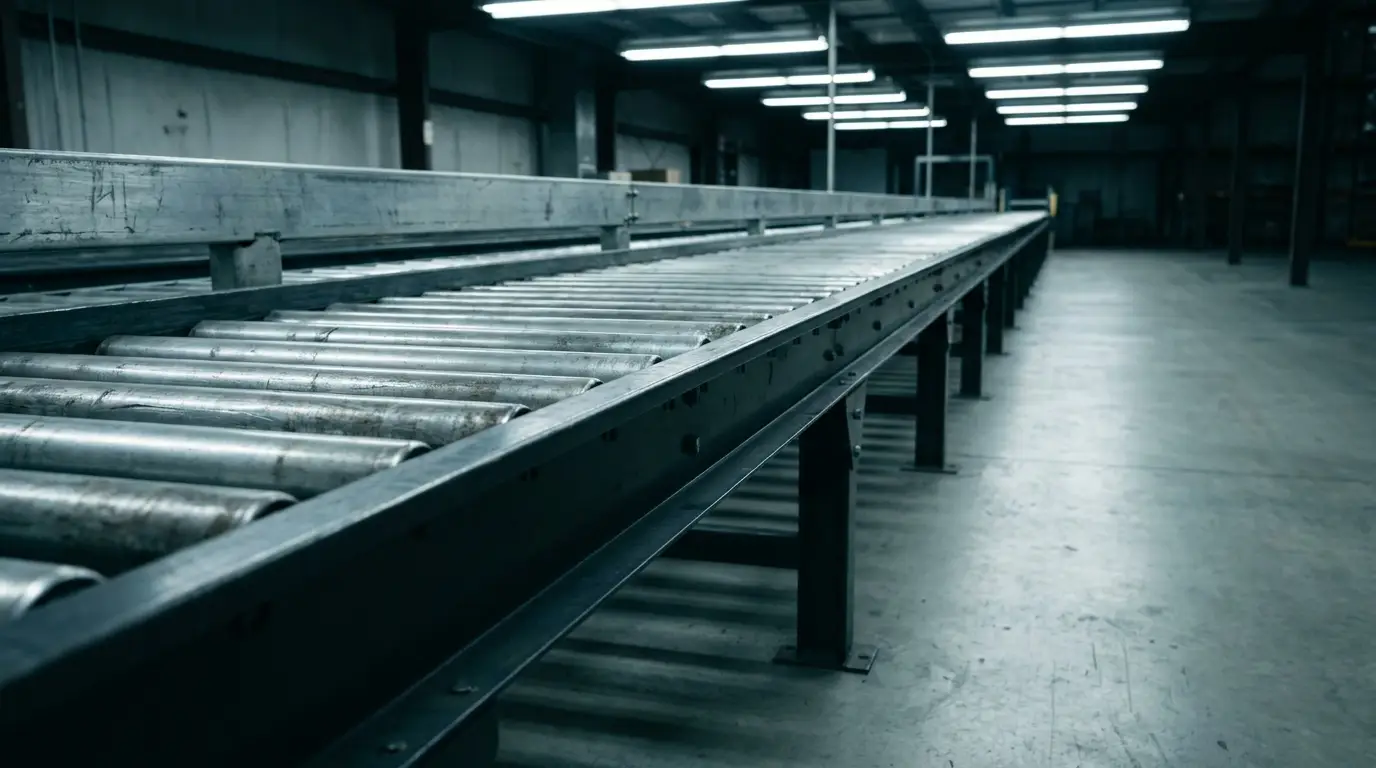
Not every warehouse needs extensive automation.
However, when products repeatedly travel along the same route, conveyors can reduce manual transportation and create a more predictable workflow. They may be useful between receiving, sorting, picking, packing, and shipping areas.
Different products require different conveyor designs. Boxes, loose items, pallets, and unusually shaped goods do not necessarily move effectively using identical systems.
Before investing, study existing movement patterns. Identify how frequently employees transport goods between the same locations and determine whether automation would genuinely reduce labor, handling, or delays.
Flexibility matters too. A system designed around today’s workflow can become restrictive if product dimensions, order volumes, or facility layouts change substantially.
Automation should solve an identifiable operational problem rather than exist simply because automated warehouses look impressive. Sometimes a thoughtfully positioned cart or workstation provides a better return than a complicated conveyor installation that the operation never fully utilizes.
Equip Packing Stations for Efficient Work
Packing stations sit near the end of the fulfillment process, making inefficiencies there particularly noticeable.
Workers need convenient access to boxes, tape, labels, protective materials, scanners, printers, and other frequently used supplies. If employees continually walk across the warehouse to retrieve basic materials, small delays can accumulate across hundreds of daily orders.
Ergonomic design can improve the workspace as well.
Adjustable work surfaces, appropriate matting, accessible storage, and sensible placement of equipment can reduce unnecessary reaching and bending.
Standardization may help where several stations perform similar work. Employees moving between stations should not need to relearn where every tool is located.
At the same time, stations handling unusually large, fragile, or specialized products may need different configurations.
Measure performance before and after changing a packing area. The most attractive workstation is not necessarily the most productive. Good design should reduce unnecessary movement while helping employees pack accurately and consistently.
Make Material-Handling Tools Easy to Access
Not every load requires powered equipment.
Pallet jacks, platform carts, hand trucks, dollies, and other manual material-handling tools remain useful for countless warehouse tasks. They can provide a quick way to move suitable loads without allocating a forklift to every movement.
These tools still require regular inspection and maintenance.
Damaged wheels, handles, forks, or hydraulic components can make ordinary tasks more difficult and potentially unsafe. Employees should have a clear process for reporting defective equipment rather than leaving it in circulation.
Storage location matters too.
If workers regularly spend several minutes searching for an available pallet jack, the facility may have too few units or poor equipment organization.
Assigning designated storage areas can make commonly used tools easier to find while preventing them from becoming obstacles in aisles.
The simplest equipment often produces substantial efficiency improvements when it is available, properly maintained, and positioned where employees actually need it during their shifts.
Build Safety Equipment Into Warehouse Design
Safety equipment should be treated as part of warehouse infrastructure rather than an afterthought.
Guardrails, rack protection, mirrors, barriers, floor markings, signs, and appropriate personal protective equipment can help address different workplace hazards. Exact requirements depend on the facility, equipment, tasks, and applicable regulations.
Separating pedestrian routes from powered-equipment traffic is particularly important where possible.
Clear markings and designated crossing areas can make movement more predictable, but employees still need appropriate training and awareness.
Lighting also deserves attention. Poorly illuminated racks, loading areas, stairs, or workstations can make routine tasks unnecessarily difficult.
Emergency equipment must remain accessible and properly maintained.
Managers should regularly inspect the facility from a worker’s perspective. Damaged barriers, blocked routes, cluttered aisles, or poorly positioned materials may gradually become normalized even though they create avoidable problems.
A safer warehouse is usually an easier warehouse to navigate, making thoughtful safety planning compatible with efficient daily operations.
Make Preventive Maintenance Part of Operations
Equipment maintenance becomes expensive when every repair is an emergency.
A preventive schedule allows teams to inspect machinery, identify wear, replace appropriate components, and address developing problems before equipment unexpectedly fails during a busy shift.
Maintenance records can track service dates, recurring failures, replacement parts, and repair costs.
Over time, those records provide useful information for replacement decisions. A machine requiring increasingly frequent repairs may eventually cost more to keep operating than to replace.
Spare-parts planning deserves similar attention.
Warehouses do not need shelves filled with every imaginable component, but frequently required parts for critical equipment may justify keeping appropriate stock. Less common components should have reliable sourcing channels so maintenance teams know where to obtain them when necessary.
Employees should also report unusual sounds, leaks, warning indicators, or changes in equipment performance promptly.
Ultimately, warehouse equipment performs best when selection, operation, storage, and maintenance are planned together. Forklifts and lifts may receive the most attention, but conveyors, carts, racks, packing stations, safety equipment, and replacement components all influence productivity.
The objective is not owning the largest collection of machinery. It is creating an operation where employees have appropriate equipment available, machines remain properly maintained, and materials move through the facility without unnecessary delays. When those fundamentals are handled consistently, warehouses can improve reliability, limit avoidable downtime, and build operations better prepared for changing inventory volumes and customer demands.