A dirndl may be the centerpiece of a traditional Bavarian outfit, but the right hairstyle is what brings the entire look together. Across Bavaria and the Alpine region, hairstyles have long been considered an essential part of traditional dress, complementing the neckline, silhouette, and formality of the dirndl. From milkmaid braids and elegant crown braids to modern waves and low buns, the best dirndl hairstyles balance tradition with personal style. Fully tied hairstyles like braids and buns work for Oktoberfest and other such long-day events while modern hairstyles are the go to choice with a dirndl at weddings or formal occasions.
The Dirndl Neckline Determines the Hairstyle
Before choosing a hairstyle, consider your dirndl neckline. It dictates more about your hair than personal preference does. Low necklines of dirndl require updos or hairstyles that lift hair away from the neck and shoulders; in this way, the neck looks elongated. In contrast, when the bodice exposes the collarbone and neckline, the hair should complement that exposure rather than cover it as braids pinned up, buns, and crown styles work best with exposed necklines.
Longer open hairstyles and loose waves that fall over the shoulders look good with the high necklines of dirndl blouses. The collar structure provides visual interest at the top of the garment so the hair does not need to do that work.
For square necklines, you can benefit from face-framing hairstyles. Styles with soft layers around the face or braids that create diagonal lines across the crown soften the angular cut of the neckline in a way that blunt hair does not.
Note: Dirndl neckline-oriented hairstyle decision is not a rule to memorize but a proportional logic that, once you see it, makes every hairstyle decision easier.
Traditional Braids: The Signature Bavarian Hairstyle
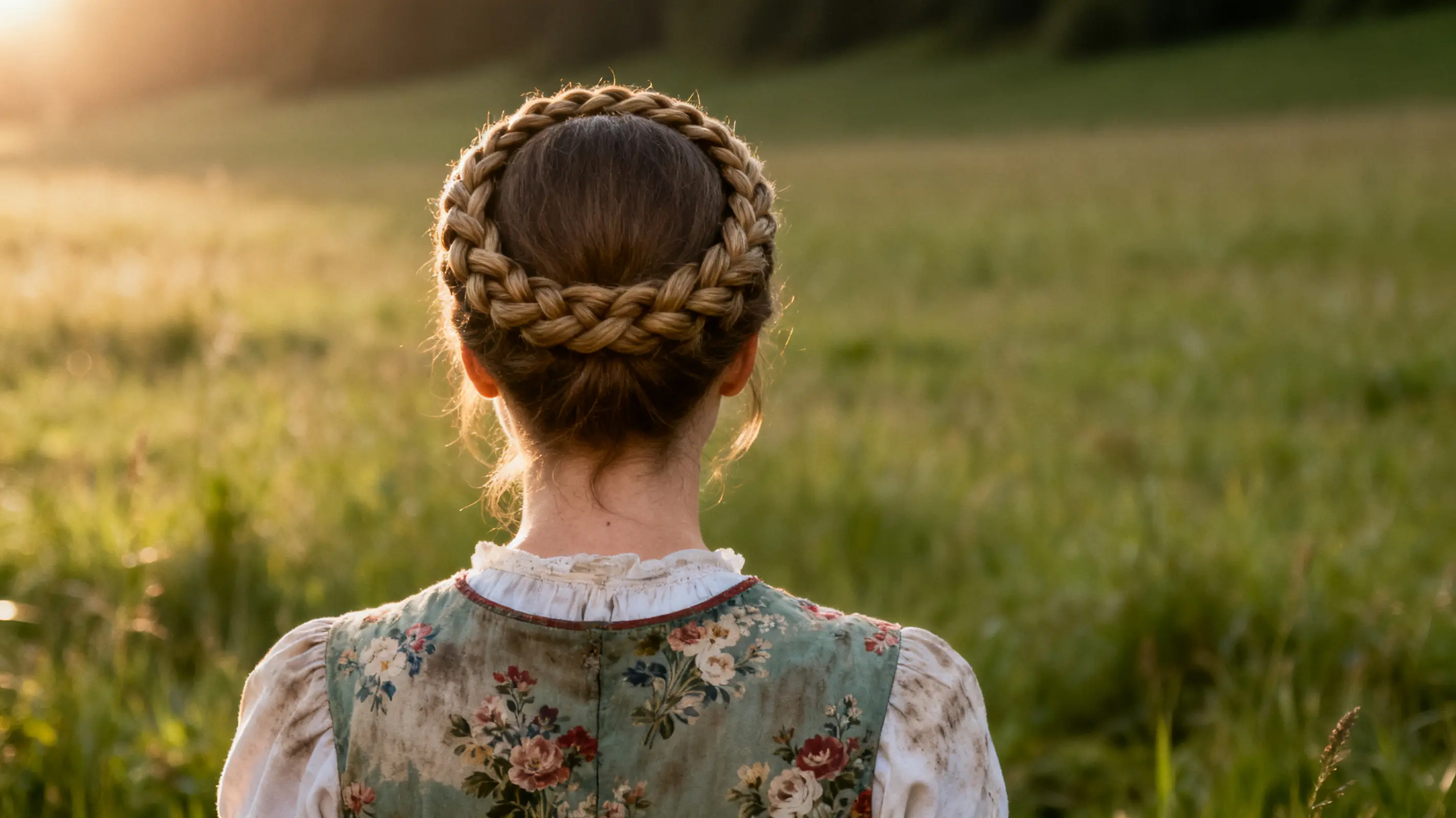
Braids are the oldest and most used Bavarian hairstyle. The traditional Bavarian hairstyle includes various braid styles.
Milkmaid Braid: The Most Iconic Dirndl Style
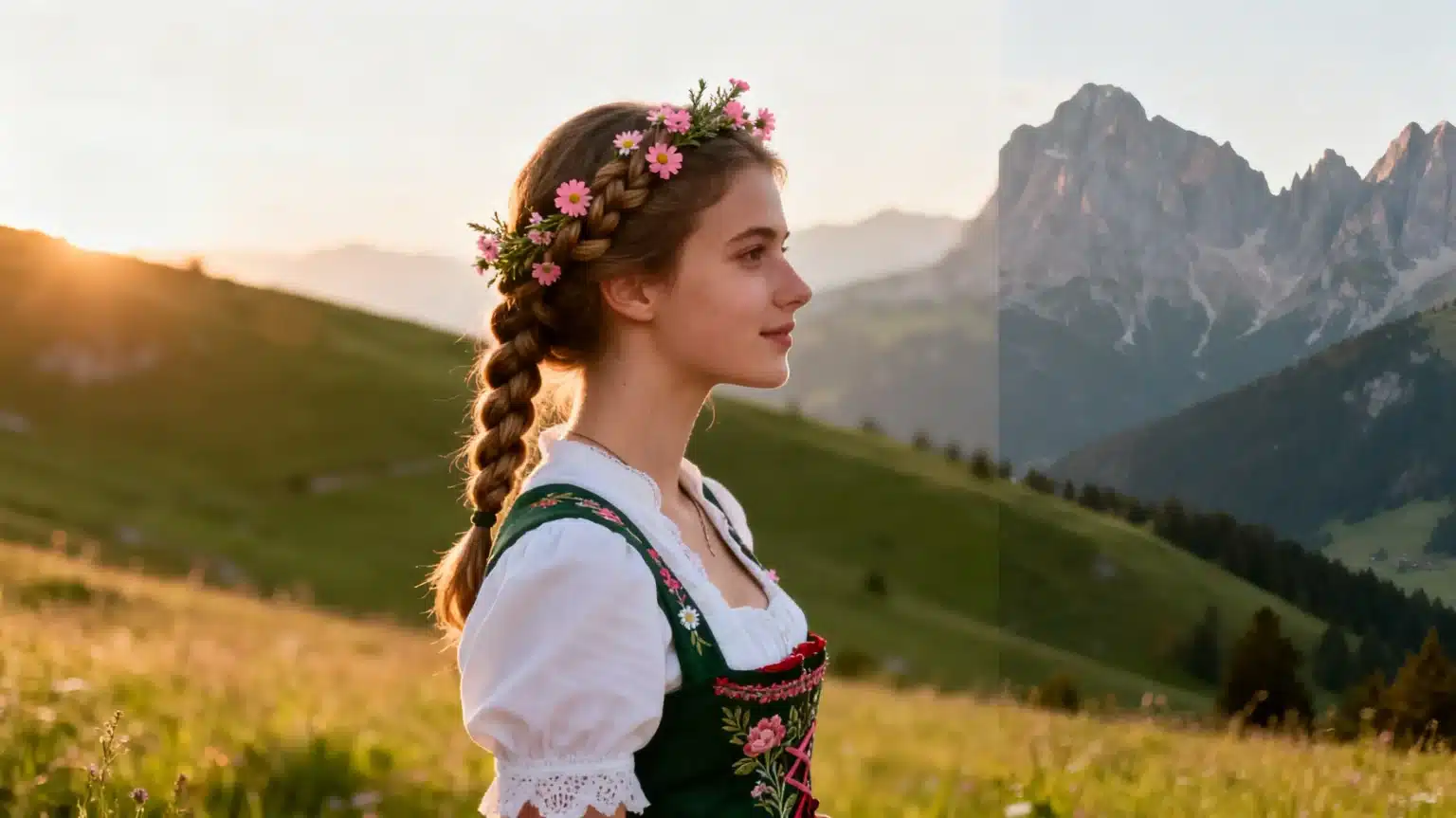
The milkmaid braid is the hairstyle most associated with authentic Bavarian traditional dress. Milkmaids braids are not only traditional but they are in mainstream fashion too. Two simple braids are pinned across the top of the head, ear to ear, making a headband. The milkmaid’s braid creates a crown effect that frames the face and keeps all hair secured throughout long festival sessions.
Bavarian women wore the milkmaid’s braid for centuries during farm work and village celebrations because it kept hair completely off the face and neck for hours. The same logic applies at Oktoberfest, where you are active from morning through late evening. Milkmaid’s braid is practical and keeps your face free of any loose hair.
Milkmaid’s Braid for Different Hair Lengths
For longer hair, braid both sides and bring each braid up and over the top, securing it with pins. For shorter hair, fold the braids upward at the roots and guide them along the top of the head. Add medium-hold hairspray at the start, and the style holds from the opening ceremony to the last round.
Crown Braid: Full Halo Effect for Formal Dirndls
The crown braid is a single continuous braid encircling the entire head, it creates a halo effect from every angle. Unlike the milkmaid braid which uses two separate braids, the crown braid wraps fully around in one continuous plait.
The crown braid works particularly well with floor-length dirndls and formal bodice construction. The full halo creates visual balance with the length and structure of a formal dress in a way that half-up styles cannot match. You can add some flowers for an exquisite flower crown effect.
Braided Pigtails: Traditional and Playful
Pigtails have been a traditional Bavarian hairstyle since the 18th century. The pigtails refer to symmetrical braids falling over the shoulders. These are very simple to create and immediately portrays the German traditional hairstyling when paired with dirndls.
Adding ribbons at the braids’ ends is the traditional Bavarian finishing touch. Match the ribbon color to your apron rather than your bodice for the most coordinated look. Pigtail-style photographs exceptionally well at outdoor festival events, where natural light catches the ribbon color.
Dutch Braid: The Festival Staple
Dutch braids are a styling essential in the Dutch regions, hence the adopted name. Dutch braids are reverse French braids; the difference is that they sit close to the scalp because each strand passes under the braid rather than over, creating raised lines that stand out from the hair.
The raised structure means Dutch braids hold their shape through long festival days better than French braids. Double Dutch braids left hanging down the back are one of the cleanest-looking traditional styles. They pair exceptionally well with the traditional Bavarian dress and you can create them without formal training.
Updo Hairstyles for Dirndl: Elegant and Manageable
Classic Low Bun: The Understated Dirndl Hair Combo
The classic low bun is one of the most traditional Bavarian hairstyles found in historical photographs across generations. All the hair is gathered at the nape and twisted or rolled into a clean bun. Classic buns pair particularly well with formal high-necked dirndls where the collar structure benefits from the neck being fully visible and unobstructed. The simplicity of the bun lets the dirndl’s embroidery and neckline detail carry the visual interest.
Adornments for the Bun Hairstyle
A decorative pin or a small flower can be added to the bun for a traditional finishing touch. For elegant styling, keep the bun clean and structured rather than messy. Low messy buns also look good with oktoberfest dirndl styling, where a few strands of hair can be let loose for face framing. The low bun works best as an intentional choice rather than a hastily gathered afterthought.
Flower Bun: Romantic and Festival-Ready
A simple bun with Flowers immediately evokes the simple rural, and nature-loving lifestyle of Bavarians. Flower buns are effortless and well-suited to dirndl hairstyling. Gather hair into a low-to-mid bun and decorate with faux flowers or fresh blooms. The complexity of a flower bun is entirely in the decoration rather than the construction.
Flower Choices for the Bun
Edelweiss and daisies are the most traditional choices and carry significance in Bavarian folk culture. Bavarian women began wearing flowers at festivals in the early 19th century as a symbol of femininity connected to Alpine nature. A flower bun maintains that tradition in the most accessible styling format available. Faux flowers are a more practical choice for all-day wear, they hold color and shape through festival chaos without wilting.
Half-Up Half-Down With Twisted Crown
Take the top section of your hair, twist it gently across the crown, and secure at the back. Leave the remaining hair loose or add soft curls falling over the shoulders. Three minutes to achieve. Works at every hair length from bob to waist-length.
This is the style for when you want the traditional updo aesthetic without committing to pinning all your hair. The twisted crown provides enough structure to look intentional. The loose hair below adds movement and softness that the dirndl’s bodice benefits from visually, particularly with lower necklines where the collarbone and shoulders are visible.
Modern Hairstyles That Still Work With Dirndl
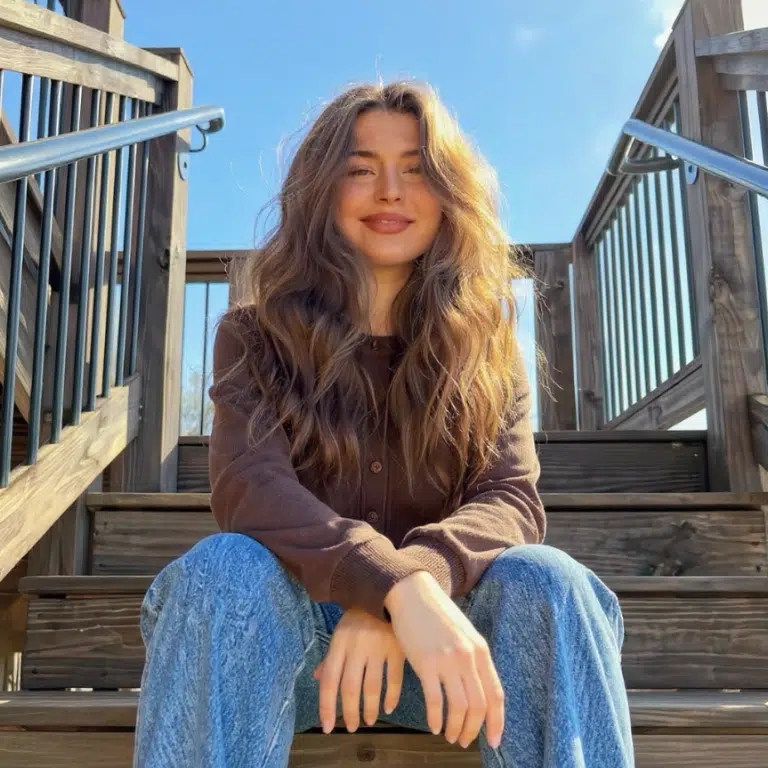
Beach Waves and Loose Curls
Semi-open beach waves are the modern Oktoberfest hairstyle that takes the least time and pairs well with contemporary dirndl styles. Loose curls created with a large barrel curling iron, then left to fall naturally create voluminous natural looking curls.
Beach waves pair best with mid-length and longer hair. They also benefit from adding a traditional hair accessory, a velvet hairband, flower clip, or ribbon, which elevates the style enough to bridge the gap between modern and traditional.
Dirndl Hairstyles for Different Hair Lengths
Short hair is not a limitation for dirndl hairstyles. A hairband with floral or embroidered detail does the visual work that longer styles achieve through braiding. A flower crown is the strongest short hair option because it creates a full traditional impression regardless of the hair beneath it.
Medium hair opens the full range of half-up styles and lighter braid options. The half-up twisted crown works especially well at this length. The fishtail braid and Dutch braids both work with complete effect at shoulder length.
Long hair carries every style on this list without adaptation. The milkmaid braid and crown braid both require length to work properly. If you have long hair attending Oktoberfest, these traditional crown styles are available to you specifically. They are the most culturally resonant dirndl hairstyles and the most visually complete.
Conclusion
Match hairstyle formality to dirndl formality. A formal floor-length dirndl with heavy embroidery requires a structured updo. A casual midi for a village Volksfest accepts loose waves and half-up styles. A modern mini dirndl pairs naturally with contemporary styling rather than traditional crown braids.
You can start by selecting a dirndl that suits the occasion and then build the rest of the outfit around it, including accessories and hair styling. Collections from Dirndl Delights and Dirndl online shop offer a range of traditional and modern dirndls that pair beautifully with both classic braided styles and contemporary hairstyles.