

Minimalism doesn’t automatically equate to a cold interior. In fact, a stark, empty-feeling space is usually a sign of unfinished minimalism. The style was never meant to mean just bare walls and a single gray sofa; it means every object earns its place. Warmth fits that definition just as well as restraint does.
The trick is knowing which additions build warmth and which ones just build clutter. Here is how to bring comfort into a minimalist room without dragging it back toward maximalism.
Why Do Minimalist Rooms Feel Cold in the First Place?
It usually comes down to three things: hard surfaces, flat lighting, and a palette that stops at “neutral” instead of pushing through to “warm.” Concrete floors, glass tables, and matte white walls all reflect light in a similar, slightly clinical way. Stack enough of them together and a room starts to feel more like a showroom than a home.
Over-editing is the other culprit. Some people hear “minimalist” and start removing anything with visible grain, weave, or imperfection, because those things read as “extra.” In practice, those are exactly the details that give a room a pulse. A minimalist space still needs texture; it just needs it applied with restraint rather than left out entirely.
How Does Wood Warm Up a Minimalist Space?
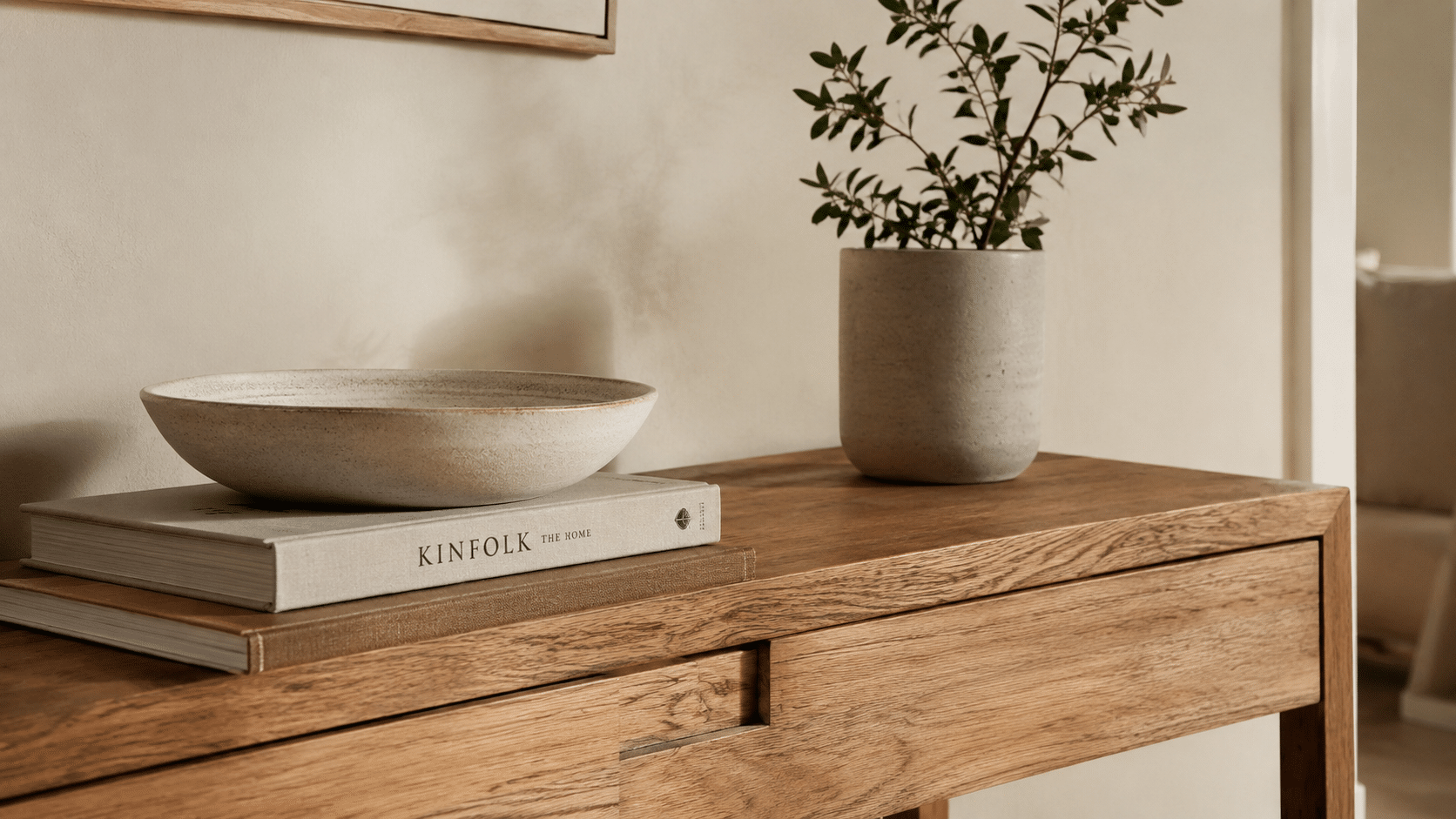
Wood is doing a lot of the work here, and it does it without adding a single extra object to the room. A pale oak floor, a walnut console, or even a single wooden bowl on a shelf introduces grain, tone, and slight irregularity into a space that would otherwise be all straight lines and flat color.
Choose warmer, honey-toned woods over cool, gray-washed ones if coziness is the goal. Oak, walnut, and ash all bring depth without looking rustic or fussy, which keeps them compatible with a clean, edited room. Limit yourself to two or three wood tones across the whole space so it still reads as considered rather than mismatched.
Furniture is the easiest entry point. A low wooden coffee table or a set of dining chairs will do more for a room’s warmth than a dozen small accessories, and it does not compete with a minimalist layout the way clutter would.
What Role Do Natural Textiles Play?
Hard surfaces are efficient to clean and photograph well, but a room built entirely from them will always feel a little unfinished. Textiles fix that fast, and unlike ornaments, they serve a function, which keeps them firmly inside minimalist logic.
Linen, wool, boucle, and jute all bring visible texture without adding visual noise. A wool throw folded once over the arm of a sofa, a jute or wool rug anchoring a seating area, or linen curtains catching light differently through the day all soften a room while staying quiet in color.
Stick to one or two textures per room and let them do the talking. A boucle armchair paired with a smooth linen sofa reads as intentional; five different textiles competing for attention reads as clutter, even if each piece is technically “neutral.”
How Should You Layer Lighting for Warmth?
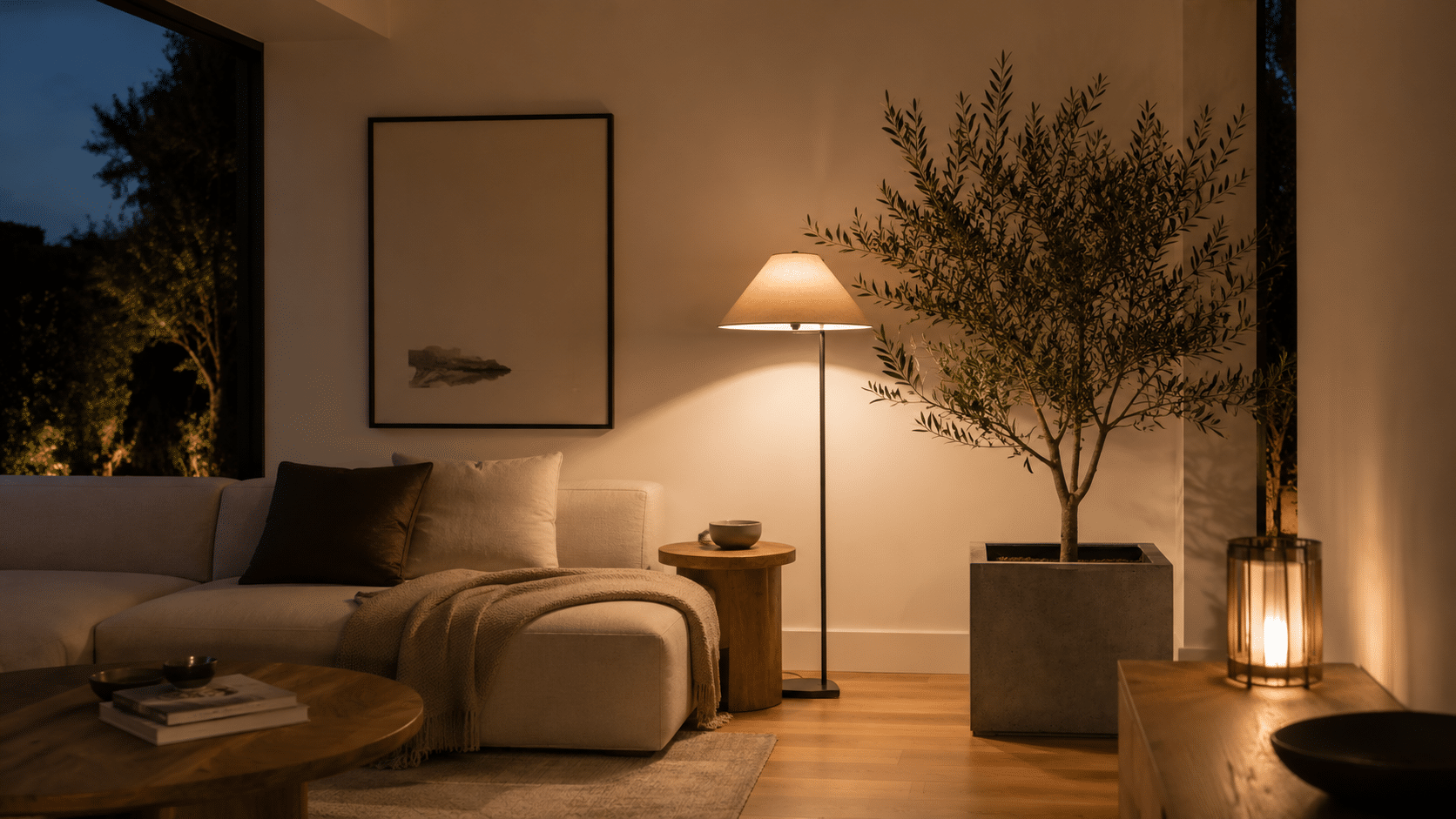
Lighting is arguably the fastest, cheapest fix on this list, and the one most minimalist rooms get wrong. A single overhead fixture, however well designed, throws flat, even light across a space and flattens texture right along with it. That is part of why so many minimalist rooms photograph beautifully but feel oddly sterile to actually sit in.
Warm-temperature bulbs, somewhere around 2700K to 3000K, make an immediate difference over the cooler 4000K+ bulbs common in kitchens and offices. Beyond bulb choice, layering matters just as much as color temperature. Combine an ambient source with a floor lamp, a table lamp, or wall sconces so light pools in a few places instead of blasting the whole room evenly. Dimmers let a single fixture do double duty, bright for daytime tasks and low and warm for evenings.
Can Greenery Soften a Minimalist Room?
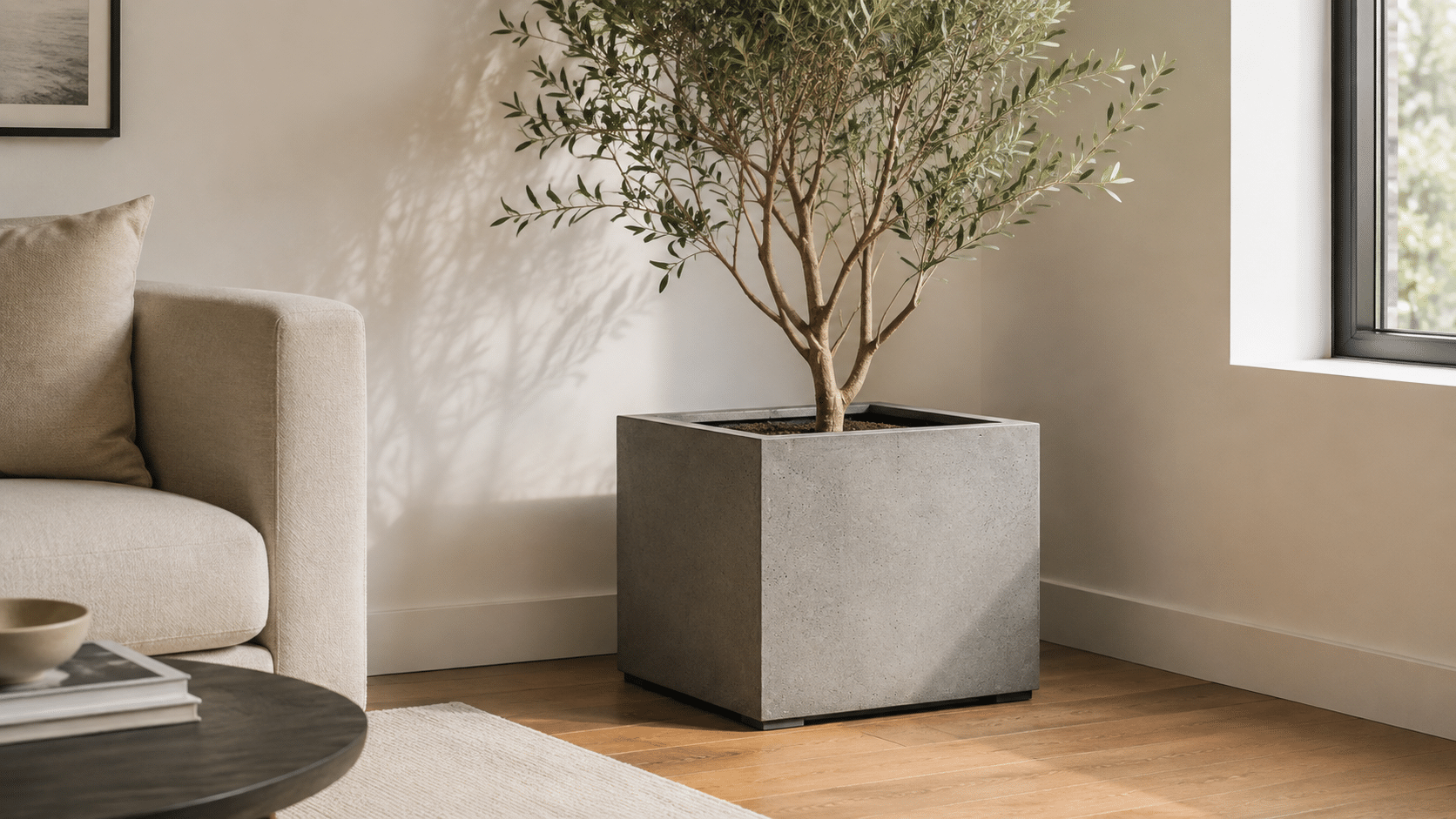
Plants might be the single most effective way to add life to a minimalist interior, because they bring color, movement, and organic shape without adding “stuff.”
In minimalism, the planter is just as important as the plant. A modern architectural planter scaled perfectly to the room does double duty: it anchors the greenery while acting as a standalone solid sculpture in its own right. A single oversized fiddle-leaf fig or olive tree in a substantial, tonal pot reads as a deliberate design statement. Six small pots scattered across surfaces reads as a collection, which works against the minimalist brief.
A few guidelines keep greenery from tipping into visual noise:
- Quality Over Quantity: Choose fewer, larger plants in oversized planters. The scale fills visual space without adding clutter, and a substantial planter grounds the room the way a piece of furniture does.
- Keep Planters Tonal and Textured: A textured ceramic or matte stone planter in a neutral or earthy tone blends into the room’s palette, while a busy patterned pot competes with it. The weight and material of the planter matter just as much as the plant inside it.
- Repeat the Style: Matching planter styles across a few plants of varying heights looks curated rather than accidental.
Choosing the right pot for a plant is its own small design decision, and it is worth getting right, since the wrong planter can undercut an otherwise well-chosen plant. This guide on using pots and planters in interior design goes further into matching planter material, shape, and finish to different room styles, which is worth a look before buying.
What About Color and Texture Beyond White?
Pure white walls are not required for minimalism, even though they have become shorthand for it. Warm off-whites, greiges, and soft terracotta or clay tones all keep a room feeling calm and edited while reading noticeably warmer than stark white. The undertone matters more than the shade itself; a warm beige and a cool gray at the same lightness value will feel like entirely different rooms.
Texture works the same way color does here. A lightly textured plaster wall, a woven pendant light, or a hand-thrown ceramic vase introduces subtle irregularity that a flat, factory-perfect surface cannot. None of these additions clutter a room. They just stop it from looking mass-produced.
Where Do People Go Wrong When “Warming Up” Minimalism?
The most common mistake is treating warmth as a license to add more. It is not. A minimalist room stays minimalist by keeping the same object count and simply choosing warmer materials, tones, and light for the objects that are already there.
The second mistake is mixing too many warm elements at once. The risk with layering too many—wood floors, a wool rug, rattan lighting, and several plants all at once—is that the room stops feeling curated and starts feeling collected. Both can be beautiful, but the first is minimalism; the second leans boho. The fix isn’t to avoid those materials altogether, but to pick your two strongest warm elements and let them lead, rather than having four or five compete for attention.
What to Keep in Mind
- Warmth comes from material and light choices, not from adding more objects.
- Warmer wood tones and layered lighting do more for a room than any single accessory.
- One or two textiles and one or two wood tones keep a space from feeling busy.
- A few well-chosen plants in simple, tonal pots add life without adding clutter.
- Warm off-whites and clay tones read as considered, not compromised.
Bringing It Together
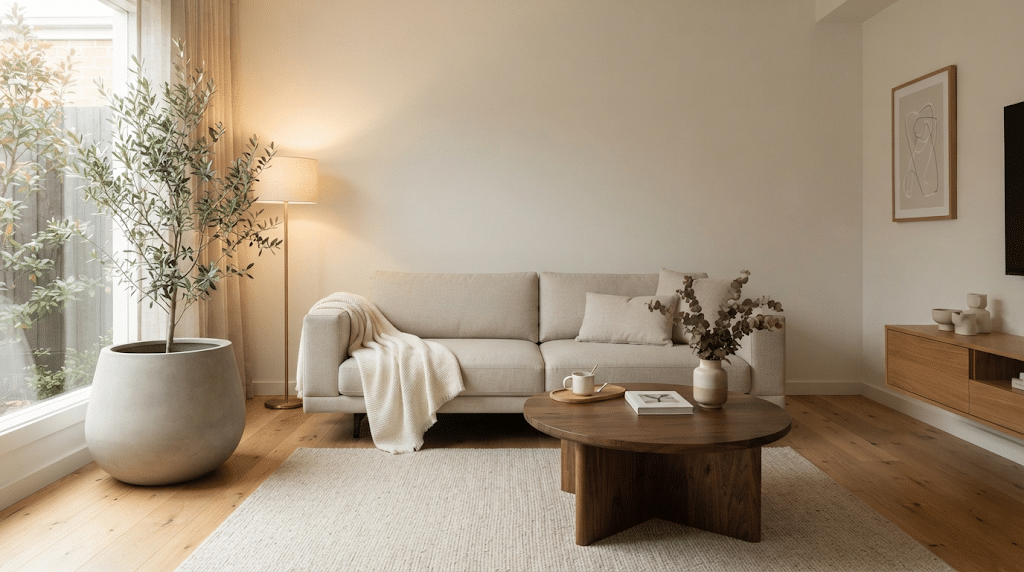
Minimalism was never really about emptiness. It is about choosing carefully, and that includes choosing warmth. Picture a room with honey-toned wood floors, a single wool throw draped over a clean-lined sofa, warm lamplight pooling in the corners, and a few carefully chosen natural elements adding softness without visual noise.
That room will feel more finished, more peaceful, and more alive than a room with twice the furniture and none of those details. Start with light and material, add greenery last, and the clean look stays intact the whole way through.
FAQ
Will Adding Plants Make a Minimalist Room Look Cluttered?
Not if you keep the count low and the planters simple. One or two larger plants in modern designer planters add warmth without competing with the room’s clean lines. Several small plants scattered across surfaces are more likely to read as clutter. Just make sure to choose the size, material, and finish that complements the existing palette rather than competing with it.
What Is the Fastest Way to Warm up A Minimalist Room on A Budget?
Swap cool-toned bulbs for warm ones, somewhere around 2700K to 3000K, and add a single lamp for layered light. It costs very little and changes the entire feel of a room within an evening.
Does Warming up A Minimalist Space Mean Adding More Furniture?
No. The goal is swapping cooler materials for warmer ones within the same footprint, not adding pieces. A wood coffee table in place of a glass one, or a wool throw instead of no throw at all, adds warmth without adding clutter.
Can a Minimalist Room Have Color, or Does It Have to Stay Neutral?
It can have color. Warm neutrals, clay, and soft terracotta all work well within minimalism as long as they are used with the same restraint as everything else in the room.