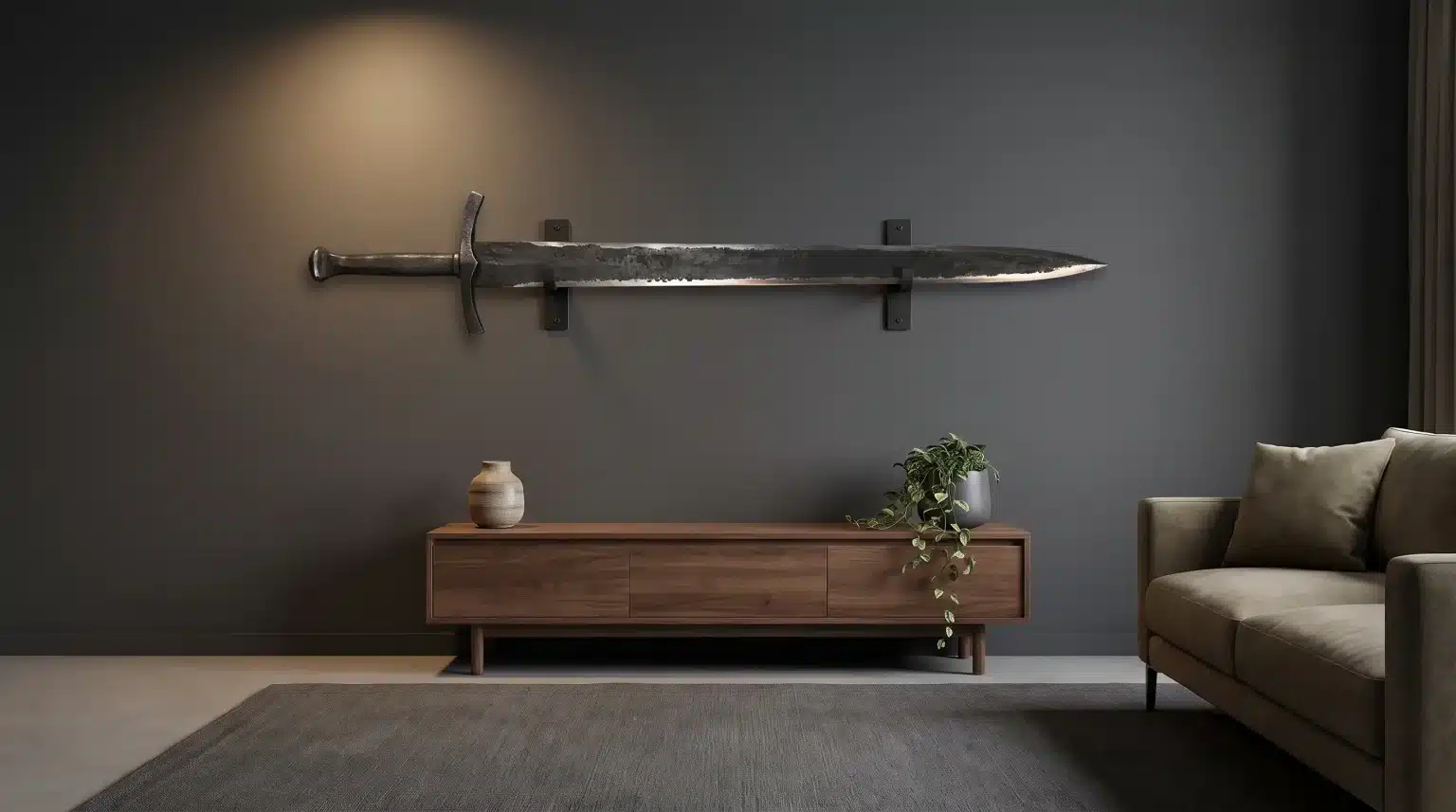
There’s a quiet confidence to a room that doesn’t rely on mass-produced prints or predictable gallery walls to make a statement. More homeowners are turning to unconventional focal points, and one of the most striking trends in modern interior styling is the display of swords as functional art. Once relegated to dusty attics or costume boxes, a well-chosen blade can now anchor a living room, home office, or hallway with the same visual weight as a sculpture or an oil painting.
Why Swords Work as Modern Decor
A sword occupies a strange and compelling space between object and artwork. Unlike a painting, it has mass, history, and craftsmanship built into its form. The curve of a blade, the texture of a forged edge, the balance of the hilt, these are details that reward close inspection in a way flat wall art rarely does. When positioned thoughtfully, a sword becomes less a weapon and more a study in metalwork, proportion, and design language borrowed from centuries of craftsmanship.
This is part of why interest in collectible swords has grown steadily among people who aren’t necessarily historians or martial artists, but simply appreciate objects made with intention. A hand-forged blade tells a story that a factory-printed canvas cannot.
Choosing the Right Piece
Not every sword suits every room. Before buying or repurposing a piece for display, consider:
- Scale. Before choosing a wall or spot, measure the sword itself, blade and hilt combined, along with the mounting hardware you plan to use, and compare that against the available space. A longer blade needs more breathing room than a shorter one, so match the piece to the wall rather than relying on a one-size-fits-all rule. A shorter blade, like a wakizashi or a smaller ceremonial piece, works well in tighter spaces such as a reading nook or entryway.
- Finish. Matte, dark steel reads as more contemporary and pairs easily with minimalist interiors. Polished or ornately etched blades lean traditional and suit rooms with warmer, more classic palettes.
- Provenance. A piece with a clear story, whether it’s a reproduction of a specific historical design or a modern hand-forged interpretation, adds depth to the display and gives you something to talk about when guests inevitably ask.
Mounting and Placement
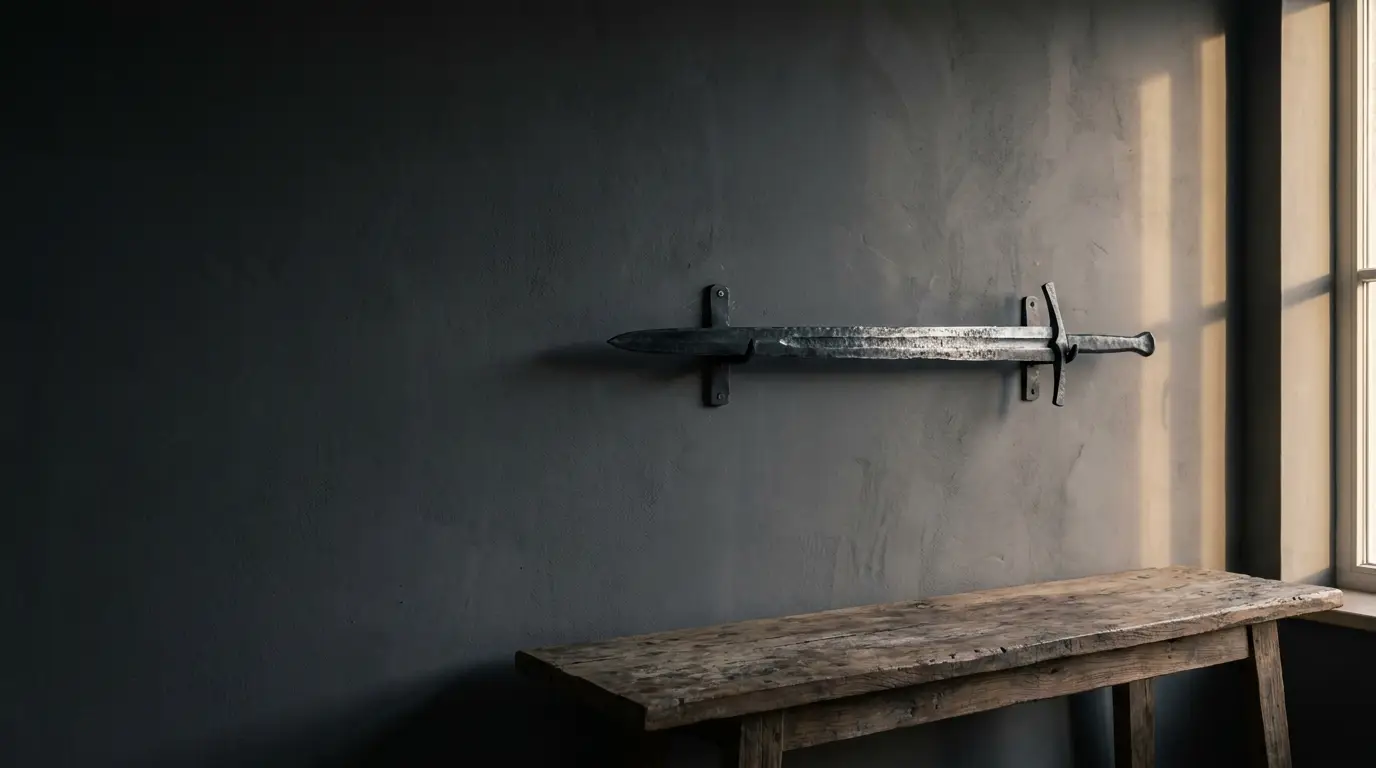
The single biggest mistake people make when displaying a sword is treating it like an afterthought, propped in a corner or laid flat on a shelf where it competes with clutter. A few approaches consistently work better:
Wall-mounted brackets. Simple, low-profile brackets let the blade float slightly off the wall, casting a subtle shadow that adds dimension. This works especially well above a mantel, a console table, or a piece of furniture with dark or neutral tones that let the metal stand out.
Stands on a credenza or bookshelf. A vertical or angled stand turns a blade into a tabletop sculpture. This suits rooms where wall space is already occupied, and it allows the piece to be moved or rearranged as the room evolves.
Grouped displays. For collectors with more than one piece, arranging two or three blades of varying length in a fan or parallel formation creates a gallery-style moment without needing a full wall. This approach borrows from museum curation techniques and works particularly well in a home office or study.
A Note on Safety
However decorative the intent, a sword is still a sharp, weighted object, and displaying one safely takes a bit more thought than hanging a picture frame. Use mounting hardware rated for the weight of the piece, and check that brackets or stands are anchored securely into a stud or solid backing rather than drywall alone.
If there are children in the home, choose placement and mounting that keeps the blade out of reach entirely, higher up, behind furniture, or in a room with restricted access, rather than relying on height alone to deter curious hands. It’s also worth following the manufacturer’s care instructions for the specific piece, since finishes, oils, and materials vary, and improper handling or cleaning can dull an edge or damage a display finish over time.
Making It Feel Intentional, Not Random
The difference between a sword that looks like a prop and one that reads as art usually comes down to context. Pair the piece with complementary elements: a leather-bound book stack beneath a mounted blade, a single dramatic light source angled to catch the steel, or a backdrop of dark paint or wood paneling that lets the metal contrast sharply.
Lighting deserves particular attention. A small directional spotlight or picture light aimed at the blade at a slight angle will catch the texture of the forging and any engraving, turning a static object into something that shifts and gleams as people move through the room.
A Growing Category for Collectors
As more people look for ways to personalize their spaces beyond what’s available at conventional home goods stores, swords have found a niche as both conversation pieces and genuine collector’s items. Whether the appeal lies in craftsmanship, history, or simply the visual drama of a well-forged blade, this is a category that rewards patience and a good eye for placement.
For anyone considering adding a piece to their own space, spending time with a few different styles, lengths, and finishes before committing will make the difference between decor that feels like an afterthought and a piece that genuinely elevates the room.