

Three photos from a wedding last June taught me more than a decade of scrolling. One guest wore a plain navy suit. The other two wore the same suit with a vest, and the difference wasn’t the fabric or the fit. It was everything around it. A shirt with too much happening at the collar, a tie knotted like a Saturday night in 2011, shoes that belonged to a different outfit entirely. The vest wasn’t the problem. It was the loudest voice in a room where nobody else was talking.
So here’s the deal. A vest only looks effortless when it has nothing to compete with. You get one accent piece, and everything else steps back. That’s the whole trick, and the rest of this piece is how to actually pull it off without overthinking it on a Tuesday morning.
Start with the silhouette. A layer worn over a shirt adds bulk, so if your shoulders slope or your midsection runs soft, a structured cut does more for you than anything in your closet. This is where men’s performance vests earn a spot. The fabric moves, so you can actually wear it to dinner and then to whatever comes after. Fit checks first, fabric second, because a great fabric on an awkward cut just looks like an expensive mistake.
What Counts as a Vest, Exactly
Half the arguments about vests collapse because two people mean different garments. Here’s the short version.
|
Type |
Where It Works |
One Thing to Watch |
|---|---|---|
|
Tailored (suit) vest |
Weddings, dressy dinners, formal events |
Must match the jacket fabric, or it reads as a mismatch |
|
Casual or knit vest |
Weekends, dinners, travel days |
Collar and shoulders need structure underneath |
|
Sweater vest |
Layering over a shirt, fall and winter |
Texture does the talking, so keep the rest flat |
|
Outer vest (quilted, puffy) |
Cold mornings, city walking |
Goes over a hoodie, not under a blazer |
Most men own one version and style it like it’s all four. That’s where the look falls apart. A tailored vest at a backyard barbecue reads as costume. A puffy vest at a formal rehearsal dinner reads as a lost tourist. Match the garment to the room and you’ve solved 70 percent of the problem before you touch anything else.
Building the Layers Around It
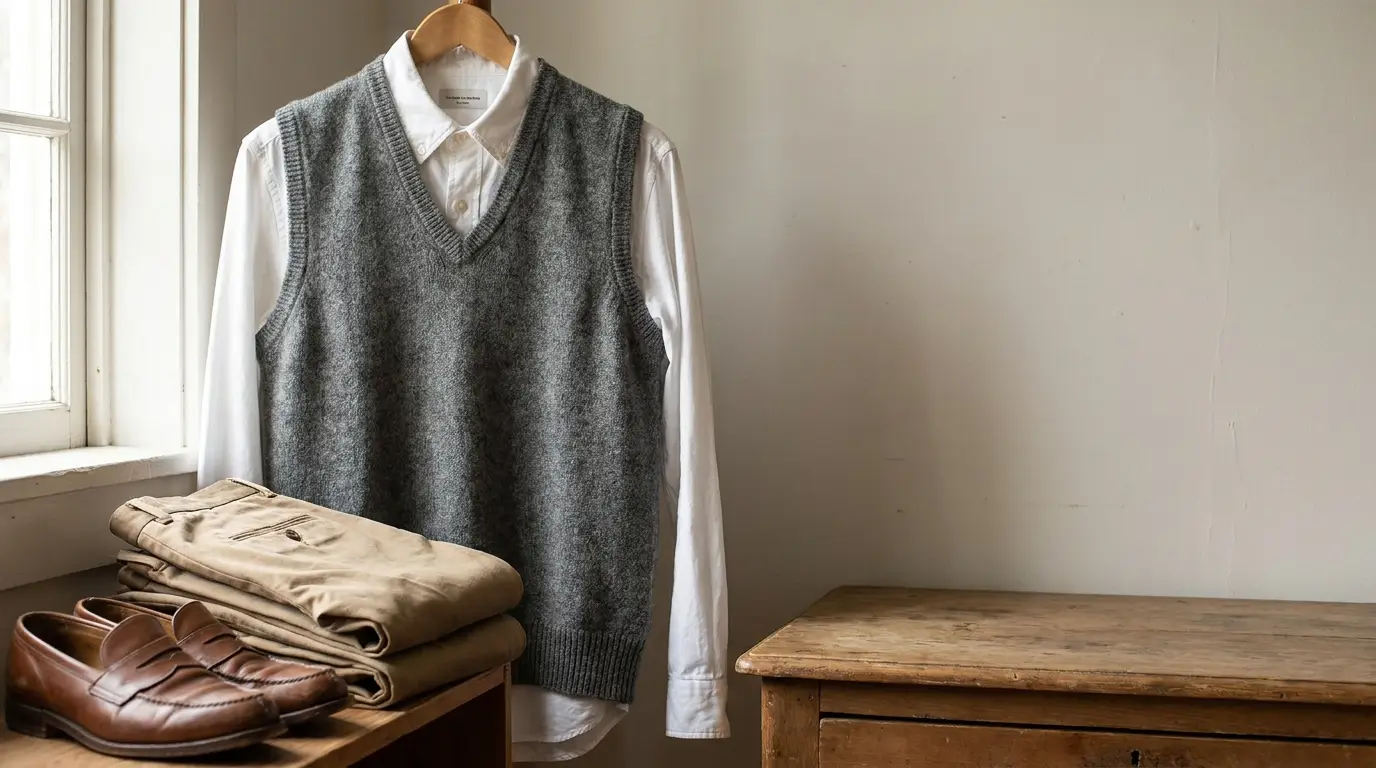
My rule is simple and I’ve never had a reason to break it: if the vest is doing something, the shirt is doing nothing. Plain shirt, no pattern, or a pattern so faint it reads as texture. When I break my own rule, the whole outfit becomes a shouting match between two fabrics that should never have met.
Then the bottom half. A plainer pant than you’d normally wear. No cargo pockets, no whiskering, no fading. Straight or slightly tapered leg. Shoes that match the formality of the vest, not the formality of your mood. A performance vest with chinos and clean sneakers sounds like a casual outfit, and it is. But swap in a leather loafer and the whole thing upgrades without a single new garment.
You can find the shape of this thinking in most style guides, and you’ll also find it at work in offices everywhere. The Department of Labor tracks how many people in this country work in roles that require showing up presentable to other people, and it’s a large share of the workforce. Meeting clients, teaching a room, running a shift as a manager, all of these roles quietly reward a man who looks like he understood the assignment.
Where Vests Actually Go Wrong
The mistakes are consistent enough that you can spot them across a room.
- Too many buttons done up. Leave the top two open on a casual vest. Always.
- Two patterns fighting. Put a striped shirt with a solid vest. Anything else is a bet.
- Wrong length. A vest should hit right at the waistband, not below it.
- Belt buckle showing through a tailored vest. Wear suspenders or skip the belt entirely.
- Cold-weather layering skipped. A thin vest over a t-shirt in fifty-degree weather is a decision you’ll regret by nine.
A small aside, because it matters more than people admit. If you’re eyeing a vest because you run warm, don’t buy a heavy fabric just because the weather looks gray. The National Weather Service runs forecasts that are actually pretty good, and layering for the high of the day rather than the morning temperature is a lesson most guys learn on the walk back from lunch.
The Three Ace Framework
Here’s the framework I use every time, and I named it after the three questions a well dressed friend of mine used to ask me before he’d let me leave the house.
Ace One: Anchor. What’s the single loudest piece? Should be the vest or the shoes. Pick one. Never both.
Ace Two: Contrast. Does this outfit have one deliberate break, or seven accidental ones? One deliberate break, like a textured vest over a flat shirt, is the goal. The rest should blend.
Ace Three: Echo. Do the shoes and belt agree? Do the sock and pant tone close together? Small echoes make an outfit feel finished without anyone being able to explain why.
I’ve watched this framework rescue everything from a black tie wedding to a Sunday brunch, and it never fails as long as you don’t cheat on Ace One. Nobody who breaks Ace One looks better for it.
A Practical Checklist Before You Walk Out
- Vest hits at the waistband. Not above, not below.
- Only the bottom button or the bottom two are done up if it’s casual.
- The shirt underneath is plain or nearly plain.
- Pants are solid and clean, no fading or cargo pockets.
- Shoes match the formality of the vest, not what you wish it was.
- One accent color max, and everything else sits in the same family.
- One full mirror check from across the room, not from six inches away.
The last point matters because you’ll notice things at distance that disappear up close. Shoulder line, overall proportion, whether the vest is speaking louder than it should. Six inches of mirror lies to you.
Common Questions
Can You Wear a Vest Without a Jacket?
Yes, with a casual or performance vest. A tailored suit vest without its jacket usually reads as missing something. If you’ve gone that route, add a plain shirt and let it be a statement piece.
What About Wearing a Vest Over a Hoodie?
It works with an outer vest, not a dress vest. Keep the hoodie plain, no graphics, and let the proportions stay clean.
Do You Tuck the Shirt In?
Yes. An untucked shirt under a vest creates a fabric pileup at your waist and kills the whole line. Tuck it, then adjust the vest over it.
A vest isn’t a magic bullet. It’s a layer that responds to how carefully you chose everything around it. Do that part and it’ll look like you woke up stylish. Skip it and you’ll spend the night explaining an outfit nobody asked about. So which is it going to be for your next dinner?