


Two inches. That’s the gap between a smooth check-in and a $150 fee.
The wrong luggage size can wreck your trip before it even starts. Airlines are strict about dimensions, and the rules keep changing without much warning.
Every airline has its own rules, and they rarely match. What fits one carrier’s bin often gets flagged by another, leaving travelers confused and frustrated at check-in counters.
Even seasoned travelers get caught off guard. A bag that worked fine last trip might not pass this time because policies have shifted.
Next are standard sizes for personal items, carry-ons, and checked bags, along with exact dimensions, airline allowances, and steps to measure your bag correctly before you fly.
What Are the Standard Luggage Sizes?
Luggage size usually falls into four basic categories used by airlines and bag makers. Knowing these ranges ahead of time helps you pick the right bag and avoid extra fees at check-in.
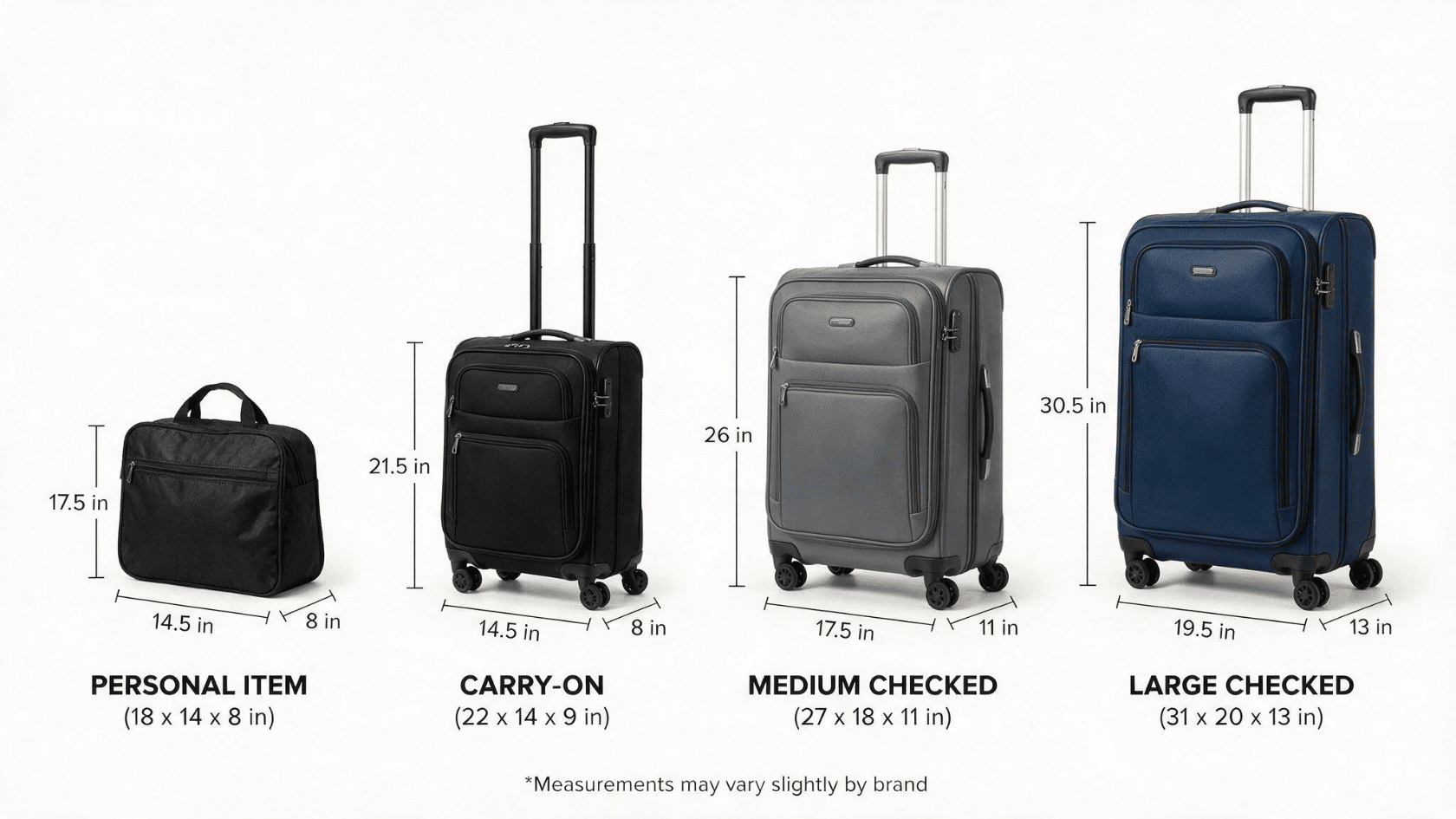
A personal item measures about 18 x 14 x 8 inches and slides easily under the airplane seat. Carry-on luggage is about 22 x 14 x 9 inches and fits neatly into overhead bins.
Medium checked bags stand between 24 and 26 inches tall, offering enough room for trips lasting three to seven days without becoming too heavy or hard to manage.
Large checked bags range from 27 to 30 inches and suit longer vacations or extra items. Choosing the right luggage size from the start keeps packing simple and helps you avoid airline restrictions later.
Luggage Size Chart: Common Suitcase Dimensions
Luggage size is made up of three separate dimensions: length, width, and height. Looking at each dimension individually makes it easier to compare bags across brands and airlines before you pack.
| Luggage Type | Length | Width | Height | Best Use |
|---|---|---|---|---|
| Personal Item | 18 inches | 14 inches | 8 inches | Laptops, chargers, small essentials, fits under the seat |
| Carry-On | 22 inches | 14 inches | 9 inches | Standard allowance for most domestic flights, includes wheels and handles |
| Medium Checked | Varies | Varies | 24–26 inches | Trips lasting about a week |
| Large Checked | Varies | Varies | 27–30 inches | Extended vacations, extra packing room, check airline limits |
How to Measure Luggage Size Correctly?
Airlines measure luggage size using outside dimensions, not just the main suitcase body. This includes wheels, handles, and any extra parts sticking out, so a rough estimate often leads to mistakes.
- Place the luggage upright on a flat surface.
- Measure height from the bottom wheels to the top handle.
- Measure the widest point for width, and front-to-back for depth.
- Include wheels and expandable sections, since both add to the total.
- Account for outside pockets, which may add extra width or depth.
- Add height, width, and depth together to get linear inches.
- Compare the total to your airline’s limit, usually up to 62 linear inches.
- Adjust your bag choice if you go over, since extra charges may apply.
Getting the correct luggage size before you leave home saves time at the counter and helps you avoid unexpected fees.
|
Checked luggage size is often expressed in linear inches, calculated using a simple formula: Height + Width + Depth = Linear Inches |
What Luggage Size Do You Need for Your Trip?
Picking the right luggage size depends on how long you’re traveling and how much you plan to pack. A quick guide to match bag size with trip length is:
| Trip Length (Days) | Recommended Luggage Size | Why It Works |
|---|---|---|
| 1–3 Days | Personal item | Ideal for very short trips with minimal packing |
| 1–3 Days | Small carry-on | Offers a bit more room for extra clothes or shoes |
| 4–7 Days | Carry-on | Works well for light packers who travel efficiently |
| 4–7 Days | Medium checked luggage | Gives more space for varied outfits or bulkier items |
| 8+ Days | Large checked luggage | Provides enough room for extended packing needs |
Match your luggage size to your trip length for a hassle-free journey. Shorter trips need less space, while longer ones call for bigger bags. Always confirm airline size limits first.
Carry-On vs Checked Luggage Size: What Is Allowed?
Carry-on and checked luggage size limits differ across airlines, so knowing both helps you pack smart and avoid surprises at the counter.
| Luggage Type | Standard Limit | Key Points |
|---|---|---|
| Carry-On | 22 x 14 x 9 inches | Fits overhead bins; international airlines may set smaller limits |
| Checked Bag | Up to 62 linear inches | Weight limits often apply; oversized bags may incur extra fees |
Confirming size and weight limits before you fly helps avoid unexpected charges at check-in, keeping your travel plans smooth, simple, and stress-free from start to finish.
Airline Luggage Size Limits You Should Check Before Flying
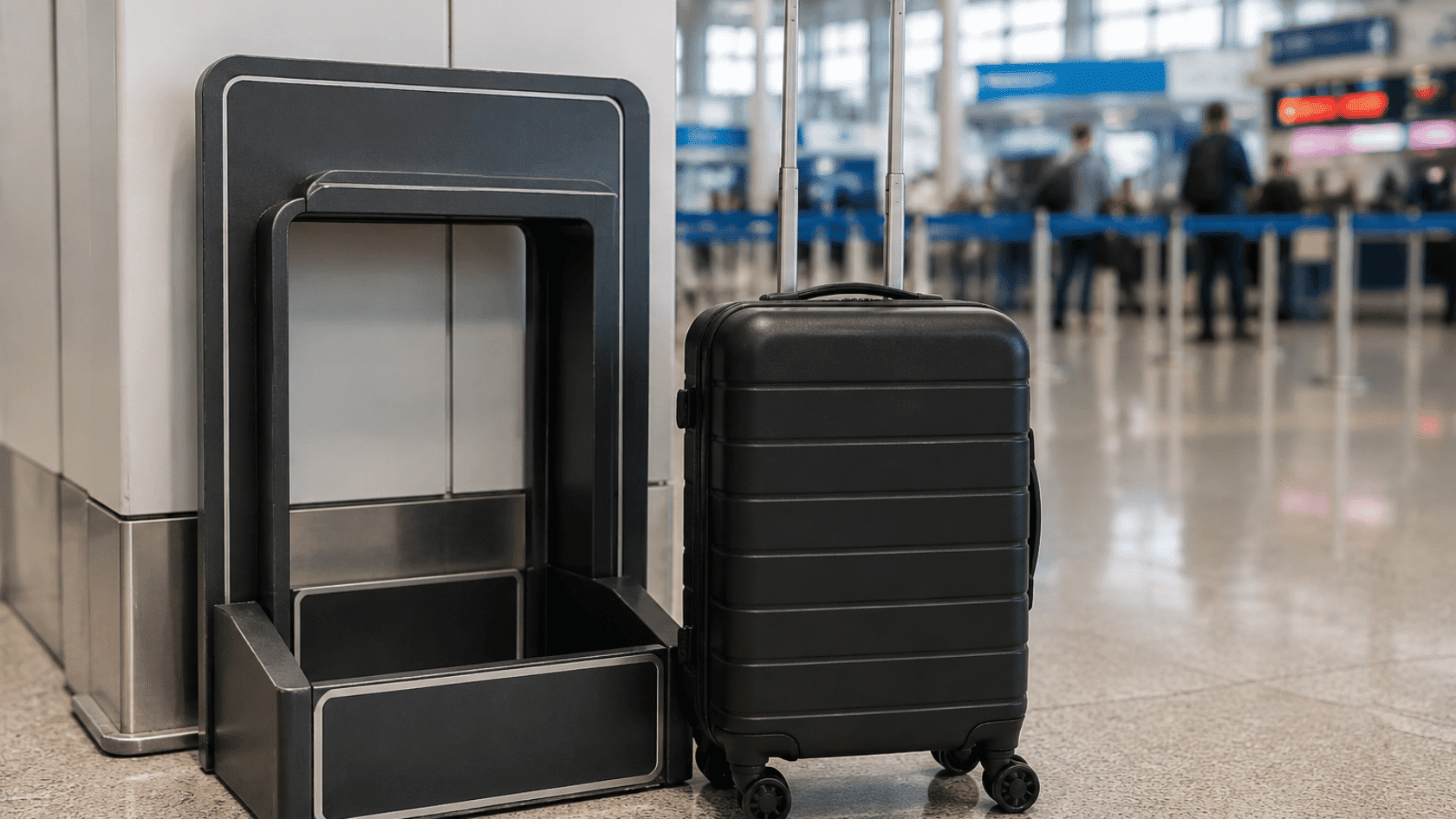
Every airline sets its own luggage size rules, so limits can vary even for similar bag types. Checking these details early helps avoid last-minute packing changes or added fees at the airport.
Major US airlines commonly allow a carry-on close to 22 x 14 x 9 inches, fitting most overhead bins without issue.
International airlines often set slightly smaller limits, around 21 to 22 inches, paired with strict weight restrictions.
Checked bags typically max out near 62 linear inches, though this varies by carrier and route.
Rules can also shift without much notice, so it helps to check official guidance too. The TSA’s carry-on baggage size restrictions page confirms that exact dimensions vary by airline, making it worth verifying policies directly before you pack.
Luggage Size Mistakes That Can Cost You Extra Fees
Small oversights while choosing or packing luggage can lead to unexpected charges at the airport.
Here are common luggage-size mistakes travelers make:
- Buying oversized checked luggage that exceeds standard airline limits
- Forgetting to include wheels and handles when measuring total luggage size
- Ignoring airline-specific limits, since rules vary between carriers
- Packing beyond weight allowances, even when the bag size itself is within limits
Avoiding these common mistakes helps you stay within airline rules, saving money and reducing stress during check-in and boarding.
Wrapping Up
Getting your bag dimensions right before a trip saves both time and money at the airport. From personal items to large checked bags, matching luggage size to airline rules keeps check-in smooth and simple every time.
A quick measurement at home, including wheels and handles, confirms the correct luggage size before you reach the counter. This small step prevents last-minute surprises and avoids paying extra fees for oversized bags.
The takeaway is simple: know the airline’s exact luggage size allowance, measure carefully, and pack accordingly. This habit skips extra fees entirely and keeps travel planning stress-free from start to finish.
Share your travel tips or questions in the comments below!
Frequently Asked Questions
Can I Check in a 32-Inch Bag?
Most airlines accept a 32-inch bag as a large checked item, but it may be near or over the 62-linear-inch limit. Confirm total linear inches before packing.
What is the Most Confiscated Item at Airports?
Sharp objects and oversized liquids top the list, especially pocket knives and full-size toiletries. TSA and security agents remove these daily since they exceed carry-on limits or safety rules.
What Does 2 Checked Bags 23kg Mean?
It means your ticket allows two checked bags, each weighing up to 23kg (about 50lbs). Exceeding this weight per bag usually triggers extra fees at check-in.