A single old photograph won’t usually turn into a federal court case three decades later. This one did, and the story behind it involves a photographer, a fishhook, and a baby who grew up to sue the band.
Every detail behind the Nevermind album cover connects to a bigger mix of pop culture, design choices, and legal drama that most fans never fully unpack.
After tracking how one visual can define an artist’s whole image, this cover stands out as a rare case worth breaking down piece by piece.
From here, the story unfolds through who made it, how it came together, and where the ongoing legal fight stands today.
What Is on the Nevermind Album Cover?
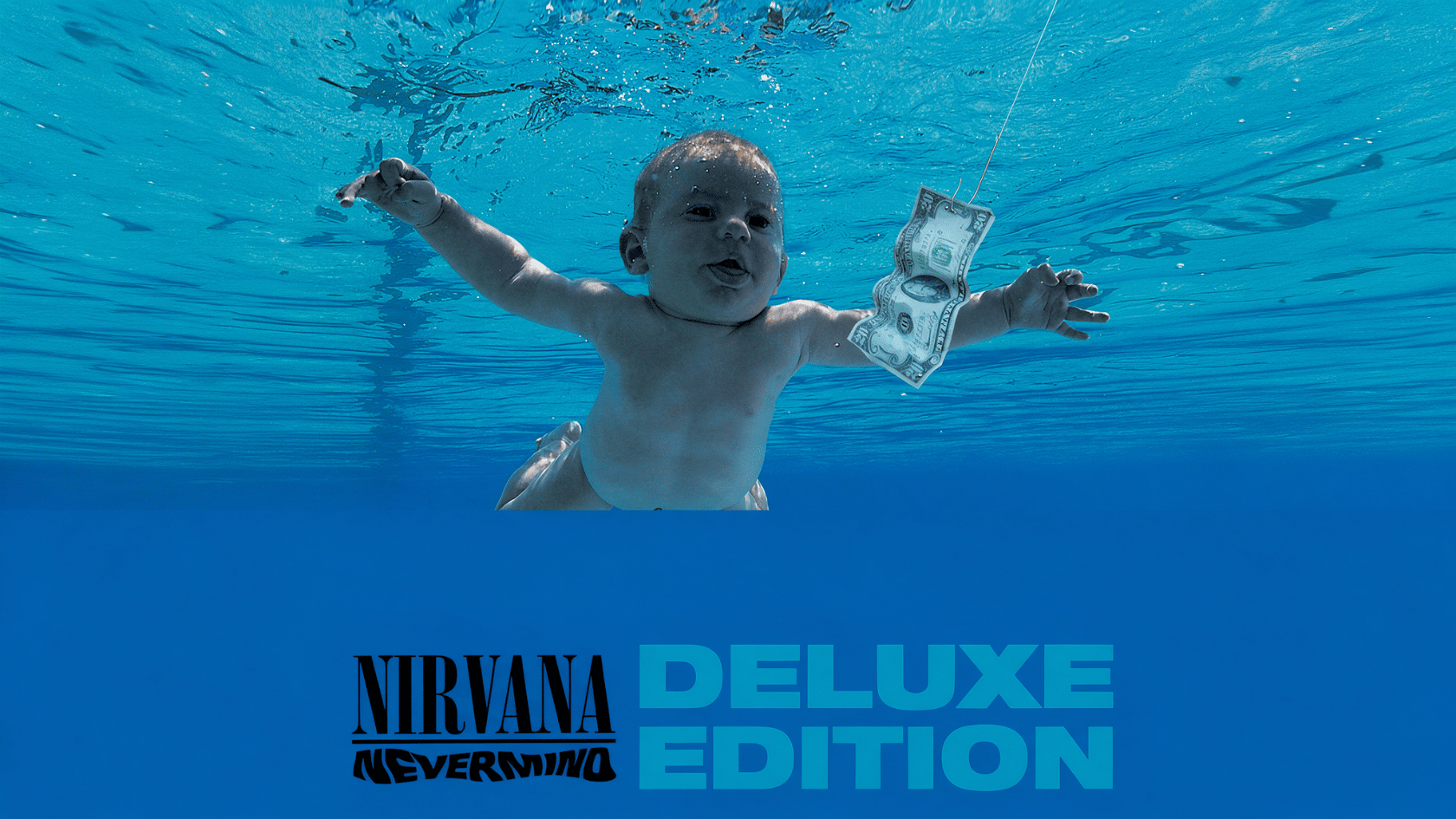
The Nevermind album cover shows Spencer Elden swimming underwater in a pool, reaching toward a dollar bill attached to a fishhook.
A wavy, water-distorted version of the word “Nevermind” sits below Nirvana’s logo, tying the type treatment to the photograph itself.
The hook and dollar bill were not part of the original underwater shoot. Both were added afterward during post-production, along with extra bubbles for effect.
What Does the Nevermind Album Cover Mean?
The Nevermind album cover doesn’t have one confirmed meaning. Designer Robert Fisher has said the concept grew step by step rather than starting from a single grand statement, which is why interpretations still vary among fans and critics.
-
The baby chasing money: The most widely accepted reading treats the swimming baby as a symbol of anyone born into a money-driven world, with the dollar bill representing wealth and the fishhook signaling risk or manipulation.
-
A comment on selling out: A second interpretation connects the image to Nirvana’s own move from an independent label to a major one, framing the baby as a stand-in for the band chasing commercial success.
-
No official confirmation: Kurt Cobain never publicly confirmed either meaning, so both remain fan theories rather than a stated artistic intent.
In short, the Nevermind cover’s meaning is open to interpretation by design, and that ambiguity is part of why the image has stayed culturally relevant for more than three decades.
Who Designed the Nevermind Album Cover?
Source: Nirvana
Robert Fisher designed the Nevermind album cover as Geffen Records’ art director, building the concept from an idea Kurt Cobain brought to him long before any photograph existed.
Kirk Weddle handled the underwater photography, using his technical experience shooting swimmers to capture Spencer Elden mid-motion inside a Pasadena pool back in 1991.
Kurt Cobain’s original pitch centered on a water birth, a request that pushed Fisher toward research most album designers never needed. That early idea shaped every decision made afterward.
Together, these three roles turned one loose concept into a finished cover, and each contributed something the others could not replace. Spencer Elden, the baby chosen for the shot, rounded out the design as its final element.
How the Nevermind Album Cover Was Created

Turning Cobain’s original pitch into a finished photograph took several stages, moving from an early birth-themed idea to a full underwater shoot and careful post-production work.
-
Kurt Cobain’s Original Water-Birth Idea: The birth-themed concept was dropped after early research photographs proved too graphic, pushing Fisher toward a swimming baby instead.
-
Finding Underwater Photographer Kirk Weddle: Fisher found Weddle through a directory of working photographers and chose him for his skill in shooting clean, distortion-free underwater images.
-
The Underwater Baby Photoshoot: The shoot took place in a Pasadena pool, where Spencer Elden and several other babies were passed through the water for the camera.
-
How Fisher Chose Spencer Elden’s Photo: Fisher picked Elden’s frame from dozens of options because his outstretched arms gave the strongest sense of reaching toward something.
-
Adding the Dollar Bill and Fishhook: Cobain’s fishhook idea led to a dollar bill added in post-production, along with extra bubbles and a removed pool floor.
Each stage fed into the next, turning one loose idea into the finished Nevermind album cover that fans still recognize on sight today.
How the Wavy Nevermind Logo Was Made Using a Xerox Copier
Fisher created the water-like lettering by printing the word “Nevermind,” then physically moving the paper while running it through a photocopier.
The resulting distortion echoed the underwater photograph beneath it, giving the whole Nevermind album cover a single, unified visual idea.
Nirvana’s existing band logo was placed above the wavy type, keeping the design tied to their established branding.
Who Is the Baby on the Nevermind Album Cover?
Spencer Elden was four months old when he appeared on the Nevermind album cover, with his parents present and reportedly paid around $200 for his participation.
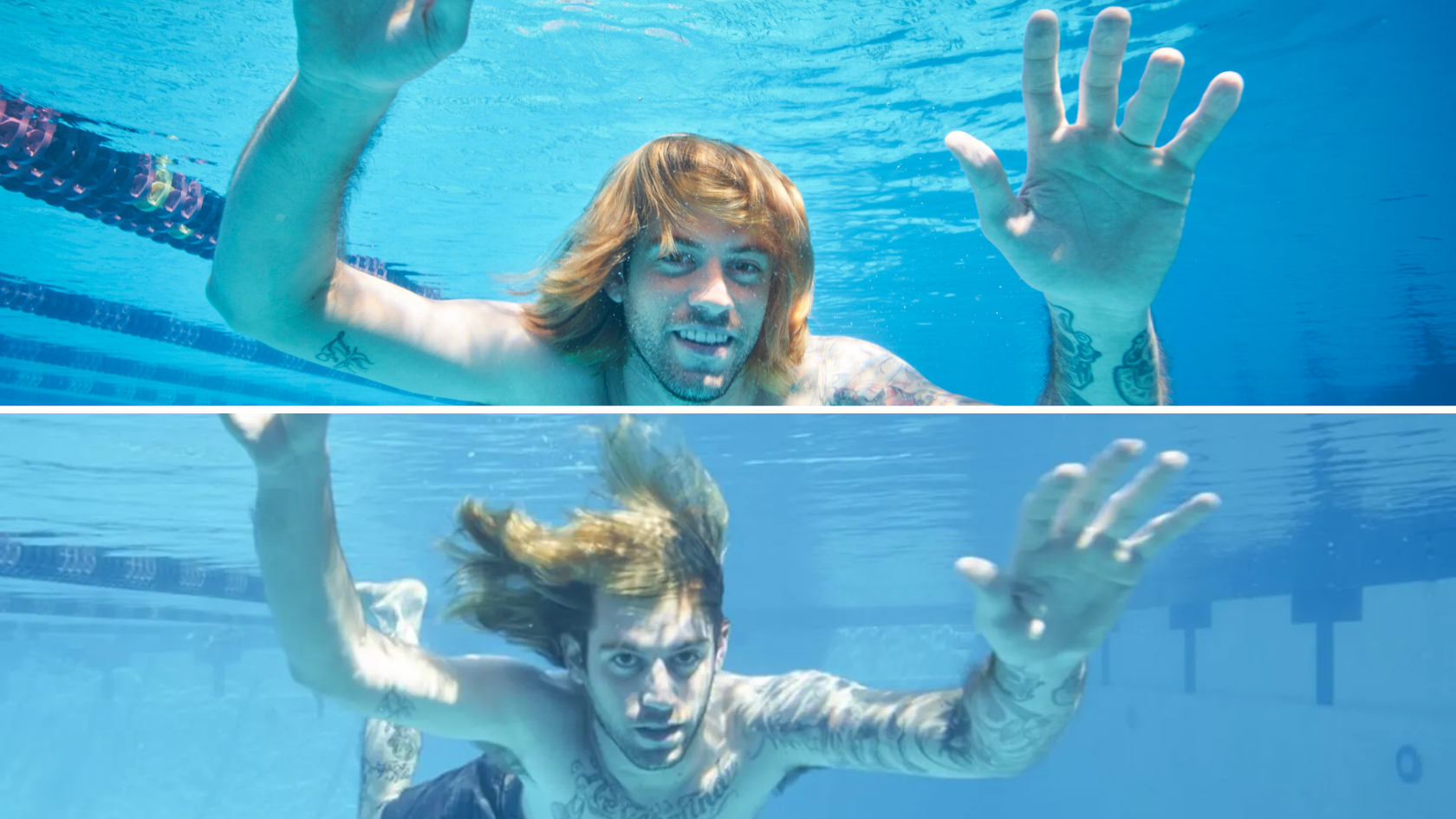
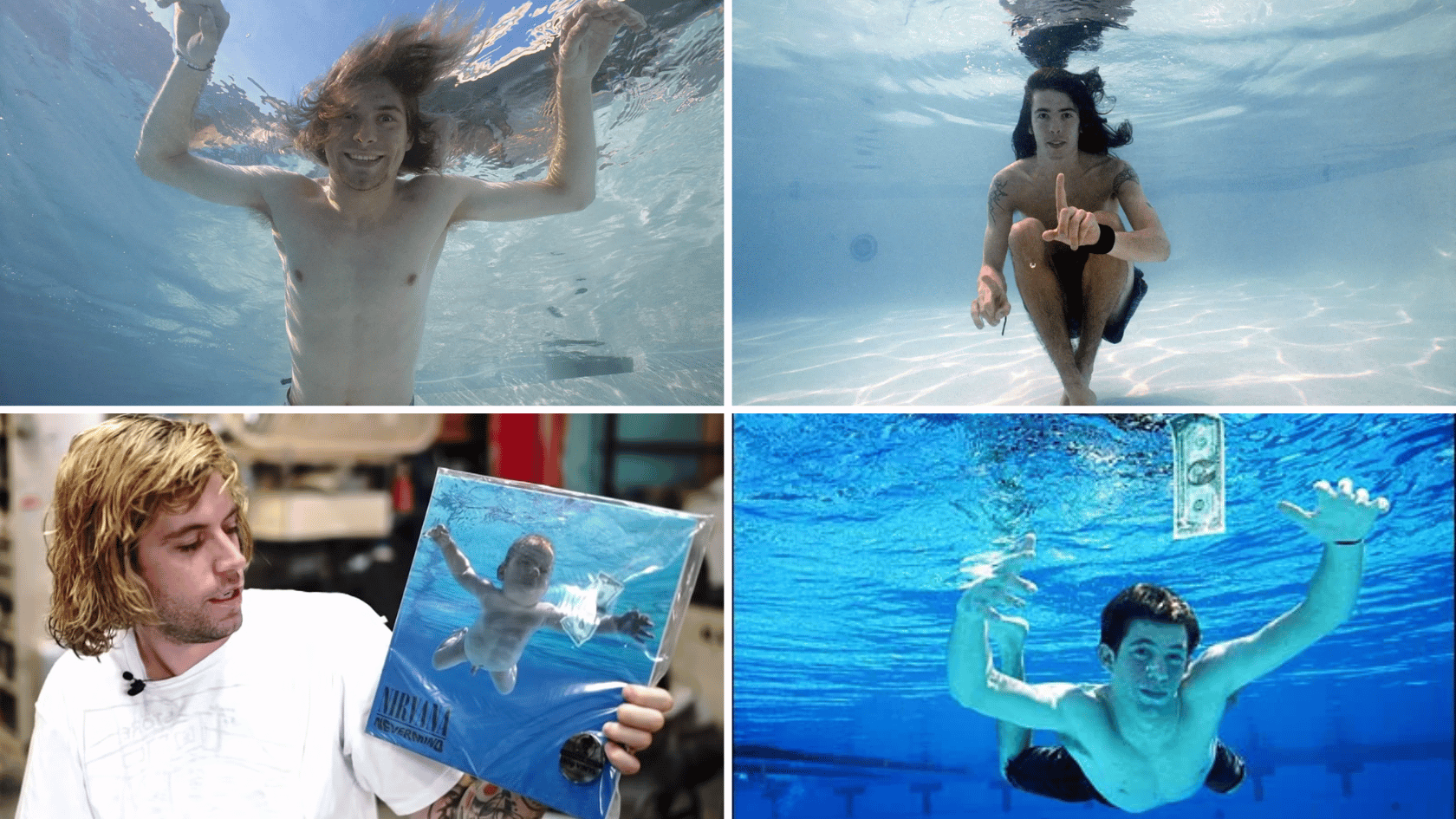
Elden later leaned into his connection to the photograph as he grew older, taking part in recreations of the shoot and even getting a Nevermind-themed tattoo.
That public association with the image eventually became the backdrop for a legal dispute that would follow him well into adulthood.
The Nevermind Album Cover Lawsuit and Controversy
What started as a widely recognized piece of album art turned into a multi-year federal case, with the legal picture shifting more than once between 2021 and 2025.
1. Why Spencer Elden Sued Nirvana
Elden filed suit in 2021, alleging that the nude childhood photograph caused him harm and amounted to exploitation under federal child pornography law.
Nirvana and the other named defendants rejected these claims, and the case moved through several rounds of federal review over the following years.
2. Why the Lawsuit Was Initially Dismissed
A district court dismissed the case in 2022, largely on statute-of-limitations grounds, ruling that Elden had waited too long after reaching adulthood to bring the claim.
3. Why the Ninth Circuit Revived the Case
On December 21, 2023, the Ninth Circuit reversed that dismissal, holding that alleged republications within the relevant period could count as new injuries.
The panel did not rule at that stage on whether the photograph itself met the legal definition of child pornography.
4. The 2025 Ruling in Nirvana’s Favor
The case reached a turning point on September 30, 2025, when the federal district court sided with the defendants, granting summary judgment and dismissing the action with prejudice.
The court concluded that the cover did not meet the legal definition of child pornography under its analysis.
5. What Is the Current Status of the Nevermind Lawsuit?
Elden appealed that September 2025 ruling, and the Ninth Circuit opened a new appeal in October 2025. Court filings show briefing continued into January 2026, and a June 2026 status report described the appeal as still pending.
Disclaimer: This appeal is still active, so the details above reflect its status at the time of writing and may shift once the court issues a new ruling.
Why the Nevermind Album Cover Became So Iconic
Part of the appeal comes from sheer visual simplicity, a single swimming baby paired with a dollar bill that reads clearly at any size.
The image also captures an unsettling pairing of innocence and money that has kept people talking about it for more than three decades.
Recognized by museums and design critics alike, the photograph has been recreated, parodied, and printed on posters and merchandise for years, keeping the Nevermind album cover in circulation long after the record’s release.
Final Thoughts
One photoshoot from 1991 turned into a permanent piece of pop culture, and the Nevermind album cover proves how a single choice, a dollar bill on a hook, can outlast the record it was made for.
Knowing the people behind it, the choices made in post-production, and the legal fight still playing out in court gives real context to carry into the next conversation about Nirvana and its early years.
Save this story for whenever that cover comes up again. Bookmark this breakdown so the full story stays one tap away the next time Nirvana comes up.
Drop a comment below with the detail from this story that surprised you most.
Frequently Asked Questions
Was the Nevermind Album Cover Ever Censored?
Some retailers and streaming platforms blurred or partially covered the image over the years because of nudity concerns, though Nirvana and Geffen Records never officially altered the original artwork.
Has Nirvana Publicly Commented on The 2025 Ruling?
Neither Nirvana nor its surviving members have issued a detailed public statement on the September 2025 ruling, with most updates coming through court filings and legal representatives instead of interviews.
Have Other Artists Referenced the Nevermind Album Cover?
Yes, the image has inspired parodies, recreations, and homages across music, fashion, and advertising, with its dollar-and-fishhook visual becoming a recognizable shorthand for consumerism across different corners of pop culture.