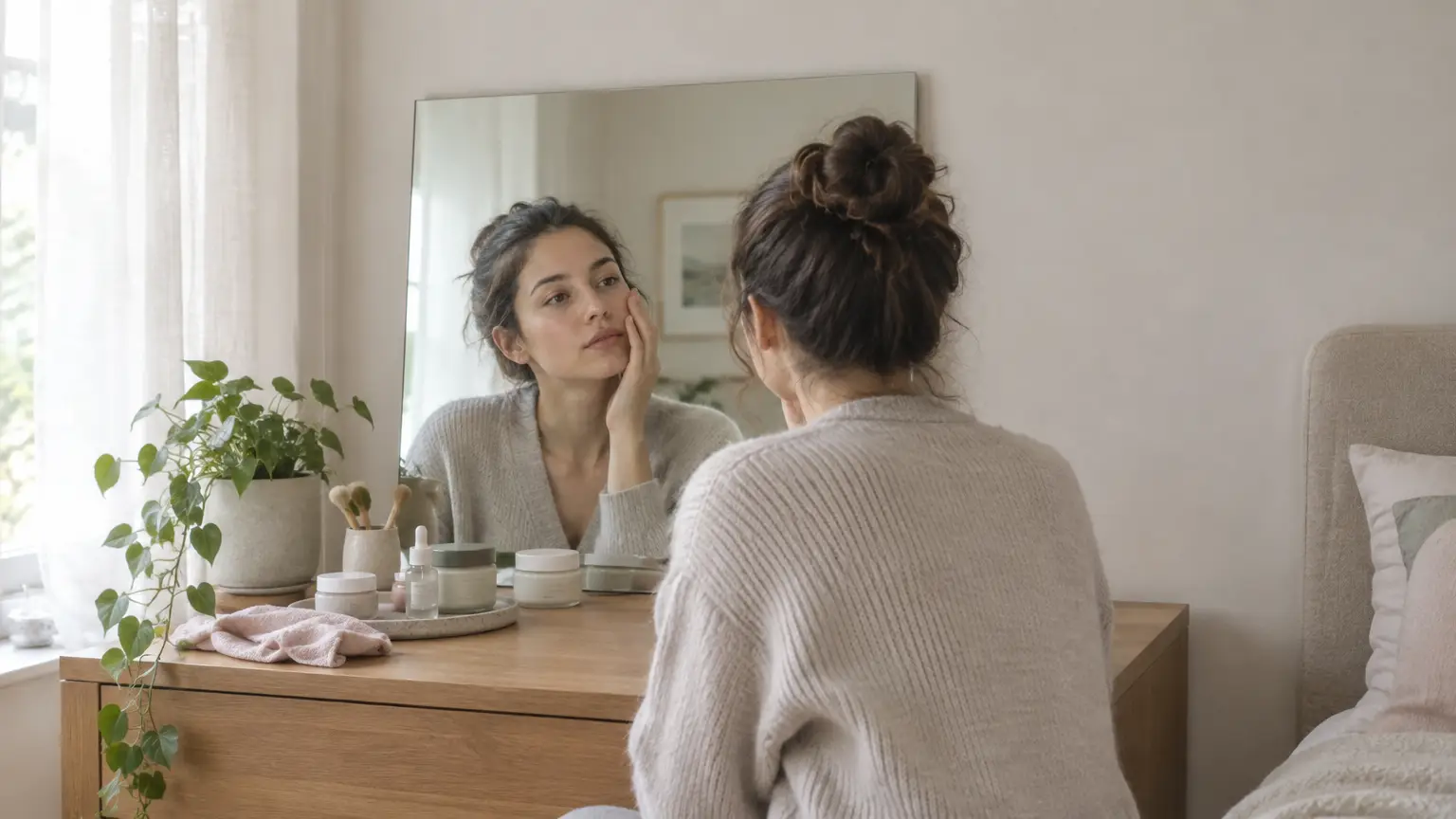
At some point in your twenties you looked in a mirror and made a judgment that was not entirely yours. Maybe it was about your nose, or your chest, or the way your jaw read in photographs. The verdict felt private and obvious, which is exactly how borrowed opinions tend to feel.
Beauty is sold as the most personal subject there is, yet almost nobody arrives at their preferences alone. Families, advertising, friends, algorithms and whatever decade you happened to grow up in all get a vote, usually before you know a vote is being taken.
Freedom here does not mean escaping influence, because that is not on offer. It means noticing the influence, deciding which parts of it you actually endorse, and then acting on the remainder without apologizing for it. That is a slower kind of confidence, and a sturdier one.
Taste Is Inherited Before It Is Chosen
Children learn what counts as attractive the same way they learn grammar, by absorption and long before they can argue with it. A grandmother who praised thinness, a coach who praised size, a classroom where one kind of hair was treated as neutral and another as a statement: all of it goes in before the critical faculties arrive.
The useful exercise is to trace one of your own convictions back to its source. Pick a feature you dislike and ask when you first decided that, and who was in the room. Sometimes the answer is a considered aesthetic preference. Often it is a comment somebody made in 2009 and forgot by dinner. The difference between those two origins is worth knowing before you spend money or anxiety on either.
The Pressure Is Measurable, and It Is Not Evenly Distributed
Pressure around appearance is not a vague cultural mood; it has been measured. Pew Research Center found that 71 percent of Americans say women face a lot of pressure to be physically attractive, against 27 percent who say the same about men, a gap wide enough to explain a great deal about how differently two people can experience the same mirror.
Naming that asymmetry matters because it reframes the personal as partly structural. If you have spent years feeling that your appearance is under review, that feeling is not paranoia or vanity. It is an accurate reading of a real environment, and accuracy is a better starting point than self-blame.
Autonomy Needs Information to Mean Anything
Autonomy is the word everyone reaches for in this conversation, usually to end it. Your body, your choice, and that is true. It is also incomplete, because a choice made without information is only technically a choice.
The Nuffield Council on Bioethics spent a full report on the ethics of cosmetic procedures and landed on recommendations that are strikingly practical: certified surgeons only, accredited registers patients can actually check, no procedures for under-18s outside a medical context, and independent research into how social platforms feed appearance anxiety. None of that restricts what an adult may want. It just insists the wanting be informed.
Information also changes what regret looks like. People who understood the tradeoffs and chose anyway tend to sit comfortably with an imperfect outcome, while people who were rushed through a consultation rarely do, even when the result is objectively good.
Numbers Describe a Trend, Not a Mandate
Trend data gets misread constantly. The Aesthetic Society publishes annual procedural statistics going back to the late 1990s, and the long view they offer is mostly a record of fashion moving through medicine. What was requested in 2003 is not what is requested now.
Read that correctly and it is liberating rather than alarming. Popularity is evidence of popularity and nothing else. Someone weighing a Six Surgery breast augmentation should be asking what fits their frame, their life, and their tolerance for recovery, not what a chart says was common last year. The same logic applies in reverse: declining a procedure because it has become fashionable is still letting the fashion decide.
Defining Beauty on Your Own Terms Is Work, Not a Slogan
Defining beauty for yourself sounds like a poster, and in practice it is mostly admin. You audit what you consume, you notice which accounts leave you worse off and remove them, and you get specific about what you actually like rather than what you are supposed to like. None of it happens in an afternoon.
Specificity is the real defense. People who can describe precisely what bothers them tend to make calmer decisions than people carrying a general sense of not being enough. It is also why honest procedure write-ups help; a breakdown of celebrity brow lift results that explains millimeters, recovery and risk does more for a reader than any amount of encouragement.
Final Thoughts
Identity and appearance are tangled together in ways no amount of affirmation fully untangles. Pretending looks do not matter is as unhelpful as pretending they are everything, and most people live somewhere between those two positions without much trouble.
What separates a free choice from a pressured one is rarely the choice itself. It is whether you can explain it to yourself in plain language, without reaching for someone else’s standard to justify it. Surgery, no surgery, a haircut, nothing at all: the test is the same.
The judgment you made in that mirror years ago can be revisited. You are allowed to overturn it, keep it, or decide it was never interesting enough to hold onto.