Do you eat well and exercise but still feel tired, stressed, or unmotivated? Many people focus on just one part of their health, like diet or fitness, without realizing that true well-being depends on much more than physical strength alone.
The components of health work together to shape how you think, feel, function, and connect with others every day.
When one part of health is overlooked, whether it’s your mental state, emotional balance, or social connections, it often affects the rest, even if your physical health seems fine on the surface.
Each component of health plays a role in your daily life and long-term well-being, and practical habits can help you build a balanced, sustainable routine
Understanding Health as a Whole, Not Just Fitness
Fitness is often the first thing people associate with being healthy, but it only covers one part of the picture. True health includes your mental clarity, emotional stability, and how connected you feel to others.
Someone can maintain a strict workout routine and still struggle with stress, poor sleep, or a lack of purpose. Physical strength alone doesn’t guarantee a balanced or fulfilling life.
Health as a whole considers how your body, mind, and relationships work together every day. When one area is strong, but others are ignored, it often shows up as fatigue, low motivation, or irritability.
Shifting your focus from just fitness to overall well-being helps you build habits that support every part of your life. This broader approach leads to lasting balance rather than short-term physical results.
What Are the Main Components of Health?
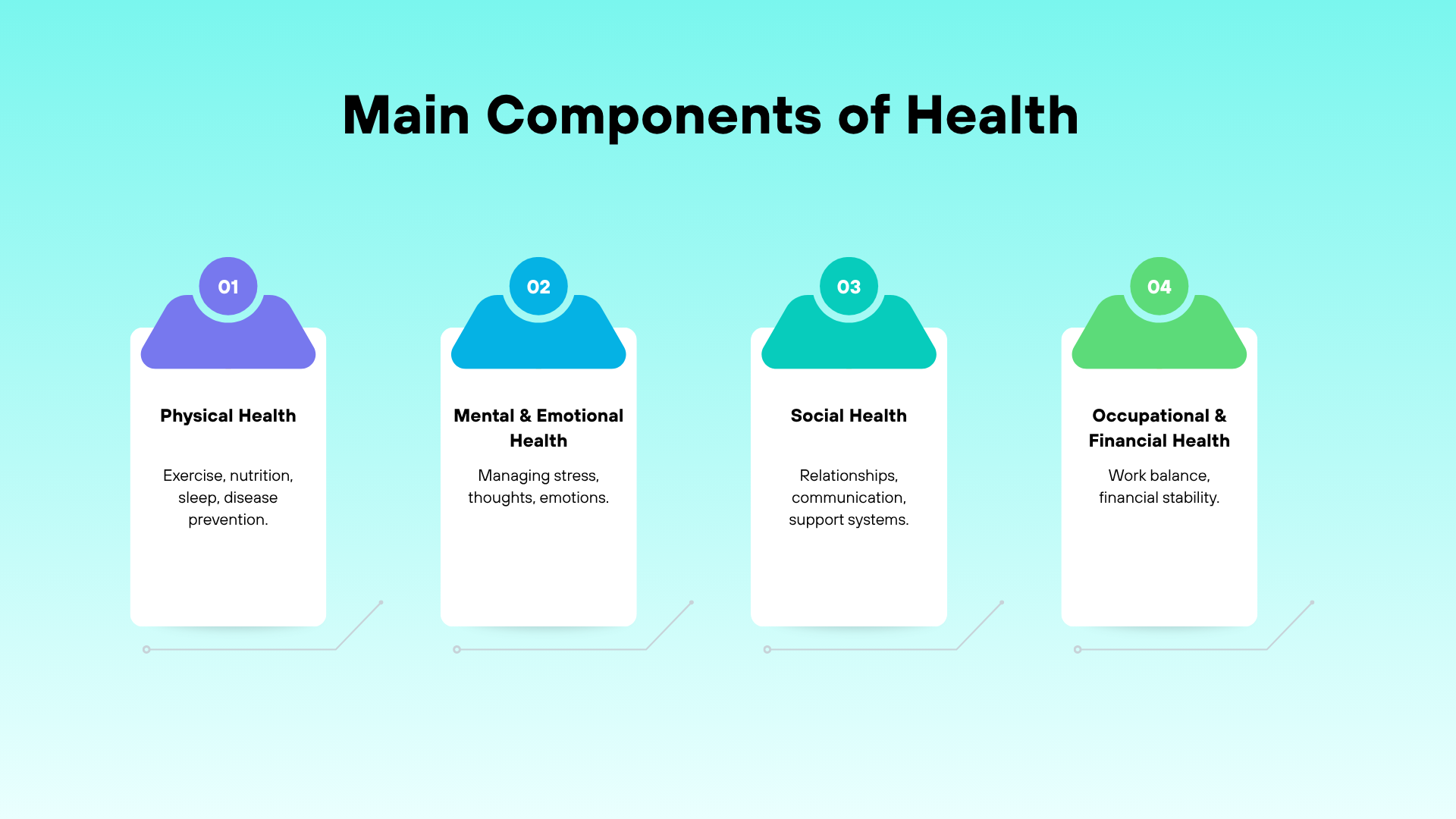
Health and wellness are built on multiple interconnected dimensions, each playing a vital role in how you feel, function, and live every day.
Together, these components form a complete picture of overall well-being.
- Physical Health: Keeps your body functioning through exercise, nutrition, sleep, and disease prevention.
- Mental & Emotional Health: Supports thinking, learning, stress management, and understanding and expressing emotions.
- Social Health: Builds healthy relationships, communication, and strong support systems.
- Occupational & Financial Health: Supports work-life balance, financial stability, and reduced stress.
True well-being comes from balancing every area of health to build a healthier, more fulfilling, and resilient life.
How Are the Components of Health Related to Wellness?
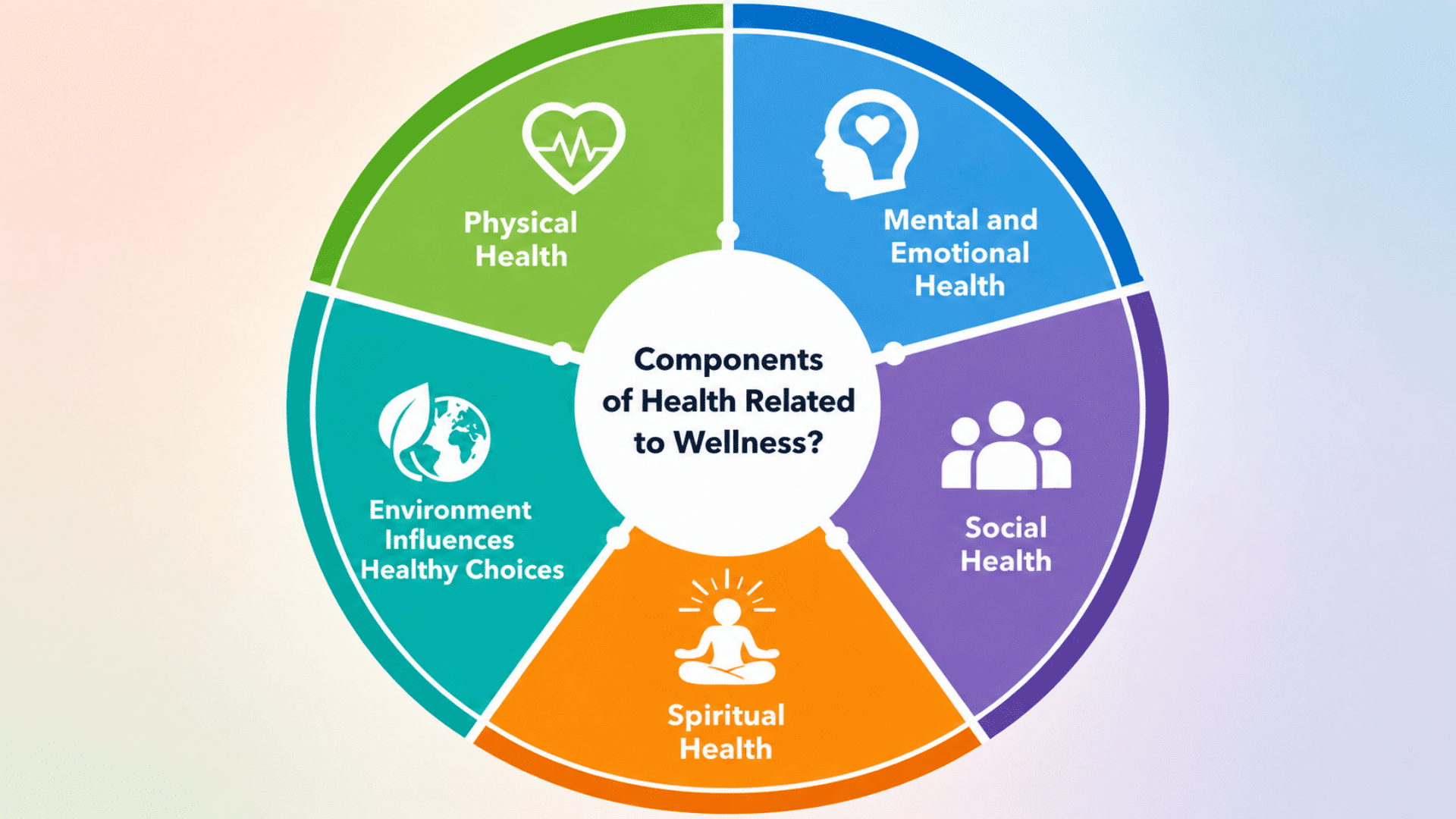
The components of health are related to wellness because they constantly influence one another. Wellness is not achieved by excelling in only one area; it develops when multiple components work together.
Rather than existing as separate categories, these components form an interconnected system.
1. Physical Health Supports Every Other Component
Physical health is the foundation of overall well-being. Without a healthy body, it’s hard to engage with the mental, emotional, social, and professional aspects of life.
When physical health declines, energy drops, straining relationships and work. Caring for your body builds the strength and resilience needed to thrive everywhere.
For example:
- Regular exercise improves mood.
- Nutritious food supports brain function.
- Good sleep improves memory and emotional control.
- Physical activity reduces stress.
2. Mental and Emotional Health Influence Daily Decisions
Mental and emotional health are more than internal experiences; they’re powerful forces shaping behavior, decisions, and daily habits.
How a person thinks and feels directly influences their choices, often unconsciously.
Over time, these behaviors affect physical health, creating a difficult cycle and recognizing the connection is the first step toward breaking it.
Someone experiencing chronic stress may:
- Sleep poorly
- Eat less nutritious foods
- Avoid exercise
- Withdraw socially
3. Social Health Strengthens Overall Wellness
Human beings are inherently social creatures; connection, belonging, and support are fundamental needs, not luxuries.
The quality of relationships shapes overall health as powerfully as diet or exercise.
The people around you can lift you toward better health or pull you away, so investing in supportive relationships is invaluable.
Strong social connections can help people:
- Manage stress
- Recover after setbacks
- Stay motivated
- Build healthy habits
4. Spiritual Health Builds Resilience
People with a strong sense of purpose cope more effectively with adversity, staying grounded and motivated during difficult times.
While spirituality looks different for everyone, having meaning and direction supports overall wellness and emotional strength, acting as an anchor during life’s more uncertain or challenging moments.
Purpose can:
- Reduce stress
- Increase motivation
- Improve emotional balance
- Encourage healthier lifestyle choices
5. Environment Influences Healthy Choices
Your surroundings shape daily behaviors more than most people realize, often influencing choices before you’re aware of it.
Even small changes in your environment can make healthy habits feel effortless or exhausting.
For example:
- Safe neighborhoods encourage walking.
- Healthy workplaces reduce stress.
- Access to nutritious food improves diet.
- Quiet environments improve sleep.
Why Wellness Depends on Balance Instead of Perfection
Many people believe wellness means excelling in every component of health at all times. In reality, it is about maintaining a reasonable balance across all dimensions over time.
Everyone goes through periods where one area of health demands more attention than another.
A student facing exams, a new parent adjusting to sleepless nights, or someone recovering from surgery will each experience natural, temporary shifts in their wellness.
Wellness is not about perfection; it is about awareness and adaptation. Recognizing these changes and consciously supporting other components helps maintain overall well-being through every stage of life.
What Is the Difference Between Health and Wellness?
Health and wellness sound alike but describe different things.
Health is your condition at a given moment, while wellness is the daily, active pursuit that keeps that condition strong.
|
Aspect |
Health |
Wellness |
|---|---|---|
|
Definition |
A dynamic state of complete physical, mental, and social well-being, not just the absence of disease. |
The active pursuit of activities, lifestyle choices, and personal growth that lead to holistic health. |
|
Focus |
Treating, diagnosing, and managing symptoms or medical conditions. |
Prevention, balance, and thriving across emotional, social, intellectual, and spiritual dimensions. |
|
Nature |
Often viewed as a goal or fixed outcome that can be measured with clinical tests. |
A continuous, lifelong process rather than a static endpoint. |
Habits that Support Every Component of Health
Many healthy habits strengthen more than one component of wellness simultaneously, making them powerful tools for overall well-being.
- Take care of your body: Regular exercise, quality sleep, and a balanced diet work together to support physical and mental health, stabilize mood, and strengthen the immune system.
- Manage stress: Meditation, journaling, or time outdoors improve emotional, mental, and physical well-being.
- Build strong relationships: Strengthens emotional resilience, stress management, and overall happiness.
- Keep learning: Supports intellectual health while building confidence and personal growth.
Final Thought
The components of health rarely work in isolation. Your physical, mental, emotional, and social sides constantly feed into each other, shaping your energy, your daily habits, and how you feel from one day to the next.
When one area is strong, it tends to support the rest. That connection is also an advantage.
A small improvement in a single area often lifts the others, so you don’t have to fix everything at once to feel a real difference.
Progress in one place quietly builds momentum everywhere else.
Share your thoughts in the comment section: Which area of health has the biggest impact on your wellness?
Frequently Asked Questions
Can Your Health Components Change Throughout Life?
Yes. Your physical, mental, social, and other health components naturally change with age, life events, and circumstances, making regular self-care and adaptation essential for long-term wellness.
Which Component of Health Should You Improve First?
Start with the area that has the biggest impact on your daily life or presents the greatest challenge. Improving one component often creates positive changes across several others.
How Can You Tell if Your Overall Wellness Is Improving?
Signs of better wellness include consistent energy, improved sleep, better stress management, healthier relationships, and greater ability to handle everyday responsibilities.