
A fire table can completely transform how you actually use an outdoor area. There’s something genuinely warm about gathering around one on a cool night. But before spending the money, you need to know exactly what separates a safe fire table from one that creates unnecessary risk.
These six features are what you should check before anything else.
A Dependable Auto Shut-Off System
An automatic shut-off is the single most important safety mechanism on any gas fire table, and it’s the first thing to verify when you shop. Fire side tables at Majestic Fountains are built with this kind of safety-first approach in mind, and it reflects a broader standard you should expect across the category. The auto shut-off valve cuts the gas supply the moment the flame goes out unexpectedly – whether from a strong gust of wind or a mechanical hiccup. Without it, gas continues to flow into the air around your guests, creating a serious hazard. Look for a model that uses a thermocouple or thermopile sensor, because these detect heat from the flame directly and respond within seconds. Don’t accept a table that requires you to manually shut the gas off as your only safeguard.
CSA or UL Certification
Third-party certification isn’t just a sticker on the box. CSA (Canadian Standards Association) and UL (Underwriters Laboratories) marks mean the product cleared independent safety testing for gas appliances and outdoor heating equipment. Treat an uncertified fire table the way you’d treat uncertified electrical wiring, something that hasn’t been proven safe under real-use conditions.
Ask the retailer directly whether the model carries one of these marks, and verify it yourself if you can. Some manufacturers claim compliance without ever going through formal testing. A certified fire table has been evaluated for gas line integrity, ignition reliability, and material performance under sustained heat, and that testing matters, especially if you plan to use the table regularly or in a covered outdoor space.
Adjustable Flame Control
Control over flame height isn’t just a comfort feature. It’s a practical safety tool. A fire table that lets you dial the flame down gives you an immediate response option if conditions change – wind picks up, a child moves closer, or guests shift the seating arrangement. Tabletop models with only an on/off valve leave you with no middle ground.
Look for a knob or electronic panel that offers a clear, smooth range from low to high. The adjustment should feel deliberate. Not loose, not imprecise. Some higher-end models include a remote control, letting you dial back the flame without reaching across the table, which matters more than it sounds when guests are seated all the way around it.
Heat-Resistant Materials and a Protected Burner
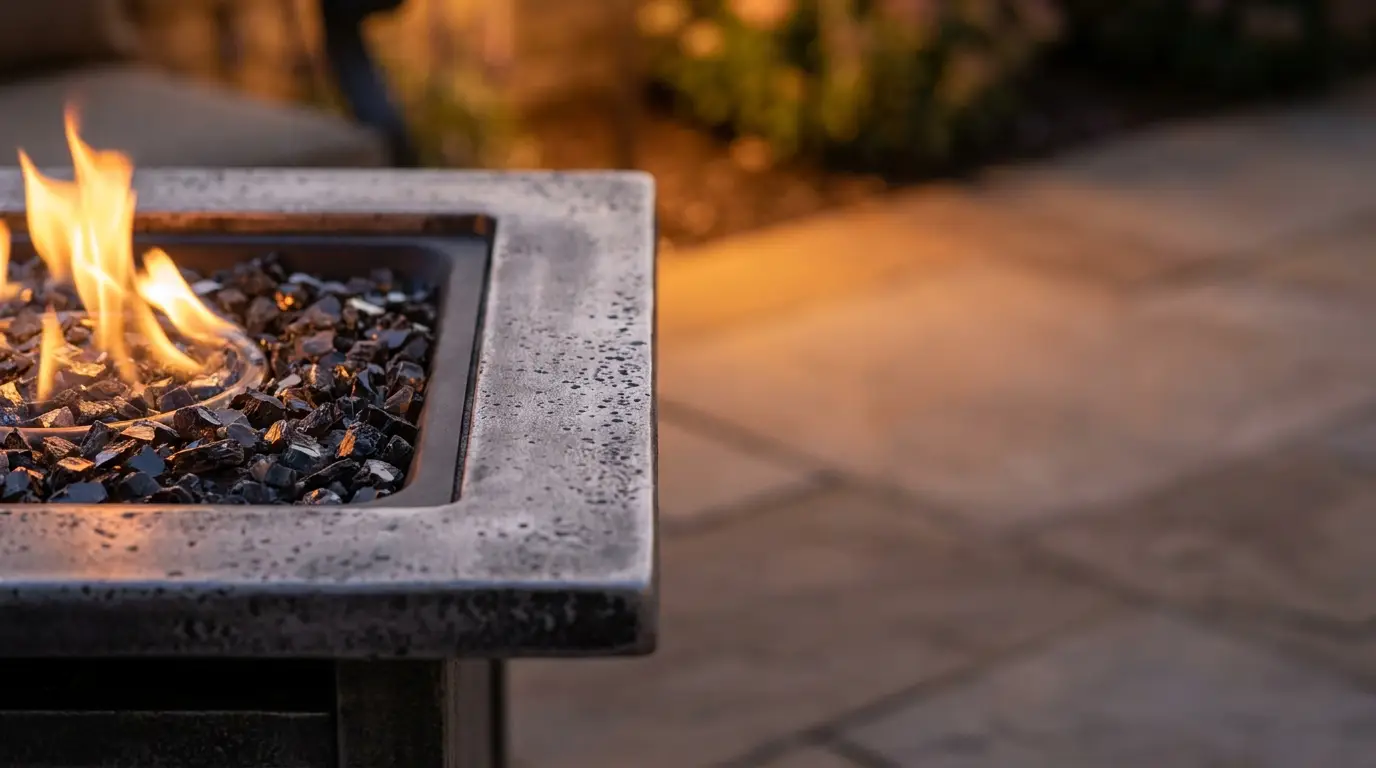
The materials surrounding the burner are just as important as the burner itself. A well-built fire table keeps heat contained and directed upward, not conducted sideways into the frame, nearby furniture, or the ground underneath. Check that the burner cover – typically lava rocks, fire glass, or fire beads – is rated for sustained high-temperature exposure. Low-grade filler material can crack, shift, or discolor, and in some cases it affects how evenly the flame sits above the burner.
The table frame should also stay cool enough to touch on the sides and base during normal operation. Cast aluminum and powder-coated steel are common choices that handle outdoor heat well. Skip any table whose spec sheet doesn’t mention material ratings at all.
A Wind Guard or Glass Panel Enclosure
Open flames and wind don’t mix well. A strong gust can push the flame sideways, send embers toward seating, or extinguish the flame and trigger the auto shut-off repeatedly throughout the evening. But a steady crosswind that bends the flame without killing it is more dangerous because the auto shut-off doesn’t activate, and the heat distribution becomes unpredictable.
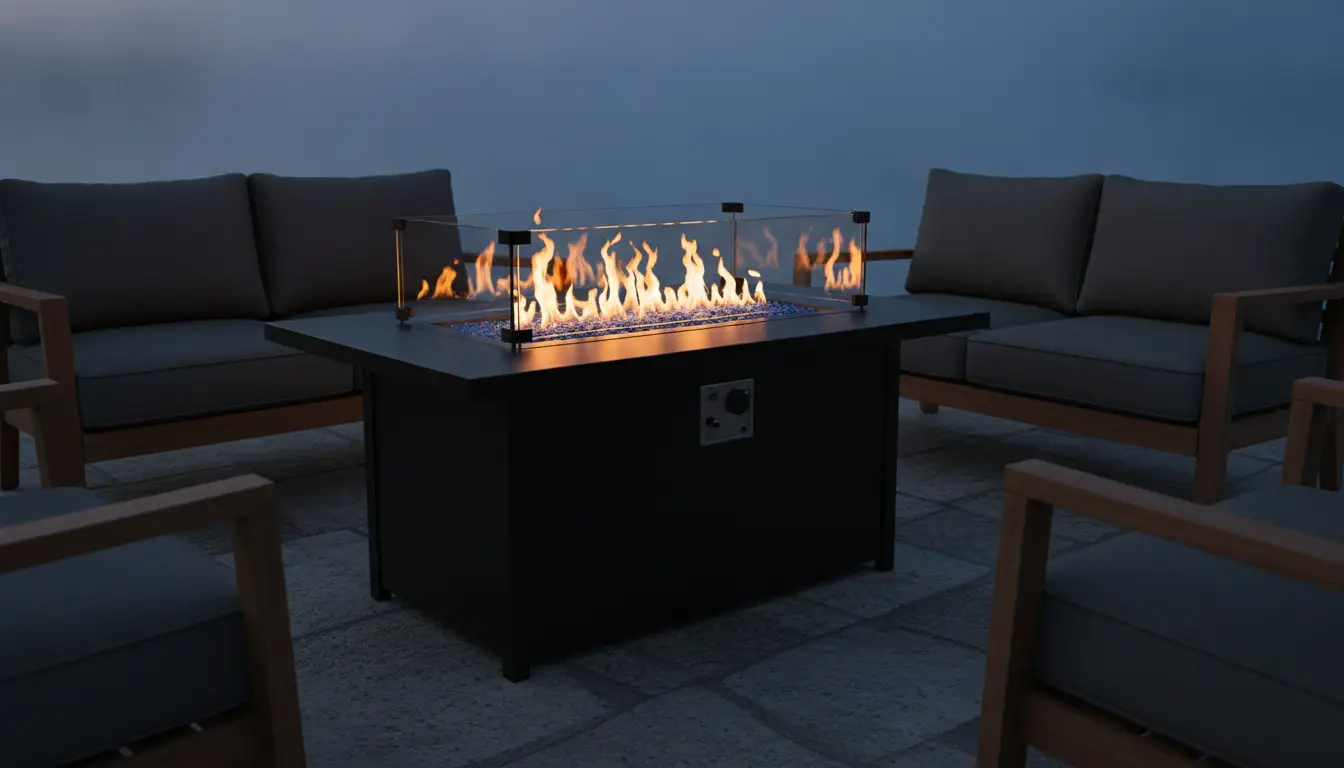
A tempered glass wind guard solves this. It shields the flame on all sides without blocking the visual effect, and it keeps the burn pattern stable even on breezy nights. Some tables include the guard as standard equipment; others sell it separately. If you live in a region with regular afternoon wind – common in coastal or high-elevation areas – treat the wind guard as required, not optional.
Stable Construction and Tip-Over Protection
A fire table with an active flame needs to stay exactly where you put it. Models with a narrow base, lightweight frame, or uneven leg design carry real risk on patios that aren’t perfectly level, or in yards where kids and pets are constantly moving around. Before buying, check the weight distribution and whether the base widens toward the ground for stability.
Some gas fire tables also include anti-tip features built into the base or the gas line connection. A flexible gas line that disconnects cleanly if the table shifts dramatically is a meaningful safety addition; so is a recessed burner design, which keeps the flame below the table rim rather than at or above it. Both reduce the consequences if the table ever gets bumped.
Conclusion
Safety features in fire tables aren’t complicated, but they do require attention. An auto shut-off valve, certified construction, adjustable flame control, heat-resistant materials, wind protection, and a stable base each address a distinct category of risk. Check for all six before you buy, and don’t assume a higher price automatically means a safer design. Ask for the specs, verify the certifications, and think through how you’ll actually use the table before you commit.