

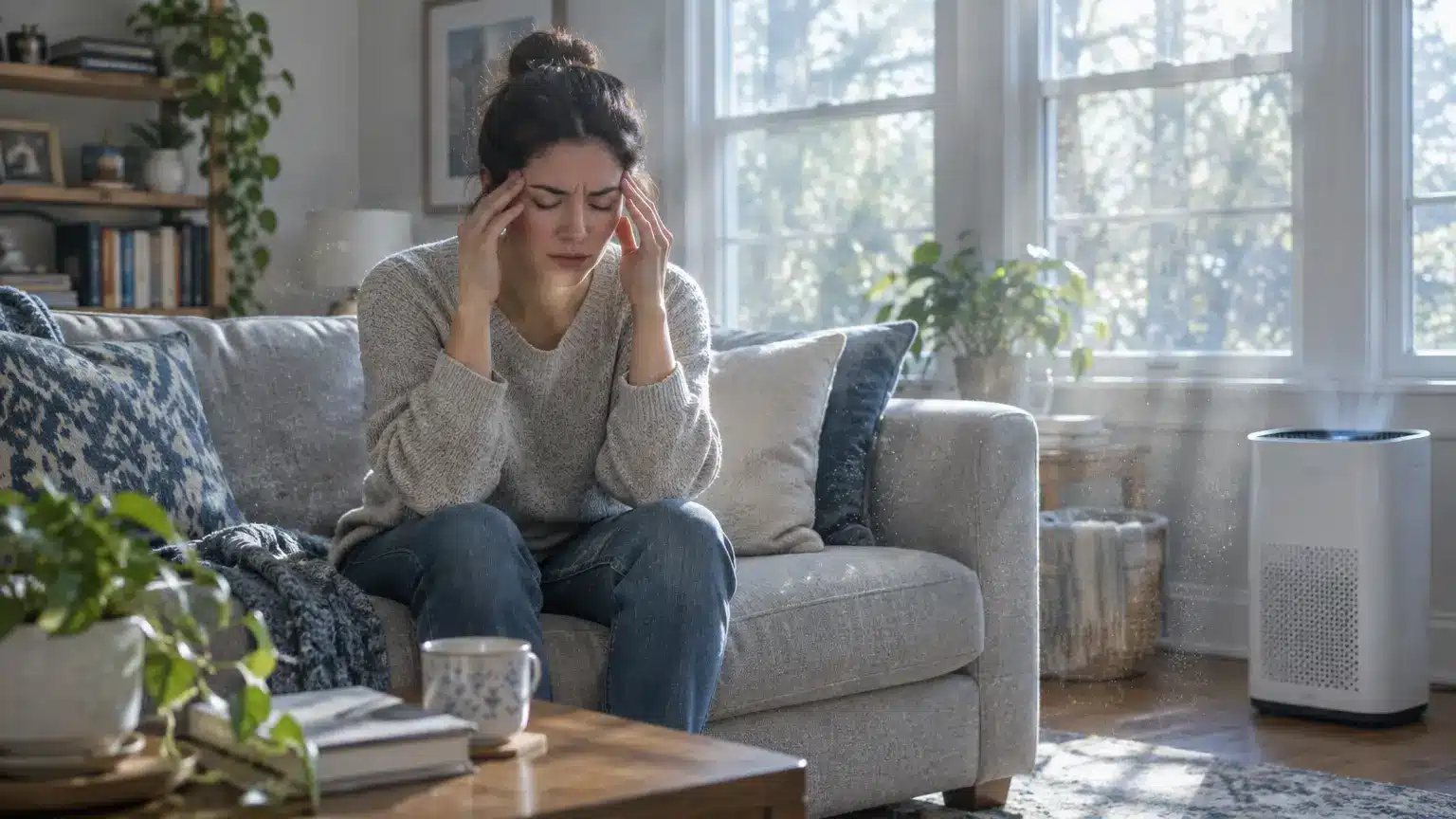
You spend much of your day at home, keep things clean, and still wake up tired or congested. Perhaps a headache develops by afternoon, or restless sleep leaves you exhausted. These complaints have many possible causes, but the air inside your home is worth considering.
Dust, indoor allergens, cooking emissions, cleaning products, and inadequate ventilation can all affect what you breathe. Even neglected heating and cooling equipment may contribute to uncomfortable indoor conditions. Recognizing possible poor indoor air quality symptoms means noticing patterns, not assuming the air is responsible for every health concern.
Common Signs That Poor Indoor Air Quality May Be Affecting You
Frequent Headaches and Unexplained Fatigue
Repeated headaches at home can be frustrating. Certain pollutants, including fumes from household products and combustion sources, may contribute to headaches, dizziness, or fatigue. Inadequate ventilation can allow pollutants to accumulate.
Notice whether discomfort increases in a particular room or eases elsewhere. That pattern merits investigation, but is not a diagnosis. Stress, dehydration, infections, medication effects, and other health conditions can cause similar symptoms.
Poor Sleep and Morning Congestion
Bedding, carpets, and soft furnishings can harbor allergens. Dust mites and pet dander may aggravate congestion, nighttime coughing, and itchy eyes, making restful sleep harder.
Respiratory Irritation and Allergy Symptoms
Sneezing, a scratchy throat, coughing, watery eyes, or a persistently irritated nose can sometimes be linked to airborne irritants. People with allergies or asthma may be especially sensitive to dust, mold, pollen, and other indoor triggers.
Symptoms are not always immediate, and one person’s reaction may differ from another’s. If wheezing, coughing, or breathing discomfort persists, discuss it with a healthcare professional rather than relying on home cleaning alone.
Why Indoor Air Can Be More Polluted Than You Think
A closed window may keep out traffic noise, but it does not guarantee clean air. Pollutants generated indoors can accumulate when there is too little fresh-air exchange. Cooking can release particles, cleaning sprays may emit volatile organic compounds (VOCs), and damp materials may support mold growth. Dust and pet dander can become airborne again when people move around.
According to the U.S. Environmental Protection Agency (EPA), levels of some pollutants are often several times higher indoors than outdoors. That does not mean every home’s air is worse; conditions depend on the sources present, ventilation, moisture, and building maintenance.
Outdoor pollen, wildfire smoke, and traffic pollution may enter through openings or ventilation systems, too. Improving indoor air quality therefore involves more than buying one appliance. Reducing pollution at its source, supplying cleaner air, and filtering airborne particles work together.
Could Your HVAC Filter Be Part of the Problem?
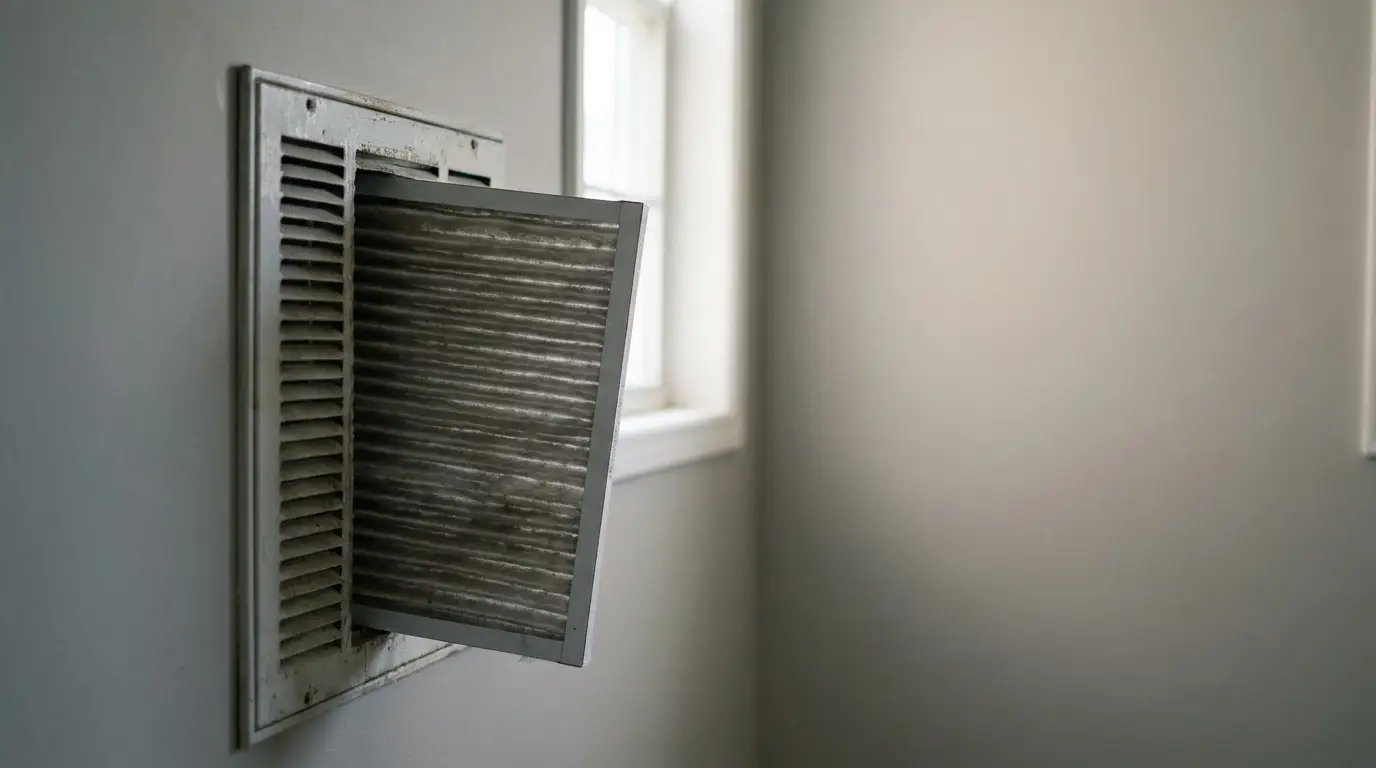
One easily overlooked part of indoor air quality is the filter inside your heating and cooling system. Over time, it collects dust and airborne particles, and a heavily clogged filter can restrict airflow and make the system work harder. Checking the filter regularly is a sensible home-maintenance habit, particularly in households with pets or frequent HVAC use. If the existing filter is overdue or visibly dirty, HVAC filter replacement is a practical step toward maintaining proper airflow and filtration.
A furnace air filter captures particles only when air passes through the system. Its effectiveness depends partly on the filter’s design, fit, and compatibility with the equipment. Choose the correct filter dimensions and an efficiency rating compatible with the system, following the manufacturer’s guidance or advice from an HVAC professional.
There is no universal replacement interval. Filter type, system runtime, household dust, and pets can all change how quickly a filter becomes dirty.
Other Hidden Sources of Poor Air Quality at Home
Some indoor pollutants are easy to miss because they have no obvious smell or visible cloud. Dust mites collect in mattresses, rugs, and upholstered furniture, while pet dander can remain on fabrics even after a pet leaves the room. For sensitive people, these indoor allergens can contribute to ongoing discomfort.
Moisture creates a different problem. A leaking pipe, damp basement, or recurring window condensation can encourage mold growth, especially when the underlying water source goes unresolved. Covering a stain or masking a musty odor will not fix the cause.
Certain cleaners, air fresheners, paints, and scented products can release irritating fumes or VOCs. Smoke from tobacco, candles, or cooking may also linger without adequate exhaust ventilation.
A clean-looking room is not necessarily free of pollution. Even a well-maintained filter cannot remove a damp wall, stop smoke at its source, or correct an improperly vented appliance.
Simple Ways to Improve the Air You Breathe at Home
Improvement need not require an expensive renovation. Start with habits that reduce pollutants at the source:
- Capture dust rather than spreading it. Vacuum floors, rugs, and upholstered furniture regularly, ideally with equipment that traps fine particles. Use a damp cloth to clean dusty surfaces.
- Refresh fabrics. Wash bedding routinely and clean curtains, throws, and other textiles that collect dust. Consider allergen-proof mattress or pillow covers when dust mites are a known trigger.
- Reduce avoidable emissions. Keep tobacco smoke outside, limit candles or incense if they irritate your airways, and avoid unnecessary air fresheners or fragranced sprays. Follow cleaning-product instructions and ventilate during use.
- Ventilate at the source. Use a kitchen range hood that vents outdoors and run bathroom exhaust fans during and after showers. Open windows when outdoor air quality is good and, if pollen triggers your symptoms, pollen levels are low.
- Keep moisture under control. Fix leaks promptly and use a hygrometer to track humidity. The EPA recommends an indoor relative humidity of roughly 30% to 50% to help limit mold-friendly conditions.
- Maintain filtration. Check heating and cooling filters as recommended, keep vents unobstructed, and consider a portable particle-filtering air purifier with a clean air delivery rate (CADR) suitable for the room. Avoid devices that intentionally generate ozone, which can irritate the lungs.
- Protect against invisible hazards. Maintain working carbon monoxide alarms and test your home for radon. Standard particle filters do not address either gas.
Simple habits work best when repeated regularly.
When to Take Indoor Air Concerns More Seriously
Persistent headaches, fatigue, congestion, or breathing problems deserve medical attention, particularly if they are worsening. If symptoms consistently appear in one building, note when and where they occur and investigate possible moisture, combustion, ventilation, or HVAC problems. A qualified professional may be needed when the cause is unclear.
Carbon monoxide requires immediate action. Headaches, dizziness, weakness, or nausea can be signs of exposure, especially when several people in the same home feel unwell, but exposure can also affect just one person. The CDC warns that carbon monoxide is odorless and potentially deadly. If a carbon monoxide alarm sounds or you suspect exposure, leave the building immediately and call emergency services from outside, even if nobody feels ill. Do not reenter until authorities say it is safe. Routine filter changes cannot prevent carbon monoxide poisoning.
The Final Step: Make Indoor Air Quality Part of Your Wellness Routine
Healthy indoor air belongs alongside sleep, nutrition, and movement in your wellness routine. Make a monthly check: inspect the HVAC filter, look for condensation or leaks, monitor humidity, test carbon monoxide alarms according to their instructions, and clean the spaces you use most.
Consistent maintenance, sensible ventilation, and attention to changing conditions can make a home more comfortable. When something feels different, investigate early instead of waiting for an obvious problem.