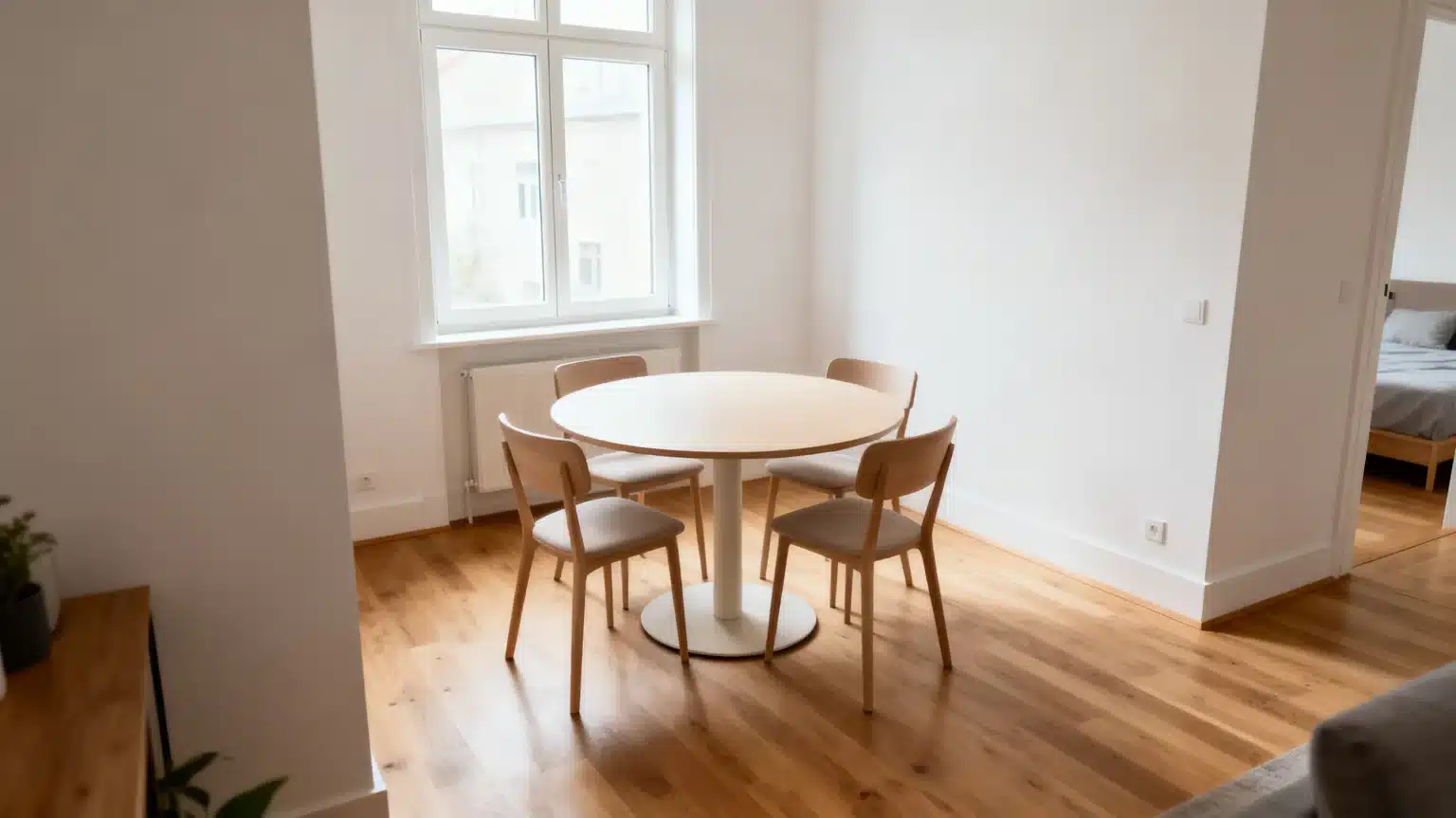
Round tables are the best space-saving choice. They have no sharp corners, which improves flow and traffic space, making them ideal for small square rooms and dining corners. If you need more seating, choose oval.
Table Shape Comparison for Small Spaces
|
Shape |
Best For |
Seats |
Space-Saving Rating |
|
Round |
Small square rooms, corners |
4–6 |
⭐⭐⭐⭐⭐ |
|
Oval |
Narrow spaces, occasional guests |
6–8 |
⭐⭐⭐⭐ |
|
Square |
Small apartments, couples |
2–4 |
⭐⭐⭐⭐ |
|
Slim Rectangular |
Long narrow rooms, wall placement |
4–6 |
⭐⭐⭐ |
|
Extendable/Folding |
Studio apartments, multi-use spaces |
2–10 |
⭐⭐⭐⭐⭐ |
Why Round Dining Tables Are the Space-Saving Champion
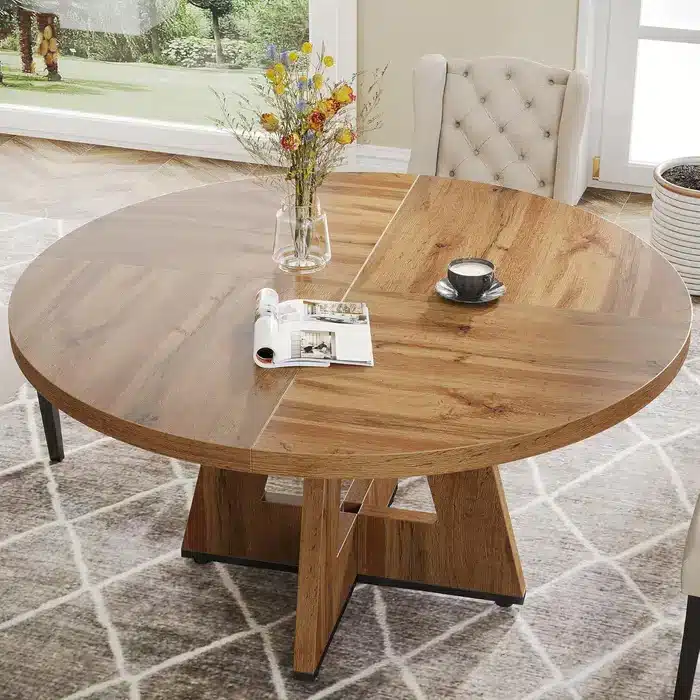
The main advantage of round tables is their lack of sharp corners. Sharp corners waste circulation space, while round tables let chairs slide underneath more freely and allow people to move around without obstruction.
Key Advantages
- Less floor occupation: Round tables seat more people than rectangular ones at the same size, since corners aren’t wasted
- Better flow: Pedestal single-column bases provide extra legroom, and chairs can rotate 360° around the table
- More visually open: Glass-top round tables make spaces feel larger, ideal for ultra-small units
Best For
- Small square rooms (e.g., 8×10 ft dining areas)
- Cozy dining corners
- Families needing flexible seating arrangements (many kids, frequent guests)
Choose pedestal bases over four-leg designs – chairs can fully slide under the table. Glass-top designs let light pass through, reducing visual pressure. The 47-inch round farmhouse dining table features a sturdy pedestal base, making it an ideal choice for both flow and function.
Oval Dining Tables
Oval dining tables are like a “stretched version” of round tables—slightly longer surface but still no sharp corners. They work well in narrow rooms, such as corridor-style dining areas.
- Similar flow advantages to round tables
- Extendable oval tables can adjust size: 4 people normally, expand to 8 when guests arrive
- Armless chairs can fully slide under, saving space
If your room’s length is significantly greater than its width, an oval dining table is a better choice than round.
Square Tables: Best for Compact Living (2–4 People)
Square tables suit small apartments, couples, or small families. Their advantage is wall placement—they actually take up less floor space than round tables.
- Ideal for 2–4 people daily dining
- When placed against the wall, they occupy only one side of the room, thereby leaving more space for movement.
- Can double as a workspace, multi-functional without waste
- Choose folding square or wall-mounted drop-down tables for ultra-small spaces
If your household only has 2 people eating regularly, a square table is the most minimalist choice.
Rectangular Tables
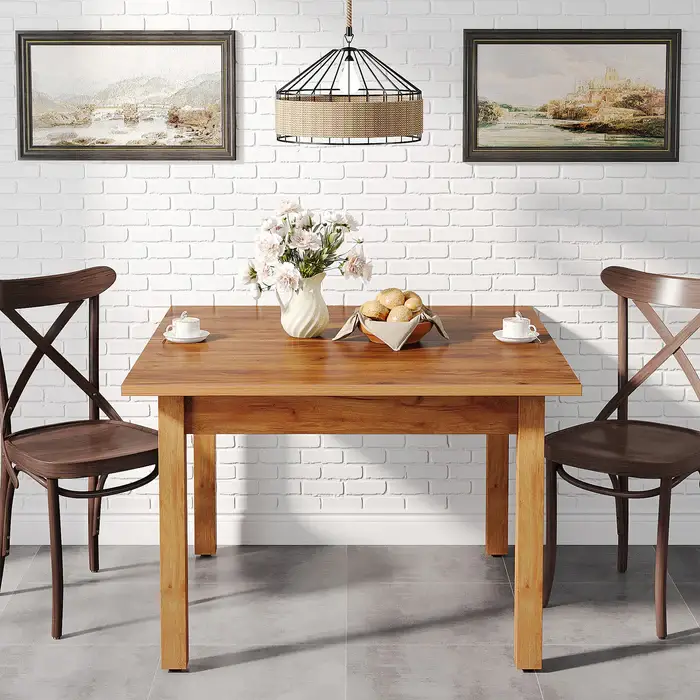
Rectangular tables are most common, but placement determines whether they save space.
- Suitable for long narrow rooms
- Use a bench instead of chairs: benches can fully slide under the table, not occupying extra space
- Choose narrow-width designs (e.g., 30 inches wide) to avoid overwhelming small rooms
- Daytime dining + nighttime work = one table, two uses
How to Choose the Right Size
Measure before choosing—otherwise the best shape will still waste space.
Each person needs 24 inches (60–70cm) of table width for comfortable dining.
|
Seats |
Minimum Table Size |
|
2 |
Square 60×60cm or round 70cm diameter |
|
4 |
Square 90×90cm or round 100cm diameter |
|
6 |
Rectangular 120×80cm or round 120cm diameter |
|
8 |
Rectangular 180×90cm or extendable table |
Measurement Formula
Max Table Size=Room Size−2×36 inches clearance
Example: Room is 10×12 ft, max table width = 10 ft – 2×3 ft = 4 ft (about 120cm).
FAQ
1. What Is the Best Dining Table Shape for A Small Square Room?
Round is best for small square rooms. Round tables have no sharp corners, which improves flow and circulation space. They also fit well in corners or breakfast nooks. Rectangular tables work better for narrow, hallway-like rooms.
2. how Much Clearance Space Do I Need Around a Dining Table?
At least 36 inches (91 cm) from the table edge to the wall. This allows enough space for chairs and for people to walk behind seated diners. For high-traffic areas (e.g., next to a kitchen path), allow 42–48 inches (107–122 cm). The absolute minimum is 30 inches (76 cm), but that is only for very tight layouts.
3. What Size Round Table Fits a Small Apartment?
A round table of 36–42 inches (90–110 cm) in diameter works best for most small apartments. It comfortably seats four people while preserving good circulation space. A 48‑inch (120 cm) table can seat four to six people but requires a larger room (at least 10–11 feet wide). For urban apartments, the 36–42 in range is the most popular and practical.
4. Is an Extendable Table Worth It for Small Spaces?
Yes – if you occasionally host guests but lack space for a large fixed table. An extendable table stays compact for daily use and expands when needed. It is a worthwhile investment for flexibility. However, if you live alone or as a couple and rarely entertain, a good‑quality fixed table may be more practical and cost‑effective.
5. Can a Rectangular Table Save Space in A Small Room?
Yes – in narrow, hallway‑like rooms. Place a slim rectangular table (30–34 inches / 76–86 cm wide) against a wall, and pair it with a bench on the opposite side. This layout saves aisle space and works well as a dining table or even a desk. Avoid deep, wide rectangular tables in small square rooms – they block circulation.
Final Recommendation
- Small spaces first choice: Round (100–120cm diameter), enough for 4–6 people
- Narrow spaces: Oval or slim rectangular + bench
- 2–4 people ultra-small spaces: Square against wall, most minimalist
- Ultimate solution: Extendable/folding table, best if budget allows
When choosing a table, consider three factors: daily users + need for guest flexibility + room shape. If you normally have 2 people but occasionally 8, extendable is most practical. If space is extremely tight and only 2 people, square against wall saves most space.