
Most collectibles lose their appeal once the trend fades. The ones that hold value across decades share something more durable than popularity. They sit at the intersection of rarity, condition, and genuine historical significance.
When an item carries provenance that can be traced and verified through authentication, its story becomes part of its worth. A well-documented origin does not just satisfy curiosity; it protects the object’s investment potential by giving future buyers confidence in what they are acquiring.
Craftsmanship adds another layer that outlasts market cycles. Items produced with exceptional skill, limited production runs, or materials no longer available tend to attract sustained demand because they cannot simply be replicated. Combined with cultural meaning, that visible quality creates the kind of appeal that keeps collectors and institutions returning to the same categories generation after generation.
The sections that follow examine specific collecting areas where these factors consistently converge, offering a practical framework for evaluating which categories reward long-term attention.
What Makes a Collectible Hold Value
Rarity, condition, provenance, historical significance, and maker quality rarely appear in isolation among the most enduring collectibles. What separates a piece with lasting investment potential from one that fades is how many of these traits it carries at once.
Provenance and authentication give future buyers a verifiable story, which is what transforms an object from a curiosity into a market-recognized asset. Historical significance anchors demand in something beyond personal taste, while craftsmanship signals that the object required skill and materials that cannot simply be reproduced on demand. When all of these traits converge, collector interest tends to persist across generations rather than tracking the rise and fall of any single trend.
Collectible Categories Worth Watching
Not every collecting category rewards long-term attention equally. Rather than cataloguing every possible area, the sections below focus on a handful of categories where history, craftsmanship, or both have consistently supported enduring demand. Understanding why these categories hold interest matters more than simply knowing which ones are popular at any given moment.
Objects Prized for Historical Significance
Some categories earn their place in collections not because of who made them, but because of what they witnessed. Rare coins sit firmly in this group. A coin minted during a pivotal empire, a short-lived republic, or a monetary reform carries compressed history in a small, durable object. Serious collectors in this space pay close attention to market depth and dealer credibility alongside mintage, metal content, and condition. Monex is a high-volume metals dealer operating in a market where buyer confidence and liquidity are shaped by exactly those factors.
First edition books work similarly. A first printing of a culturally defining text, especially in fine condition, represents a fixed moment in the development of ideas. Action Comics #1, the 1938 debut of Superman, remains one of the most documented examples of how cultural timing can define long-term value.
Antique furniture also fits here, particularly pieces tied to documented workshops, historical estates, or significant political periods. The connection to a specific era anchors demand in a way that reproduction furniture, however well made, simply cannot replicate.
Categories Where Craftsmanship Leads Demand
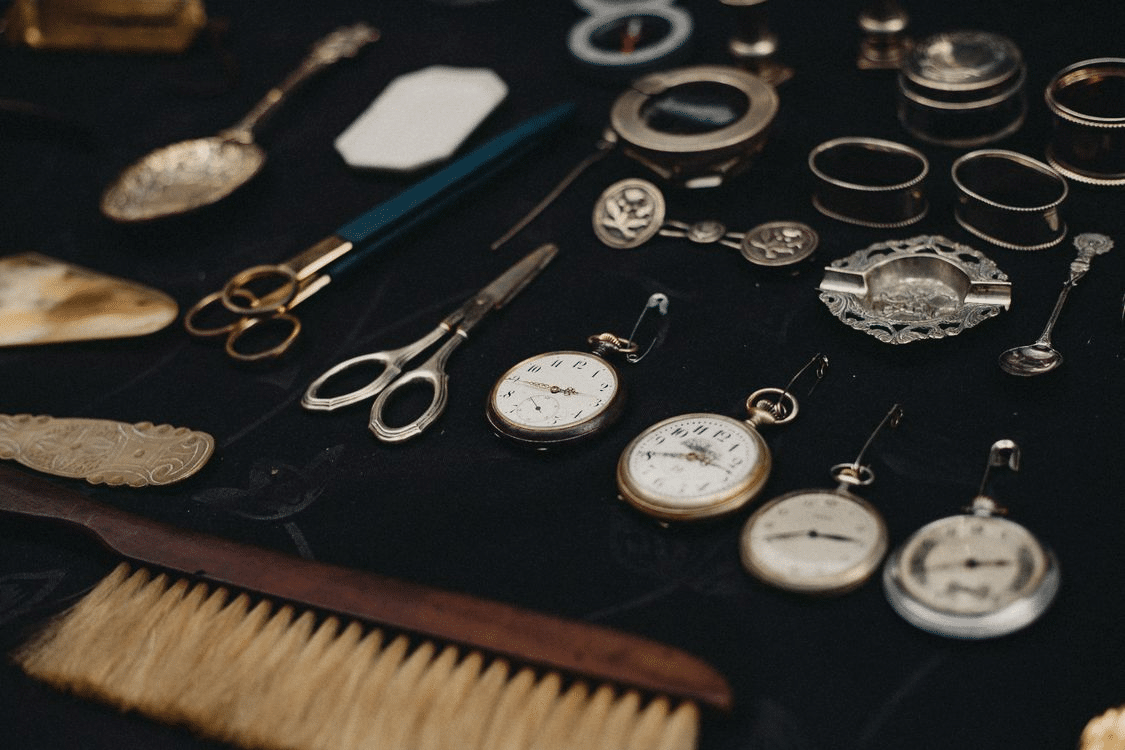
Other categories hold value primarily because of what went into making them. Vintage watches are among the clearest examples. Rolex and Patek Philippe both built reputations on precision engineering and controlled production, which means their older references remain desirable to collectors who understand the mechanical complexity involved. The craftsmanship is visible, measurable, and well-documented.
Porcelain and ceramics follow a similar logic. Meissen, as the first European hard-paste porcelain manufacturer, established standards of production in the early eighteenth century that still inform how collectors assess quality today. Fine art rounds out this group, where the hand, the period, and the technical achievement combine to create vintage items with lasting worth across market cycles.
These categories differ meaningfully in liquidity and entry cost. Watches and coins tend to be more liquid than furniture or ceramics, while fine art occupies a wide spectrum depending on the artist and period.
Pieces That Balance Both Traits Well
The most consistently sought-after collectibles tend to carry both traits at once. A Patek Philippe pocket watch from a documented estate sale carries historical provenance and technical mastery together. Meissen porcelain produced during the factory’s earliest decades reflects both artistic ambition and period significance. When history and making quality reinforce each other, the collecting case tends to be strongest.
Why History and Craftsmanship Raise Prices
The categories covered above each command premiums for specific reasons. Understanding the underlying mechanics helps collectors distinguish objects with genuine market-recognized value from those that simply look the part.
Historical Context Creates Collector Demand
Not every old object commands a premium. What separates a valuable antique from a simple relic is provenance, which is a documented history that places the object within a story collectors want to own.
When an item can be traced to a notable era, a significant event, or a recognized movement, its historical significance becomes part of the asking price. Keepsakes that carry personal and historical meaning resonate at the individual level, but market-recognized value operates differently. It requires documentation, authentication, and a chain of ownership that future buyers can verify.
Sentimental appeal and collector demand are not the same thing. An object can matter deeply to a family without carrying any market premium, while another piece commands thousands precisely because its history is legible to strangers.
Craft Quality Signals Lasting Desirability
On the making side, value follows workmanship that cannot be easily reproduced. Vintage watches from controlled-production manufacturers hold value partly because the mechanical complexity is visible and documented. Fine art holds value because the hand, the period, and the technical achievement are verifiable.
Materials matter here too. Tiffany pieces, for example, retain collector interest because the maker’s reputation is tied to specific standards of design and production that defined an era. Condition is the final variable. Even strong provenance and exceptional craft lose market traction when an object is damaged beyond restoration. Collectors and institutions consistently apply condition as the deciding factor between two otherwise comparable pieces.
How to Judge Authenticity and Condition
Before committing to any category, screening an item for authenticity and condition is the first practical step. Authentication confirms that an object is what it claims to be, while provenance records, such as certificates of ownership, auction receipts, and exhibition history, document where it has been and who has held it.
Maker marks, foundry stamps, and hallmarks provide a starting point, but expert verification adds a level of certainty that self-research rarely matches. Specialists in a given category can identify period-appropriate construction techniques, materials, and finishing details that distinguish originals from later reproductions or outright fakes.
Condition assessment involves its own set of variables. Restoration, replaced components, and poor storage history all affect how a piece is valued, even when the core object is genuine. A fine watch with non-original parts, or a ceramic with a repaired break, will typically trade at a meaningful discount compared to an unaltered example.
Comparing documented examples helps calibrate expectations. Auction houses such as Heritage Auctions maintain publicly accessible sale records that show how condition and rarity interact with realized prices, giving collectors a concrete reference point before they approach a dealer or private seller.
How the Market Supports Long-Term Value
The broader collectibles market has shown consistent growth over recent years, with market research data pointing to sustained demand across multiple categories. That expansion reflects a wider shift toward tangible assets as part of diversified long-term holdings.
Categories like rare coins, fine art, vintage watches, and antique furniture have each benefited from this trend, driven by collector communities that value physical ownership and historical permanence over purely financial instruments. That said, market growth does not translate evenly across all items. Investment potential remains tied to the individual object, its condition, and its provenance, not to the category as a whole. A rising tide lifts well-documented, high-quality pieces far more reliably than it lifts everything within reach.
How Do You Start Collecting Items That May Gain Value?
Starting with research rather than purchases is the most practical approach. Understanding which categories have historically demonstrated investment potential, and why, gives a collector the framework to evaluate individual pieces rather than relying on instinct or trend-chasing.
Condition is worth prioritizing from the first acquisition. Items in original, unaltered state consistently outperform restored or damaged equivalents over time, so developing an eye for condition early shapes better buying decisions across every category a collector enters.
What Matters More in Collectibles, Rarity or Condition?
Both factors shape value, but they operate differently depending on the category. Rarity establishes scarcity, which limits supply and drives demand. Condition, on the other hand, determines how much of that potential value is actually preserved in the physical object.
A rare piece in poor condition will almost always trade below a comparable example in strong, original state. When both rarity and condition are present together, the collecting case is at its strongest. Neither factor fully compensates for the absence of the other.
Are Collectibles a Reliable Long-Term Investment?
The answer depends on the category, the individual object, and the holding period involved. Some categories, such as rare coins and vintage watches, have demonstrated consistent investment potential over decades. Others are far more volatile, with values tied to shifting cultural interest rather than durable demand.
Historical significance and craftsmanship quality remain the most reliable indicators that a piece will hold or grow in value over time. Neither guarantees returns, but both reduce the risk of holding something the market eventually forgets.
Choosing Pieces with Staying Power
The strongest collectibles rarely succeed on a single quality. What gives a piece lasting relevance is the convergence of historical significance, provenance, craftsmanship, and condition working together, rather than any one factor carrying the rest.
Chasing trends pulls attention toward whatever the market is currently rewarding, which shifts. Collectors who build depth in a specific category develop the judgment to recognize genuine quality when they encounter it, and that knowledge compounds over time in ways that trend-following rarely does.
The clearest takeaway is also the simplest: learn one area well, buy what you can verify, and let the object’s own story do the work.